Lee Mindy H, Shaffer Annabelle, Alfouzan Nouf W, Applegate Catherine C, Hsu Jennie C, Erdman John W, Nakamura Manabu T
Division of Nutritional Sciences University of Illinois at Urbana-Champaign Urbana Illinois USA.
Carle Illinois College of Medicine University of Illinois at Urbana-Champaign Urbana Illinois USA.
Obes Sci Pract. 2024 May 27;10(3):e764. doi: 10.1002/osp4.764. eCollection 2024 Jun.
Currently available behavioral and dietary weight-loss programs lack magnitude and sustainability compared with bariatric surgery. A novel dietary weight-loss program was developed to assist participants in achieving sustainable diet changes by building knowledge and skills in food self-selection. Although the approach worked, a large variation was observed in outcome among participants.
Determine factors affecting weight-loss outcomes among participants to further improve the efficacy of the program.
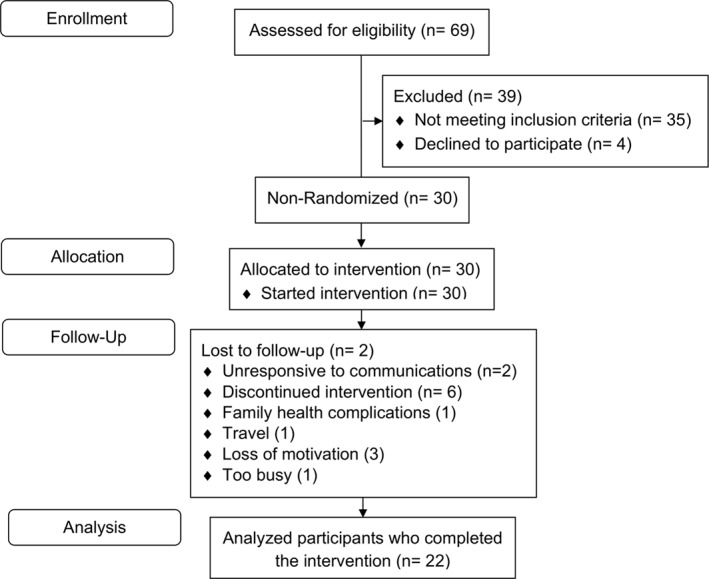
Participants attended 19 dietary educational sessions during a 1-year intervention which included prescribed homework. Changes in weight, diet, and body composition were assessed.
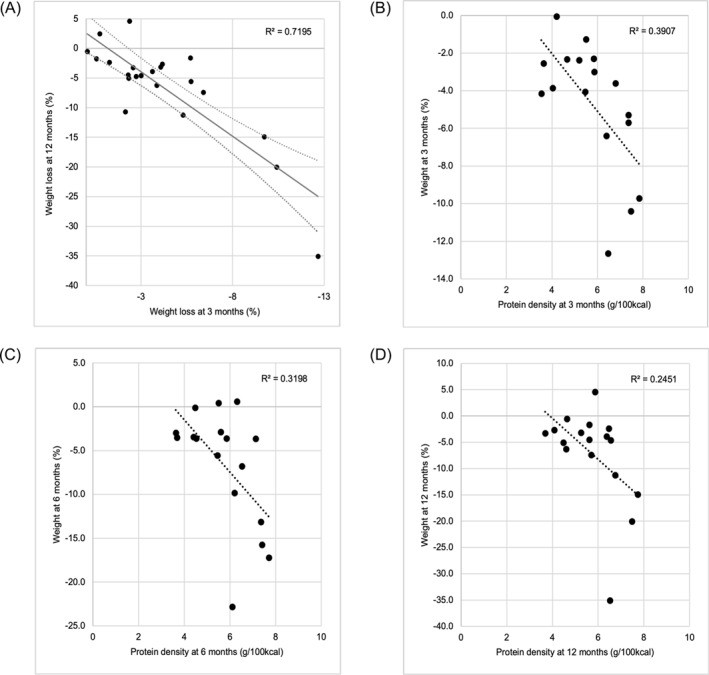
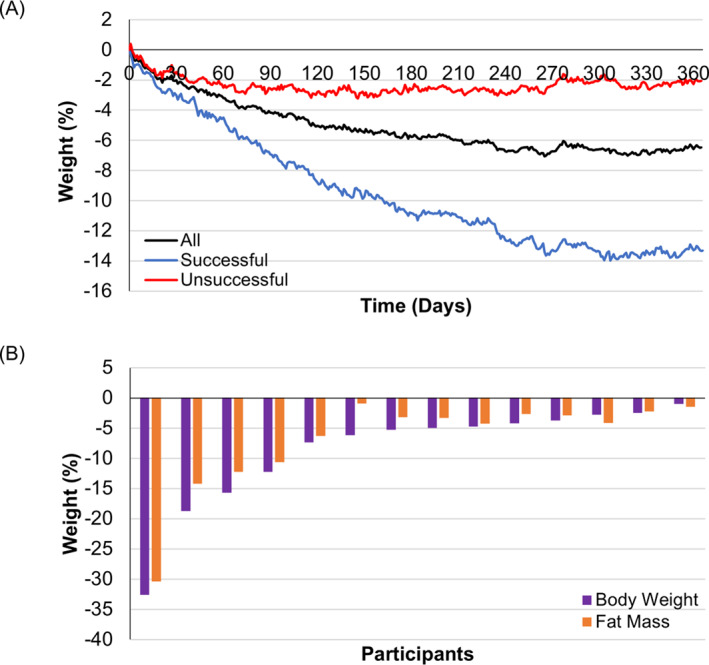
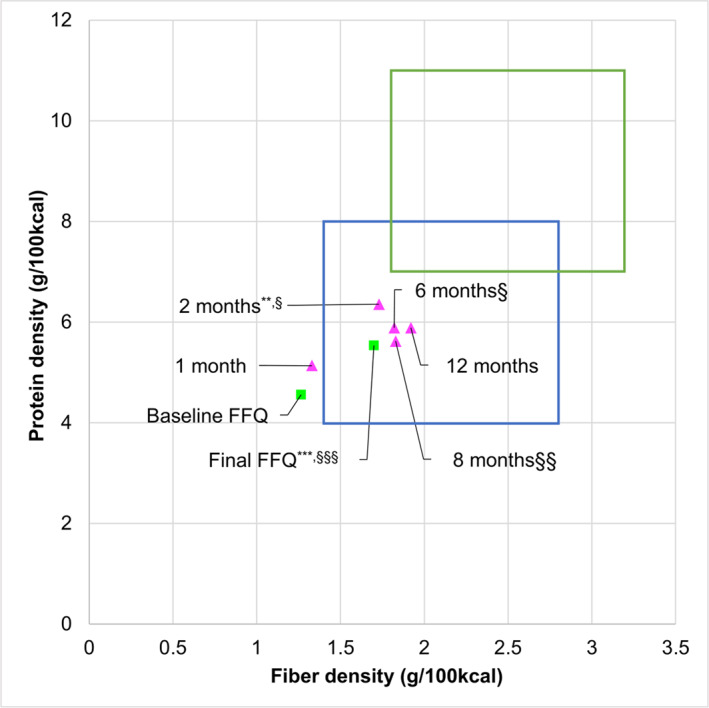
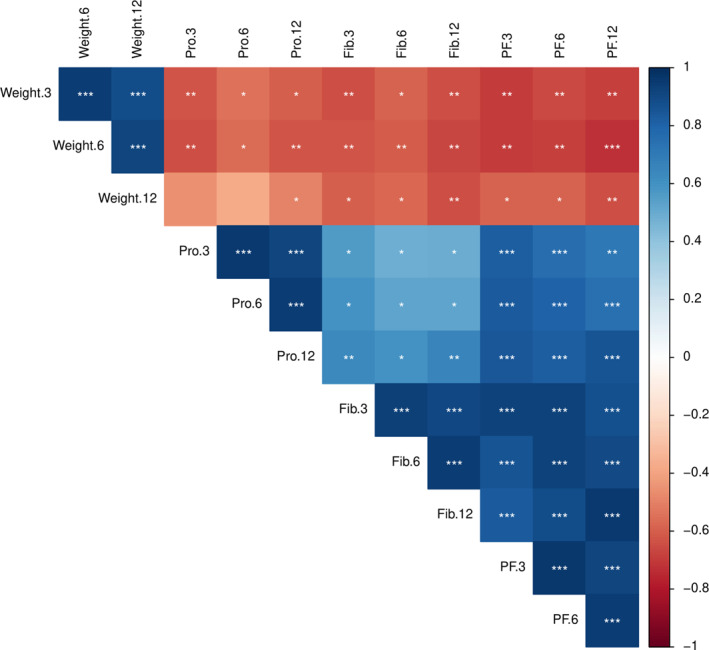
Participants ( = 22) achieved mean body weight loss of -6.49(8.37%, < 0.001) from baseline at 12 months. Nine participants (41%) achieved weight loss >5% of initial bodyweight; two reached a Body Mass Index 25 kg/m. A large divergence in weight loss among participants was observed; successful ( = 9) achieved -12.9(9.6)% while unsuccessful achieved -2.03(2.78)%. Dietary protein and fiber density by 24-h records showed a significant and inverse correlation with weight loss (%) throughout the program. Weight loss at 3 months and 12 months showed a strong correlation ( = 0.84). Participants with self-reported depression lost significantly less weight than those without depression at 12 months ( < 0.03).
Divergence in weight-loss outcomes among the participants is likely due to a difference in successful dietary implementation. Intra-cohort analysis indicates early weight-loss success and early dietary implementation was predictive of long-term success.
与减肥手术相比,目前可用的行为和饮食减肥计划在减重幅度和可持续性方面存在不足。一项新的饮食减肥计划旨在通过培养食物自我选择方面的知识和技能,帮助参与者实现可持续的饮食改变。尽管该方法有效,但参与者的结果存在很大差异。
确定影响参与者减肥效果的因素,以进一步提高该计划的效果。
参与者在为期1年的干预期间参加了19次饮食教育课程,其中包括布置的家庭作业。评估体重、饮食和身体成分的变化。
22名参与者在12个月时平均体重较基线下降了-6.49(8.37%,P<0.001)。9名参与者(41%)体重减轻超过初始体重的5%;2人达到体重指数25kg/m²。观察到参与者之间的体重减轻差异很大;成功组(n=9)体重减轻了-12.9(9.6)%,而未成功组体重减轻了-2.03(2.78)%。通过24小时记录的膳食蛋白质和纤维密度在整个计划中与体重减轻(%)呈显著负相关。3个月和12个月时的体重减轻显示出很强的相关性(r=0.84)。自我报告有抑郁症的参与者在12个月时体重减轻明显少于无抑郁症的参与者(P<0.03)。
参与者减肥效果的差异可能是由于成功的饮食实施存在差异。队列内分析表明,早期减肥成功和早期饮食实施可预测长期成功。