Lee Mauricette Moling, Tang Wern Ee, Smith Helen Elizabeth, Tudor Car Lorainne
Lee Kong Chian School of Medicine, Nanyang Technological University, Singapore, Singapore.
Health and Social Sciences, Singapore Institute of Technology, Singapore, Singapore.
Health Info Libr J. 2024 Dec;41(4):418-428. doi: 10.1111/hir.12535. Epub 2024 May 28.
Clinicians' information-seeking behaviours impact patient care quality. Earlier studies indicated that barriers to accessing information deter clinicians from seeking answers to clinical questions.
To explore primary care clinicians' information-seeking behaviour at point-of-care, focusing on when and how they seek answers to clinical questions.
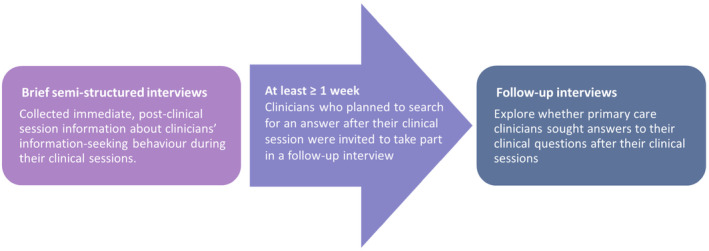
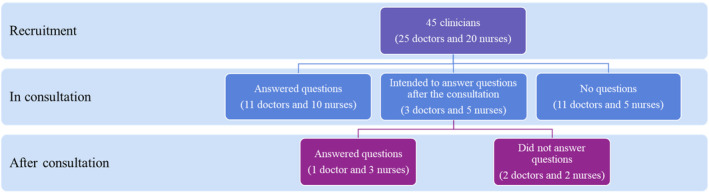
Semi-structured interviews were conducted with 45 clinicians after clinical sessions to investigate their information-seeking habits. Follow-up interviews were conducted after a week for those intending to address unanswered queries.
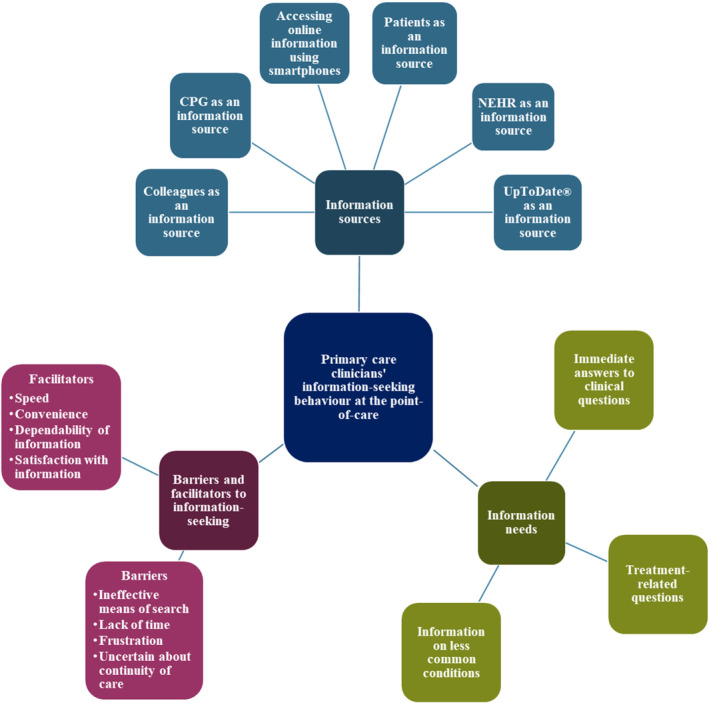
Two thirds of clinicians encountered questions during care, with nearly three quarters resolving them during the session. Colleagues, guidelines and online platforms were common information sources, with smartphones being used to access Google, WhatsApp or UpToDate®. Facilitators included reliable sources and the drive to confirm knowledge, while barriers included ineffective search methods and high workload. Despite challenges, most clinicians expressed satisfaction with their information-seeking process.
The findings underscore the increasing use of smartphones for accessing clinical information among Singaporean primary care clinicians and suggest the need for tailored training programmes and guidelines to optimise information-seeking practices.
Insights from this study can inform the development of training programmes and guidelines aimed at improving information-seeking practices among primary care clinicians, potentially enhancing patient care quality.
临床医生的信息寻求行为会影响患者护理质量。早期研究表明,获取信息的障碍阻碍临床医生寻求临床问题的答案。
探讨基层医疗临床医生在诊疗现场的信息寻求行为,重点关注他们何时以及如何寻求临床问题的答案。
在临床诊疗结束后,对45名临床医生进行了半结构化访谈,以调查他们的信息寻求习惯。对于那些打算解决未回答问题的医生,在一周后进行了跟进访谈。
三分之二的临床医生在诊疗过程中遇到问题,近四分之三的问题在诊疗期间得到解决。同事、指南和在线平台是常见的信息来源,智能手机被用于访问谷歌、WhatsApp或UpToDate®。促进因素包括可靠的信息来源和确认知识的动力,而障碍包括无效的搜索方法和高工作量。尽管存在挑战,但大多数临床医生对他们的信息寻求过程表示满意。
研究结果强调了新加坡基层医疗临床医生越来越多地使用智能手机获取临床信息,并表明需要制定量身定制的培训计划和指南,以优化信息寻求行为。
本研究的见解可为旨在改善基层医疗临床医生信息寻求行为的培训计划和指南的制定提供参考,有可能提高患者护理质量。