Division of Cardiorespiratory Medicine, Department of Medicine, Victor Phillip Dahdaleh Heart and Lung Research Institute, University of Cambridge, United Kingdom (J.W.O., A.C., T.X.Z., Z.M.).
Complement and Inflammation Research Section, National Heart, Lung, and Blood Institute, National Institutes of Health, Bethesda, MD (C.K.).
Arterioscler Thromb Vasc Biol. 2024 Jul;44(7):1512-1522. doi: 10.1161/ATVBAHA.124.319844. Epub 2024 May 30.
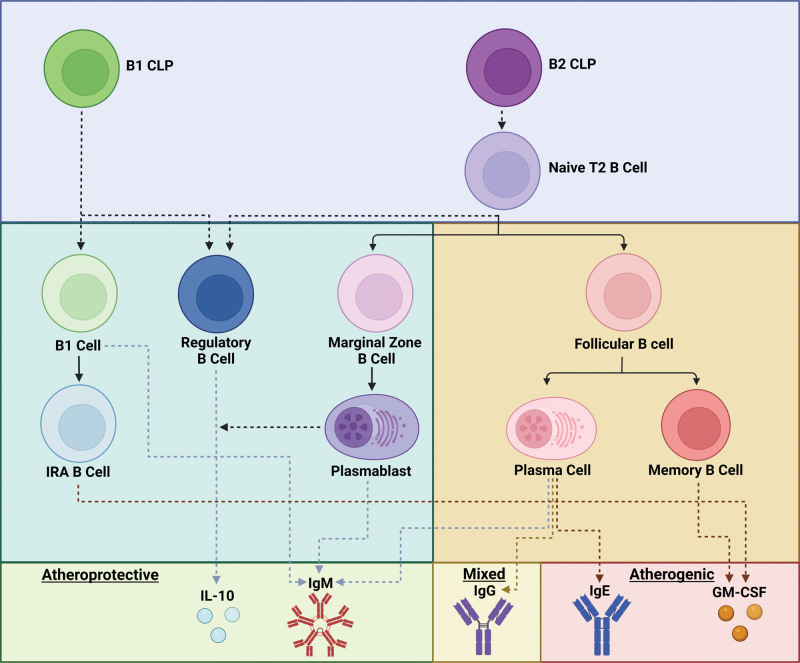
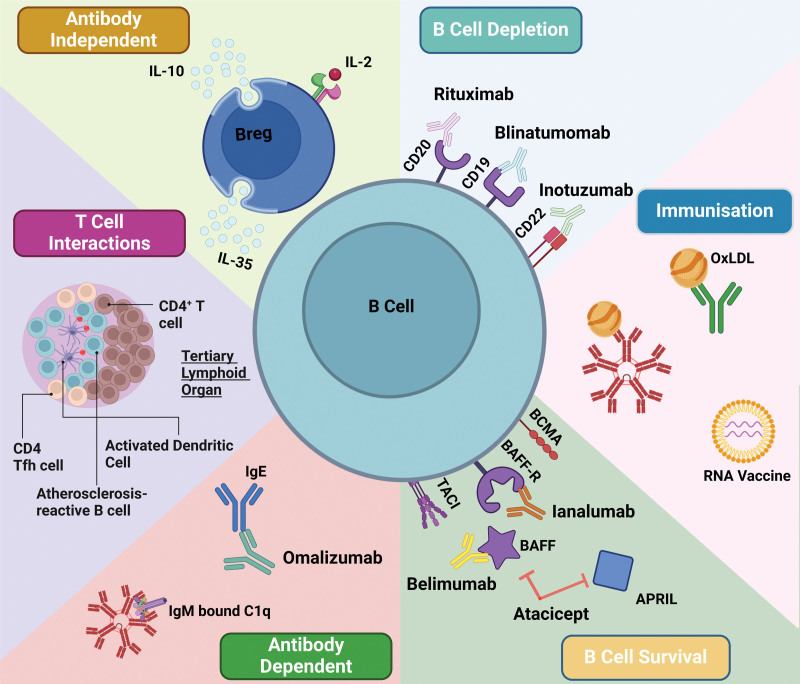
The adaptive immune system plays an important role in the development and progression of atherosclerotic cardiovascular disease. B cells can have both proatherogenic and atheroprotective roles, making treatments aimed at modulating B cells important therapeutic targets. The innate-like B-cell response is generally considered atheroprotective, while the adaptive response is associated with mixed consequences for atherosclerosis. Additionally, interactions of B cells with components of the adaptive and innate immune system, including T cells and complement, also represent key points for therapeutic regulation. In this review, we discuss therapeutic approaches based on B-cell depletion, modulation of B-cell survival, manipulation of both the antibody-dependent and antibody-independent B-cell response, and emerging immunization techniques.
适应性免疫系统在动脉粥样硬化性心血管疾病的发生和发展中起着重要作用。B 细胞可以发挥促动脉粥样硬化和抗动脉粥样硬化作用,因此针对 B 细胞的治疗方法成为重要的治疗靶点。固有样 B 细胞反应通常被认为具有抗动脉粥样硬化作用,而适应性反应与动脉粥样硬化的混合后果有关。此外,B 细胞与适应性和固有免疫系统的成分(包括 T 细胞和补体)相互作用也是治疗调节的关键点。在这篇综述中,我们讨论了基于 B 细胞耗竭、B 细胞存活调节、抗体依赖性和非依赖性 B 细胞反应的操纵以及新兴免疫接种技术的治疗方法。