
具有增强传播能力和降低中和敏感性的病毒变体的选择以及横向引入可能解释了猪繁殖与呼吸综合征病毒在接种疫苗的种猪群中的持续存在。
Selection of viral variants with enhanced transmission and reduced neutralization susceptibility alongside lateral introductions may explain the persistence of porcine reproductive and respiratory syndrome virus in vaccinated breeding herds.
作者信息
Clilverd Hepzibar, Li Yanli, Martín-Valls Gerard, Aguirre Laia, Martín Marga, Cortey Martí, Mateu Enric
机构信息
Department of Animal Health and Anatomy, Universitat Autònoma de Barcelona, Cerdanyola del Vallès 08193, Spain.
出版信息
Virus Evol. 2024 May 17;10(1):veae041. doi: 10.1093/ve/veae041. eCollection 2024.
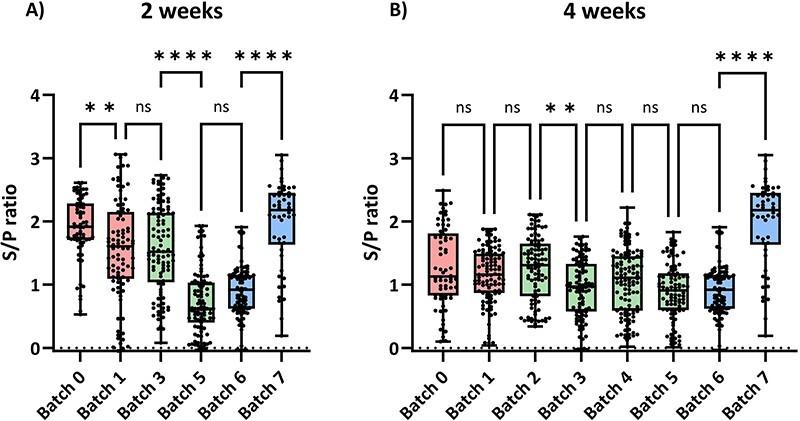
This study investigates the long-term evolutionary dynamics of porcine reproductive and respiratory syndrome virus (PRRSV-1) in an endemically infected and vaccinated pig herd. Over a one year and a half period, piglets from seven farrowing batches in a 300-sow PRRSV-vaccinated farm were monitored from birth to nine weeks of age by reverse transcription-quantitative polymerase chain reaction (RT-qPCR). Eighty-five PRRSV-positive samples were subjected to whole genome sequencing (Illumina Miseq), and 251 samples to open reading frame 5 (ORF5) sequencing. Farm-specific PRRSV variants' impact on anti-PRRSV antibodies was evaluated using enzyme-linked immunosorbent and neutralizing antibody assays. The replication kinetics and cytokine inhibition capabilities (IFN-α and TNF-α) of these variants were assessed in porcine alveolar macrophages. The study revealed fluctuating PRRSV-1 incidences in farrowing units and nurseries, attributed to two key evolutionary events: an escape variant emergence and a lateral introduction of a new strain. Initially, strain 1 variant α was swiftly replaced within weeks by variant 1β (99.5 per cent genomic similarity), with twenty-five amino acid mutations, primarily in nsp1α, GP2, GP3, and GP5, including an additional glycosylation site and a deletion downstream the neutralization epitope of GP5. This shift to 1β correlated with increased incidence in nurseries and higher viral loads, with sera from 1α-exposed animals showing reduced neutralization against 1β. Consistently for assays, variant 1β demonstrated enhanced replication in porcine alveolar macrophages but no difference regarding IFN-α or TNF-α responses. Later, a new strain (strain 2, 83.3 per cent similarity to strain 1) emerged and led to incidence resurgence because of the low cross reactivity with the previous antibodies. The study highlights PRRSV's rapid adaptability and challenges in controlling its spread, underscoring the necessity for more effective vaccines and eradication approaches.
本研究调查了猪繁殖与呼吸综合征病毒(PRRSV - 1)在一个地方流行且接种疫苗的猪群中的长期进化动态。在一年半的时间里,通过逆转录定量聚合酶链反应(RT - qPCR)对一个拥有300头母猪且接种了PRRSV疫苗的猪场中七个产仔批次的仔猪从出生到九周龄进行了监测。对85份PRRSV阳性样本进行了全基因组测序(Illumina Miseq),对251份样本进行了开放阅读框5(ORF5)测序。使用酶联免疫吸附和中和抗体测定评估了猪场特异性PRRSV变体对抗PRRSV抗体的影响。在猪肺泡巨噬细胞中评估了这些变体的复制动力学和细胞因子抑制能力(IFN - α和TNF - α)。该研究揭示了产仔单元和保育舍中PRRSV - 1发病率的波动,这归因于两个关键的进化事件:一个逃逸变体的出现和一个新毒株的横向引入。最初,毒株1变体α在数周内迅速被变体1β(基因组相似性为99.5%)取代,有25个氨基酸突变,主要在nsp1α、GP2、GP3和GP5中,包括一个额外的糖基化位点和GP5中和表位下游的一个缺失。这种向1β的转变与保育舍发病率增加和病毒载量升高相关,来自接触过1α的动物的血清对1β的中和作用降低。一致地,对于各项测定,变体1β在猪肺泡巨噬细胞中显示出增强的复制,但在IFN - α或TNF - α反应方面没有差异。后来,一个新毒株(毒株2,与毒株1的相似性为83.3%)出现,并由于与先前抗体的交叉反应性低而导致发病率再次上升。该研究强调了PRRSV的快速适应性以及控制其传播的挑战,突出了更有效疫苗和根除方法的必要性。




 Zotero 插件