Algar Sergio, Vázquez-Villa Henar, Aguilar-Garrido Pedro, Navarro-Aguadero Miguel Ángel, Velasco-Estévez María, Sánchez-Merino Anabel, Arribas-Álvarez Iván, Paradela Alberto, Giner-Arroyo Rafael L, Tamargo-Azpilicueta Joaquín, Díaz-Moreno Irene, Martínez-López Joaquín, Gallardo Miguel, López-Rodríguez María L, Benhamú Bellinda
Department of Organic Chemistry, Faculty of Chemistry, Universidad Complutense de Madrid, E-28040 Madrid, Spain.
Department of Haematology, Hospital Universitario 12 de Octubre, Instituto de Investigación Sanitaria Hospital 12 de Octubre (imas12), E-28041 Madrid, Spain.
JACS Au. 2024 Feb 9;4(5):1786-1800. doi: 10.1021/jacsau.3c00682. eCollection 2024 May 27.
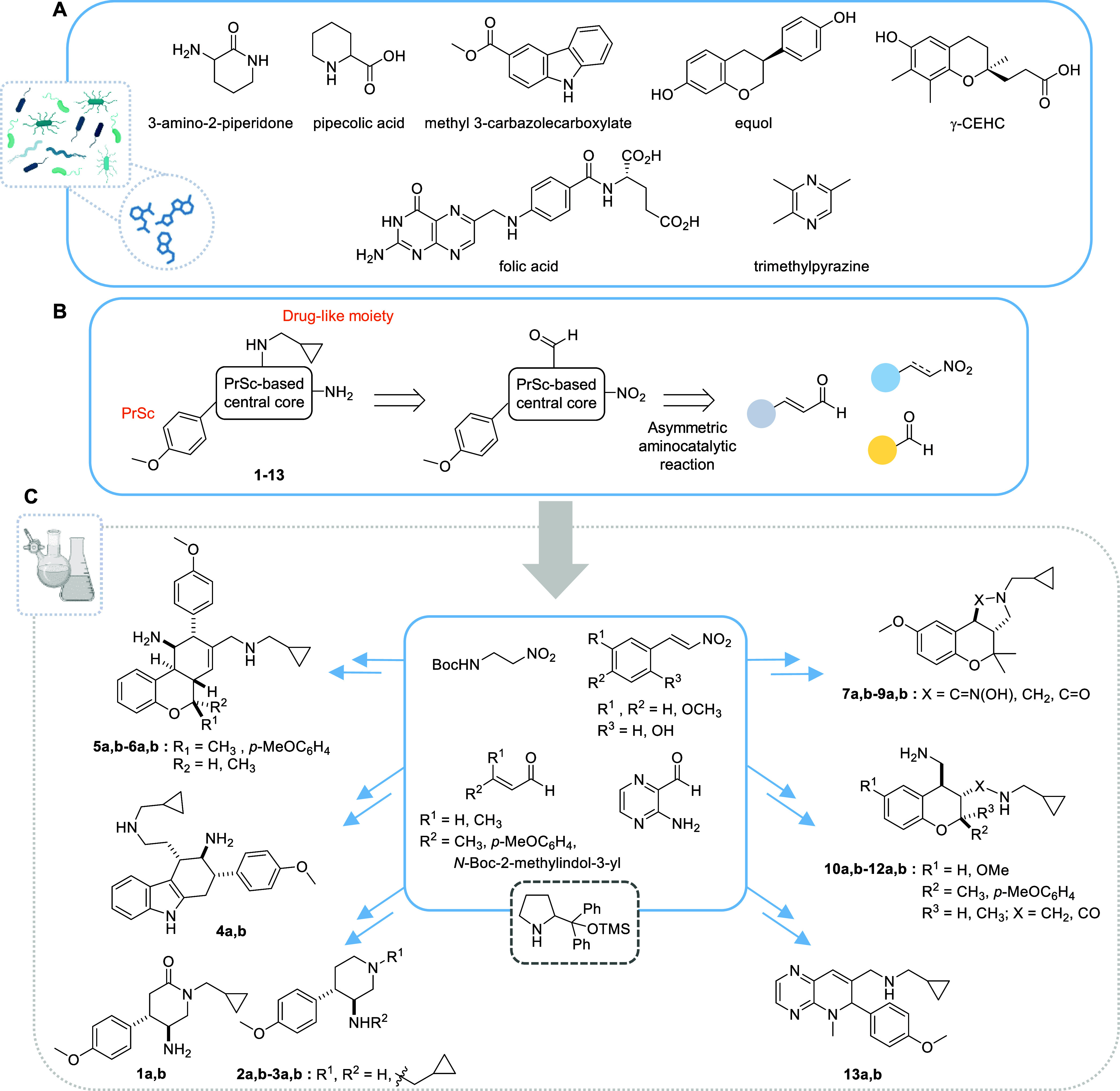
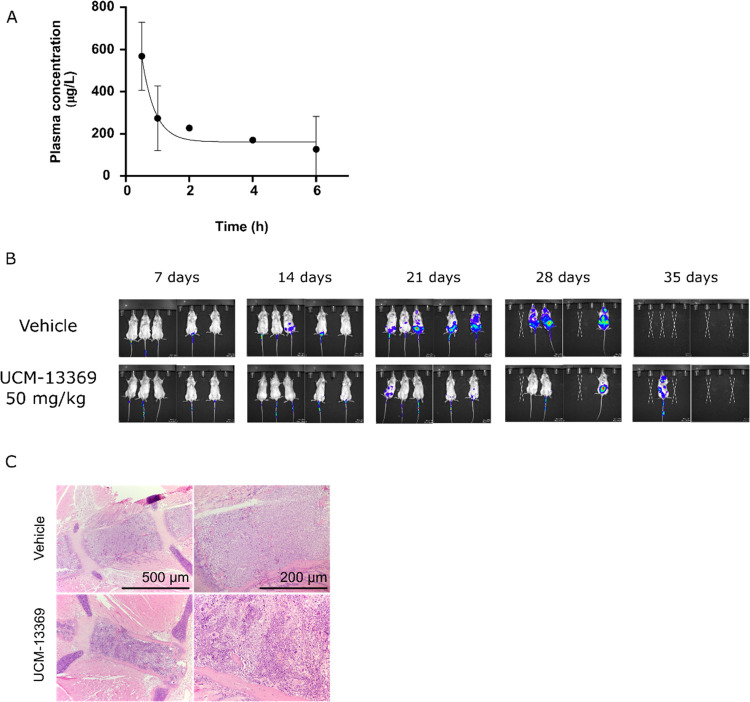
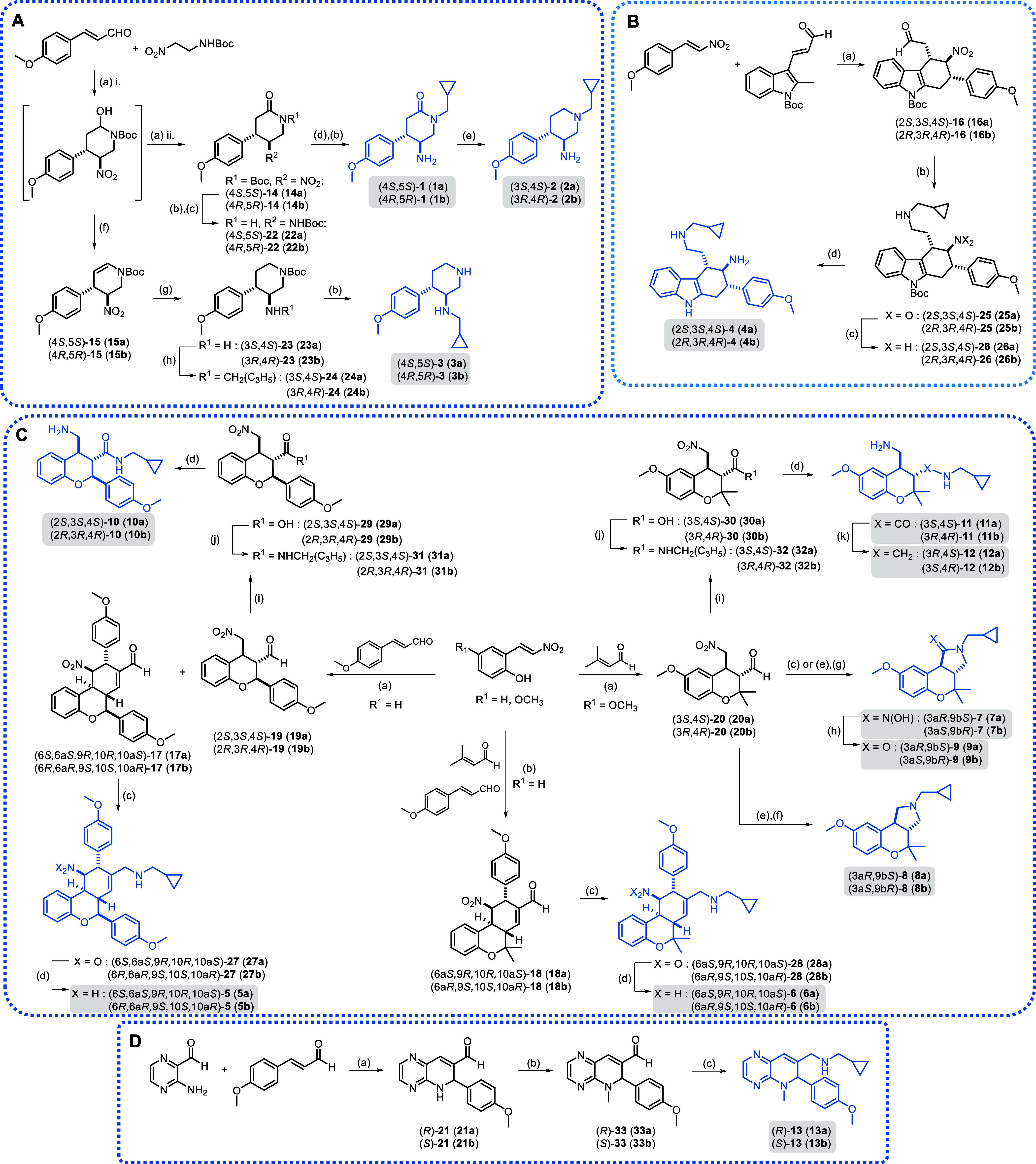
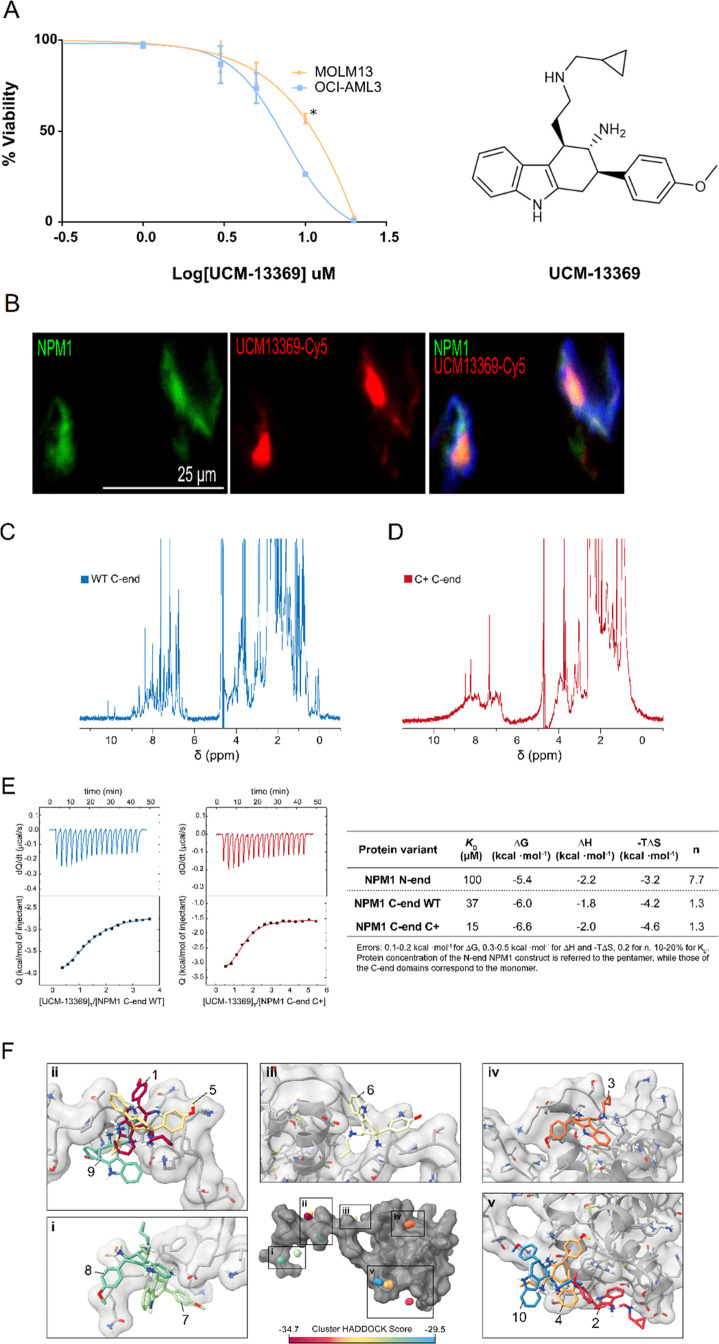
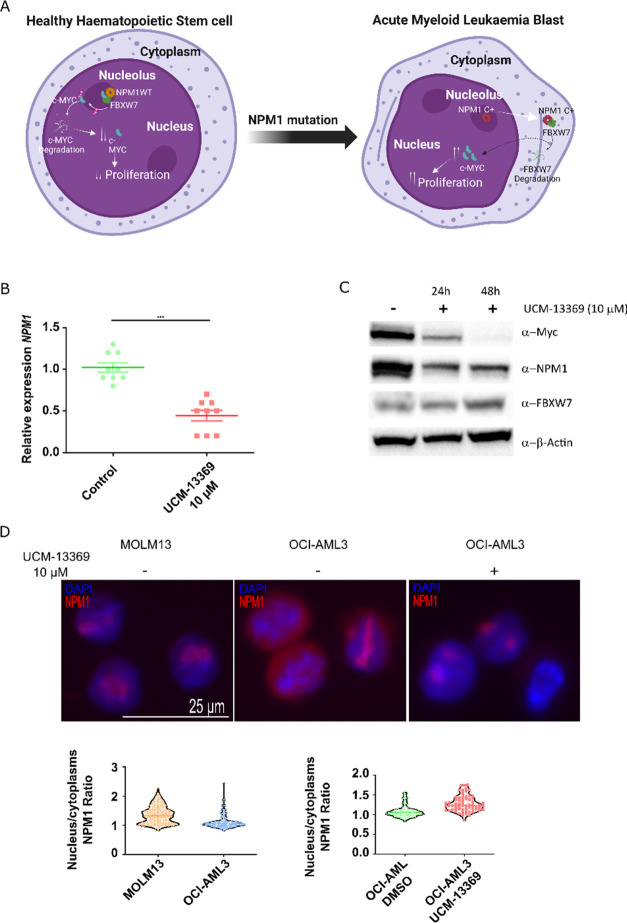
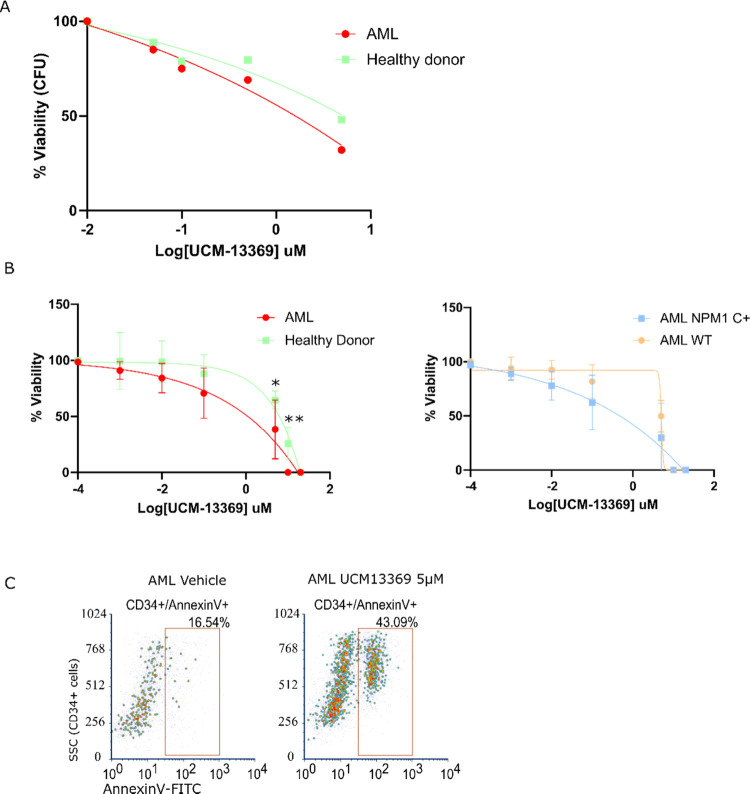
The human microbiota plays an important role in human health and disease, through the secretion of metabolites that regulate key biological functions. We propose that microbiota metabolites represent an unexplored chemical space of small drug-like molecules in the search of new hits for drug discovery. Here, we describe the generation of a set of complex chemotypes inspired on selected microbiota metabolites, which have been synthesized using asymmetric organocatalytic reactions. Following a primary screening in CSC models, we identified the novel compound UCM-13369 () whose cytotoxicity was mediated by NPM1. This protein is one of the most frequent mutations of AML, and NPM1-mutated AML is recognized by the WHO as a distinct hematopoietic malignancy. UCM-13369 inhibits NPM1 expression, downregulates the pathway associated with mutant NPM1 C+, and specifically recognizes the C-end DNA-binding domain of NPM1 C+, avoiding the nucleus-cytoplasm translocation involved in the AML tumorological process. The new NPM1 inhibitor triggers apoptosis in AML cell lines and primary cells from AML patients and reduces tumor infiltration in a mouse model of AML with NPM1 C+ mutation. The disclosed phenotype-guided discovery of UCM-13369, a novel small molecule inspired on microbiota metabolites, confirms that CSC death induced by NPM1 inhibition represents a promising therapeutic opportunity for NPM1-mutated AML, a high-mortality disease.
人类微生物群通过分泌调节关键生物学功能的代谢物,在人类健康和疾病中发挥着重要作用。我们提出,微生物群代谢物代表了一个未被探索的类药物小分子化学空间,可用于寻找药物发现的新靶点。在此,我们描述了一组受选定微生物群代谢物启发的复杂化学型的生成,这些化学型是通过不对称有机催化反应合成的。在CSC模型中进行初步筛选后,我们鉴定出了新型化合物UCM-13369(),其细胞毒性由NPM1介导。该蛋白是急性髓系白血病(AML)中最常见的突变之一,NPM1突变的AML被世界卫生组织(WHO)认定为一种独特的造血系统恶性肿瘤。UCM-13369抑制NPM1表达,下调与突变型NPM1 C+相关的通路,并特异性识别NPM1 C+的C端DNA结合结构域,避免参与AML肿瘤学过程的核质转运。这种新型NPM1抑制剂可诱导AML细胞系和AML患者原代细胞凋亡,并减少具有NPM1 C+突变的AML小鼠模型中的肿瘤浸润。所公开的基于表型引导发现的受微生物群代谢物启发的新型小分子UCM-13369,证实了由NPM1抑制诱导的CSC死亡是NPM1突变的AML(一种高死亡率疾病)的一个有前景的治疗机会。