Peter MacCallum Cancer Centre, Melbourne, VIC, Australia.
Princess Margaret Cancer Centre, Toronto, ON, Canada.
J Clin Oncol. 2024 Oct 10;42(29):3400-3409. doi: 10.1200/JCO.24.00581. Epub 2024 May 31.
Lorlatinib improved progression-free survival (PFS) and intracranial activity versus crizotinib in patients with previously untreated, advanced, -positive non-small cell lung cancer (NSCLC) in the phase III CROWN study. Here, we report long-term outcomes from CROWN after 5 years of follow-up.
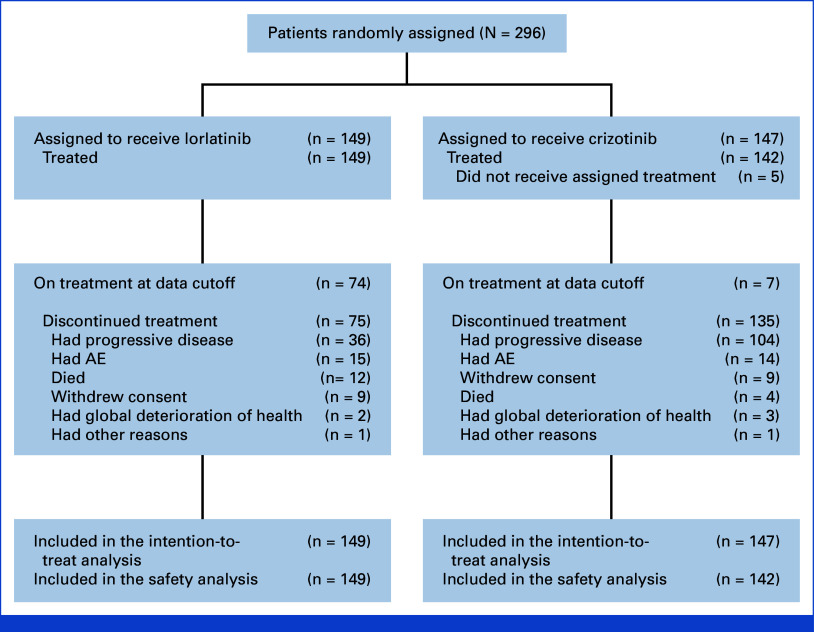
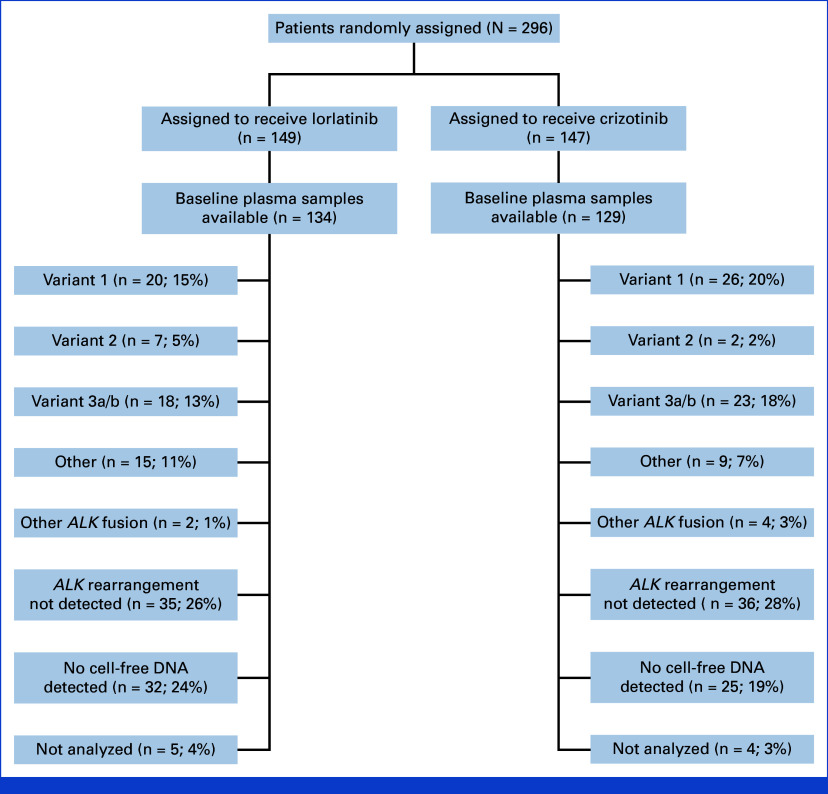
Two hundred ninety-six patients with -positive NSCLC were randomly assigned 1:1 to receive lorlatinib 100 mg once daily (n = 149) or crizotinib 250 mg twice daily (n = 147). This post hoc analysis presents updated investigator-assessed efficacy outcomes, safety, and biomarker analyses.
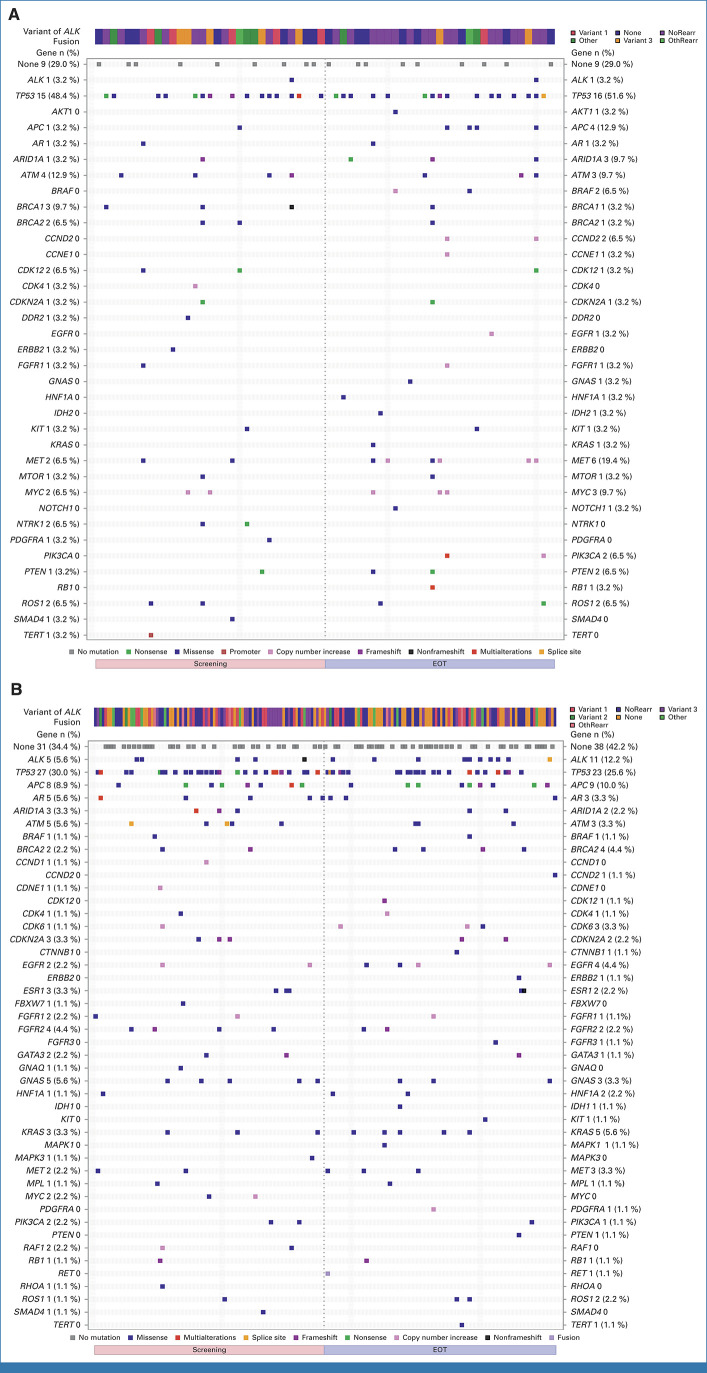
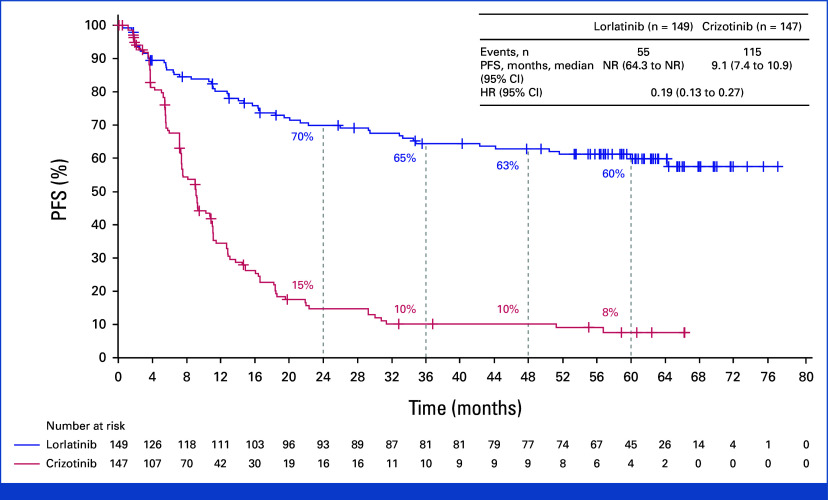
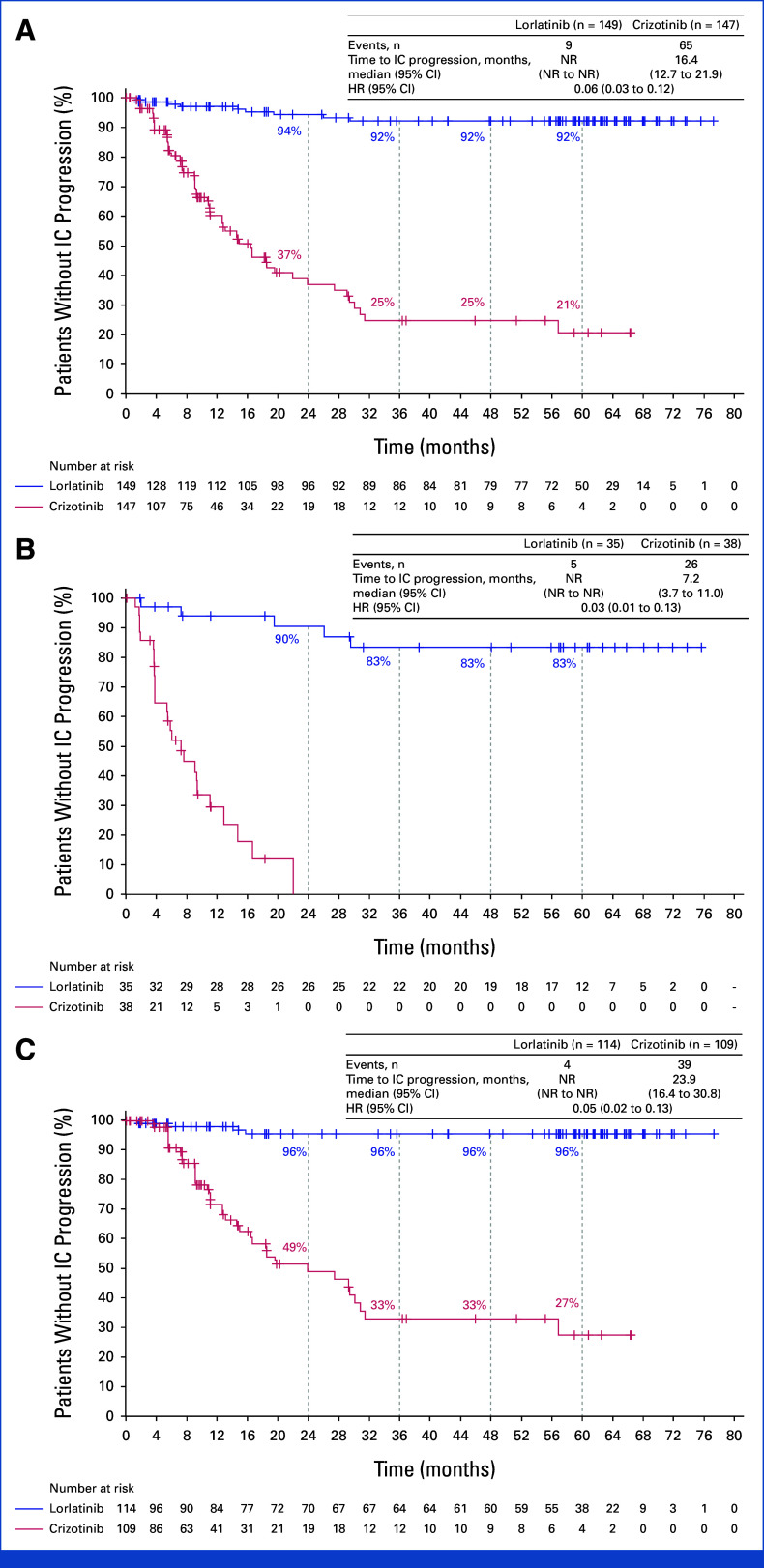
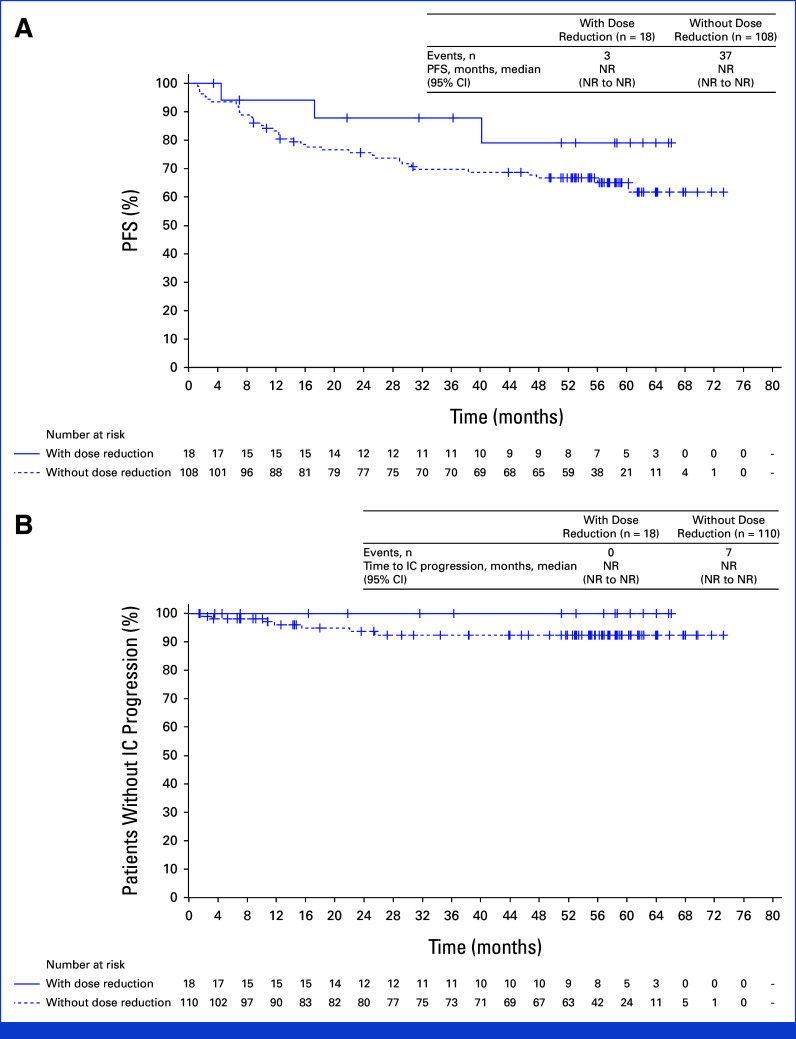
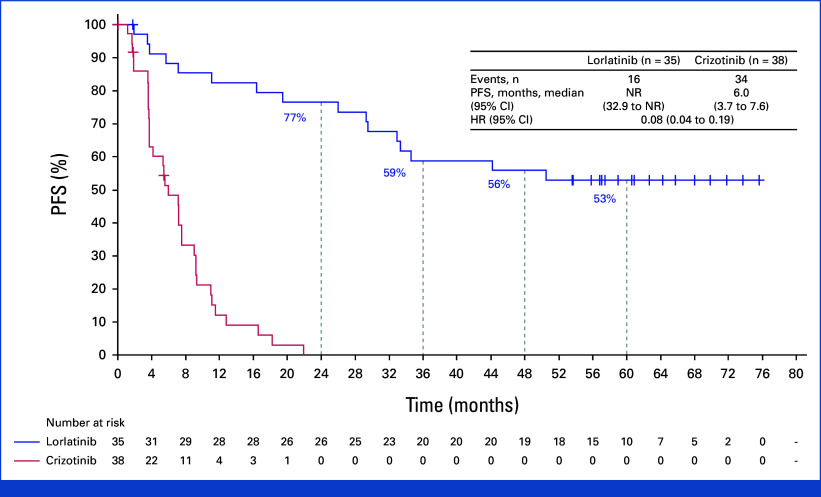
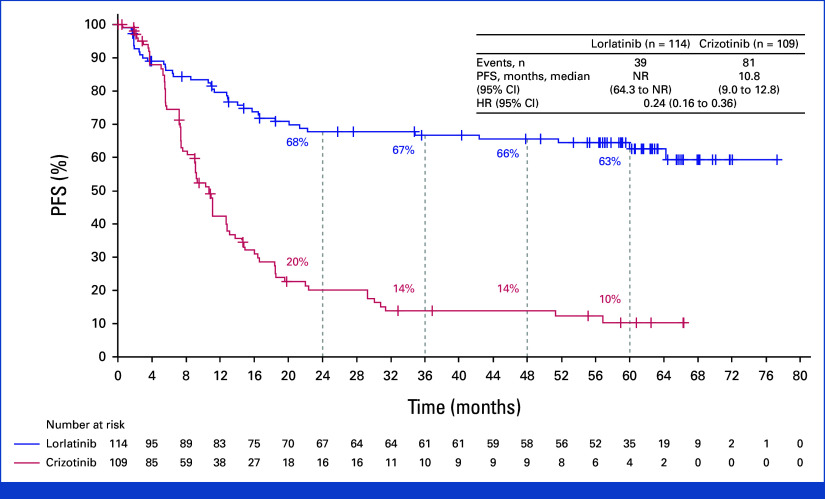
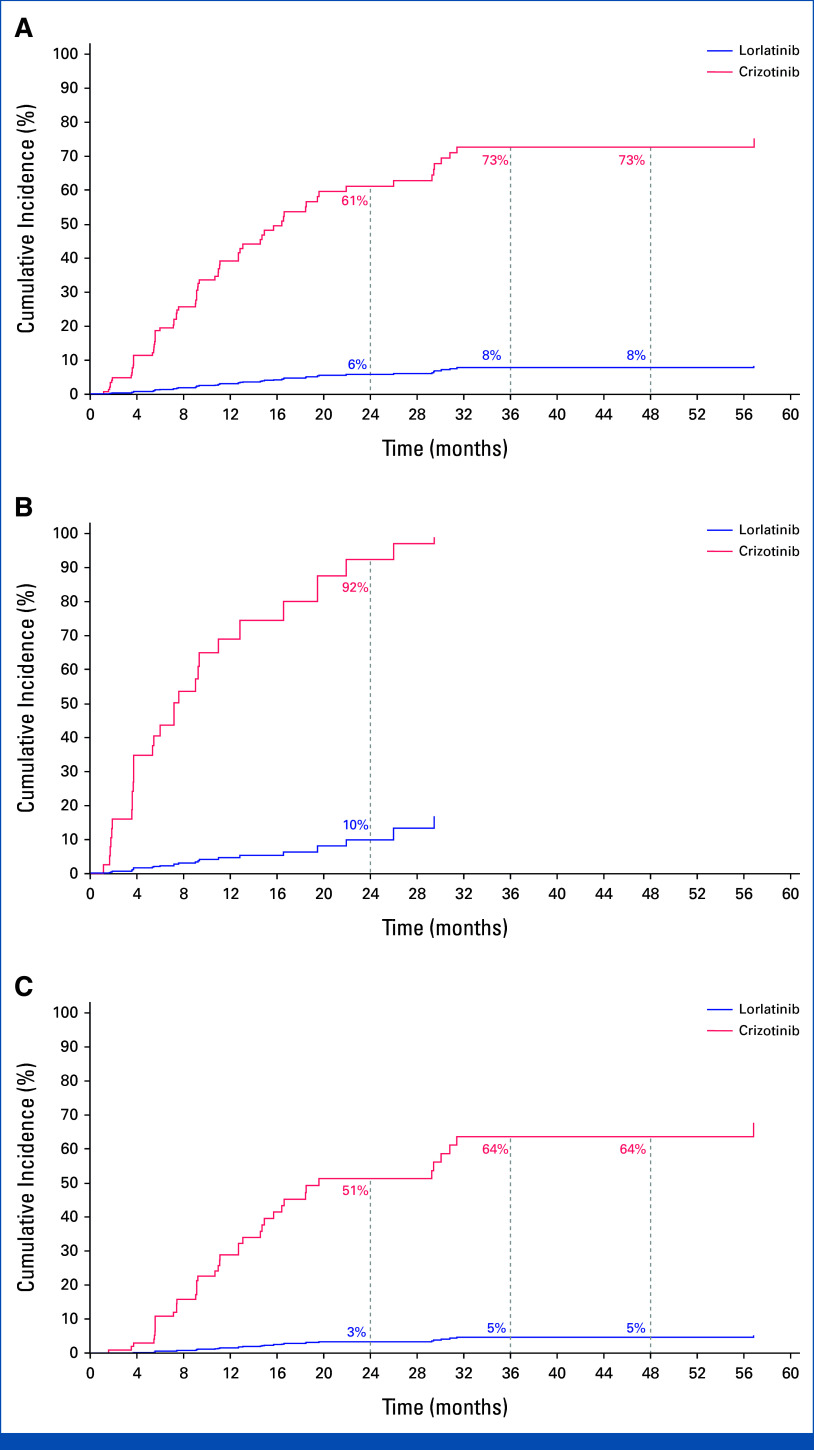
With a median follow-up for PFS of 60.2 and 55.1 months, respectively, median PFS was not reached (NR [95% CI, 64.3 to NR]) with lorlatinib and 9.1 months (95% CI, 7.4 to 10.9) with crizotinib (hazard ratio [HR], 0.19 [95% CI, 0.13 to 0.27]); 5-year PFS was 60% (95% CI, 51 to 68) and 8% (95% CI, 3 to 14), respectively. Median time to intracranial progression was NR (95% CI, NR to NR) with lorlatinib and 16.4 months (95% CI, 12.7 to 21.9) with crizotinib (HR, 0.06 [95% CI, 0.03 to 0.12]). Safety profile was consistent with that in prior analyses. Emerging new resistance mutations were not detected in circulating tumor DNA collected at the end of lorlatinib treatment.
After 5 years of follow-up, median PFS has yet to be reached in the lorlatinib group, corresponding to the longest PFS ever reported with any single-agent molecular targeted treatment in advanced NSCLC and across all metastatic solid tumors. These results coupled with prolonged intracranial efficacy and absence of new safety signals represent an unprecedented outcome for patients with advanced -positive NSCLC and set a new benchmark for targeted therapies in cancer.
在 III 期 CROWN 研究中,与克唑替尼相比,劳拉替尼改善了未经治疗的晚期阳性非小细胞肺癌(NSCLC)患者的无进展生存期(PFS)和颅内活性。在此,我们报告了 CROWN 研究 5 年随访后的长期结果。
296 例阳性 NSCLC 患者按 1:1 随机分配接受劳拉替尼 100 mg 每日一次(n=149)或克唑替尼 250 mg 每日两次(n=147)治疗。本事后分析呈现了更新的研究者评估的疗效结果、安全性和生物标志物分析。
中位 PFS 随访时间分别为 60.2 和 55.1 个月,劳拉替尼组未达到中位 PFS(NR[95%CI,64.3 至 NR]),克唑替尼组为 9.1 个月(95%CI,7.4 至 10.9)(风险比[HR],0.19[95%CI,0.13 至 0.27]);5 年 PFS 分别为 60%(95%CI,51 至 68)和 8%(95%CI,3 至 14)。劳拉替尼组颅内进展的中位时间为 NR(95%CI,NR 至 NR),克唑替尼组为 16.4 个月(95%CI,12.7 至 21.9)(HR,0.06[95%CI,0.03 至 0.12])。安全性特征与之前的分析一致。在劳拉替尼治疗结束时采集的循环肿瘤 DNA 中未检测到新的耐药突变。
在 5 年随访后,劳拉替尼组尚未达到中位 PFS,这与晚期 NSCLC 和所有转移性实体瘤中使用任何单一分子靶向治疗的最长 PFS 相当。这些结果加上延长的颅内疗效和无新的安全性信号,代表了晚期阳性 NSCLC 患者前所未有的治疗结果,并为癌症的靶向治疗树立了新的基准。