Faculty of Frontier Engineering, Institute of Science & Engineering, Kanazawa University, Kakuma-machi, Kanazawa, Kanazawa, 920-1192, Japan.
Graduate School of Frontier Engineering, Kanazawa University, Kanazawa, Japan.
J Comp Physiol B. 2024 Aug;194(4):493-499. doi: 10.1007/s00360-024-01566-0. Epub 2024 May 31.
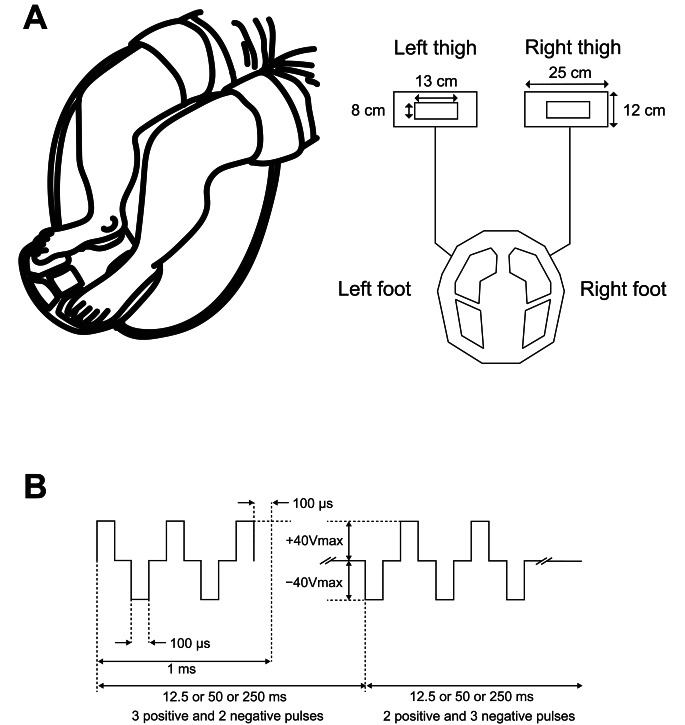
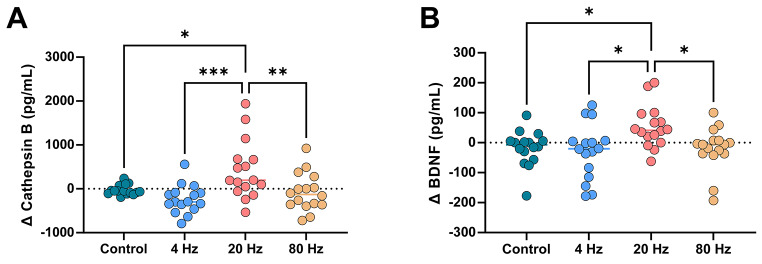
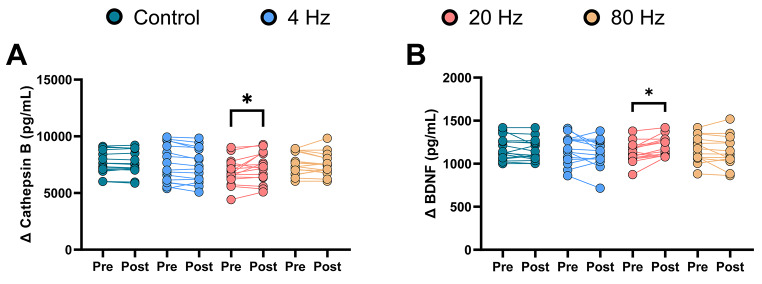
Electrical muscle stimulation (EMS) has been shown to stimulate the production of myokines (i.e., brain-derived neurotrophic factor (BDNF)), but the most effective EMS parameters for myokine production have not been fully elucidated. The purpose of this study was to quantify the optimal EMS frequency for stimulating myokine production. This study included sixteen young adults (male, n = 13, age = 27.3 ± 5.5 years). Participants underwent four EMS interventions (20 min each) with the following conditions: (1) 4 Hz, (2) 20 Hz, (3) 80 Hz, and (4) control (no intervention). Blood samples were obtained before and immediately after EMS. For the control condition, blood samples were taken before and after 20 min of quiet sitting. BDNF and cathepsin-B levels were analyzed in serum. Compared to preintervention levels, stimulation at 20 Hz resulted in significantly greater postintervention cathepsin-B and BDNF levels (p < 0.01). On the other hand, the control condition did not result in a significant change between pre- and posttreatment. Furthermore, stimulation at 20 Hz caused significantly larger increases in cathepsin-B and BDNF levels than stimulation at 4-80 Hz or the control condition (p < 0.05). In conclusion, stimulation at 20 Hz effectively causes a robust cathepsin-B and BDNF response. Based on these results, we suggest a new strategy for rehabilitation of people with neurological disorders.
电肌肉刺激(EMS)已被证明可刺激肌肽(即脑源性神经营养因子(BDNF))的产生,但最有效的 EMS 参数来产生肌肽尚未完全阐明。本研究的目的是量化刺激肌肽产生的最佳 EMS 频率。这项研究包括 16 名年轻人(男性,n = 13,年龄 = 27.3 ± 5.5 岁)。参与者接受了四次 EMS 干预(每次 20 分钟),条件如下:(1)4Hz,(2)20Hz,(3)80Hz,和(4)对照(无干预)。在 EMS 之前和之后立即采集血液样本。对于对照条件,在安静坐 20 分钟前后采集血液样本。在血清中分析 BDNF 和组织蛋白酶-B 水平。与干预前水平相比,20Hz 的刺激导致干预后组织蛋白酶-B 和 BDNF 水平显著增加(p<0.01)。另一方面,对照条件在治疗前后没有导致显著变化。此外,20Hz 的刺激引起的组织蛋白酶-B 和 BDNF 水平的增加明显大于 4-80Hz 的刺激或对照条件(p<0.05)。总之,20Hz 的刺激可有效引起强烈的组织蛋白酶-B 和 BDNF 反应。基于这些结果,我们为神经障碍患者的康复提出了一种新的策略。