Royal Belgian Institute of Natural Sciences, Brussels, Belgium.
Terrestrial Ecology Unit, Biology Department, Ghent University, Gent, Belgium.
Sci Adv. 2024 May 31;10(22):eadk7906. doi: 10.1126/sciadv.adk7906.
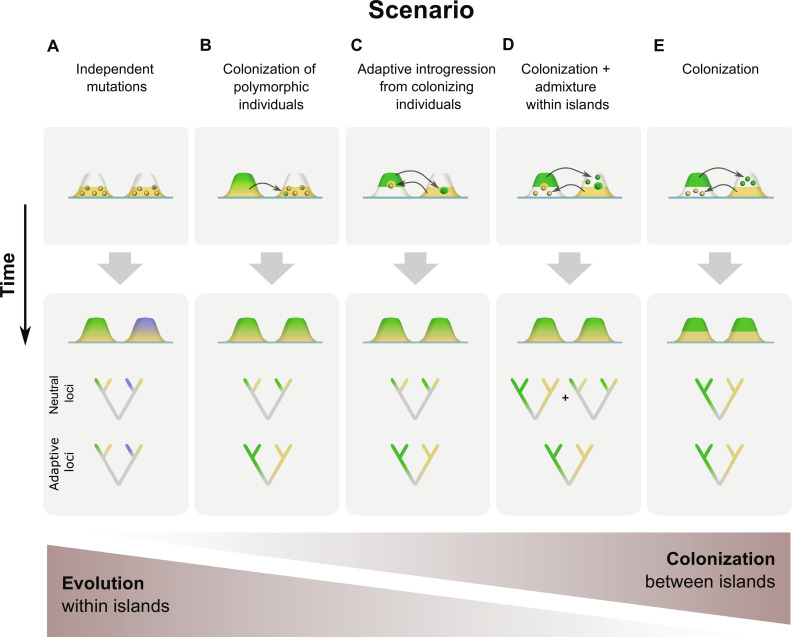
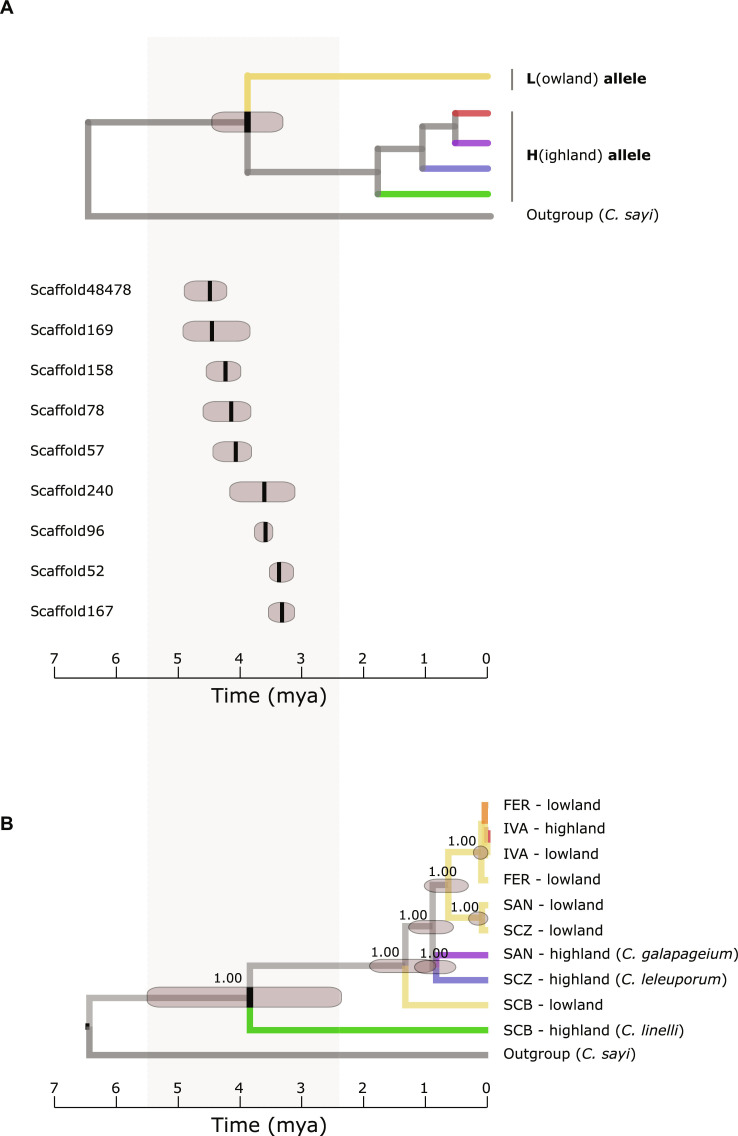
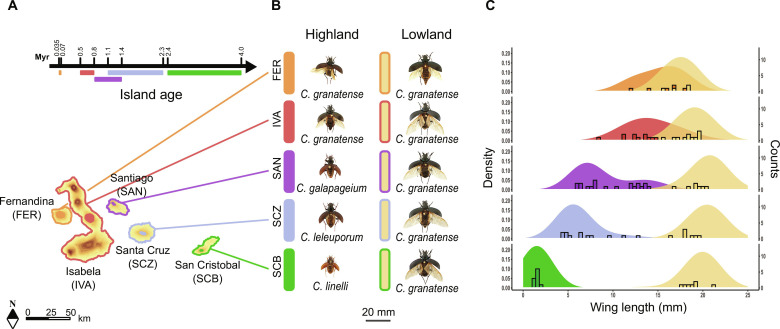
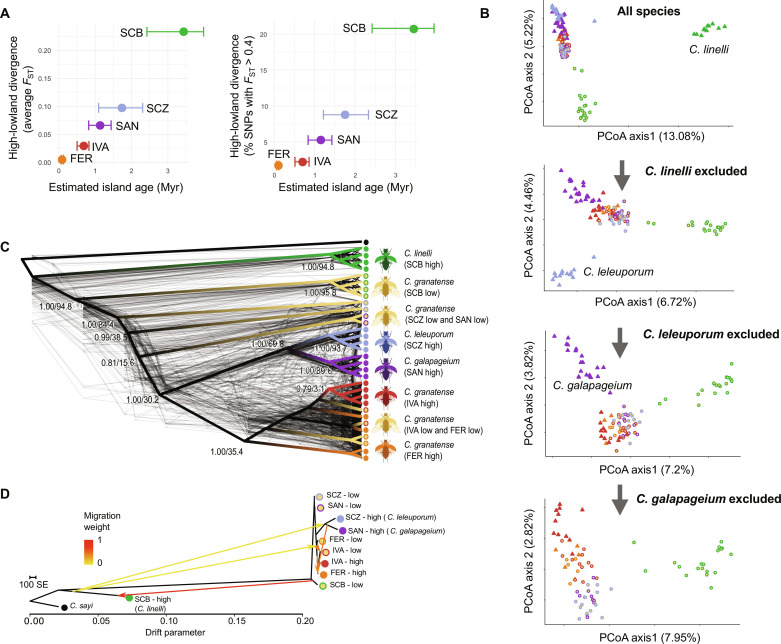
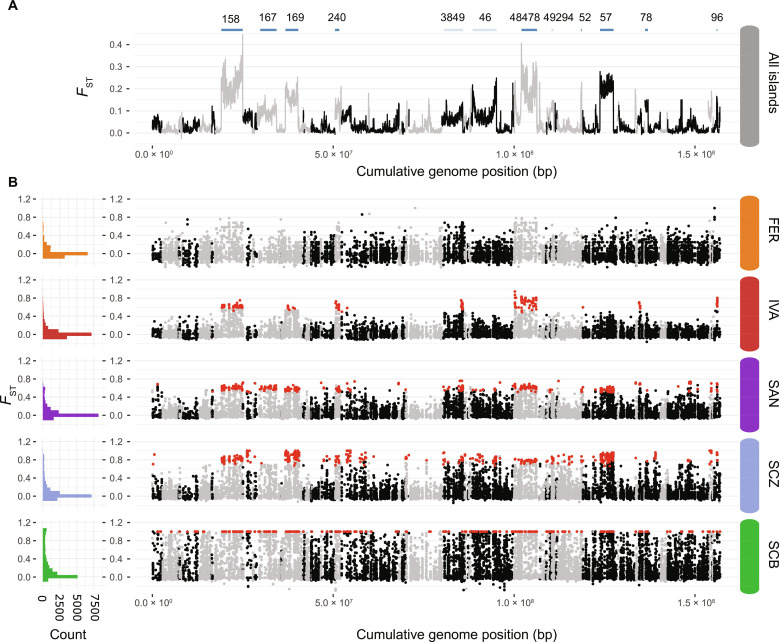
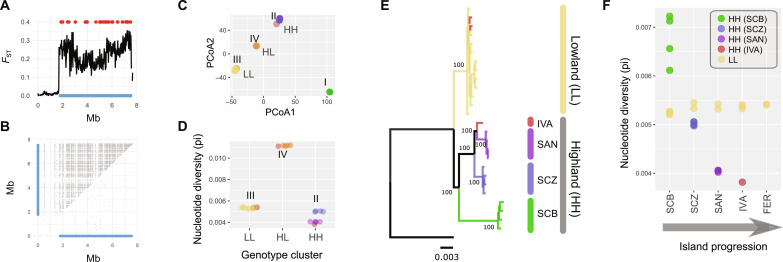
Island faunas exhibit some of the most iconic examples where similar forms repeatedly evolve within different islands. Yet, whether these deterministic evolutionary trajectories within islands are driven by an initial, singular divergence and the subsequent exchange of individuals and adaptive genetic variation between islands remains unclear. Here, we study a gradual, repeated evolution of low-dispersive highland ecotypes from a dispersive lowland ecotype of beetles along the island progression of the Galápagos. We show that repeated highland adaptation involved selection on multiple shared alleles within extensive chromosomal inversions that originated from an initial adaptation event on the oldest island. These highland inversions first spread through dispersal of highland individuals. Subsequent admixture with the lowland ecotype resulted in polymorphic dispersive populations from which the highland populations evolved on the youngest islands. Our findings emphasize the significance of an ancient divergence in driving repeated evolution and highlight how a mixed contribution of inter-island colonization and within-island evolution can shape parallel species communities.
岛屿动物群展示了一些最具代表性的例子,在这些例子中,相似的形态在不同的岛屿上反复进化。然而,这些岛屿内的确定性进化轨迹是由最初的单一分歧以及随后岛屿间个体和适应性遗传变异的交换驱动的,这一点仍不清楚。在这里,我们研究了加拉帕戈斯群岛上,从一个具有扩散能力的低地生态型向一个扩散能力较弱的高地生态型的逐渐、重复的进化。我们表明,多次高地适应涉及到在广泛的染色体倒位中对多个共享等位基因的选择,这些倒位是由最古老岛屿上的最初适应事件产生的。这些高地倒位首先通过高地个体的扩散传播。随后与低地生态型的混合导致了多态性的扩散种群,高地种群就是从这些种群中在最年轻的岛屿上进化而来的。我们的研究结果强调了古老分歧在推动重复进化中的重要性,并突出了岛屿间殖民化和岛内进化的混合贡献如何塑造平行的物种群落。