Directorate Taxonomy and Phylogeny, Royal Belgian Institute of Natural Sciences, Brussels, Belgium.
Terrestrial Ecology Unit, Biology Department, Ghent University, Ghent, Belgium.
PLoS Genet. 2018 Nov 13;14(11):e1007796. doi: 10.1371/journal.pgen.1007796. eCollection 2018 Nov.
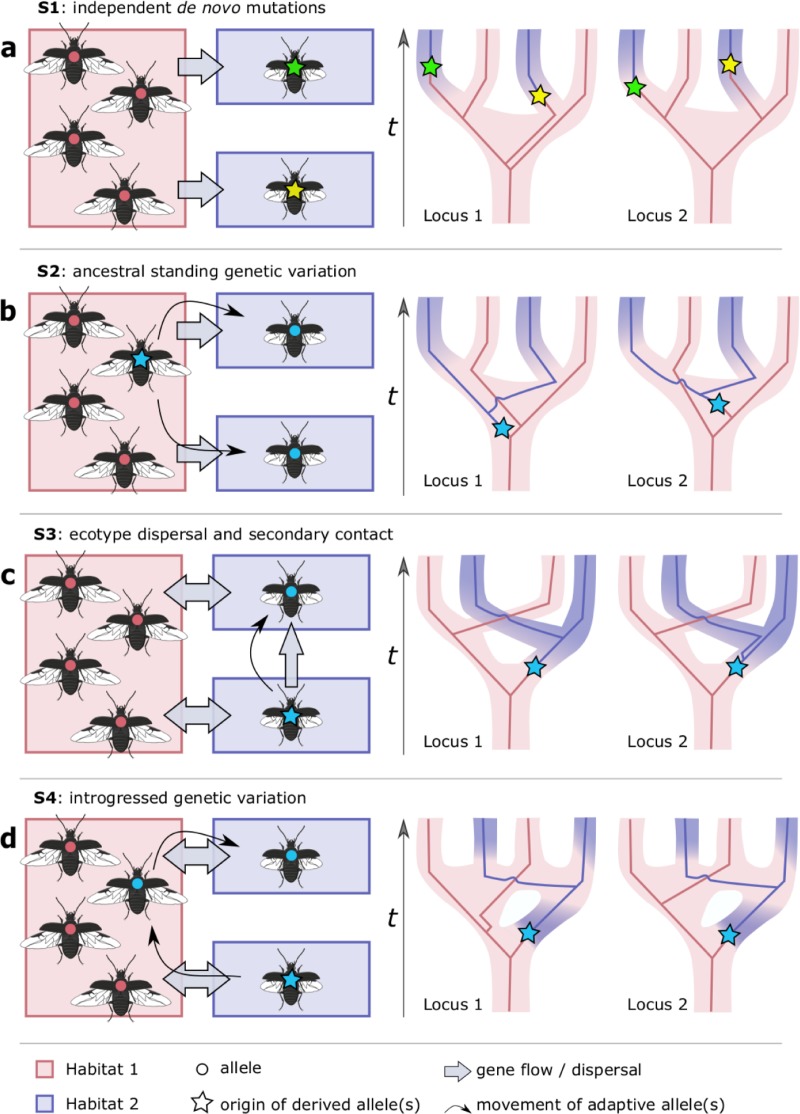
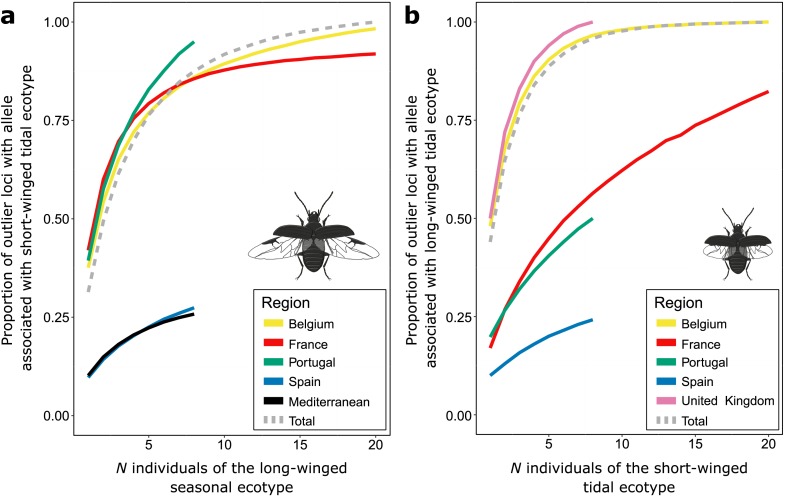
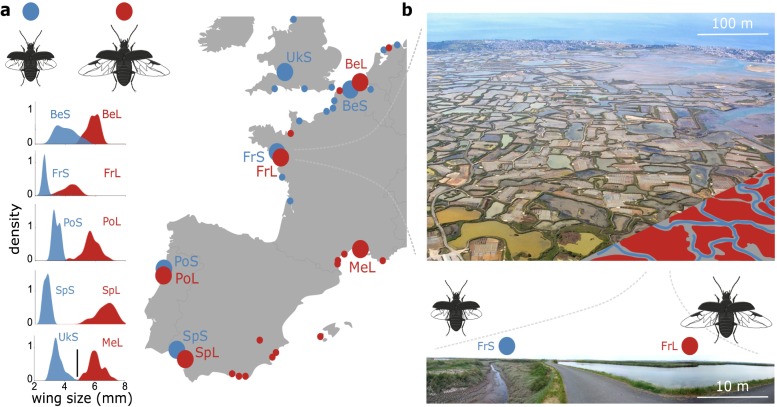
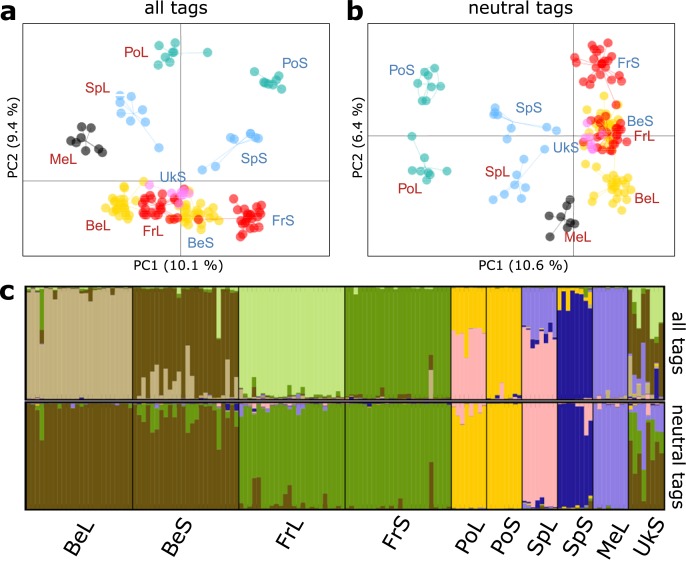
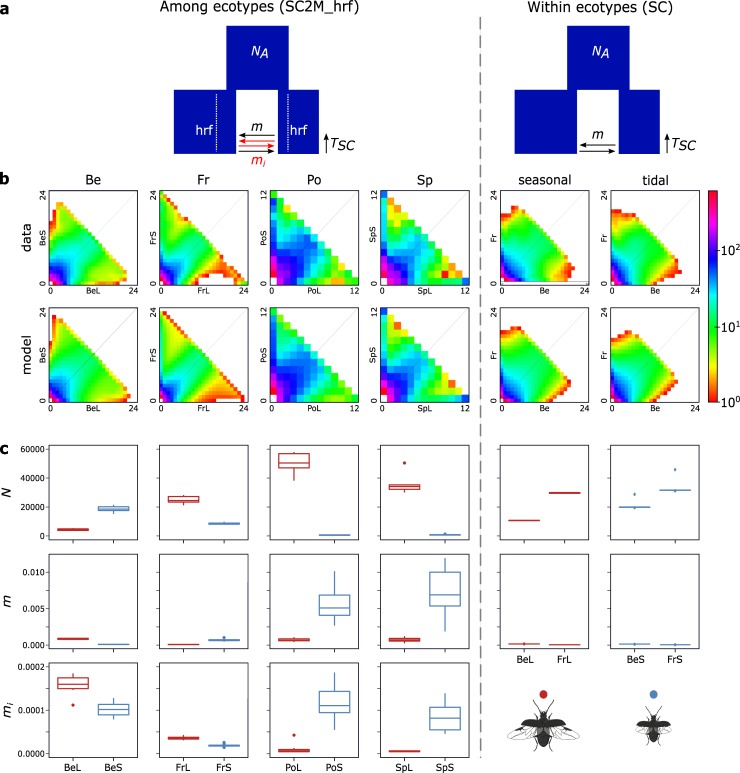
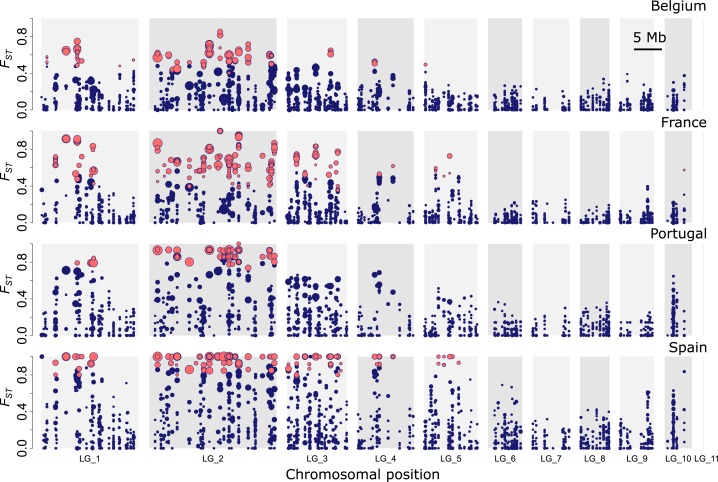
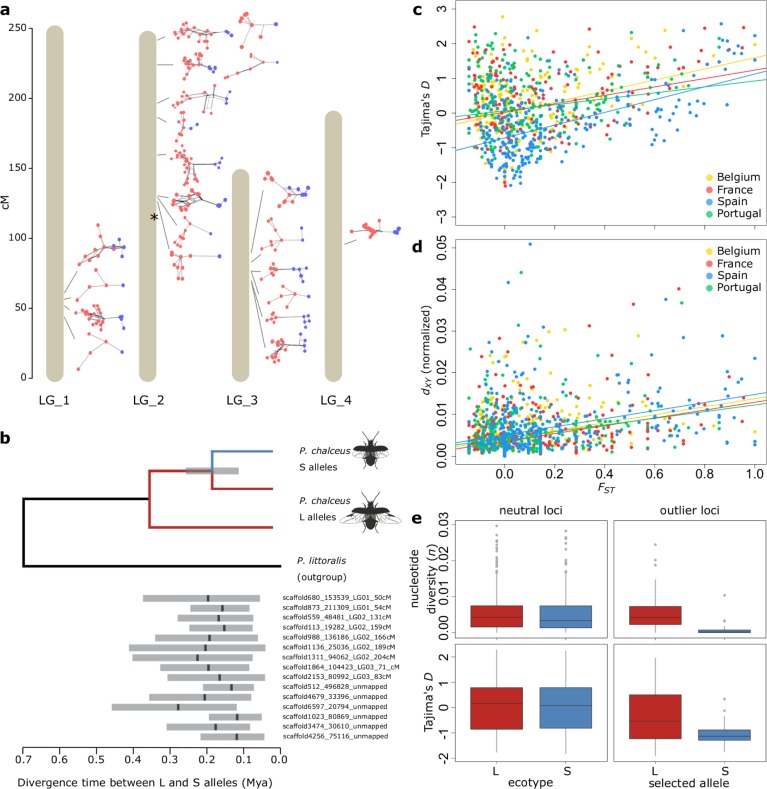
When environments change, populations may adapt surprisingly fast, repeatedly and even at microgeographic scales. There is increasing evidence that such cases of rapid parallel evolution are fueled by standing genetic variation, but the source of this genetic variation remains poorly understood. In the saltmarsh beetle Pogonus chalceus, short-winged 'tidal' and long-winged 'seasonal' ecotypes have diverged in response to contrasting hydrological regimes and can be repeatedly found along the Atlantic European coast. By analyzing genomic variation across the beetles' distribution, we reveal that alleles selected in the tidal ecotype are spread across the genome and evolved during a singular and, likely, geographically isolated divergence event, within the last 190 Kya. Due to subsequent admixture, the ancient and differentially selected alleles are currently polymorphic in most populations across its range, which could potentially allow for the fast evolution of one ecotype from a small number of random individuals, as low as 5 to 15, from a population of the other ecotype. Our results suggest that cases of fast parallel ecological divergence can be the result of evolution at two different time frames: divergence in the past, followed by repeated selection on the same divergently evolved alleles after admixture. These findings highlight the importance of an ancient and, likely, allopatric divergence event for driving the rate and direction of contemporary fast evolution under gene flow. This mechanism is potentially driven by periods of geographic isolation imposed by large-scale environmental changes such as glacial cycles.
当环境发生变化时,种群可能会出人意料地快速适应,这种情况会反复发生,甚至在微观地理尺度上也是如此。越来越多的证据表明,这种快速的平行进化是由遗传变异引起的,但这种遗传变异的来源仍不清楚。在盐沼甲虫 Pogonus chalceus 中,短翅的“潮汐”和长翅的“季节性”生态型已经分化,以适应截然不同的水文条件,可以在整个欧洲大西洋沿岸反复发现。通过分析甲虫分布的基因组变异,我们揭示了在潮汐生态型中选择的等位基因在基因组中广泛分布,并在过去 190 千年来发生了单一的、可能是地理隔离的分化事件中进化而来。由于随后的混合,古老的和差异选择的等位基因目前在其分布范围内的大多数种群中都是多态的,这可能允许一个生态型从另一个生态型的一小部分随机个体中快速进化,数量低至 5 到 15 个。我们的研究结果表明,快速的平行生态分化案例可能是过去进化的结果,然后在混合后对同一进化分歧的等位基因进行重复选择。这些发现强调了古老的、可能是异域分化事件对在基因流条件下驱动当代快速进化的速度和方向的重要性。这种机制可能是由大规模环境变化(如冰川周期)引起的地理隔离期驱动的。