Modarresi Chahardehi Amir, Afrooghe Arya, Emtiazi Nikoo, Rafiei Sajjad, Rezaei Negin Jafarkhanloo, Dahmardeh Sarvin, Farz Fatemeh, Naderi Zahra, Arefnezhad Reza, Motedayyen Hossein
Kimia Andisheh Teb Medical and Molecular Research Laboratory Co., Tehran, Iran.
School of Medicine, Tehran University of Medical Sciences, Tehran, Iran.
Front Oncol. 2024 May 17;14:1385632. doi: 10.3389/fonc.2024.1385632. eCollection 2024.
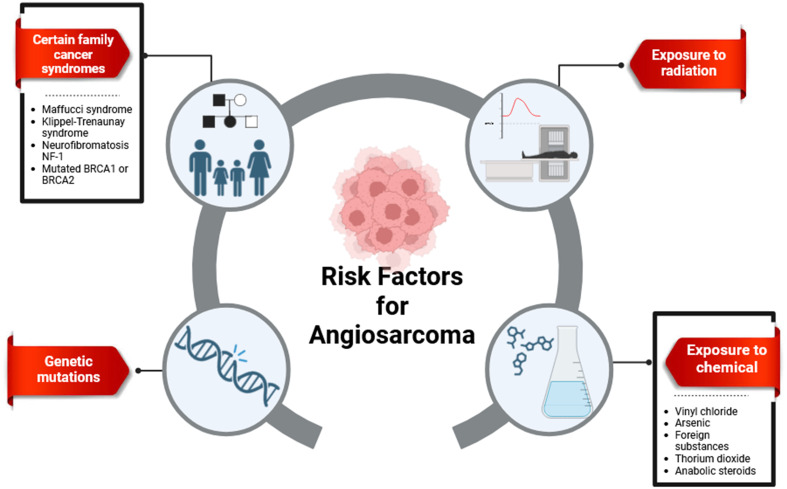
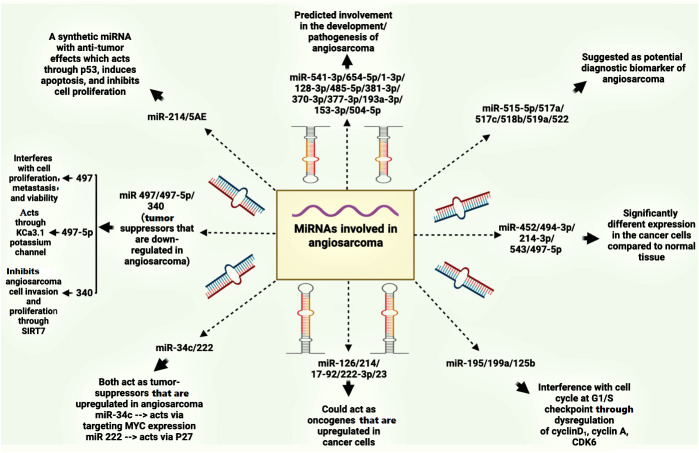
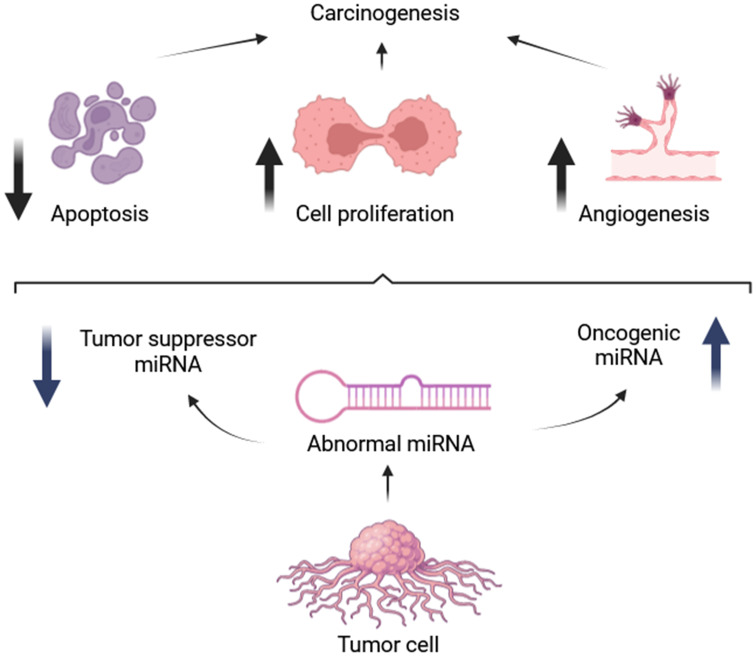
In recent years, microRNAs (miRNAs) have garnered increasing attention for their potential implications in cancer pathogenesis, functioning either as oncogenes or tumor suppressors. Notably, angiosarcoma, along with various other cardiovascular tumors such as lipomas, rhabdomyomas, hemangiomas, and myxomas, has shown variations in the expression of specific miRNA subtypes. A substantial body of evidence underscores the pivotal involvement of miRNAs in the genesis of angiosarcoma and certain cardiovascular tumors. This review aims to delve into the current literature on miRNAs and their prospective applications in cardiovascular malignancies, with a specific focus on angiosarcoma. It comprehensively covers diagnostic methods, prognostic evaluations, and potential treatments while providing a recapitulation of angiosarcoma's risk factors and molecular pathogenesis, with an emphasis on the role of miRNAs. These insights can serve as the groundwork for designing randomized control trials, ultimately facilitating the translation of these findings into clinical applications. Moving forward, it is imperative for studies to thoroughly scrutinize the advantages and disadvantages of miRNAs compared to current diagnostic and prognostic approaches in angiosarcoma and other cardiovascular tumors. Closing these knowledge gaps will be crucial for harnessing the full potential of miRNAs in the realm of angiosarcoma and cardiovascular tumor research.
近年来,微小RNA(miRNA)因其在癌症发病机制中的潜在影响而受到越来越多的关注,它们既可以作为癌基因,也可以作为肿瘤抑制因子发挥作用。值得注意的是,血管肉瘤以及其他各种心血管肿瘤,如脂肪瘤、横纹肌瘤、血管瘤和黏液瘤,都显示出特定miRNA亚型表达的变化。大量证据强调了miRNA在血管肉瘤和某些心血管肿瘤发生过程中的关键作用。本综述旨在深入探讨有关miRNA的现有文献及其在心血管恶性肿瘤中的潜在应用,特别关注血管肉瘤。它全面涵盖了诊断方法、预后评估和潜在治疗方法,同时概述了血管肉瘤的危险因素和分子发病机制,重点强调了miRNA的作用。这些见解可为设计随机对照试验奠定基础,最终促进将这些研究结果转化为临床应用。展望未来,研究必须彻底审视与血管肉瘤和其他心血管肿瘤当前诊断和预后方法相比,miRNA的优缺点。弥合这些知识差距对于在血管肉瘤和心血管肿瘤研究领域充分发挥miRNA的潜力至关重要。