Instituto de Recursos Naturales y Agrobiologia, IRNAS-CSIC, 41012, Sevilla, Spain.
Departamento de Biologia y Geologia, Universidad de Almeria, 04120, Almeria, Spain.
Microb Ecol. 2024 Jun 3;87(1):80. doi: 10.1007/s00248-024-02395-y.
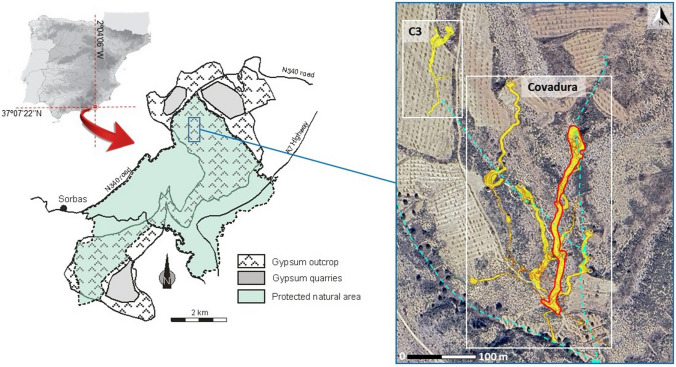
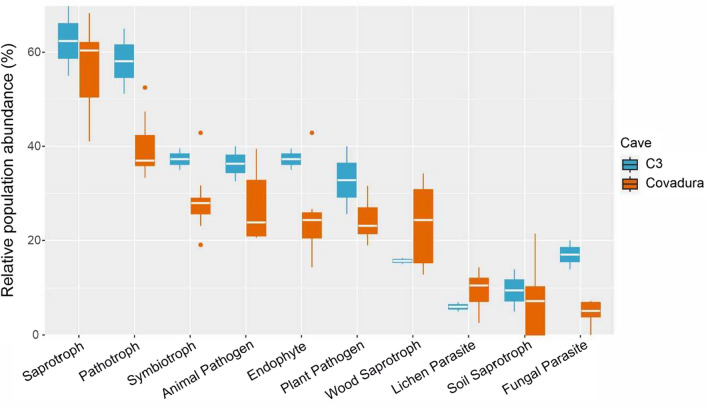
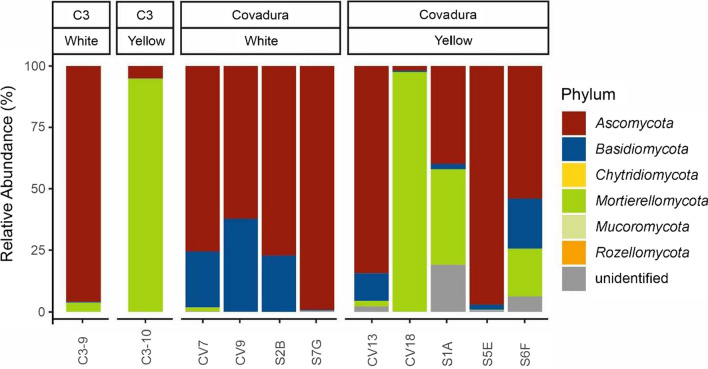
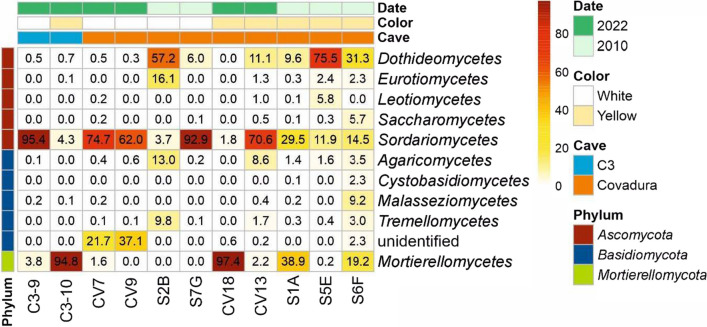
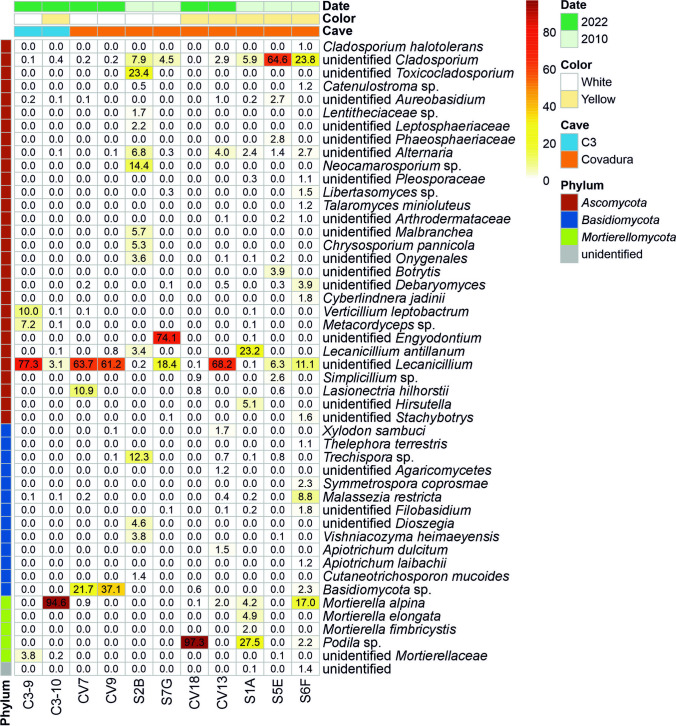
The Gypsum Karst of Sorbas, Almeria, southeast Spain, includes a few caves whose entrances are open and allow the entry and roosting of numerous bats. Caves are characterized by their diversity of gypsum speleothems, such as stalactites, coralloids, gypsum crusts, etc. Colored biofilms can be observed on the walls of most caves, among which the Covadura and C3 caves were studied. The objective was to determine the influence that bat mycobiomes may have on the fungal communities of biofilms. The results indicate that the fungi retrieved from white and yellow biofilms in Covadura Cave (Ascomycota, Mortierellomycota, Basidiomycota) showed a wide diversity, depending on their location, and were highly influenced by the bat population, the guano and the arthropods that thrive in the guano, while C3 Cave was more strongly influenced by soil- and arthropod-related fungi (Ascomycota, Mortierellomycota), due to the absence of roosting bats.
西班牙东南部阿尔梅里亚的索布拉尔石膏喀斯特地貌包含一些洞穴,其入口是敞开的,允许大量蝙蝠进入和栖息。洞穴的特点是其石膏溶洞标本的多样性,如钟乳石、珊瑚状、石膏壳等。在大多数洞穴的墙壁上都可以观察到有色生物膜,其中 Covadura 和 C3 洞穴被进行了研究。目的是确定蝙蝠微生物群可能对生物膜真菌群落的影响。结果表明,从 Covadura 洞穴中的白色和黄色生物膜中提取的真菌(子囊菌门、毛霉门、担子菌门)表现出广泛的多样性,这取决于它们的位置,并受到蝙蝠种群、鸟粪和在鸟粪中大量繁殖的节肢动物的高度影响,而 C3 洞穴则更多地受到与土壤和节肢动物相关的真菌(子囊菌门、毛霉门)的影响,这是由于没有栖息的蝙蝠。