Guo Xiaohuan, Zhang Yu, Peng Lina, Wang Yaling, He Cheng-Wen, Li Kaixuan, Hao Ke, Li Kaiqiang, Wang Zhen, Huang Haishan, Miao Xiaolin
School of Laboratory Medicine and Life Sciences, Wenzhou Medical University, Wenzhou, 325035, China.
Department of Gastroenterology, Zhejiang Provincial People's Hospital (Affiliated People's Hospital), Hangzhou Medical College, Hangzhou, 310014, China.
Heliyon. 2024 May 22;10(11):e31695. doi: 10.1016/j.heliyon.2024.e31695. eCollection 2024 Jun 15.
In this study, we aimed to determine whether proly4-hydroxylase-III (P4HA3) could be used as a biomarker for the diagnosis of colorectal cancer (CRC) as well as for determining prognosis.
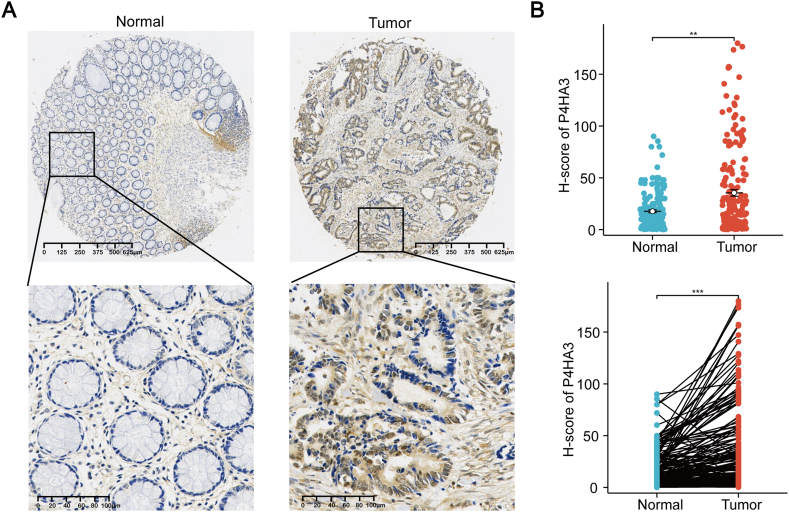
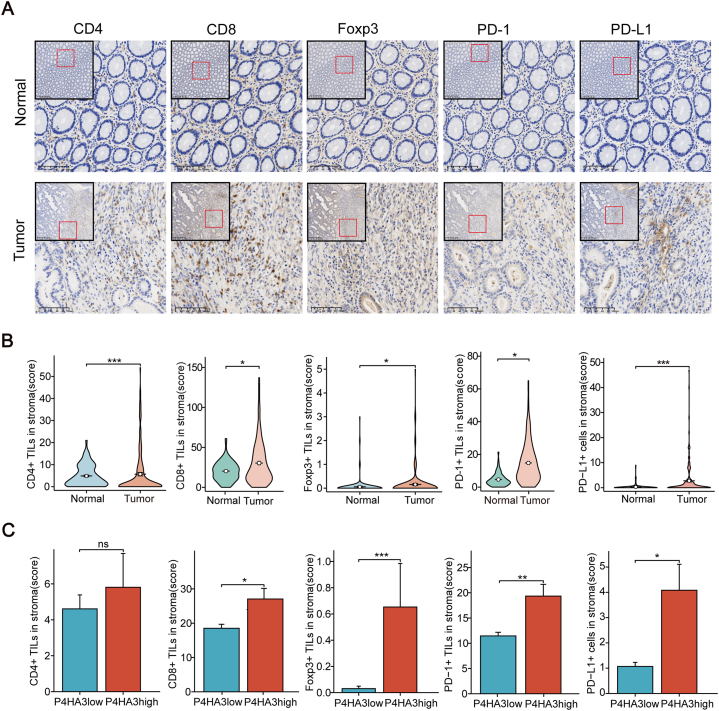
We used The Cancer Genome Atlas (TCGA) database to analyze P4HA3 expression in CRC and further investigated the association between P4HA3 and clinicopathological parameters, immune infiltration, and prognosis of patients with CRC. Enrichment analysis was conducted to investigate the potential biological role of P4HA3 in CRC. To verify the results of TCGA analysis, we performed immunohistochemical staining of 180 clinical CRC tissue samples to probe into the relationship of P4HA3 expression with lymphocyte infiltration and immune checkpoints expression.
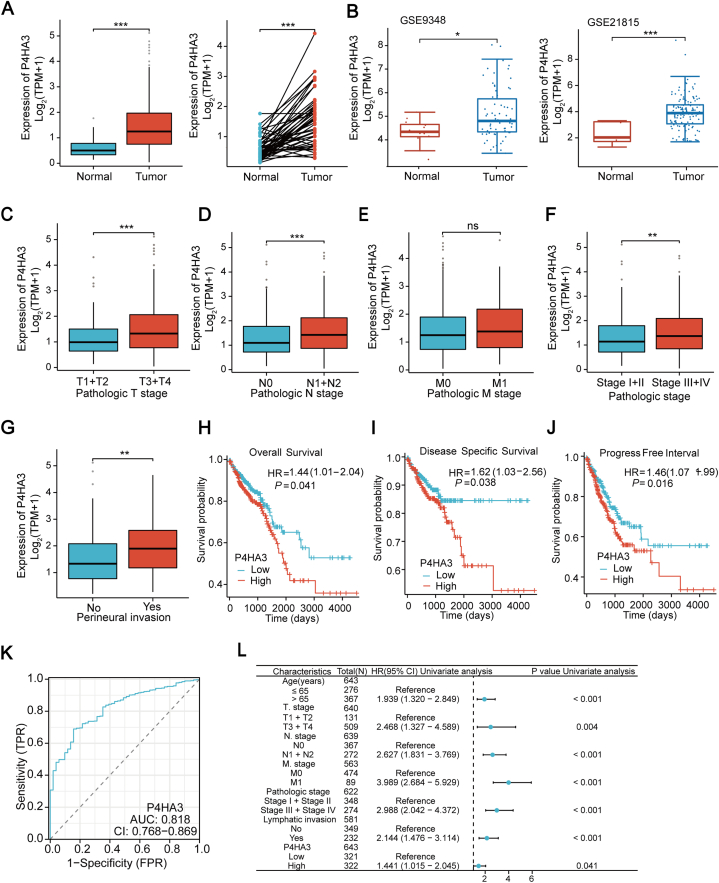
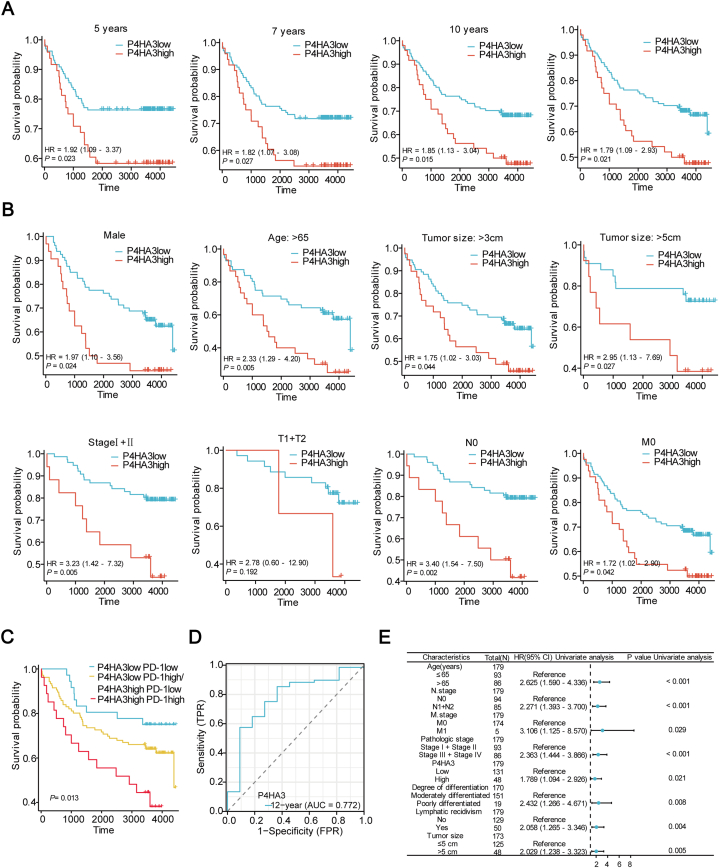
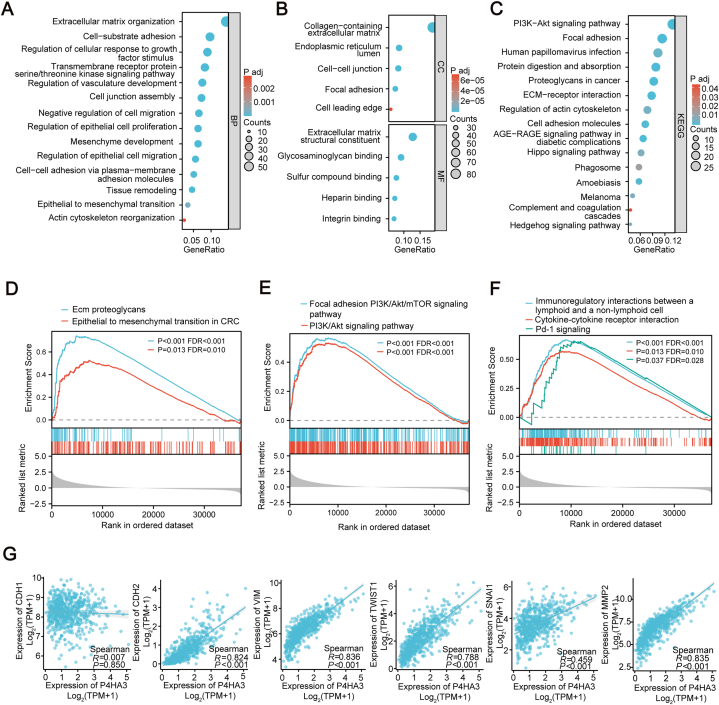
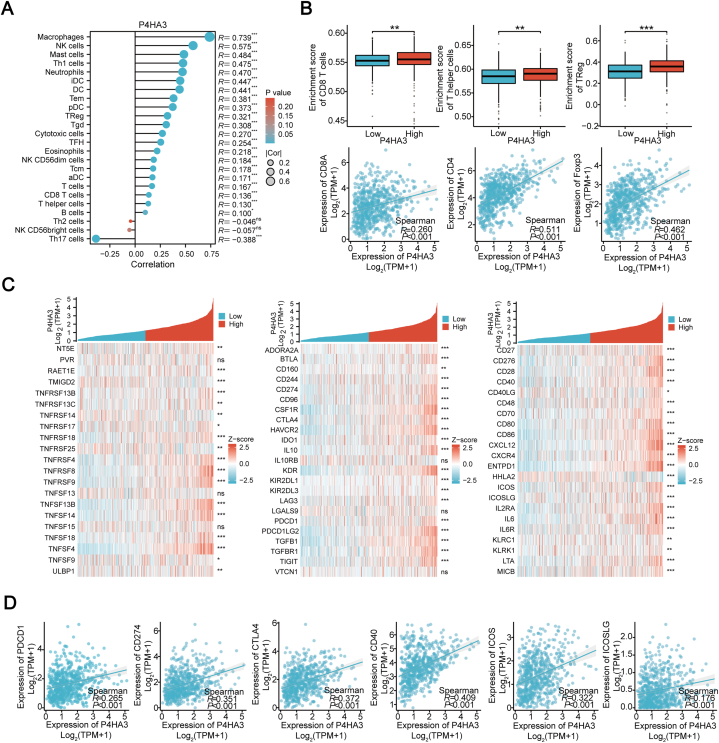
The expression of P4HA3 was significantly higher in CRC tissues and associated with a higher degree of malignancy and poorer prognosis in CRC. The results of enrichment analysis indicated that P4HA3 may be associated with the epithelial-mesenchymal transition process and the immune response. Immunohistochemical staining results showed that high P4HA3 expression was associated with high infiltration levels of CD8 and Foxp3+ TILs and high PD-1/PD- L1 expression. Lastly, patients with CRC co-expressing P4HA3 and PD-1 had a significantly worse prognosis.
High expression of P4HA3 is associated with adverse clinical features and immune cell infiltration in CRC, and has the potential to serve as a biomarker for predicting CRC prognosis.
在本研究中,我们旨在确定脯氨酰4-羟化酶III(P4HA3)是否可作为诊断结直肠癌(CRC)以及判断预后的生物标志物。
我们使用癌症基因组图谱(TCGA)数据库分析CRC中P4HA3的表达,并进一步研究P4HA3与CRC患者的临床病理参数、免疫浸润和预后之间的关联。进行富集分析以研究P4HA3在CRC中的潜在生物学作用。为了验证TCGA分析的结果,我们对180例临床CRC组织样本进行免疫组织化学染色,以探究P4HA3表达与淋巴细胞浸润及免疫检查点表达之间的关系。
P4HA3在CRC组织中的表达显著更高,且与CRC的更高恶性程度和更差预后相关。富集分析结果表明,P4HA3可能与上皮-间质转化过程和免疫反应有关。免疫组织化学染色结果显示,P4HA3高表达与CD8和Foxp3 +肿瘤浸润淋巴细胞(TILs)的高浸润水平以及高PD-1/PD-L1表达相关。最后,共表达P4HA3和PD-1的CRC患者预后明显更差。
P4HA3的高表达与CRC的不良临床特征和免疫细胞浸润相关,并且有潜力作为预测CRC预后的生物标志物。