Department of Tumor Pathology, Hamamatsu University School of Medicine, Hamamatsu, Japan.
Second Division, Department of Internal Medicine, Hamamatsu University School of Medicine, Hamamatsu, Japan.
Oncoimmunology. 2021 Aug 10;10(1):1962656. doi: 10.1080/2162402X.2021.1962656. eCollection 2021.
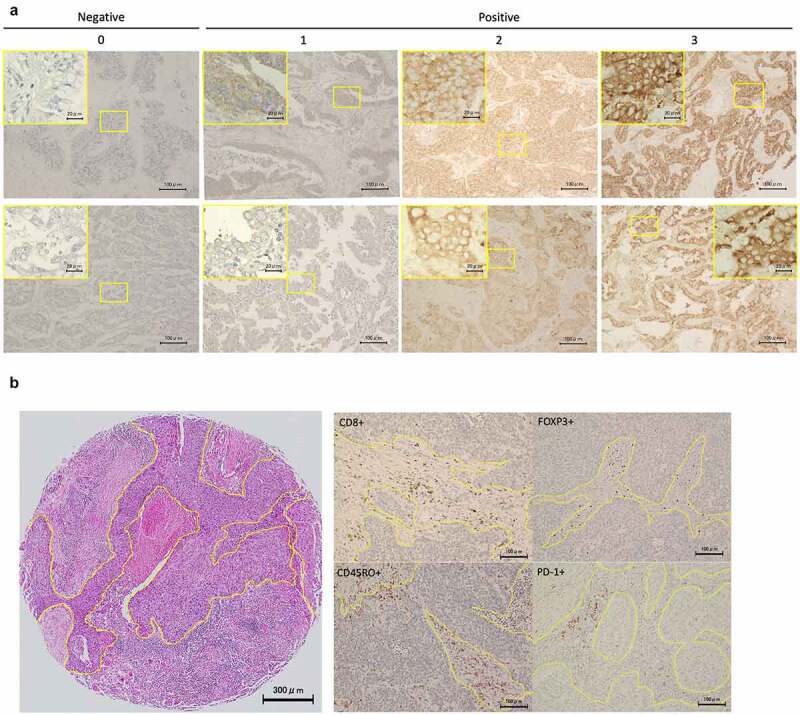
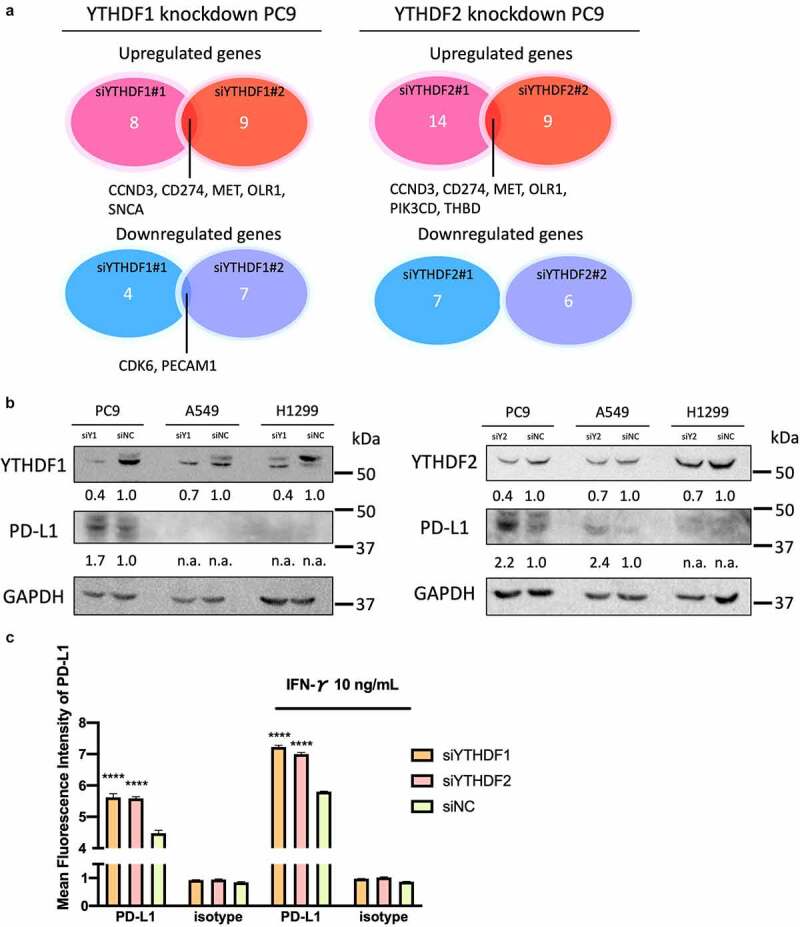
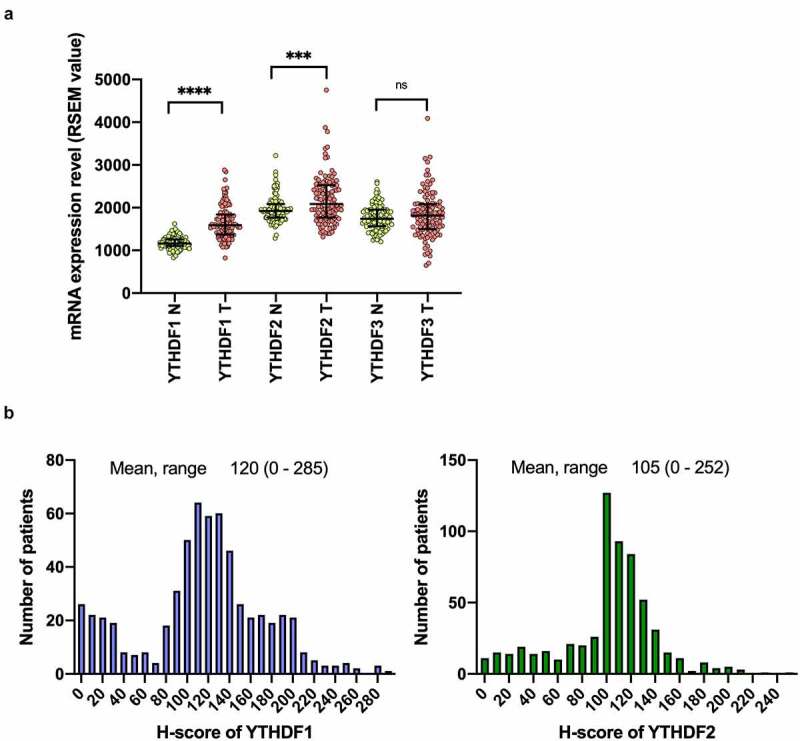
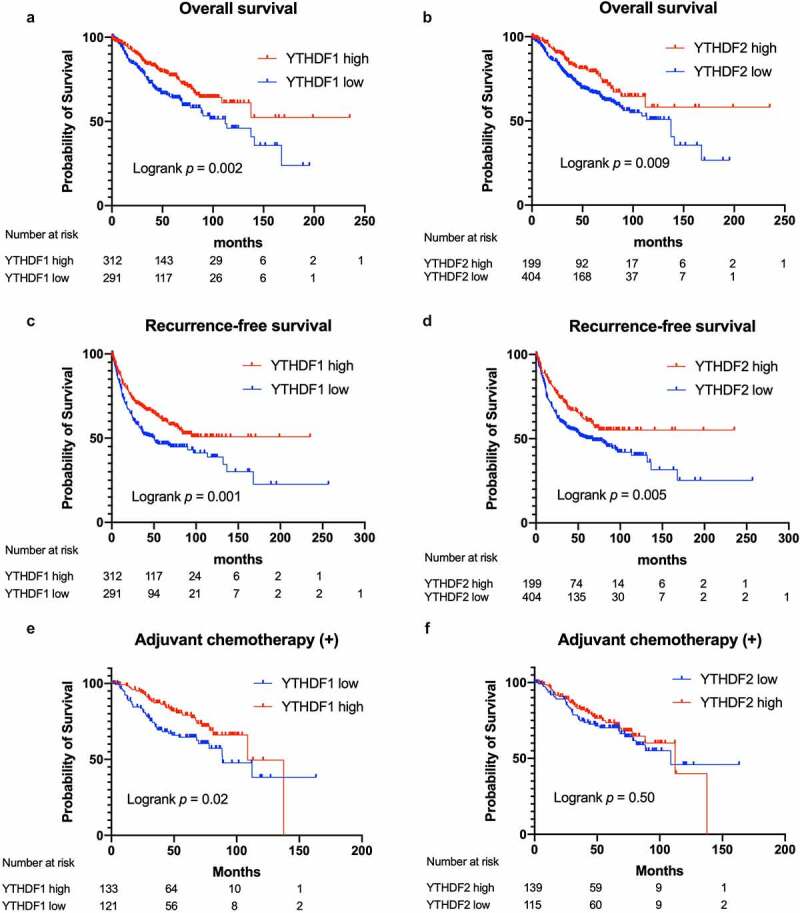
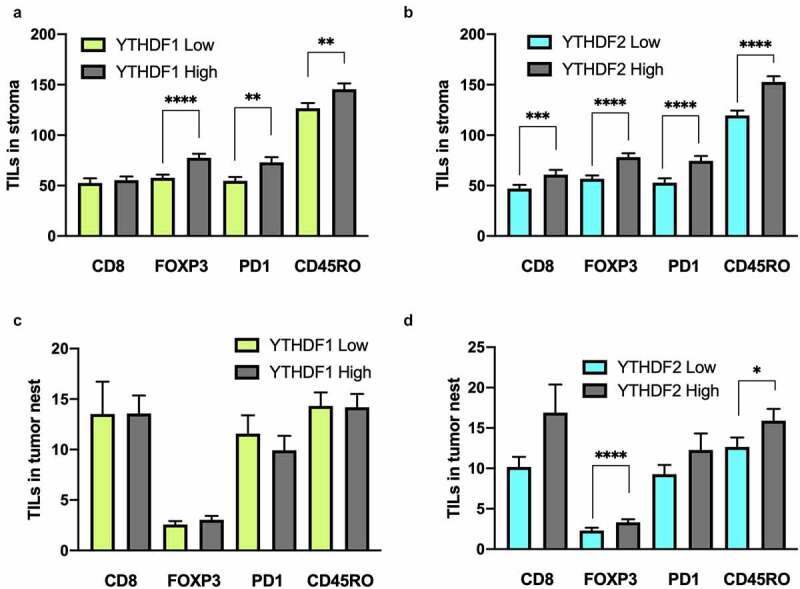
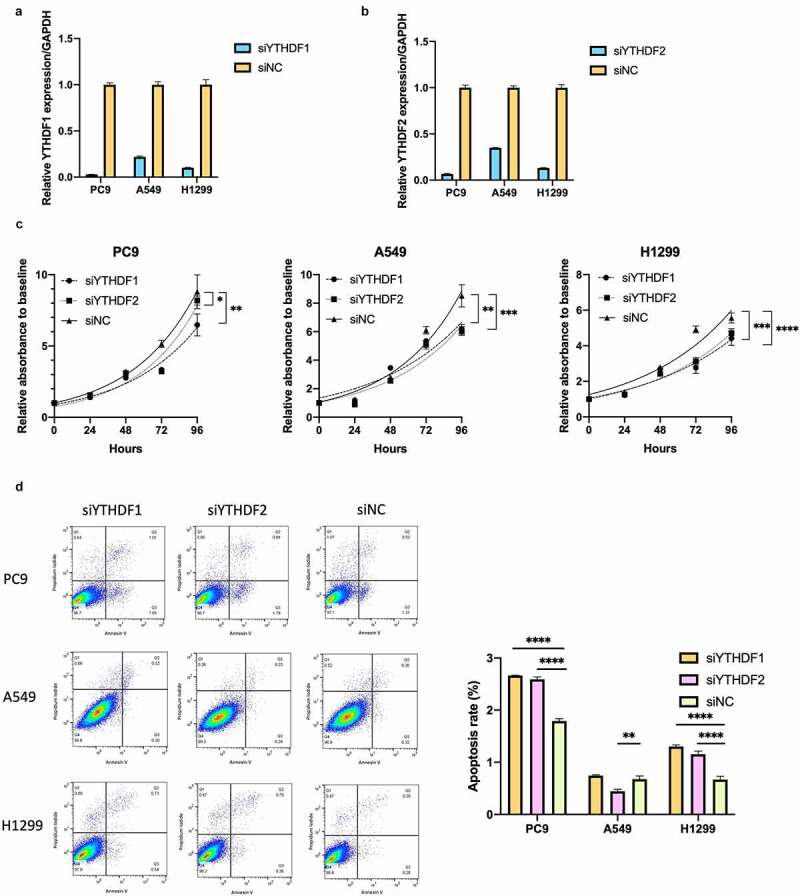
The human YTH domain family (YTHDF) proteins are RNA-binding proteins that recognize N6-methyladenosine (m6A), facilitating various biological processes via m6A RNA modification. How these molecules associate with non-small-cell lung cancer (NSCLC) molecular mechanisms remain unclear. The protein expression levels of YTHDF1 and YTHDF2 in 603 cases of resected NSCLC were evaluated using immunohistochemistry. We analyzed the associations of these attributes with patient characteristics and survival. We also assessed four subsets of lymphocytes (PD-1+, CD8+, Foxp3+, and CD45RO+) as tumor-infiltrating lymphocytes (TILs) in the tumor nest and in the surrounding stroma separately. In addition, we investigated differentially expressed genes and the expression of PD-L1 in YTHDF1- and YTHDF2-deprived lung cancer cells. The expressions of both YTHDF1 and YTHDF2 were less in the advanced-stage tumors than in the early-stage tumors. The expressions of both YTHDF1 and YTHDF2 were also independent favorable prognostic factors for recurrence-free survival (HR, 0.745; 95% CI, 0.562-0.984 for YTHDF1; HR, 0.683; 95% CI, 0.503-0.928 for YTHDF2). The TIL densities of almost all four lymphocyte subsets in the stroma were significantly higher in the tumors with high YTHDF1 and YTHDF2 expression. In vitro, YTHDF1 and YTHDF2 knockdown in cells upregulated tumor PD-L1 expression and altered multiple immune-related genes. High expressions of both YTHDF1 and YTHDF2 are associated with a favorable prognostic outcome of NSCLC patients, a greater amount of TILs, and downregulation of PD-L1. YTHDF1 and YTHDF2 could be novel prognostic and druggable targets related to the tumor-immune microenvironment in lung cancers.
人类 YTH 结构域家族(YTHDF)蛋白是 RNA 结合蛋白,可识别 N6-甲基腺苷(m6A),通过 m6A RNA 修饰促进各种生物学过程。这些分子如何与非小细胞肺癌(NSCLC)分子机制相关联尚不清楚。使用免疫组织化学评估了 603 例 NSCLC 切除标本中 YTHDF1 和 YTHDF2 的蛋白表达水平。我们分析了这些属性与患者特征和生存的关联。我们还分别评估了肿瘤巢和周围基质中四种淋巴细胞亚群(PD-1+、CD8+、Foxp3+和 CD45RO+)作为肿瘤浸润淋巴细胞(TIL)。此外,我们研究了 YTHDF1 和 YTHDF2 剥夺的肺癌细胞中差异表达的基因和 PD-L1 的表达。晚期肿瘤中 YTHDF1 和 YTHDF2 的表达均低于早期肿瘤。YTHDF1 和 YTHDF2 的表达均是无复发生存的独立有利预后因素(HR,0.745;95%CI,0.562-0.984 用于 YTHDF1;HR,0.683;95%CI,0.503-0.928 用于 YTHDF2)。高 YTHDF1 和 YTHDF2 表达的肿瘤中,基质中几乎所有四种淋巴细胞亚群的 TIL 密度均显着更高。在体外,细胞中 YTHDF1 和 YTHDF2 的敲低上调了肿瘤 PD-L1 的表达并改变了多个免疫相关基因。YTHDF1 和 YTHDF2 的高表达与 NSCLC 患者的有利预后结果、更多的 TIL 和 PD-L1 的下调相关。YTHDF1 和 YTHDF2 可能是与肺癌肿瘤免疫微环境相关的新型预后和可用药靶标。