Biotechnology Research Innovation Council-National Institute of Biomedical Genomics, Kalyani 741251, West Bengal, India.
Biostatistics Division, Global Capability Center, GlaxoSmithKline India Global Service Private Limited, Bangalore 560037, India.
Proc Natl Acad Sci U S A. 2024 Jun 11;121(24):e2404364121. doi: 10.1073/pnas.2404364121. Epub 2024 Jun 4.
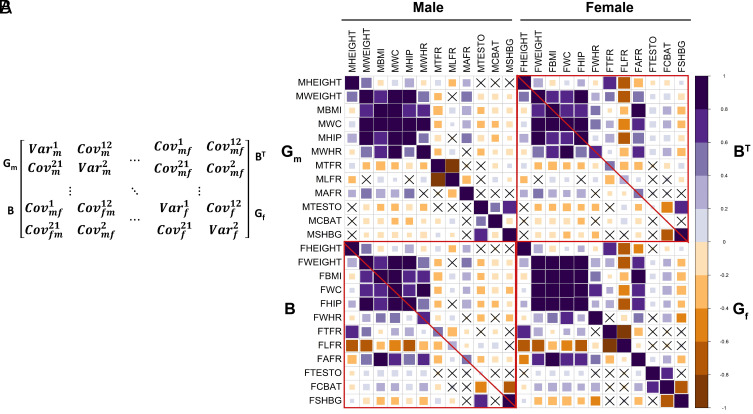
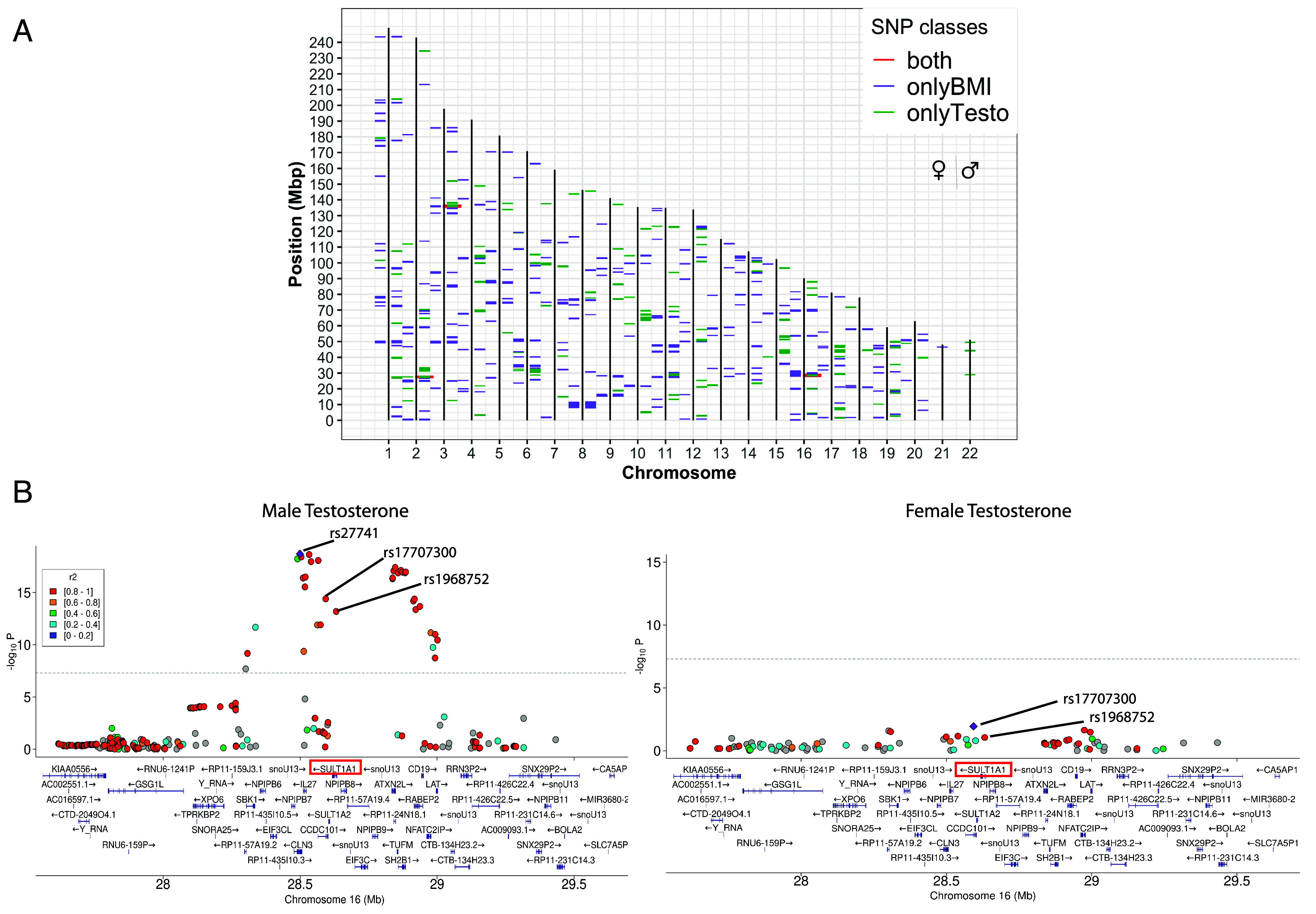
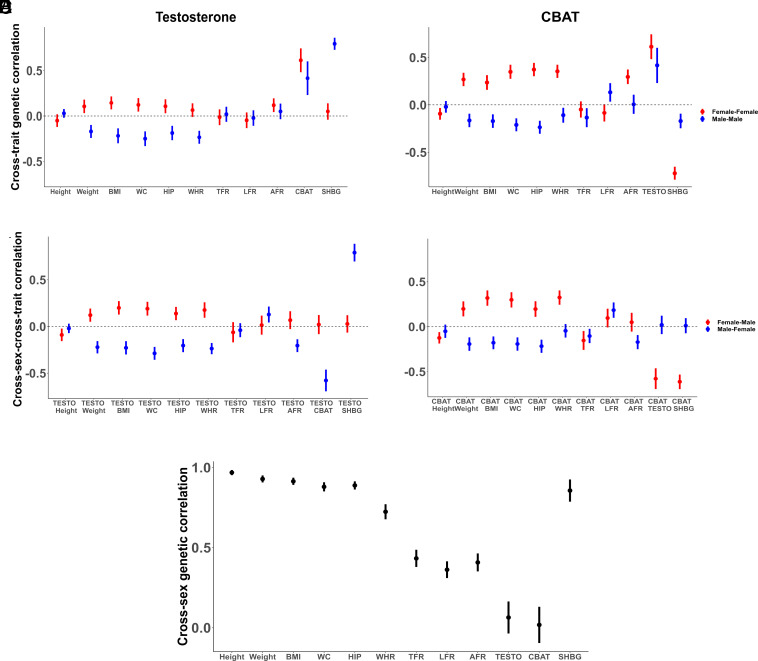
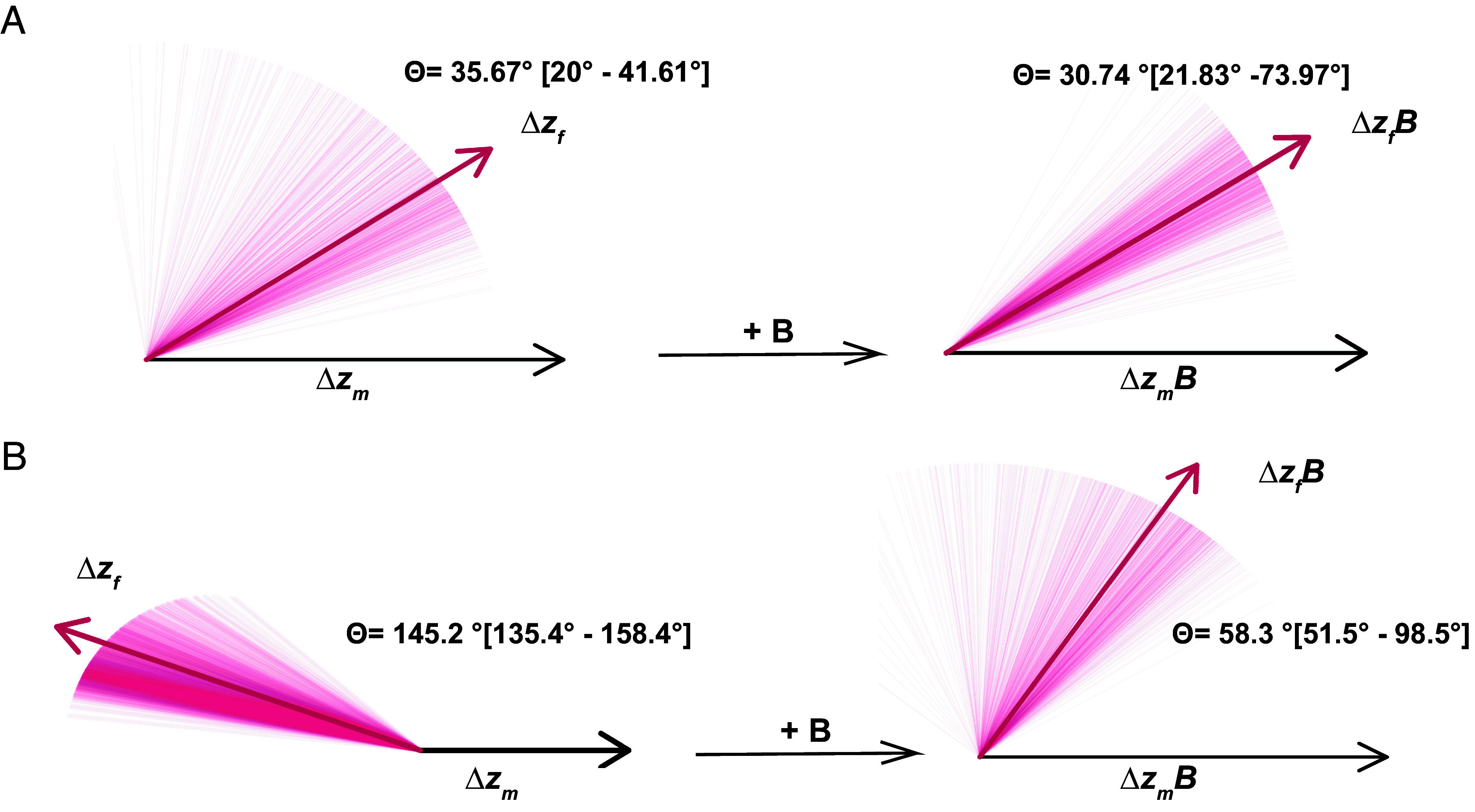
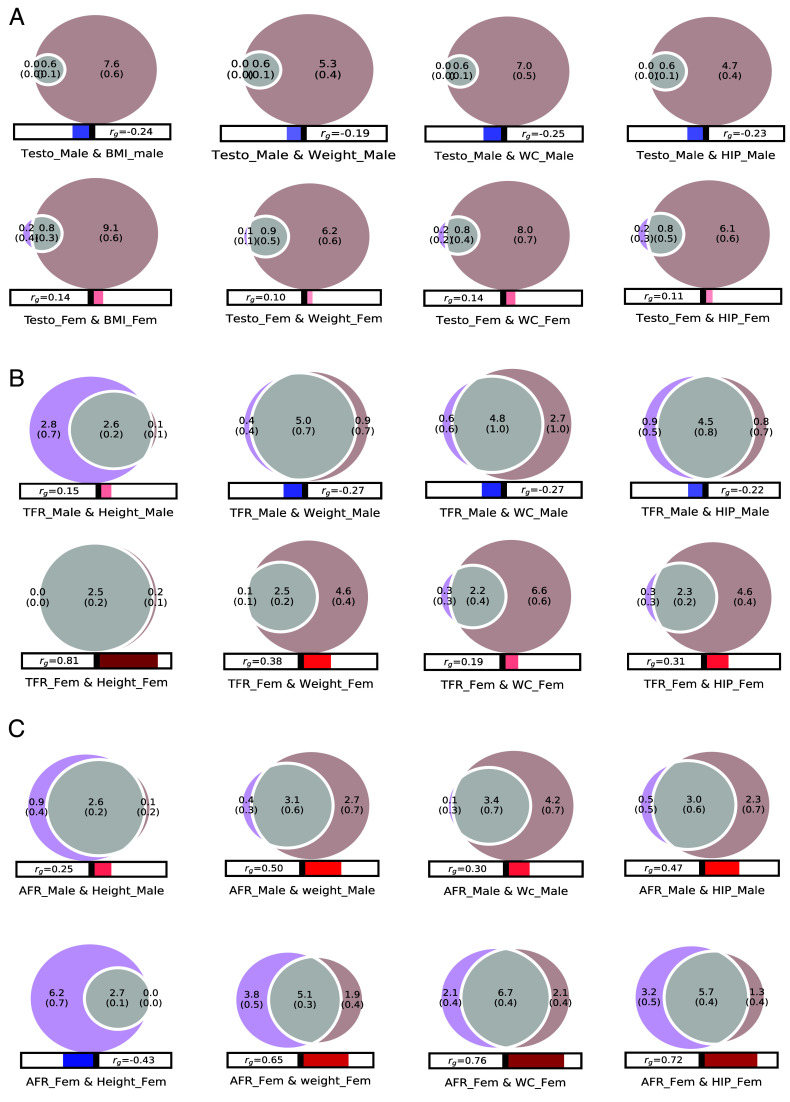
Sex difference (SD) is ubiquitous in humans despite shared genetic architecture (SGA) between the sexes. A univariate approach, i.e., studying SD in single traits by estimating genetic correlation, does not provide a complete biological overview, because traits are not independent and are genetically correlated. The multivariate genetic architecture between the sexes can be summarized by estimating the additive genetic (co)variance across shared traits, which, apart from the cross-trait and cross-sex covariances, also includes the cross-sex-cross-trait covariances, e.g., between height in males and weight in females. Using such a multivariate approach, we investigated SD in the genetic architecture of 12 anthropometric, fat depositional, and sex-hormonal phenotypes. We uncovered sexual antagonism (SA) in the cross-sex-cross-trait covariances in humans, most prominently between testosterone and the anthropometric traits - a trend similar to phenotypic correlations. 27% of such cross-sex-cross-trait covariances were of opposite sign, contributing to asymmetry in the SGA. Intriguingly, using multivariate evolutionary simulations, we observed that the SGA acts as a genetic constraint to the evolution of SD in humans only when selection is sexually antagonistic and not concordant. Remarkably, we found that the lifetime reproductive success in both the sexes shows a positive genetic correlation with anthropometric traits, but not with testosterone. Moreover, we demonstrated that genetic variance is depleted along multivariate trait combinations in both the sexes but in different directions, suggesting absolute genetic constraint to evolution. Our results indicate that testosterone drives SA in contemporary humans and emphasize the necessity and significance of using a multivariate framework in studying SD.
尽管男女之间存在共享的遗传结构 (SGA),但性别差异 (SD) 在人类中普遍存在。单变量方法,即通过估计遗传相关性来研究单一特征的 SD,不能提供完整的生物学概述,因为特征不是独立的,并且具有遗传相关性。可以通过估计共享特征之间的加性遗传(协)方差来总结男女之间的多变量遗传结构,除了跨特征和跨性别协方差外,还包括跨性别-跨特征协方差,例如,男性身高与女性体重之间的协方差。使用这种多变量方法,我们研究了 12 个人体测量、脂肪沉积和性激素表型的遗传结构中的 SD。我们在人类中发现了跨性别-跨特征协方差中的性拮抗 (SA),最明显的是在睾酮和人体测量特征之间——这种趋势类似于表型相关性。这种跨性别-跨特征协方差中有 27%的协方差具有相反的符号,导致 SGA 的不对称性。有趣的是,使用多变量进化模拟,我们观察到只有当选择具有性拮抗作用而不是一致性时,SGA 才会成为人类 SD 进化的遗传限制。值得注意的是,我们发现两性的终生生殖成功率与人体测量特征呈正遗传相关,但与睾酮无关。此外,我们证明了遗传方差沿着两性的多变量特征组合耗散,但方向不同,这表明对进化的绝对遗传限制。我们的研究结果表明,睾酮驱动了当代人类中的 SA,并强调了在研究 SD 时使用多变量框架的必要性和重要性。