Institute of Health and Wellbeing, University of Glasgow, Glasgow, Scotland, United Kingdom.
Division of Psychiatry, University of Edinburgh, Edinburgh, Scotland, United Kingdom.
PLoS Genet. 2021 Apr 8;17(4):e1009428. doi: 10.1371/journal.pgen.1009428. eCollection 2021 Apr.
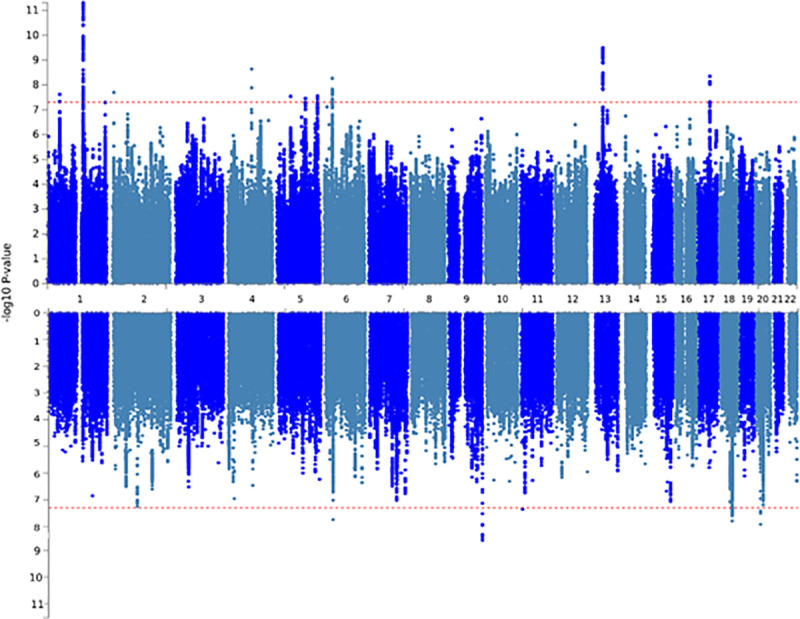
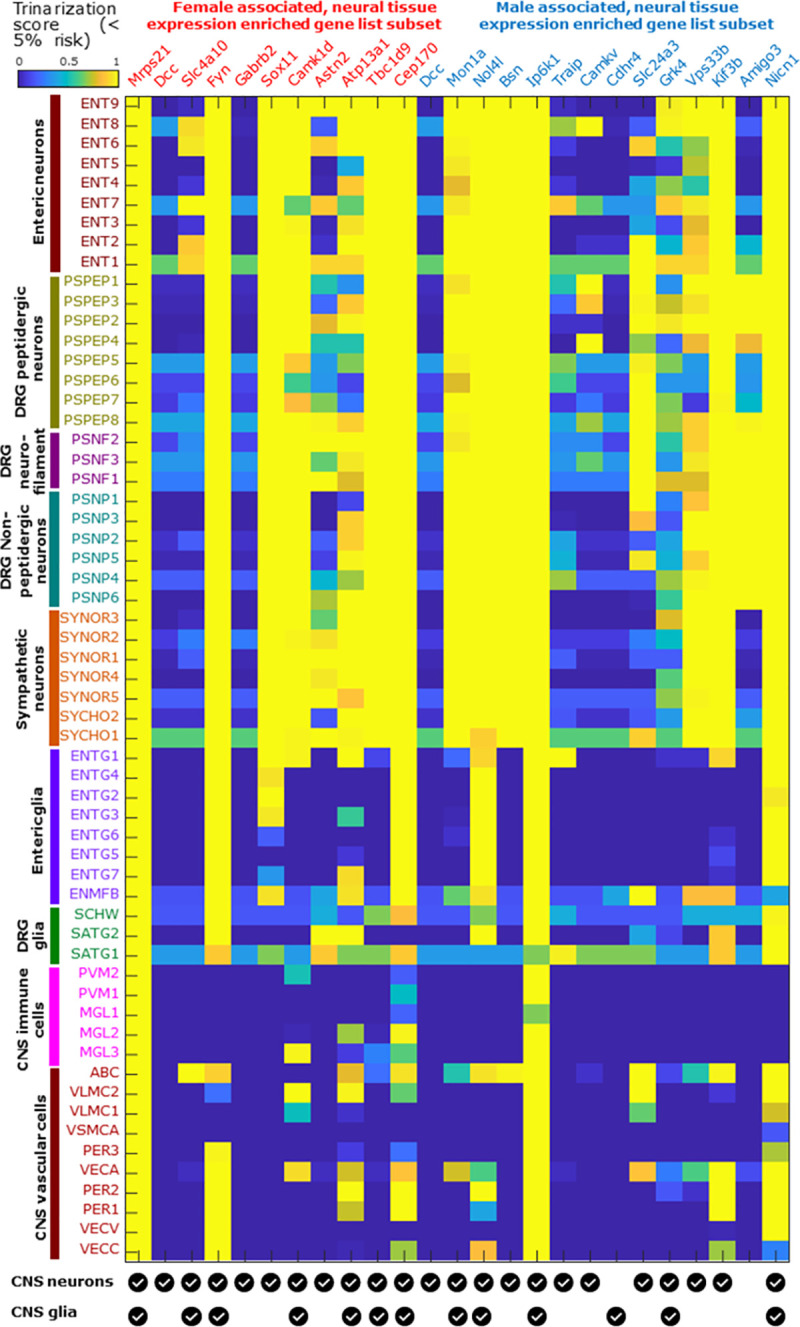
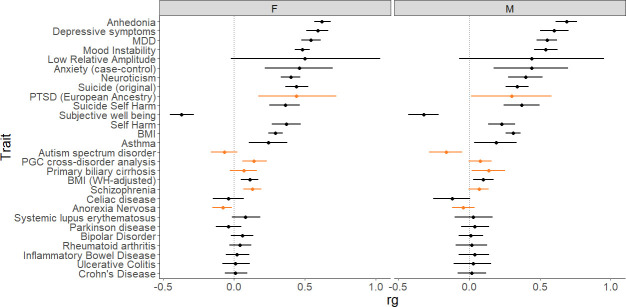
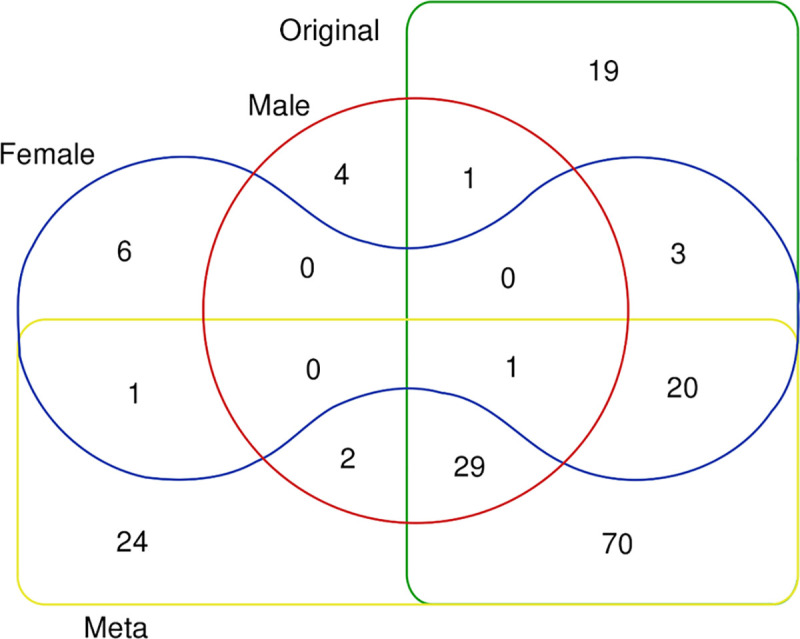
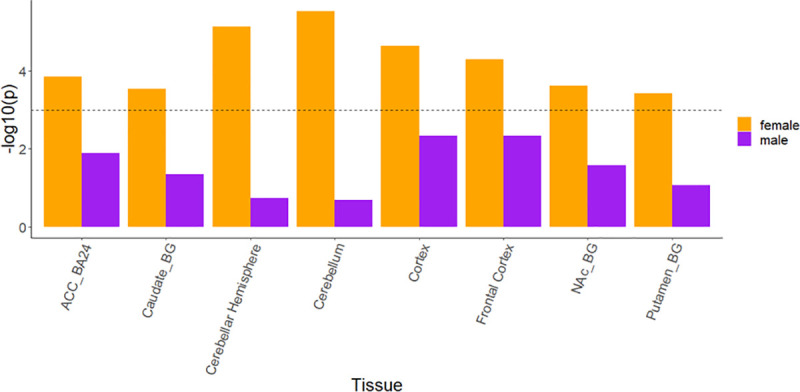
Chronic pain is highly prevalent worldwide and imparts a significant socioeconomic and public health burden. Factors influencing susceptibility to, and mechanisms of, chronic pain development, are not fully understood, but sex is thought to play a significant role, and chronic pain is more prevalent in women than in men. To investigate sex differences in chronic pain, we carried out a sex-stratified genome-wide association study of Multisite Chronic Pain (MCP), a derived chronic pain phenotype, in UK Biobank on 178,556 men and 209,093 women, as well as investigating sex-specific genetic correlations with a range of psychiatric, autoimmune and anthropometric phenotypes and the relationship between sex-specific polygenic risk scores for MCP and chronic widespread pain. We also assessed whether MCP-associated genes showed expression pattern enrichment across tissues. A total of 123 SNPs at five independent loci were significantly associated with MCP in men. In women, a total of 286 genome-wide significant SNPs at ten independent loci were discovered. Meta-analysis of sex-stratified GWAS outputs revealed a further 87 independent associated SNPs. Gene-level analyses revealed sex-specific MCP associations, with 31 genes significantly associated in females, 37 genes associated in males, and a single gene, DCC, associated in both sexes. We found evidence for sex-specific pleiotropy and risk for MCP was found to be associated with chronic widespread pain in a sex-differential manner. Male and female MCP were highly genetically correlated, but at an rg of significantly less than 1 (0.92). All 37 male MCP-associated genes and all but one of 31 female MCP-associated genes were found to be expressed in the dorsal root ganglion, and there was a degree of enrichment for expression in sex-specific tissues. Overall, the findings indicate that sex differences in chronic pain exist at the SNP, gene and transcript abundance level, and highlight possible sex-specific pleiotropy for MCP. Results support the proposition of a strong central nervous-system component to chronic pain in both sexes, additionally highlighting a potential role for the DRG and nociception.
慢性疼痛在全球范围内普遍存在,给社会经济和公共卫生带来了巨大负担。尽管人们对影响慢性疼痛发展的易感性和机制的因素还不完全了解,但人们认为性别在其中起着重要作用,而且慢性疼痛在女性中的发病率高于男性。为了研究慢性疼痛中的性别差异,我们对英国生物库中的多部位慢性疼痛(MCP)进行了性别分层的全基因组关联研究,该研究是一种衍生的慢性疼痛表型,共纳入了 178556 名男性和 209093 名女性,并研究了与一系列精神疾病、自身免疫性疾病和人体测量学表型的性别特异性遗传相关性,以及 MCP 和慢性广泛性疼痛的性别特异性多基因风险评分之间的关系。我们还评估了 MCP 相关基因在组织中的表达模式是否存在富集。在男性中,有 123 个 SNP 在五个独立的位点上与 MCP 显著相关。在女性中,在十个独立的位点上共发现了 286 个全基因组显著的 SNP。对性别分层 GWAS 结果的荟萃分析揭示了另外 87 个独立的相关 SNP。基因水平分析显示了 MCP 的性别特异性关联,在女性中有 31 个基因显著相关,在男性中有 37 个基因相关,只有一个基因 DCC 在两性中都相关。我们发现了性别特异性的多效性证据,MCP 的风险与慢性广泛性疼痛呈性别差异的方式相关。男性和女性的 MCP 具有高度的遗传相关性,但 rg 显著小于 1(0.92)。在男性和女性中,所有 37 个与 MCP 相关的基因和除 1 个以外的所有与女性 MCP 相关的基因都在背根神经节中表达,并且在性别特异性组织中存在一定程度的表达富集。总体而言,这些发现表明,慢性疼痛的性别差异存在于 SNP、基因和转录本丰度水平,并且突出了 MCP 可能存在性别特异性的多效性。研究结果支持了男女慢性疼痛都有强烈的中枢神经系统成分的观点,并进一步强调了背根神经节和伤害感受的潜在作用。