Matos Beatriz S, Peixoto da Silva Sara, Vasconcelos M Helena, Xavier Cristina P R
i3S - Instituto de Investigação e Inovação em Saúde, Universidade do Porto, Rua Alfredo Allen 208, Porto 4200-135, Portugal.
Cancer Drug Resistance Group, IPATIMUP - Institute of Molecular Pathology and Immunology of the University of Porto, Rua Alfredo Allen 208, Porto 4200-135, Portugal.
Cancer Drug Resist. 2024 May 20;7:19. doi: 10.20517/cdr.2024.04. eCollection 2024.
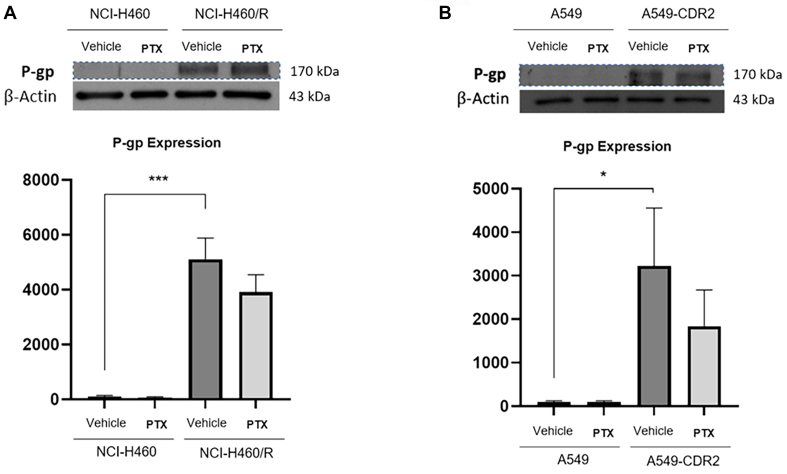
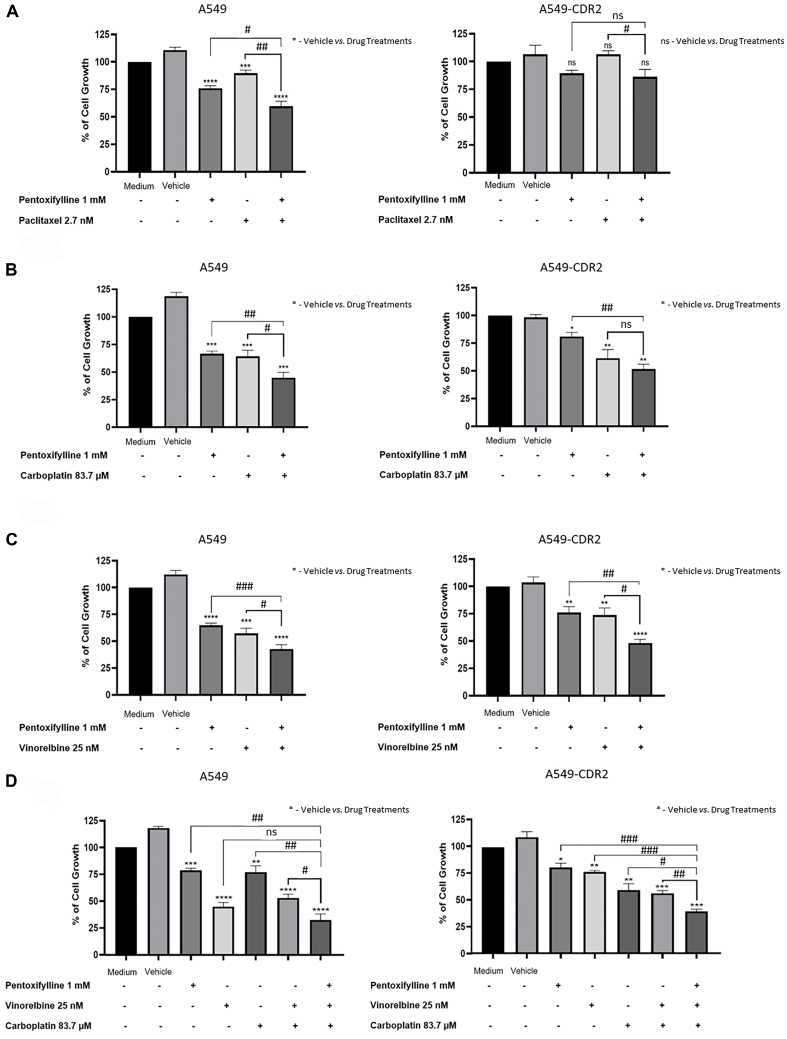
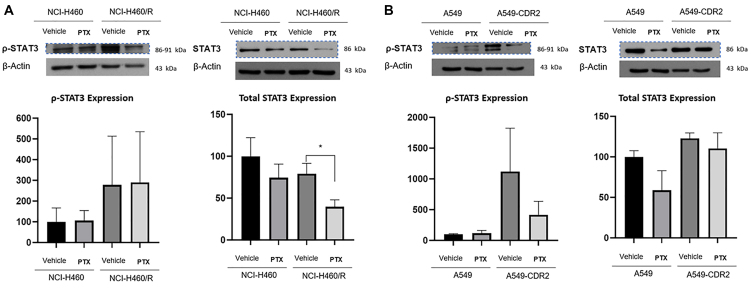
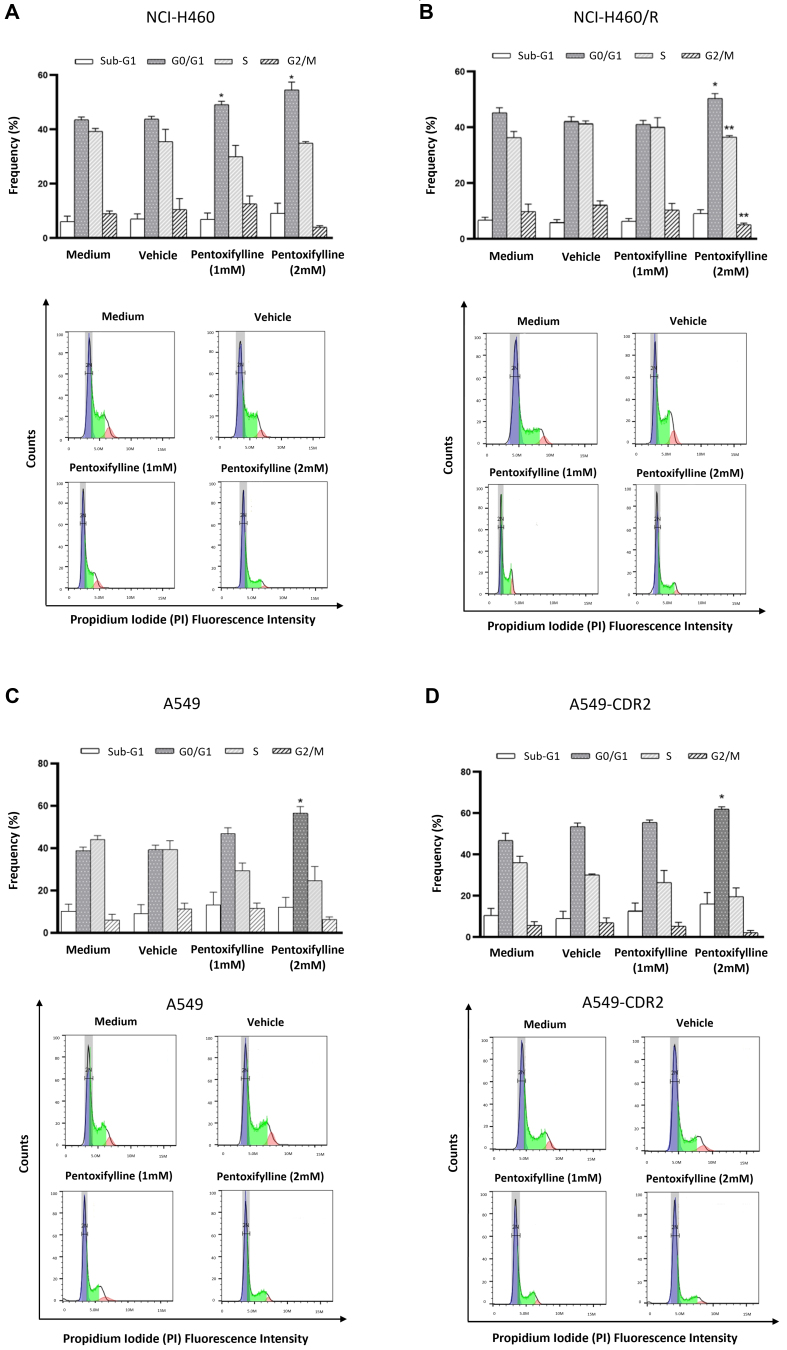
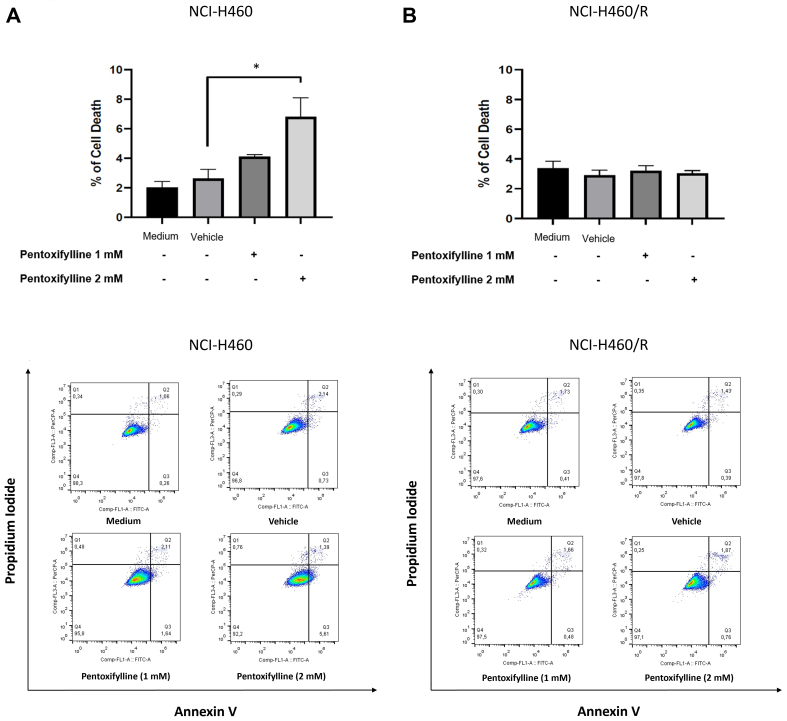
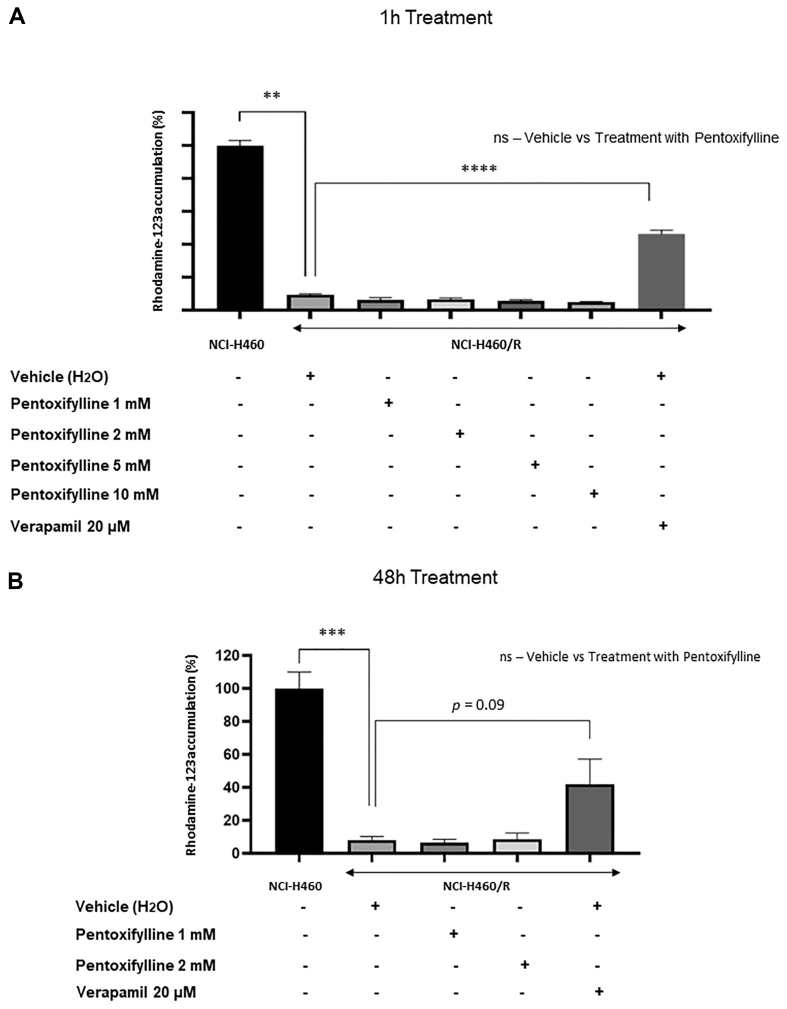
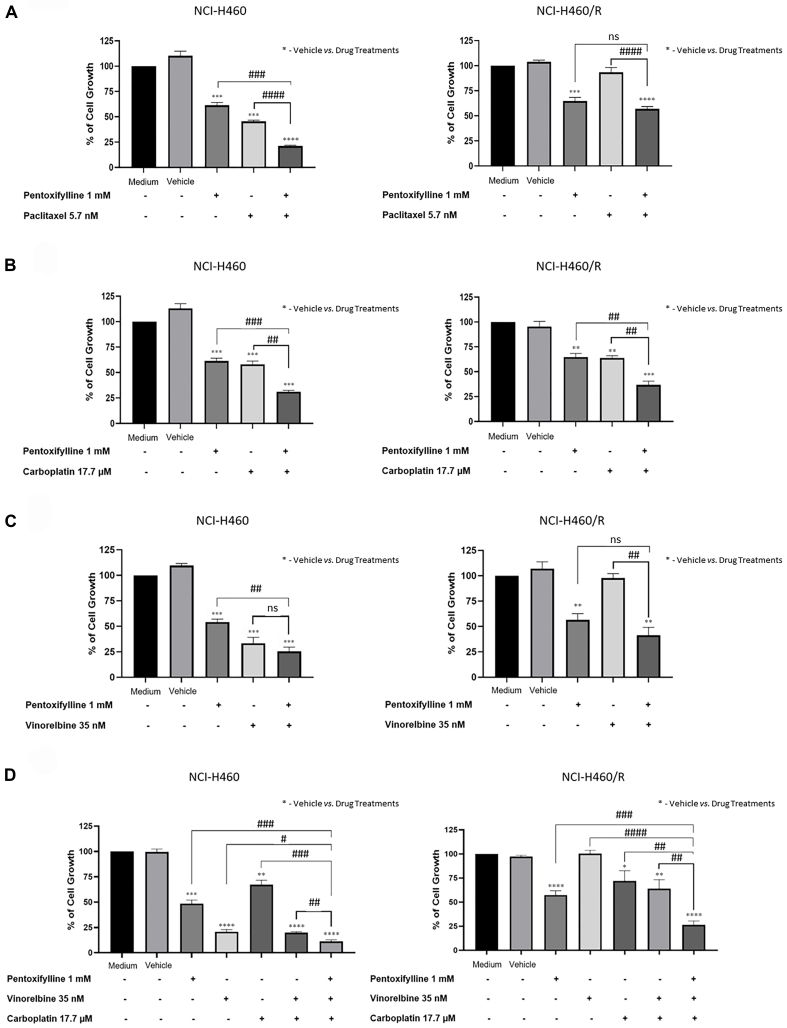
Multidrug resistance (MDR) is frequent in non-small cell lung cancer (NSCLC) patients, which can be due to its fibrotic stroma. This work explores the combination of pentoxifylline, an anti-fibrotic and chitinase 3-like-1 (CHI3L1) inhibitor drug, with conventional chemotherapy to improve NSCLC treatment. The effect of pentoxifylline in the expression levels of P-glycoprotein (P-gp), CHI3L1 and its main downstream proteins, as well as on cell death, cell cycle profile, and P-gp activity was studied in two pairs of sensitive and MDR counterpart NSCLC cell lines (NCI-H460/NCI-H460/R and A549/A549-CDR2). Association studies between gene expression and NSCLC patients' survival were performed using The Cancer Genome Atlas (TCGA) analysis. The sensitizing effect of pentoxifylline to different drug regimens was evaluated in both sensitive and MDR NSCLC cell lines. The cytotoxicity of the drug combinations was assessed in MCF10A non-tumorigenic cells. Pentoxifylline slightly decreased the expression levels of CHI3L1, β-catenin and signal transducer and activator of transcription 3 (STAT3), and caused a significant increase in the G1 phase of the cell cycle in both pairs of NSCLC cell lines. A significant increase in the % of cell death was observed in the sensitive NCI-H460 cell line. TCGA analysis revealed that high levels of CHI3L1 are associated with low overall survival (OS) in NSCLC patients treated with vinorelbine. Moreover, pentoxifylline sensitized both pairs of sensitive and MDR NSCLC cell lines to the different drug regimens, without causing significant toxicity to non-tumorigenic cells. This study suggests the possibility of combining pentoxifylline with chemotherapy to increase NSCLC therapeutic response, even in cases of MDR.
多药耐药(MDR)在非小细胞肺癌(NSCLC)患者中很常见,这可能归因于其纤维化基质。这项研究探索了抗纤维化药物己酮可可碱与几丁质酶3样1(CHI3L1)抑制剂药物与传统化疗联合使用,以改善NSCLC的治疗效果。在两对敏感和MDR配对的NSCLC细胞系(NCI-H460/NCI-H460/R和A549/A549-CDR2)中,研究了己酮可可碱对P-糖蛋白(P-gp)、CHI3L1及其主要下游蛋白表达水平的影响,以及对细胞死亡、细胞周期分布和P-gp活性的影响。使用癌症基因组图谱(TCGA)分析进行基因表达与NSCLC患者生存之间的关联研究。评估了己酮可可碱对敏感和MDR NSCLC细胞系中不同药物方案的增敏作用。在MCF10A非致瘤细胞中评估了药物组合的细胞毒性。己酮可可碱略微降低了CHI3L1、β-连环蛋白和信号转导及转录激活因子3(STAT3)的表达水平,并在两对NSCLC细胞系的细胞周期G1期引起显著增加。在敏感的NCI-H460细胞系中观察到细胞死亡百分比显著增加。TCGA分析显示,在接受长春瑞滨治疗的NSCLC患者中,高水平的CHI3L1与低总生存期(OS)相关。此外,己酮可可碱使两对敏感和MDR NSCLC细胞系对不同药物方案敏感,而不会对非致瘤细胞造成显著毒性。这项研究表明,即使在MDR的情况下,己酮可可碱与化疗联合使用以提高NSCLC治疗反应的可能性。