Department of Plastic Surgery and Hand Surgery, University Hospital Zurich, Raemistrasse 100, 8091, Zurich, Switzerland.
Aesthetic Plast Surg. 2024 Nov;48(21):4513-4522. doi: 10.1007/s00266-024-04061-7. Epub 2024 Jun 5.
Botulinum toxin A (BoTA) is a neurotoxin formed by Clostridium botulinum, with a broad medical application spectrum. While the primary effect of BoTA is on the muscles, the effects of BoTA in other systems including the blood vasculature have already been examined, revealing unexpected actions. However, no studies exist to the best of our knowledge regarding the potential effects of BoTA on the lymphatic vascular system, possessing a critical role in health and disease. Isolated human lymphatic endothelial cells (LECs) were cultured in dedicated in vitro culture systems. The analysis including imaging and cell culture approaches as well as molecular biology techniques is performed to examine the LEC alterations occurring upon exposure to different concentrations of BoTA.
Human LECs were cultured and expanded on collagen-coated petri dishes using endothelial basal medium and the commercial product Botox from Allergan as used for all our experiments. Harvested cells were used in various in vitro functional tests to assess the morphologic and functional properties of the BoTA-treated LECs. Gene expression analysis was performed to assess the most important lymphatic system-related genes and pathways.
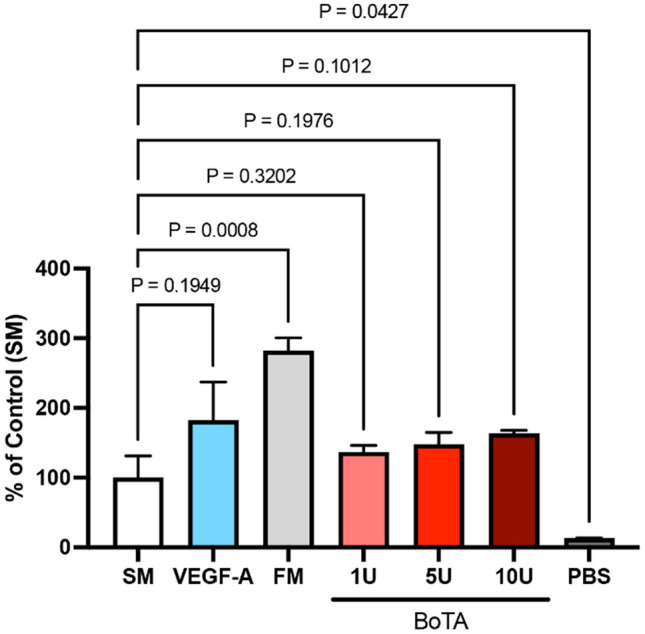
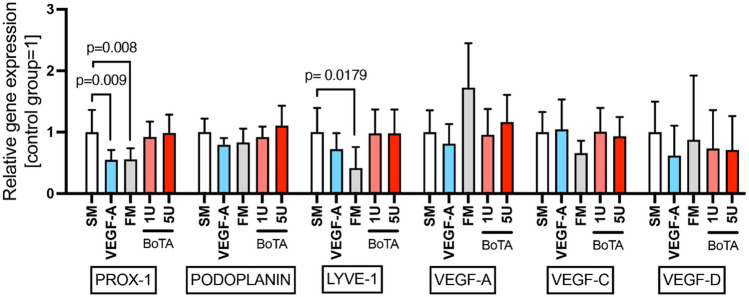
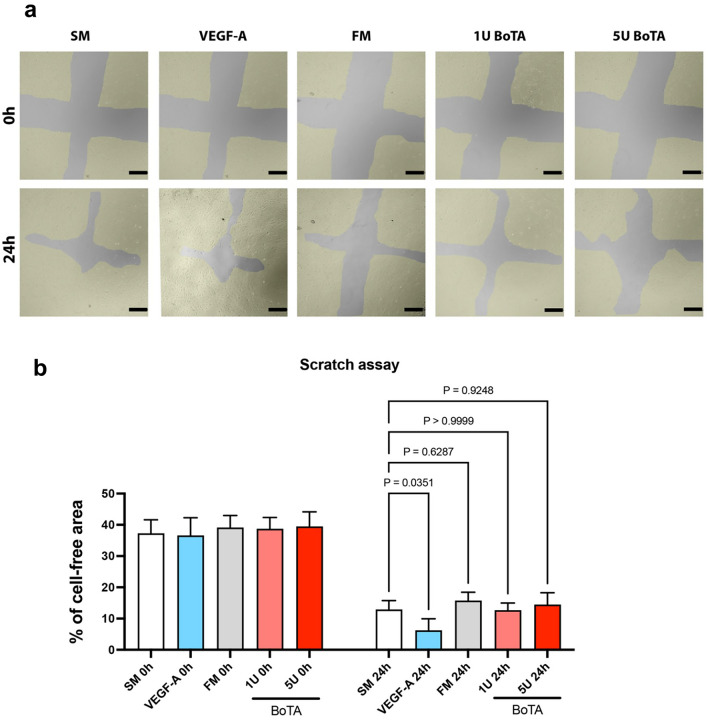
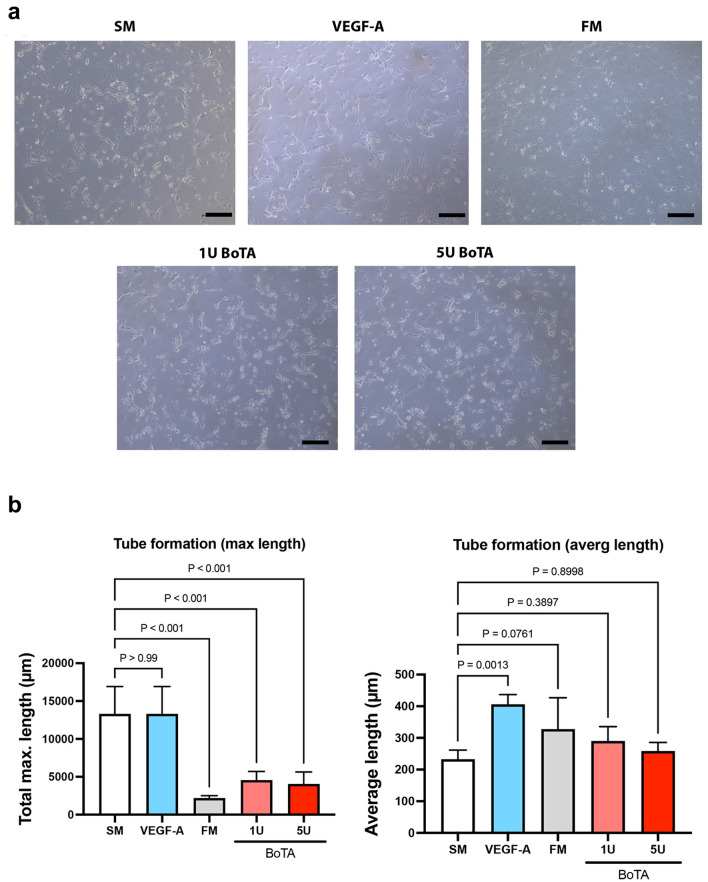
Concentrations of 1, 5 or 10 U of BoTA did not demonstrate a significant effect regarding the proliferation and migration capacity of the LECs versus untreated controls. Interestingly, even the smallest BoTA dose was found to significantly decrease the cord-like-structure formation capacity of the seeded LECs. Gene expression analysis was used to underpin possible molecular alterations, suggesting no significant effect of BoTA in the modification of gene expression versus the starvation medium control.
LECs appear largely unaffected to BoTA treatment, with an isolated effect on the cord-like-structure formation capacity. Further work needs to assess the effect of BoTA on the smooth-muscle-cell-covered collecting lymphatic vessels and the possible aesthetic implications of such an effect, due to edema formation.
This journal requires that authors assign a level of evidence to each article. For a full description of these Evidence-Based Medicine ratings, please refer to the Table of Contents or the online Instructions to Authors www.springer.com/00266 .
肉毒杆菌毒素 A(BoTA)是由肉毒梭菌形成的神经毒素,具有广泛的医学应用谱。虽然 BoTA 的主要作用是在肌肉上,但已经研究了 BoTA 在包括血管系统在内的其他系统中的作用,揭示了意想不到的作用。然而,据我们所知,尚无关于 BoTA 对淋巴管系统潜在影响的研究,淋巴管系统在健康和疾病中具有关键作用。分离的人淋巴管内皮细胞(LEC)在专门的体外培养系统中培养。通过成像和细胞培养方法以及分子生物学技术进行分析,以检查暴露于不同浓度的 BoTA 时发生的 LEC 变化。
人 LEC 在涂有胶原蛋白的培养皿上培养和扩增,使用内皮基础培养基和 Allergan 的商业产品 Botox 进行所有实验。收获的细胞用于各种体外功能测试,以评估 BoTA 处理的 LEC 的形态和功能特性。进行基因表达分析以评估最重要的淋巴管系统相关基因和途径。
与未处理的对照组相比,1、5 或 10 U 的 BoTA 浓度对 LEC 的增殖和迁移能力没有显著影响。有趣的是,即使是最小的 BoTA 剂量也被发现显著降低了接种 LEC 的索状结构形成能力。基因表达分析用于支持可能的分子改变,表明 BoTA 对基因表达的修饰与饥饿培养基对照相比没有显著影响。
LEC 对 BoTA 处理基本没有影响,仅对索状结构形成能力有影响。由于水肿形成,需要进一步研究 BoTA 对覆盖平滑肌细胞的收集淋巴管的影响以及这种影响的可能美学意义。
证据水平 V:本杂志要求作者为每篇文章分配一个证据水平。有关这些循证医学评级的完整描述,请参阅目录或在线作者指南 www.springer.com/00266 。