Miringu Gabriel, Musyoki Abednego, Muriithi Betty, Wandera Ernest, Waithiru Dan, Odoyo Erick, Shoji Hisashi, Menza Nelson, Ichinose Yoshio
Kenya Medical Research Institute, Institute of Tropical Medicine, Nagasaki University, Nairobi, 19993-00202, Kenya.
Department of Medical Laboratory Sciences, Kenyatta University, Nairobi, Kenya.
Trop Med Health. 2024 Jun 5;52(1):40. doi: 10.1186/s41182-024-00606-3.
This study aimed to develop a multiplex PCR assay for simultaneous detection of major Gram-negative etiologies of septicemia and evaluate its performance.
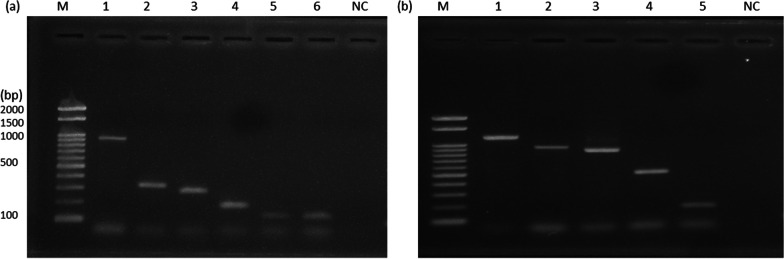
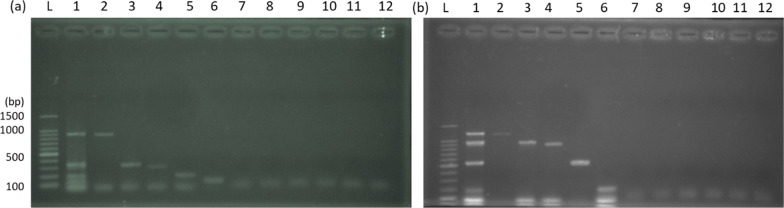
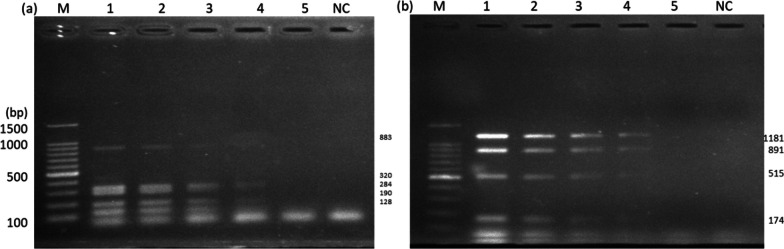
Multiplex PCR (mPCR) assays were developed targeting 11 bacterial strains. Species-specific primers were confirmed using known clinical isolates and standard strains. Gradient PCR was performed on each primer against its target bacterial gene to determine its optimal amplification condition. The minimum detectable DNA concentration of the two assays was evaluated by adjusting bacterial DNA concentration to 100 ng/μL and, tenfold serially diluting it up to 10 pg/μL with DNAse-free water. The diagnostic accuracy of mPCR assays was established by subjecting the assays to 60 clinical blood samples.
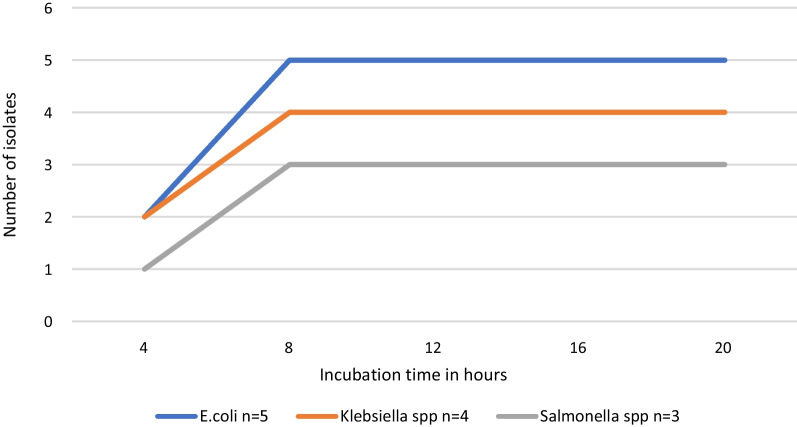
Two mPCR assays were developed. Optimal primer annealing temperature of 55 °C was established and utilized in the final amplification conditions. The assays detected all targeted bacteria, with a 100 pg minimum detectable DNA concentration. Pathogens were not detected directly from whole blood, but after 4 h and 8 h of incubation, 41% (5/12) and 100% (12/12) of the bacteria were detected in culture fluids, respectively. The assays also identified Salmonella spp. and Klebsiella pneumoniae co-infections and extra pathogens (1 E. coli and 2 K. pneumoniae) compared with culture. The sensitivity and specificity of the mPCR were 100.0% (71.7-100.0) and 98.0% (90.7-99.0), respectively. The area under the ROC curve was 1.00 (1.00-1.00).
The mPCR assays demonstrated substantial potential as a rapid tool for septicemia diagnosis alongside the traditional blood culture method. Notably, it was able to identify additional isolates, detect co-infections, and efficiently detect low bacterial DNA loads with high sensitivity, implying its value in enhancing efficiency of diagnosis of septicemia.
本研究旨在开发一种多重聚合酶链反应(PCR)检测方法,用于同时检测败血症的主要革兰氏阴性病原体,并评估其性能。
针对11种细菌菌株开发多重PCR(mPCR)检测方法。使用已知临床分离株和标准菌株确认种特异性引物。对每个引物针对其靶细菌基因进行梯度PCR,以确定其最佳扩增条件。通过将细菌DNA浓度调整至100 ng/μL,并用无核酸酶水将其连续十倍稀释至10 pg/μL,评估两种检测方法的最低可检测DNA浓度。通过对60份临床血液样本进行检测,确定mPCR检测方法的诊断准确性。
开发了两种mPCR检测方法。确定了55°C的最佳引物退火温度,并在最终扩增条件中使用。这些检测方法能够检测到所有目标细菌,最低可检测DNA浓度为100 pg。病原体不能直接从全血中检测到,但在培养4小时和8小时后,分别在培养液中检测到41%(5/12)和100%(12/12)的细菌。与培养法相比,这些检测方法还鉴定出沙门氏菌属和肺炎克雷伯菌的合并感染以及额外的病原体(1株大肠杆菌和2株肺炎克雷伯菌)。mPCR的敏感性和特异性分别为100.0%(71.7 - 100.0)和98.0%(90.7 - 99.0)。ROC曲线下面积为1.00(1.00 - 1.00)。
mPCR检测方法作为一种与传统血培养方法并行的败血症诊断快速工具,显示出巨大潜力。值得注意的是,它能够识别额外的分离株,检测合并感染,并以高灵敏度有效检测低细菌DNA载量,这意味着其在提高败血症诊断效率方面具有价值。