Chemistry department, College of Science, United Arab Emirates University, P. O. Box 15551, Al-Ain, United Arab Emirates.
Department of Statistics, College of Business and Economics, United Arab Emirates University, P. O. Box 15551, Al-Ain, United Arab Emirates.
Sci Rep. 2024 Jun 6;14(1):13064. doi: 10.1038/s41598-024-63704-6.
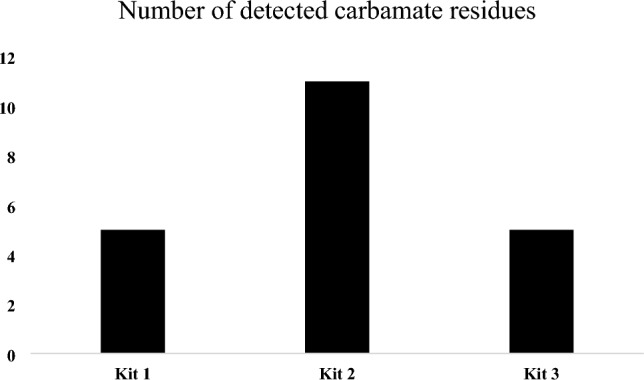
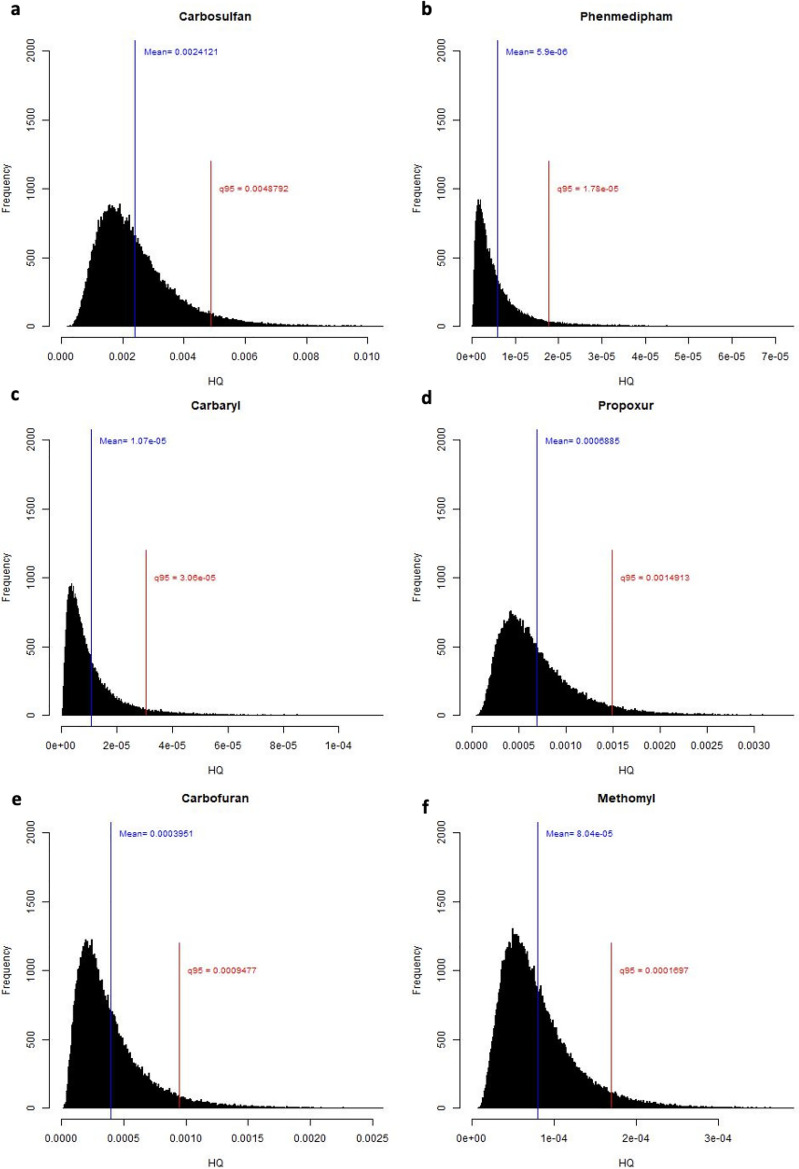
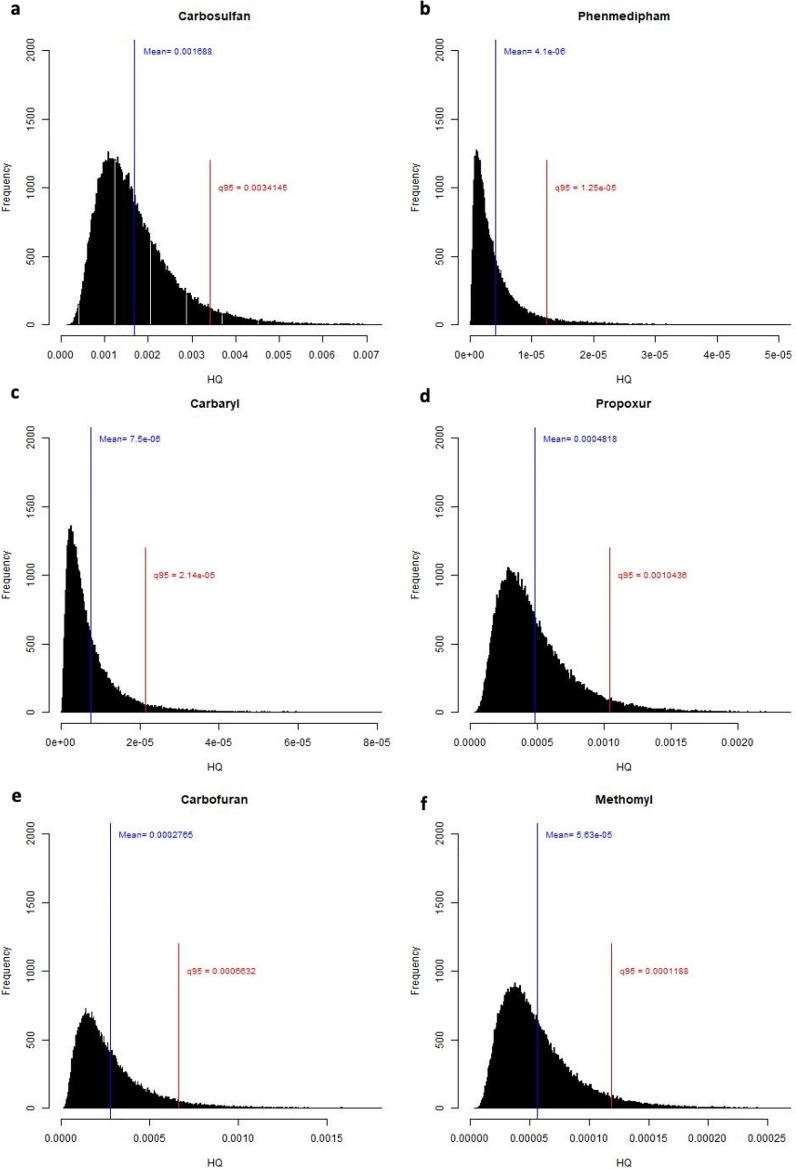
This study aimed to investigate carbamate pesticide residues in different varieties of date palm fruits in the UAE, utilizing UHPLC-MS/MS. For sample preparation and clean-up, the efficiency and performance of different QuEChERS dispersive solid-phase extraction kits were compared. Precision and recovery were assessed at 10 μg kg for the three kits, revealing that Kit 2 demonstrated the best performance. The selected QuEChERS method was validated to detect 14 carbamate residues in 55 date samples. The method exhibited strong linearity with R > 0.999 and low LOD (0.01-0.005 μg kg) and LOQ (0.003-0.04 μg kg). Excellent accuracy (recovery: 88-106%) and precision (RSD: 1-11%) were observed, with negligible matrix effect (- 4.98-13.26%). All samples contained at least one carbamate residue. While most detected residues were below their MRLs, carbosulfan was found in 21 samples, propoxur in 2 samples, and carbofuran in 1 sample above their MRLs. The hazard index (HI) was calculated for carbosulfan, phenmedipham, carbaryl, propoxur, carbofuran, and methomyl to assess potential health risks for date consumers. All HI values were below the safety limit of 1.0, indicating that the consumption of dates does not pose a non-carcinogenic health risk for adults and children.
本研究旨在利用 UHPLC-MS/MS 技术检测阿联酋不同品种的椰枣果实中的氨基甲酸酯类农药残留。为了进行样品制备和净化,比较了不同 QuEChERS 分散固相萃取试剂盒的效率和性能。在三种试剂盒中,对 10μg kg 的精度和回收率进行了评估,结果表明试剂盒 2 的性能最佳。选择的 QuEChERS 方法用于检测 55 个椰枣样品中的 14 种氨基甲酸酯残留。该方法表现出很强的线性关系(R>0.999),且具有较低的 LOD(0.01-0.005μg kg)和 LOQ(0.003-0.04μg kg)。观察到极好的准确性(回收率:88-106%)和精密度(RSD:1-11%),且基质效应可忽略不计(-4.98-13.26%)。所有样品均至少含有一种氨基甲酸酯残留。虽然大多数检出的残留低于其 MRLs,但在 21 个样品中发现了硫丹,在 2 个样品中发现了丙硫克百威,在 1 个样品中发现了呋喃丹超过了其 MRLs。为了评估椰枣消费者可能面临的健康风险,对硫丹、苯菌灵、西维因、丙硫克百威、呋喃丹和灭多威进行了危害指数(HI)的计算。所有 HI 值均低于 1.0 的安全限值,表明成年人和儿童食用椰枣不会对非致癌健康构成风险。