Sabater-Gárriz Álvaro, Gaya-Morey F Xavier, Buades-Rubio José María, Manresa-Yee Cristina, Montoya Pedro, Riquelme Inmaculada
Department of Research and Training, Balearic ASPACE Foundation, Marratxí, Spain.
Department of Nursing and Physiotherapy, University of the Balearic Islands, Palma de Mallorca, Spain.
Digit Health. 2024 Jun 5;10:20552076241259664. doi: 10.1177/20552076241259664. eCollection 2024 Jan-Dec.
Assessing pain in individuals with neurological conditions like cerebral palsy is challenging due to limited self-reporting and expression abilities. Current methods lack sensitivity and specificity, underlining the need for a reliable evaluation protocol. An automated facial recognition system could revolutionize pain assessment for such patients.The research focuses on two primary goals: developing a dataset of facial pain expressions for individuals with cerebral palsy and creating a deep learning-based automated system for pain assessment tailored to this group.
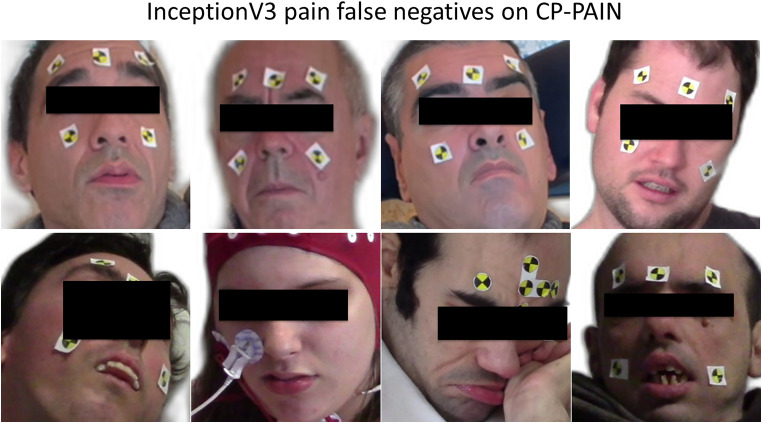
The study trained ten neural networks using three pain image databases and a newly curated CP-PAIN Dataset of 109 images from cerebral palsy patients, classified by experts using the Facial Action Coding System.
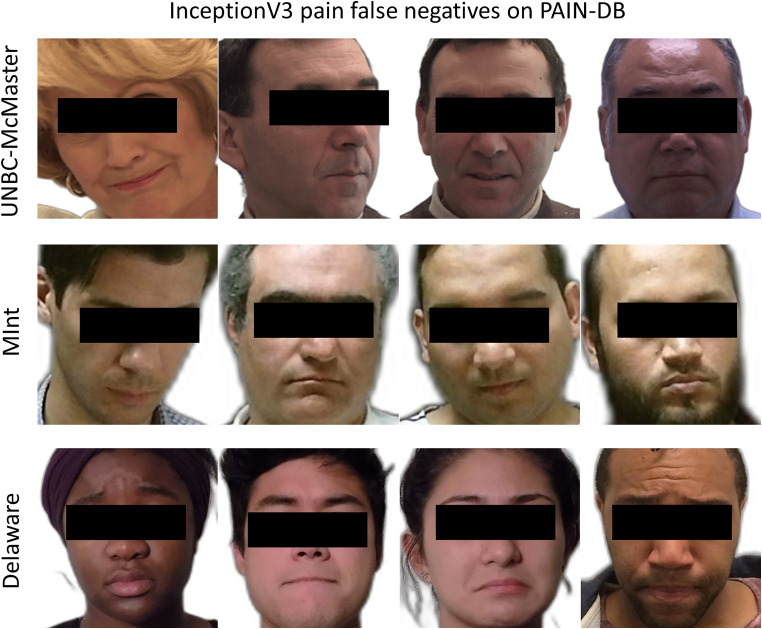
The InceptionV3 model demonstrated promising results, achieving 62.67% accuracy and a 61.12% F1 score on the CP-PAIN dataset. Explainable AI techniques confirmed the consistency of crucial features for pain identification across models.
The study underscores the potential of deep learning in developing reliable pain detection systems using facial recognition for individuals with communication impairments due to neurological conditions. A more extensive and diverse dataset could further enhance the models' sensitivity to subtle pain expressions in cerebral palsy patients and possibly extend to other complex neurological disorders. This research marks a significant step toward more empathetic and accurate pain management for vulnerable populations.
由于自我报告和表达能力有限,评估患有脑瘫等神经系统疾病的个体的疼痛具有挑战性。当前方法缺乏敏感性和特异性,这突出表明需要一种可靠的评估方案。自动化面部识别系统可能会彻底改变对此类患者的疼痛评估。该研究专注于两个主要目标:为脑瘫患者建立一个面部疼痛表情数据集,并创建一个基于深度学习的针对该群体的疼痛评估自动化系统。
该研究使用三个疼痛图像数据库和一个新整理的包含109张脑瘫患者图像的CP-PAIN数据集训练了十个神经网络,这些图像由专家使用面部动作编码系统进行分类。
InceptionV3模型展示了有前景的结果,在CP-PAIN数据集上实现了62.67%的准确率和61.12%的F1分数。可解释人工智能技术证实了跨模型识别疼痛的关键特征的一致性。
该研究强调了深度学习在为因神经系统疾病而有沟通障碍的个体开发使用面部识别的可靠疼痛检测系统方面的潜力。更广泛和多样的数据集可能会进一步提高模型对脑瘫患者细微疼痛表情的敏感性,并可能扩展到其他复杂的神经系统疾病。这项研究标志着朝着为弱势群体提供更具同理心和准确的疼痛管理迈出了重要一步。