School of Fisheries, Aquaculture and Aquatic Sciences, Auburn University, Auburn, Alabama, United States of America.
Department of Biology, Mount Allison University, Sackville, New Brunswick, Canada.
PLoS One. 2024 Jun 7;19(6):e0302687. doi: 10.1371/journal.pone.0302687. eCollection 2024.
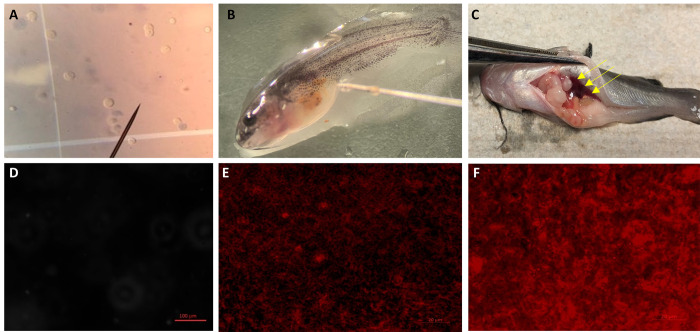
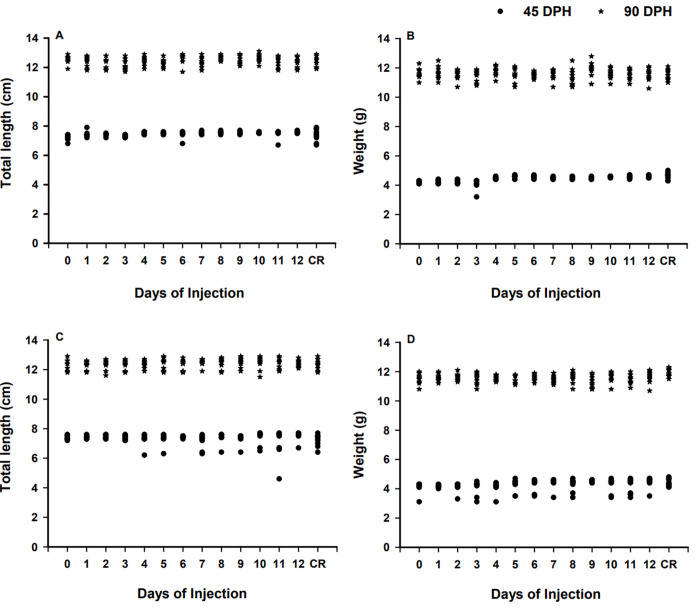
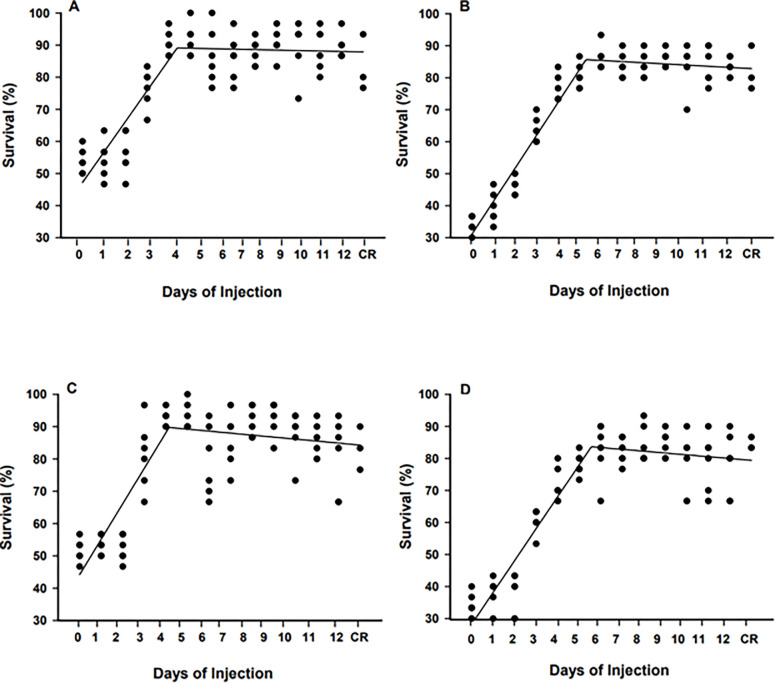
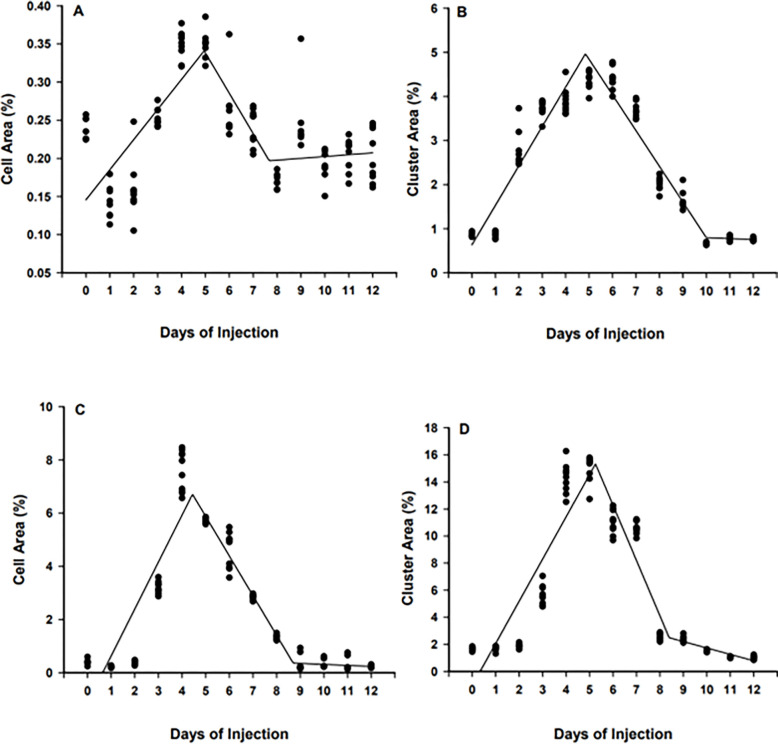
Xenogenesis has been recognized as a prospective method for producing channel catfish, Ictalurus punctatus ♀ × blue catfish, I. furcatus ♂ hybrids. The xenogenesis procedure can be achieved by transplanting undifferentiated stem cells derived from a donor fish into a sterile recipient. Xenogenesis for hybrid catfish embryo production has been accomplished using triploid channel catfish as a surrogate. However, having a surrogate species with a shorter maturation period, like white catfish (Ameiurus catus), would result in reduced feed costs, labor costs, and smaller body size requirements, making it a more suitable species for commercial applications where space is limited, and as a model species. Hence, the present study was conducted to assess the effectiveness of triploid white catfish as a surrogate species to transplant blue catfish stem cells (BSCs) and channel catfish stem cells (CSCs). Triploid white catfish fry were injected with either BSCs or CSCs labeled with PKH 26 fluorescence dye from 0 to 12 days post hatch (DPH). No significant differences in weight and length of fry were detected among BSCs and CSCs injection times (0 to 12 DPH) when fry were sampled at 45 and 90 DPH (P > 0.05). The highest survival was reported when fry were injected between 4.0 to 5.5 DPH (≥ 81.2%). At 45 and 90 DPH, cell and cluster area increased for recipients injected from 0 to 5.2 DPH, and the highest cluster area values were reported between 4.0 to 5.2 DPH. Thereafter, fluorescent cell and cluster area in the host declined with no further decrease after 10 DPH. At 45 DPH, the highest percentage of xenogens were detected when fry were injected with BSCs between 4.0 to 5.0 and CSCs between 3.0 to 5.0 DPH. At 90 DPH, the highest number of xenogens were detected from 4.0 to 6.0 DPH when injected with either BSCs or CSCs. The current study demonstrated the suitability of white catfish as a surrogate species when BSCs and CSCs were transplanted into triploid white catfish between 4.0 to 6.0 DPH (27.4 ± 0.4°C). Overall, these findings allow enhanced efficiency of commercializing xenogenic catfish carrying gametes of either blue catfish or channel catfish.
异源生殖已被认为是生产美洲鲶♀×斑点叉尾鮰♂杂种的有前途的方法。异源生殖过程可以通过将未分化的干细胞从供体鱼移植到无菌受体中来实现。已经使用三倍体美洲鲶作为代孕鱼来完成杂交鲶鱼胚胎的生产。然而,使用成熟周期更短的代孕物种,如白鲳(Ameiurus catus),将降低饲料成本、劳动力成本和对较小体型的需求,使其成为空间有限的商业应用更合适的物种,并且作为一种模式物种。因此,本研究旨在评估三倍体白鲳作为代孕物种移植斑点叉尾鮰干细胞(BSCs)和美洲鲶干细胞(CSCs)的有效性。在孵化后 0 至 12 天(DPH)期间,将标记有 PKH26 荧光染料的 BSCs 或 CSCs 注射到三倍体白鲳鱼苗中。在 45 和 90 DPH 取样时,BSCs 和 CSCs 注射时间(0 至 12 DPH)之间的鱼苗体重和长度没有显著差异(P>0.05)。当鱼苗在 4.0 至 5.5 DPH 时报告了最高的存活率(≥81.2%)。在 45 和 90 DPH 时,注射 0 至 5.2 DPH 的受者的细胞和簇面积增加,并且在 4.0 至 5.2 DPH 之间报告了最高的簇面积值。此后,宿主中荧光细胞和簇面积随着 10 DPH 后没有进一步下降而下降。在 45 DPH 时,当 BSCs 在 4.0 至 5.0 DPH 之间和 CSCs 在 3.0 至 5.0 DPH 之间注射时,检测到的异源生物比例最高。在 90 DPH 时,当注射 BSCs 或 CSCs 时,在 4.0 至 6.0 DPH 之间注射时,检测到的异源生物数量最多。本研究表明,当 BSCs 和 CSCs 在 4.0 至 6.0 DPH(27.4±0.4°C)之间移植到三倍体白鲳中时,白鲳适合作为代孕物种。总的来说,这些发现提高了商业化携带蓝鲶或美洲鲶配子的异源鲶鱼的效率。