Molecular Genetics Department, Molecular Genetics Laboratory, Public Health Laboratory, Public Health Authority, Riyadh, Saudi Arabia.
Medical School, AlFaisal University, Riyadh, Saudi Arabia.
BMC Public Health. 2024 Jun 10;24(1):1556. doi: 10.1186/s12889-024-19029-0.
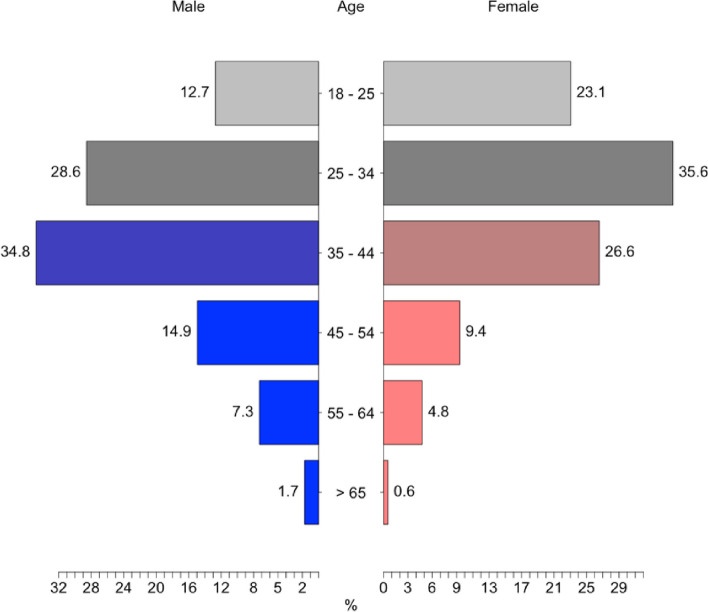
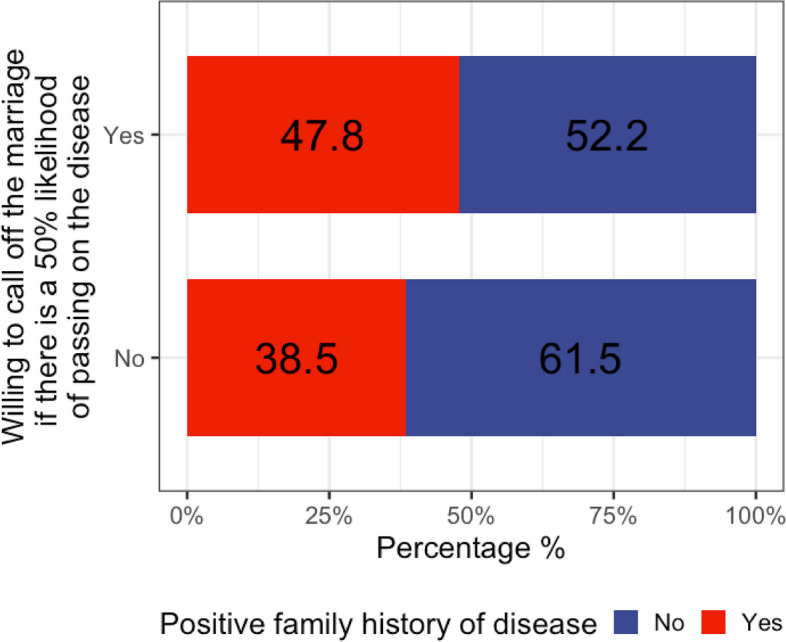
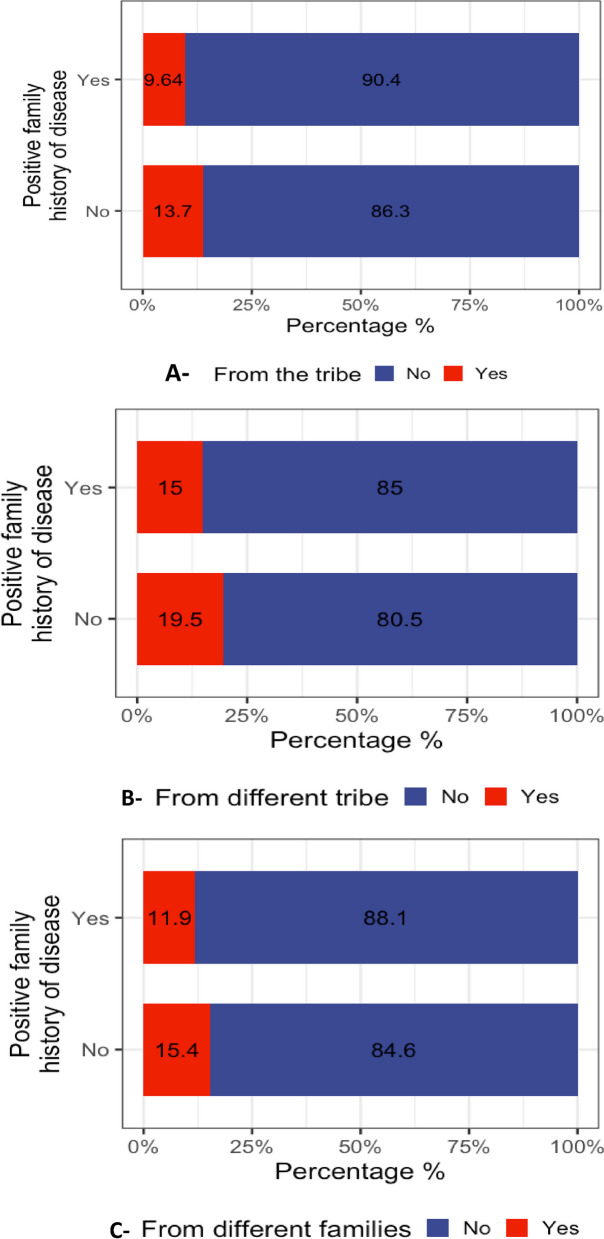
The prevalence of consanguineous marriages (CMs) varies worldwide from one country to another. However, the Middle East stands out as a region with a notably high rate of CMs. CM is particularly widespread in Saudi Arabia, where the prevalence of autosomal recessive genetic diseases has increased. This study aims to identify the Saudi population's awareness of genetic diseases and premarital screening tests (PMSTs). It also seeks to understand couples' perceptions of genetic diseases before and after marriage and their attitudes towards PMSTs and genetic counselling (GC) in reducing the risk of CM. Through the administration of online questionnaires, this cross-sectional study surveyed 2,057 participants to assess their awareness of genetic diseases and their understanding of testing and preventive measures for inherited diseases. Descriptive analysis, nonparametric chi-square tests and logistic regressions were performed to assess the association of categorical responses. This study included 2,035 Saudi Arabian respondents. A significant correlation was found between positive family history and partner selection (p = 0.001), as well as between partnering within the same tribe (p = 0.000139), with a different tribe (p = 0.000138) and from another family (p = 0.000489). About 91.3% of participants expressed agreement regarding the need to enhance public awareness and knowledge concerning genetic disorders, while 87% agreed that increased government regulations are required to prevent the spread of genetic diseases in affected families. Despite increased awareness of genetic diseases and PMSTs, there appears to be a lack of understanding regarding the limitations of PMSTs. The persistently high rate of CM underscores the challenge of altering marriage customs. Further governmental efforts are required to promote awareness of alternative reproductive options, establish new regulations and expand screening programmes.
近亲结婚(CMs)的流行程度在世界范围内因国家而异。然而,中东地区是一个 CM 率明显较高的地区。CM 在沙特阿拉伯尤为普遍,那里常染色体隐性遗传病的患病率有所增加。本研究旨在确定沙特人口对遗传疾病和婚前筛查测试(PMST)的认识。它还旨在了解夫妻在婚前和婚后对遗传疾病的看法,以及他们对 PMST 和遗传咨询(GC)在降低 CM 风险方面的态度。通过在线问卷调查,这项横断面研究调查了 2057 名参与者,以评估他们对遗传疾病的认识以及对遗传疾病检测和预防措施的理解。进行描述性分析、非参数卡方检验和逻辑回归分析,以评估分类反应的相关性。本研究包括 2035 名沙特阿拉伯受访者。研究发现,阳性家族史与伴侣选择(p=0.001)之间存在显著相关性,与同一部落内(p=0.000139)、不同部落内(p=0.000138)和其他家庭(p=0.000489)内的伴侣选择也存在显著相关性。约 91.3%的参与者表示同意需要加强公众对遗传疾病的认识和了解,而 87%的参与者同意需要增加政府法规来防止遗传疾病在受影响家庭中的传播。尽管对遗传疾病和 PMST 的认识有所提高,但似乎对 PMST 的局限性缺乏了解。CM 的高发病率持续存在,这突显了改变婚姻习俗的挑战。需要进一步加大政府努力,提高对替代生殖选择的认识,制定新的法规,扩大筛查计划。