Department of Hepatobiliary Surgery, Clinical Medical College, Yangzhou University, 98 West Nantong Rd, Yangzhou, 225000, Jiangsu, China.
Dalian Medical University, Dalian, 116000, China.
Eur J Med Res. 2024 Jun 10;29(1):318. doi: 10.1186/s40001-024-01893-6.
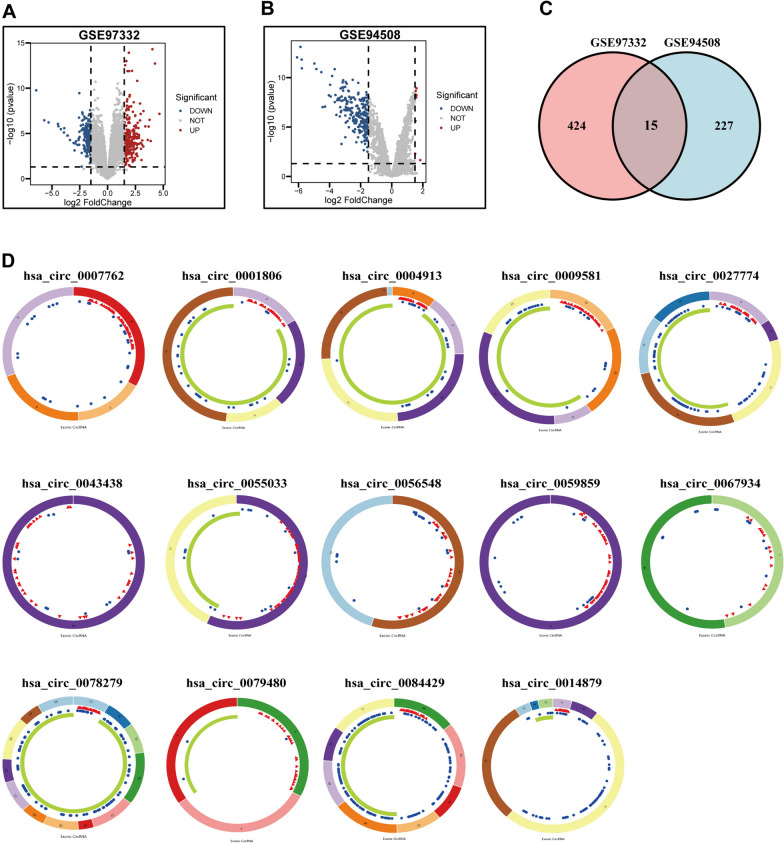
Hepatocellular carcinoma (HCC) is a common type of malignant tumor where the prognosis is dismal. Circular RNA (CircRNA) is a novel RNA that regulates downstream gene transcription and translation to influence the progression of HCC. However, the regulatory relationship that exists between E3 ligases, which is a class of post-translational modifying proteins, and circRNA remains unclear.
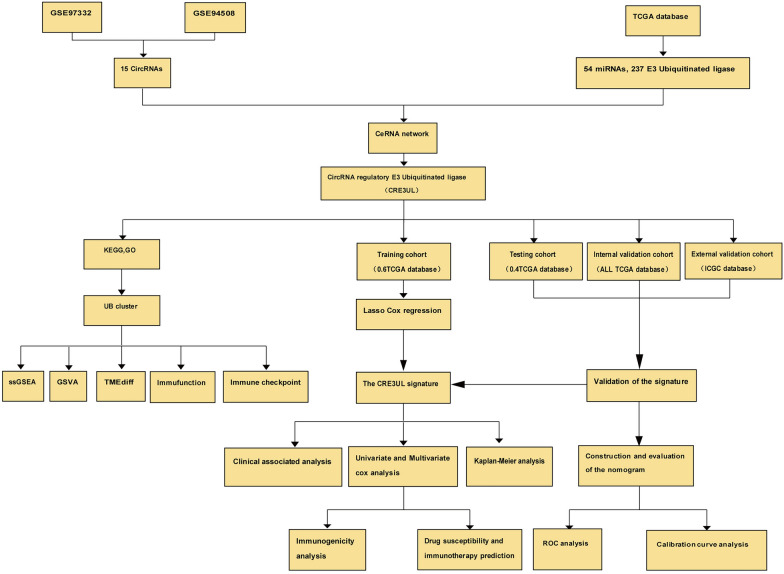
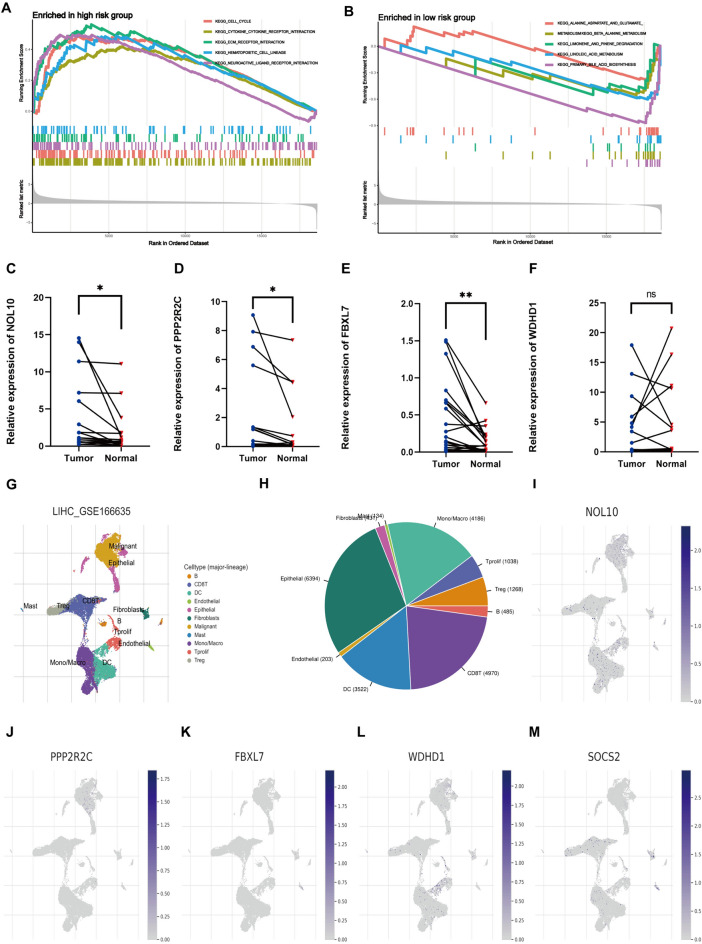
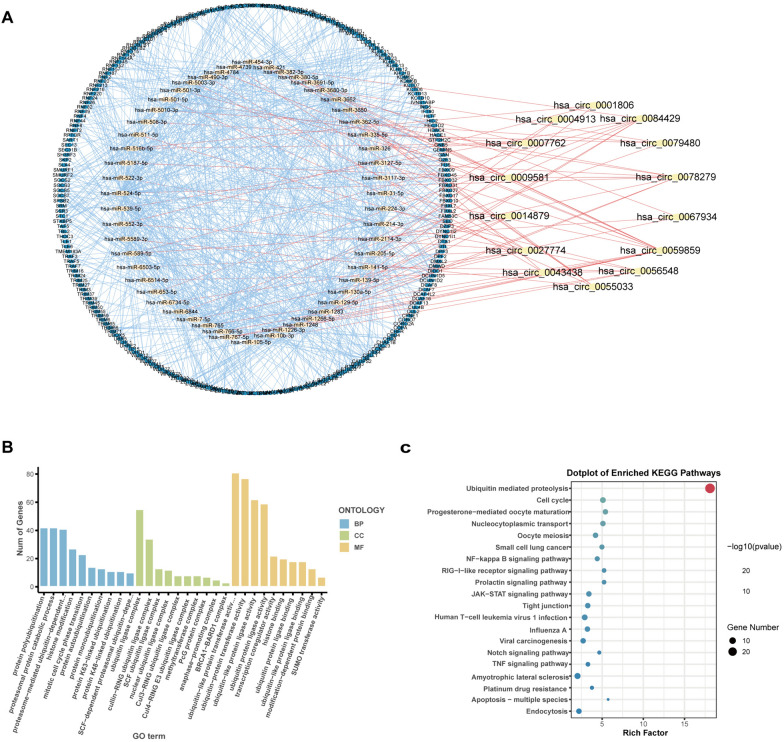
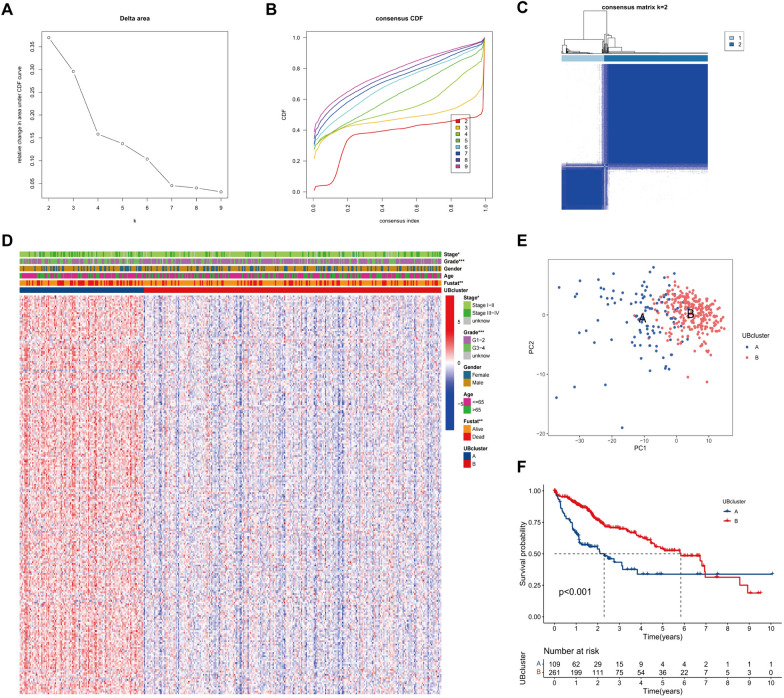
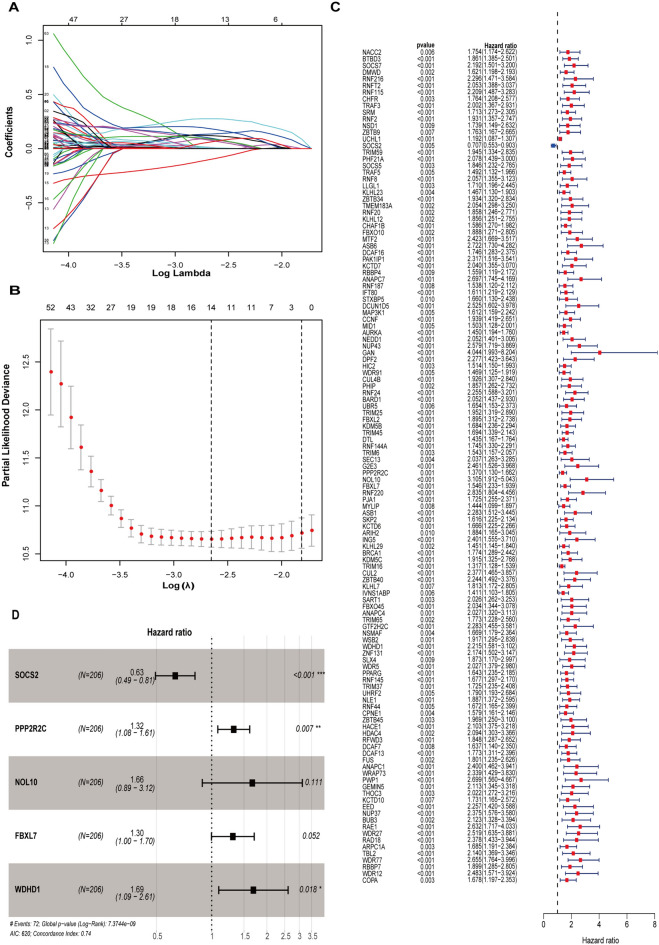
Based on the E3 ubiquitin ligase in the competitive endogenous RNA (ceRNA) network, a circRNA-regulated E3 ubiquitin ligase signature (CRE3UL) was developed. A CRE3UL signature was created using the least absolute shrinkage and selection operator (Lasso) and Cox regression analysis and merged it with clinicopathologic characteristics to generate a nomogram for prognosis prediction. The pRRophetic algorithm was utilized and immunological checkpoints were analyzed to compare the responses of patients in the high-risk group (HRG) and low-risk group (LRG) to targeted therapy and immunotherapy. Finally, experimental research will further elucidate the relationship between E3 ubiquitin ligase signature and HCC.
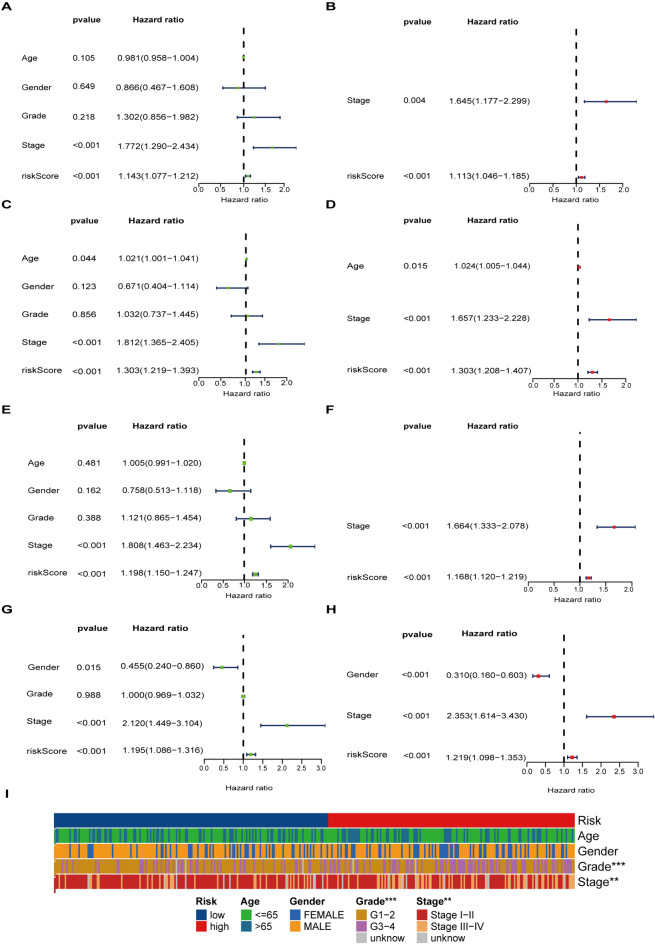
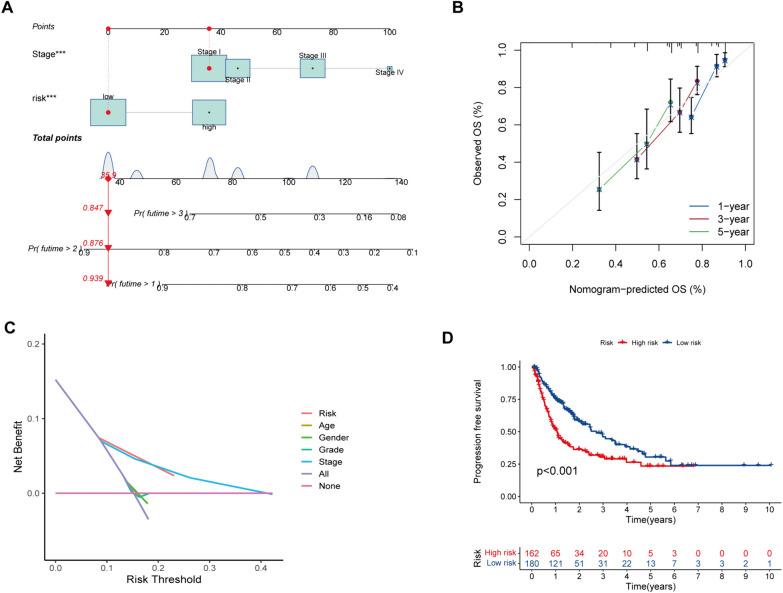
HRG patients were found to have a worse prognosis than LRG patients. Furthermore, significant variations in prognosis were observed among different subgroups based on various clinical characteristics. The CRE3UL signature was identified as being an independent prognostic indicator. The nomogram that combined clinical characteristics and the CRE3UL signature was found to accurately predict the prognosis of HCC patients and demonstrated greater clinical utility than the current TNM staging approach. According to anticancer medication sensitivity predictions, the tumors of HRG patients were more responsive to gefitinib and nilotinib. From immune-checkpoint markers analysis, immunotherapy was identified as being more probable to assist those in the HRG.
We found a significant correlation between the CRE3UL signature and the tumor microenvironment, enabling precise prognosis prediction for HCC patients. Additionally, a nomogram was developed that performs well in predicting the overall survival (OS) of HCC patients. This provides valuable guidance for clinicians in devising specific personalized treatment strategies.
肝细胞癌(HCC)是一种常见的恶性肿瘤,预后较差。环状 RNA(CircRNA)是一种新型 RNA,可调节下游基因转录和翻译,影响 HCC 的进展。然而,E3 连接酶(一类翻译后修饰蛋白)与 circRNA 之间的调控关系尚不清楚。
基于竞争性内源性 RNA(ceRNA)网络中的 E3 泛素连接酶,开发了一个环状 RNA 调节的 E3 泛素连接酶特征(CRE3UL)。使用最小绝对收缩和选择算子(Lasso)和 Cox 回归分析创建 CRE3UL 特征,并将其与临床病理特征合并,生成用于预后预测的列线图。利用 pRRophetic 算法分析免疫检查点,比较高危组(HRG)和低危组(LRG)患者对靶向治疗和免疫治疗的反应。最后,通过实验研究进一步阐明 E3 泛素连接酶特征与 HCC 之间的关系。
HRG 患者的预后明显差于 LRG 患者。此外,根据不同的临床特征,不同亚组之间的预后存在显著差异。CRE3UL 特征被确定为独立的预后指标。结合临床特征和 CRE3UL 特征的列线图被发现能够准确预测 HCC 患者的预后,并且比目前的 TNM 分期方法具有更大的临床实用性。根据抗癌药物敏感性预测,HRG 患者的肿瘤对吉非替尼和尼洛替尼更敏感。通过免疫检查点标志物分析,发现免疫治疗更有可能帮助 HRG 患者。
我们发现 CRE3UL 特征与肿瘤微环境之间存在显著相关性,能够对 HCC 患者进行精确的预后预测。此外,还开发了一个在预测 HCC 患者总生存期(OS)方面表现良好的列线图。这为临床医生制定特定的个性化治疗策略提供了有价值的指导。