Moores Amy N, Uphoff Stephan
Department of Biochemistry, University of Oxford, South Parks Rd, Oxford OX1 3QU, U.K.
J Phys Chem B. 2024 Aug 1;128(30):7291-7303. doi: 10.1021/acs.jpcb.4c01454. Epub 2024 Jun 10.
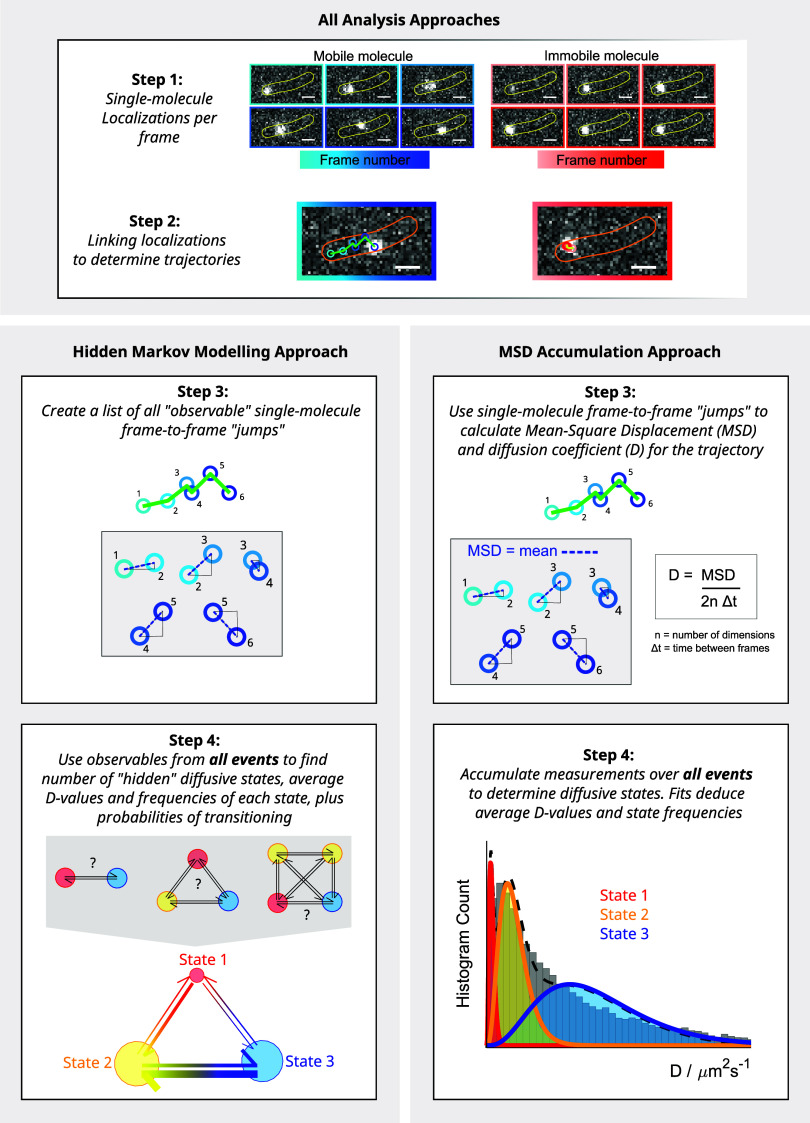
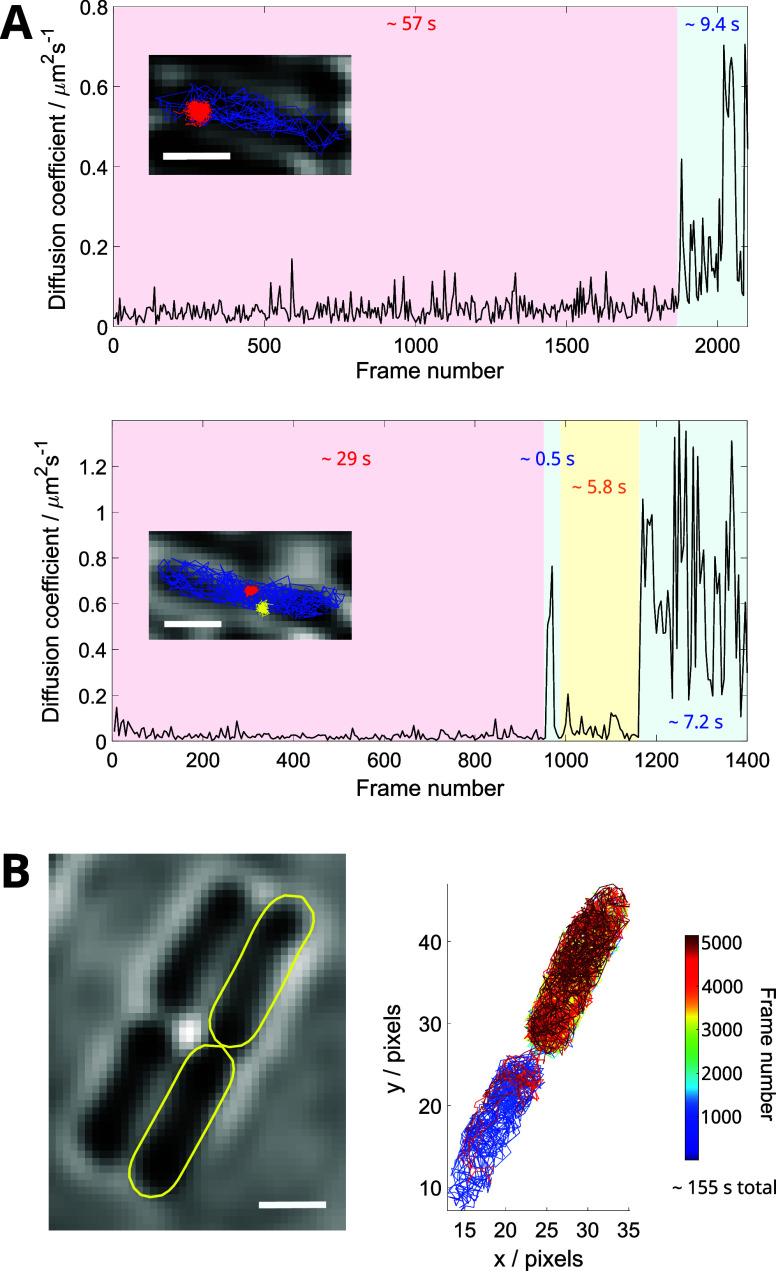
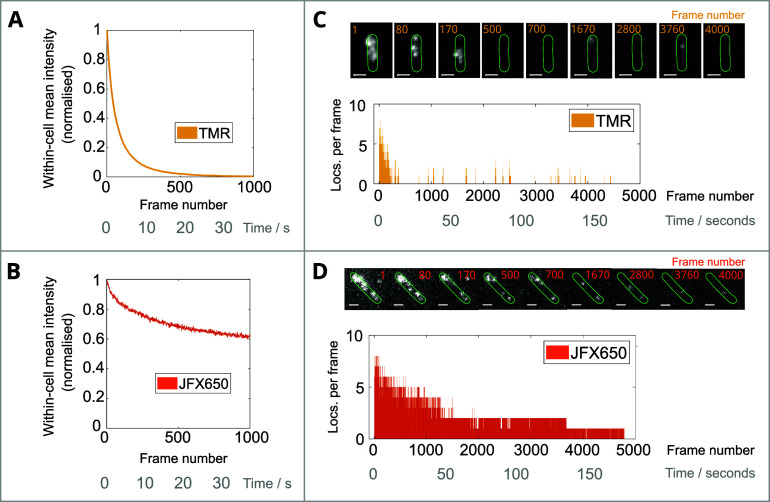
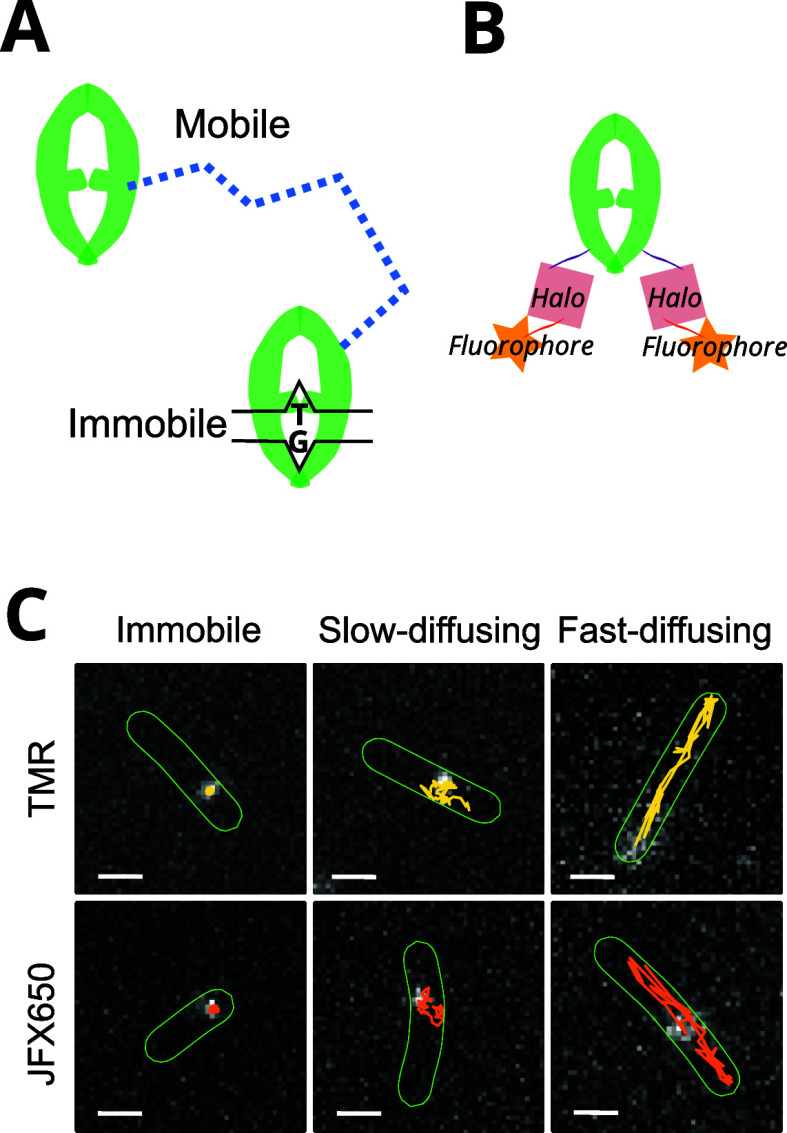
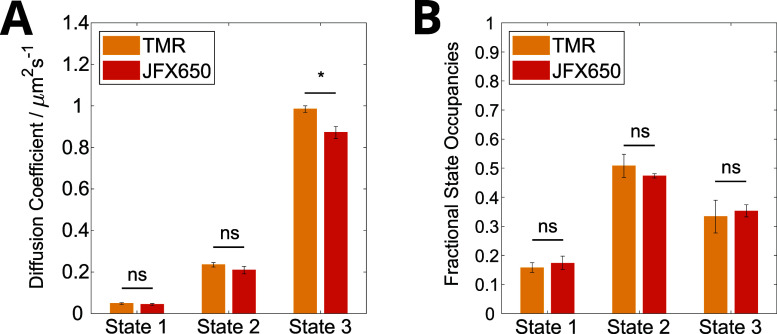
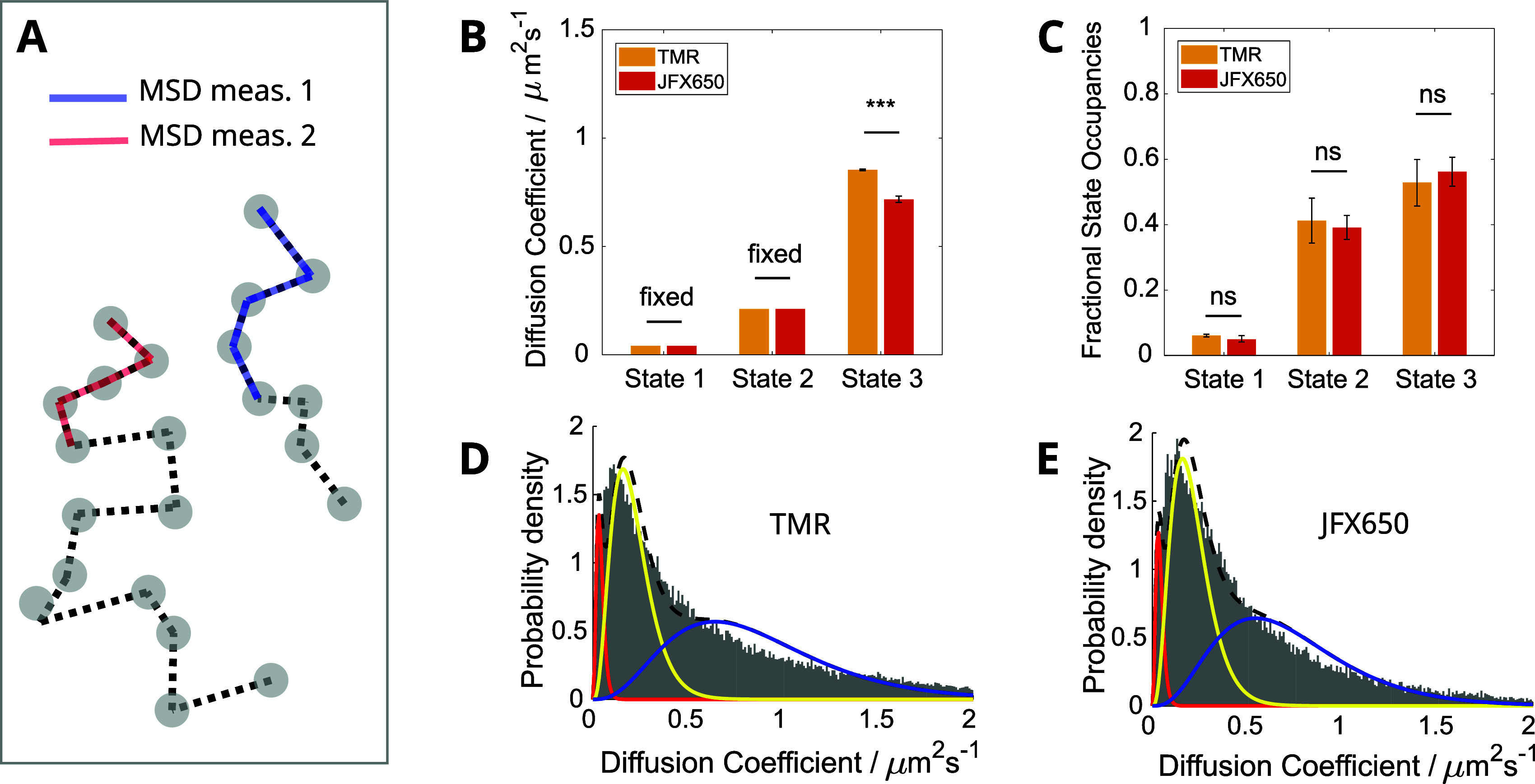
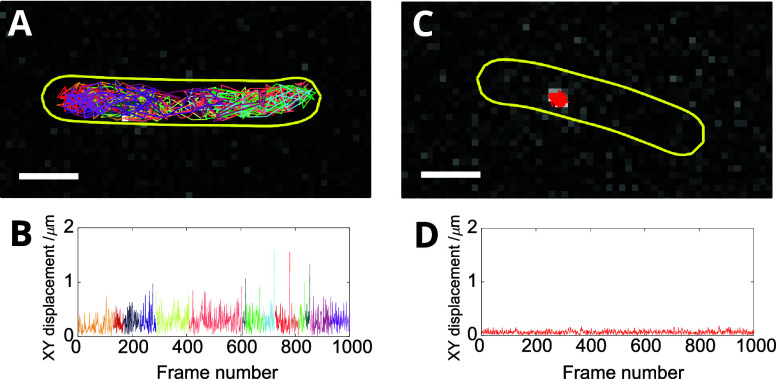
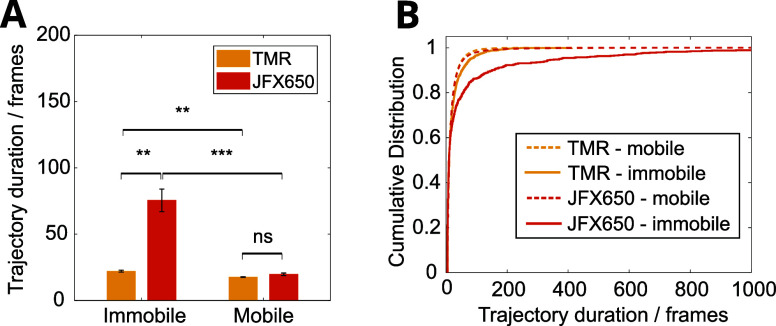
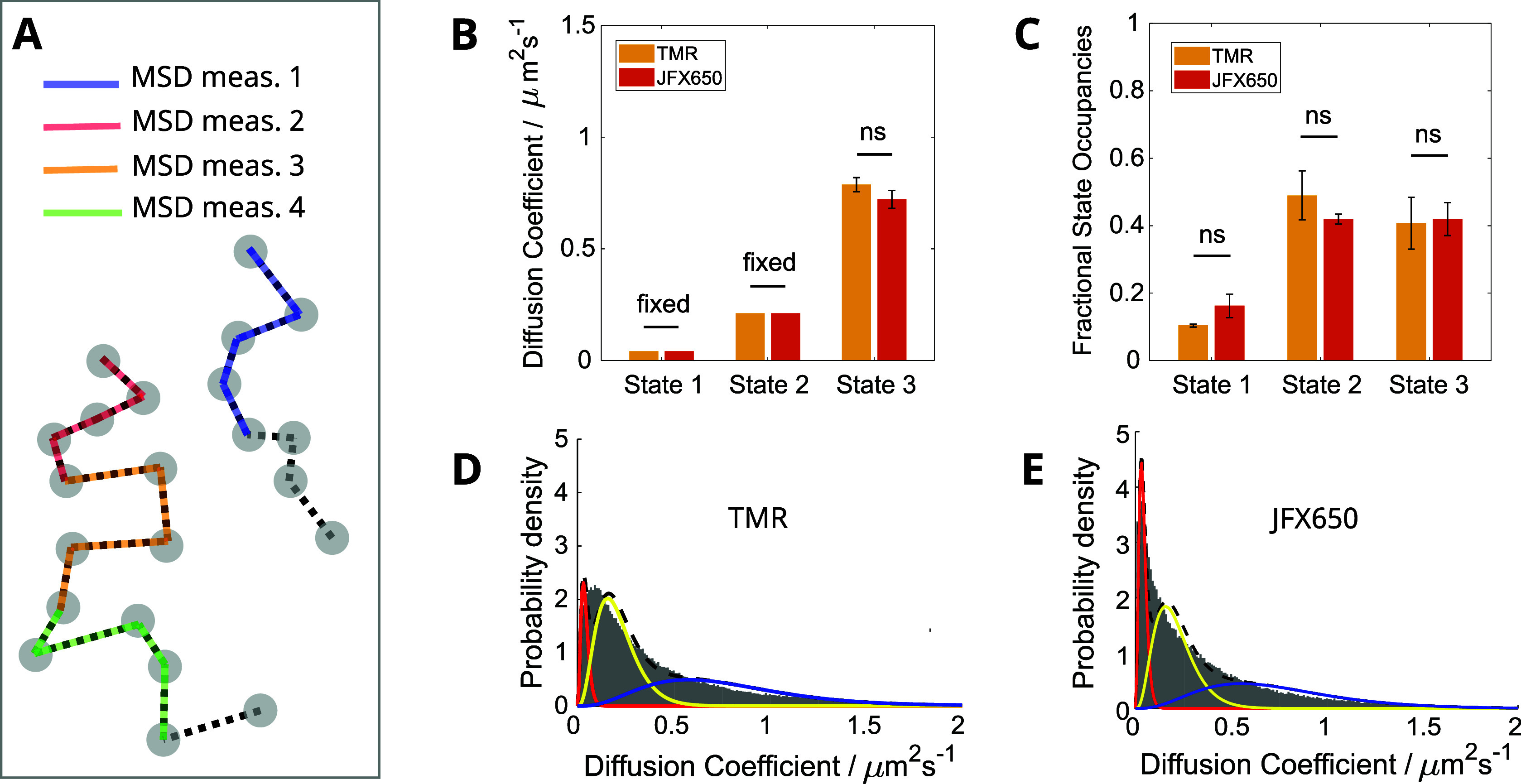
High-speed single-molecule tracking in live cells is becoming an increasingly popular method for quantifying the spatiotemporal behavior of proteins . The method provides a wealth of quantitative information, but users need to be aware of biases that can skew estimates of molecular mobilities. The range of suitable fluorophores for live-cell single-molecule imaging has grown substantially over the past few years, but it remains unclear to what extent differences in photophysical properties introduce biases. Here, we tested two fluorophores with entirely different photophysical properties, one that photoswitches frequently between bright and dark states (TMR) and one that shows exceptional photostability without photoswitching (JFX650). We used a fusion of the DNA repair enzyme MutS to the HaloTag and optimized sample preparation and imaging conditions for both types of fluorophore. We then assessed the reliability of two common data analysis algorithms, mean-square displacement (MSD) analysis and Hidden Markov Modeling (HMM), to estimate the diffusion coefficients and fractions of MutS molecules in different states of motion. We introduce a simple approach that removes discrepancies in the data analyses and show that both algorithms yield consistent results, regardless of the fluorophore used. Nevertheless, each dye has its own strengths and weaknesses, with TMR being more suitable for sampling the diffusive behavior of many molecules, while JFX650 enables prolonged observation of only a few molecules per cell. These characterizations and recommendations should help to standardize measurements for increased reproducibility and comparability across studies.
活细胞中的高速单分子追踪正日益成为一种用于量化蛋白质时空行为的流行方法。该方法能提供丰富的定量信息,但用户需要注意可能会扭曲分子迁移率估计值的偏差。在过去几年中,适用于活细胞单分子成像的荧光团范围大幅扩大,但尚不清楚光物理性质的差异在多大程度上会引入偏差。在这里,我们测试了两种具有完全不同光物理性质的荧光团,一种在亮态和暗态之间频繁光开关(TMR),另一种在无光开关的情况下表现出卓越的光稳定性(JFX650)。我们将DNA修复酶MutS与HaloTag融合,并针对这两种荧光团优化了样品制备和成像条件。然后,我们评估了两种常见数据分析算法,即均方位移(MSD)分析和隐马尔可夫模型(HMM),用于估计处于不同运动状态的MutS分子的扩散系数和比例的可靠性。我们引入了一种简单的方法来消除数据分析中的差异,并表明无论使用何种荧光团,这两种算法都能产生一致的结果。然而,每种染料都有其自身的优缺点,TMR更适合对许多分子的扩散行为进行采样,而JFX650能够对每个细胞中仅少数几个分子进行长时间观察。这些特性描述和建议应有助于规范测量,以提高研究之间的可重复性和可比性。