Section of Internal Medicine, Department of Medicine, Surgery and Neuroscience, University of Siena, Policlinico Le Scotte, Viale Bracci 2, 53100, Siena, Italy.
Division of Internal Medicine I, San Giuseppe Hospital, 50053, Empoli, Italy.
Calcif Tissue Int. 2024 Aug;115(2):160-168. doi: 10.1007/s00223-024-01240-1. Epub 2024 Jun 12.
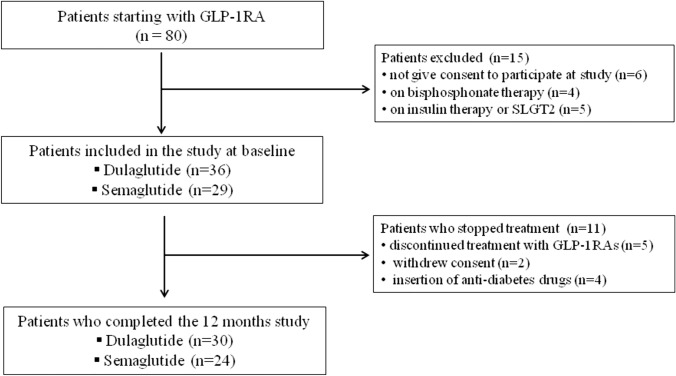
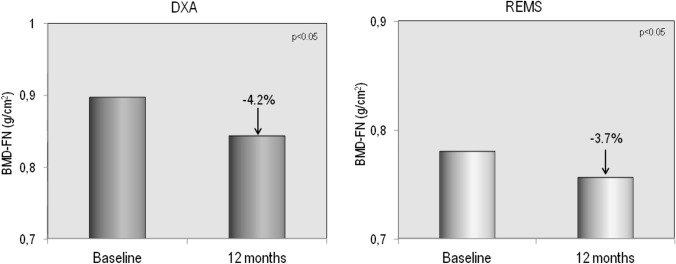
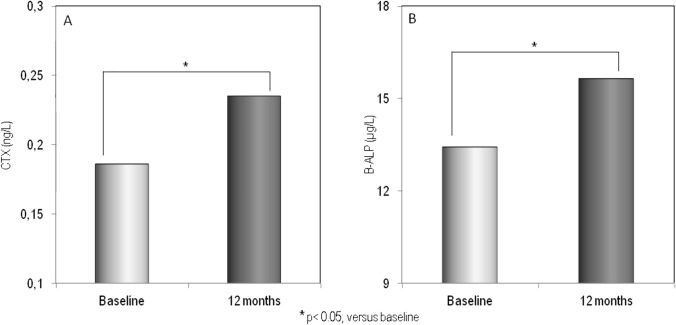
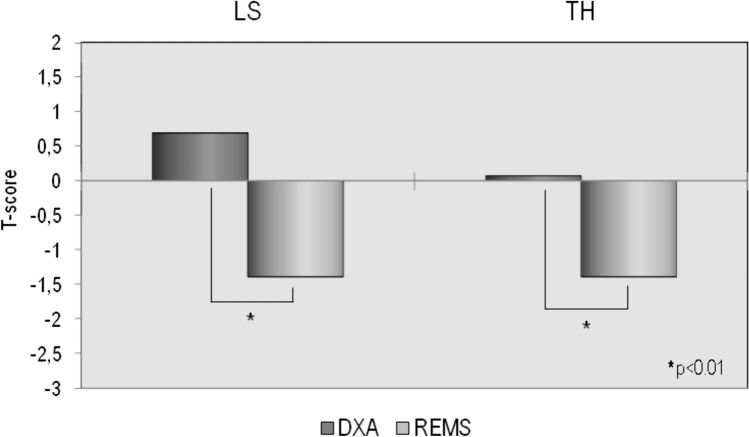
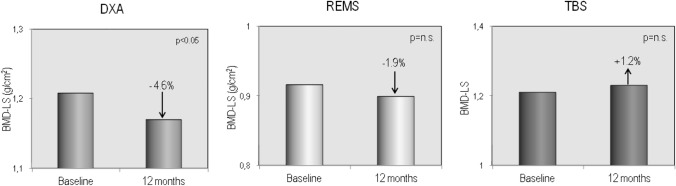
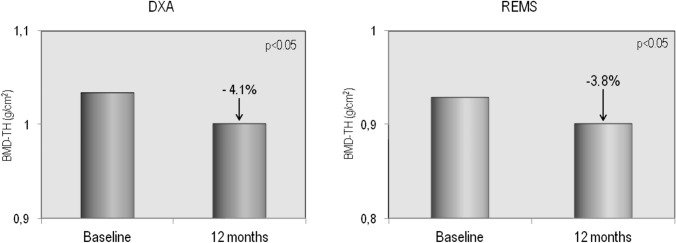
Diabetic osteopathy is a frequent complication in patients with type 2 diabetes mellitus (T2DM). The association between T2DM and increased fracture risk has led to study the impact of new antidiabetic drugs on bone metabolism. Glucagon-like peptide-1 receptor agonists (GLP-1RAs) are incretin mimetic drugs which have many pleiotropic properties. The relationship between GLP-1RAs and bone is very complex: while in vitro and animal studies have demonstrated a protective effect on bone, human studies are scarce. We led a 12 months longitudinal study evaluating bone changes in 65 patients withT2DM for whom a therapy with GLP-1RAs had been planned. Fifty-four T2DM patients completed the 12-month study period; of them, 30 had been treated with weekly dulaglutide and 24 with weekly semaglutide. One-year therapy with GLP-1RAs resulted in a significant reduction in weight and BMI. Bone mineral density (BMD), bone metabolism, trabecular bone score (TBS), adiponectin, and myostatin were evaluated before and after 12 months of GLP-1RAs therapy. After 12 months of therapy bone turnover markers and adiponectin showed a significant increase, while myostatin values showed a modest but significant reduction. BMD-LS by DXA presented a significant reduction while the reduction in BMD-LS by REMS was not significant and TBS values showed a marginal increase. Both DXA and REMS techniques showed a modest but significant reduction in femoral BMD. In conclusion, the use of GLP-1RAs for 12 months preserves bone quality and reactivates bone turnover. Further studies are needed to confirm whether GLP-1RAs could represent a useful therapeutic option for patients with T2DM and osteoporosis.
糖尿病性骨病是 2 型糖尿病(T2DM)患者的常见并发症。T2DM 与骨折风险增加之间的关联促使人们研究新型抗糖尿病药物对骨代谢的影响。胰高血糖素样肽-1 受体激动剂(GLP-1RAs)是肠促胰岛素类似物,具有许多多效性。GLP-1RAs 与骨骼的关系非常复杂:虽然体外和动物研究表明对骨骼有保护作用,但人类研究却很少。我们进行了一项为期 12 个月的纵向研究,评估了 65 例计划接受 GLP-1RA 治疗的 T2DM 患者的骨骼变化。54 例 T2DM 患者完成了 12 个月的研究期;其中 30 例接受每周度度拉糖肽治疗,24 例接受每周度司美格鲁肽治疗。GLP-1RA 治疗 1 年后,体重和 BMI 显著下降。在接受 GLP-1RA 治疗 12 个月前后评估了骨矿物质密度(BMD)、骨代谢、骨小梁评分(TBS)、脂联素和肌肉生长抑制素。治疗 12 个月后,骨转换标志物和脂联素显著增加,而肌肉生长抑制素值略有但显著降低。DXA 检测的 LS-BMD 显著降低,而 REMS 检测的 LS-BMD 降低不显著,TBS 值略有增加。DXA 和 REMS 技术均显示股骨 BMD 略有但显著降低。总之,使用 GLP-1RA 治疗 12 个月可保持骨质量并重新激活骨转换。需要进一步的研究来证实 GLP-1RA 是否可以成为 T2DM 和骨质疏松症患者的有用治疗选择。