Zheng Yue, Zhao Ailin, Yang Yuqi, Wang Laduona, Hu Yifei, Luo Ren, Wu Yijun
Division of Thoracic Tumor Multimodality Treatment, Cancer Center, West China Hospital, Sichuan University, Chengdu, China.
Laboratory of Clinical Cell Therapy, West China Hospital, Sichuan University, Chengdu, China.
JMIR Cancer. 2024 Jun 12;10:e53354. doi: 10.2196/53354.
Metachronous second primary lung cancer (MSPLC) is not that rare but is seldom studied.
We aim to compare real-world survival outcomes between different surgery strategies and radiotherapy for MSPLC.
This retrospective study analyzed data collected from patients with MSPLC between 1988 and 2012 in the Surveillance, Epidemiology, and End Results (SEER) database. Propensity score matching (PSM) analyses and machine learning were performed to compare variables between patients with MSPLC. Survival curves were plotted using the Kaplan-Meier method and were compared using log-rank tests.
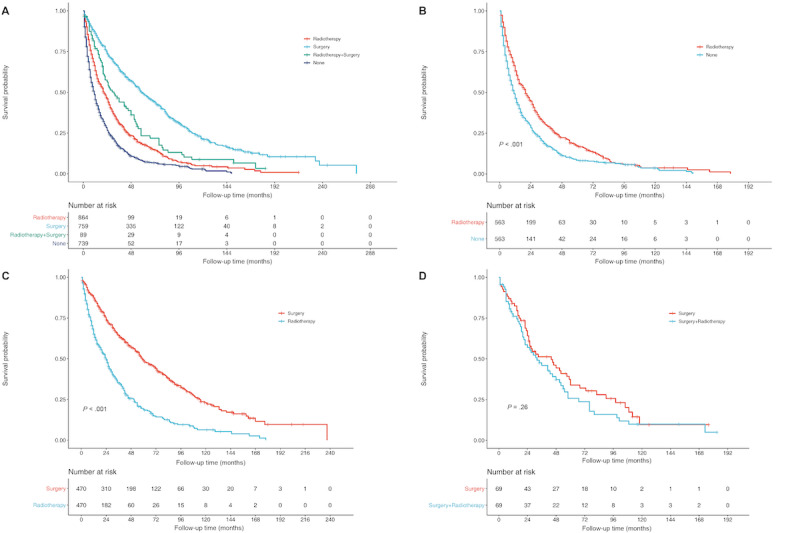
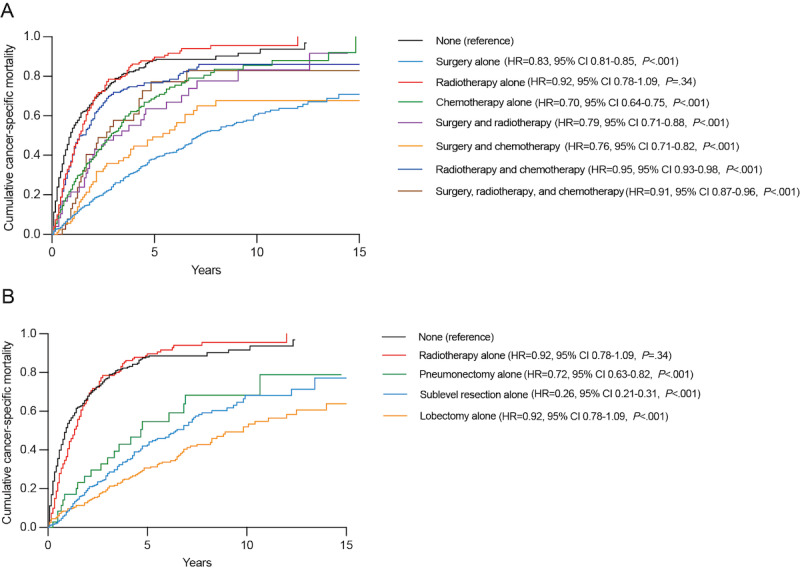
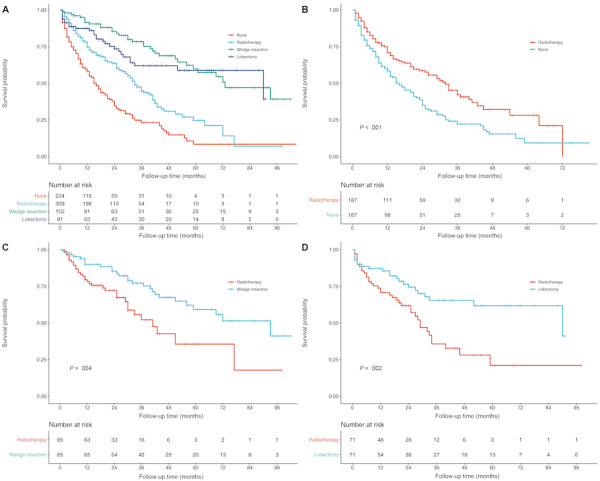
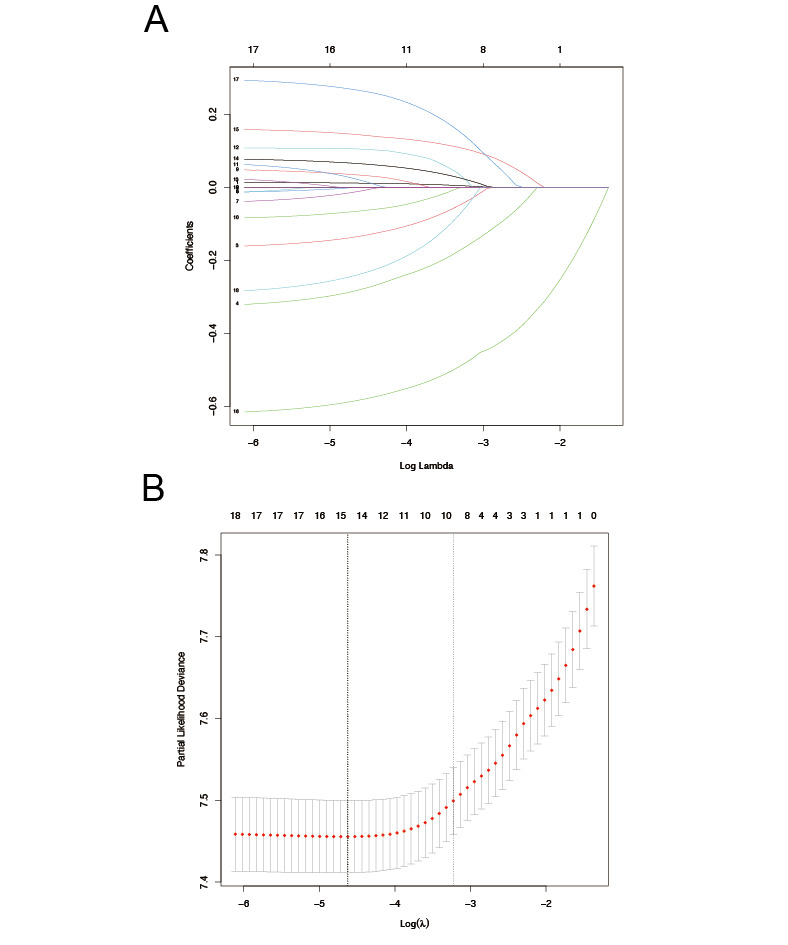
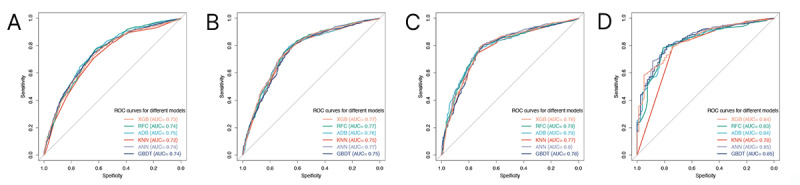
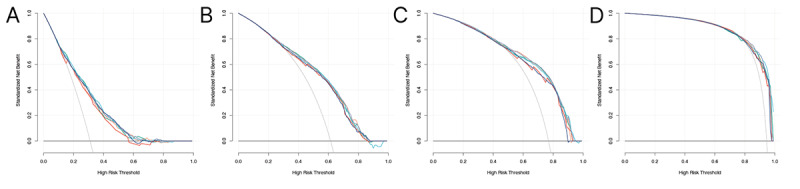
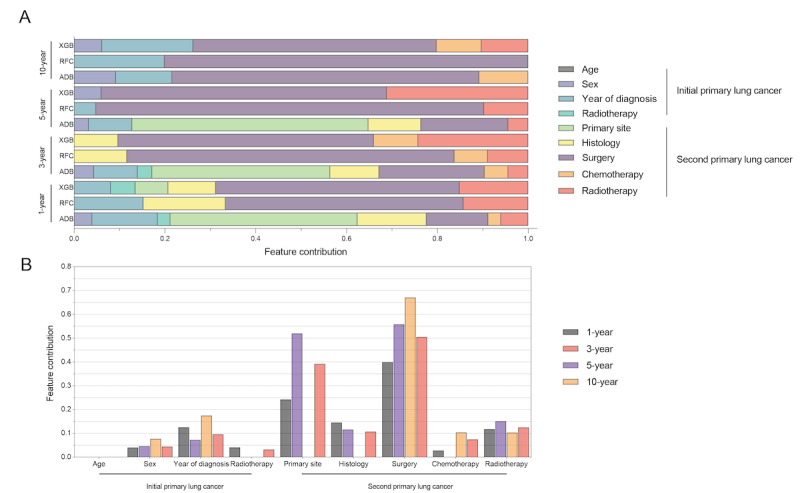
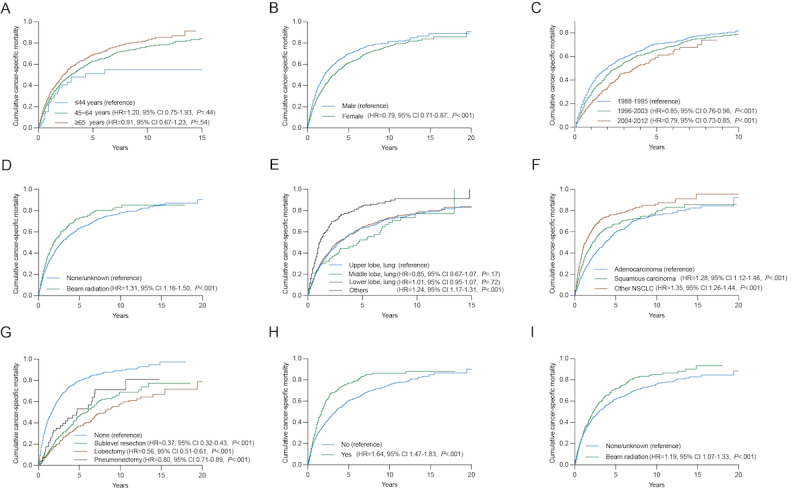
A total of 2451 MSPLC patients were categorized into the following treatment groups: 864 (35.3%) received radiotherapy, 759 (31%) underwent surgery, 89 (3.6%) had surgery plus radiotherapy, and 739 (30.2%) had neither treatment. After PSM, 470 pairs each for radiotherapy and surgery were generated. The surgery group had significantly better survival than the radiotherapy group (P<.001) and the untreated group (563 pairs; P<.001). Further analysis revealed that both wedge resection (85 pairs; P=.004) and lobectomy (71 pairs; P=.002) outperformed radiotherapy in overall survival for MSPLC patients. Machine learning models (extreme gradient boosting, random forest classifier, adaptive boosting) demonstrated high predictive performance based on area under the curve (AUC) values. Least absolute shrinkage and selection operator (LASSO) regression analysis identified 9 significant variables impacting cancer-specific survival, emphasizing surgery's consistent influence across 1 year to 10 years. These variables encompassed age at diagnosis, sex, year of diagnosis, radiotherapy of initial primary lung cancer (IPLC), primary site, histology, surgery, chemotherapy, and radiotherapy of MPSLC. Competing risk analysis highlighted lower mortality for female MPSLC patients (hazard ratio [HR]=0.79, 95% CI 0.71-0.87) and recent IPLC diagnoses (HR=0.79, 95% CI 0.73-0.85), while radiotherapy for IPLC increased mortality (HR=1.31, 95% CI 1.16-1.50). Surgery alone had the lowest cancer-specific mortality (HR=0.83, 95% CI 0.81-0.85), with sublevel resection having the lowest mortality rate among the surgical approaches (HR=0.26, 95% CI 0.21-0.31). The findings provide valuable insights into the factors that influence cumulative cancer-specific mortality.
Surgical resections such as wedge resection and lobectomy confer better survival than radiation therapy for MSPLC, but radiation can be a valid alternative for the treatment of MSPLC.
异时性第二原发性肺癌(MSPLC)并不罕见,但很少被研究。
我们旨在比较MSPLC不同手术策略与放疗的真实世界生存结果。
这项回顾性研究分析了1988年至2012年在监测、流行病学和最终结果(SEER)数据库中收集的MSPLC患者的数据。进行倾向评分匹配(PSM)分析和机器学习以比较MSPLC患者之间的变量。使用Kaplan-Meier方法绘制生存曲线,并使用对数秩检验进行比较。
总共2451例MSPLC患者被分为以下治疗组:864例(35.3%)接受放疗,759例(31%)接受手术,89例(3.6%)接受手术加放疗,739例(30.2%)未接受治疗。PSM后,放疗组和手术组各产生470对匹配病例。手术组的生存率明显高于放疗组(P<0.001)和未治疗组(563对;P<0.001)。进一步分析显示,楔形切除术(85对;P=0.004)和肺叶切除术(71对;P=0.002)在MSPLC患者的总生存方面均优于放疗。机器学习模型(极限梯度提升、随机森林分类器、自适应增强)基于曲线下面积(AUC)值显示出较高的预测性能。最小绝对收缩和选择算子(LASSO)回归分析确定了9个影响癌症特异性生存的显著变量,强调了手术在1年至10年期间的持续影响。这些变量包括诊断年龄、性别、诊断年份、初始原发性肺癌(IPLC)的放疗、原发部位、组织学、手术、化疗以及MSPLC的放疗。竞争风险分析突出显示女性MSPLC患者的死亡率较低(风险比[HR]=0.79,95%置信区间0.71-0.87)以及近期IPLC诊断的患者死亡率较低(HR=0.79,95%置信区间0.73-0.85),而IPLC的放疗会增加死亡率(HR=1.31,95%置信区间1.16-1.50)。单纯手术的癌症特异性死亡率最低(HR=0.83,95%置信区间0.81-0.85),在手术方式中,亚肺叶切除术的死亡率最低(HR=0.26,95%置信区间0.21-0.31)。这些发现为影响累积癌症特异性死亡率的因素提供了有价值的见解。
对于MSPLC,楔形切除术和肺叶切除术等手术切除的生存率优于放射治疗,但放射治疗可以是MSPLC治疗的一种有效替代方法。