Rosell Rafael, Jantus-Lewintre Eloisa, Cao Peng, Cai Xueting, Xing Baojuan, Ito Masaoki, Gomez-Vazquez Jose Luis, Marco-Jordán Mireia, Calabuig-Fariñas Silvia, Cardona Andrés Felipe, Codony-Servat Jordi, Gonzalez Jessica, València-Clua Kevin, Aguilar Andrés, Pedraz-Valdunciel Carlos, Dantes Zahra, Jain Anisha, Chandan S, Molina-Vila Miguel Angel, Arrieta Oscar, Ferrero Macarena, Camps Carlos, González-Cao Maria
Germans Trias i Pujol Research Institute, Badalona (IGTP), Barcelona, Spain.
IOR, Hospital Quiron-Dexeus Barcelona, Barcelona, Spain.
Cell Commun Signal. 2024 Jun 12;22(1):324. doi: 10.1186/s12964-024-01667-x.
KRAS-mutant non-small cell lung cancer (NSCLC) shows a relatively low response rate to chemotherapy, immunotherapy and KRAS-G12C selective inhibitors, leading to short median progression-free survival, and overall survival. The MET receptor tyrosine kinase (c-MET), the cognate receptor of hepatocyte growth factor (HGF), was reported to be overexpressed in KRAS-mutant lung cancer cells leading to tumor-growth in anchorage-independent conditions.
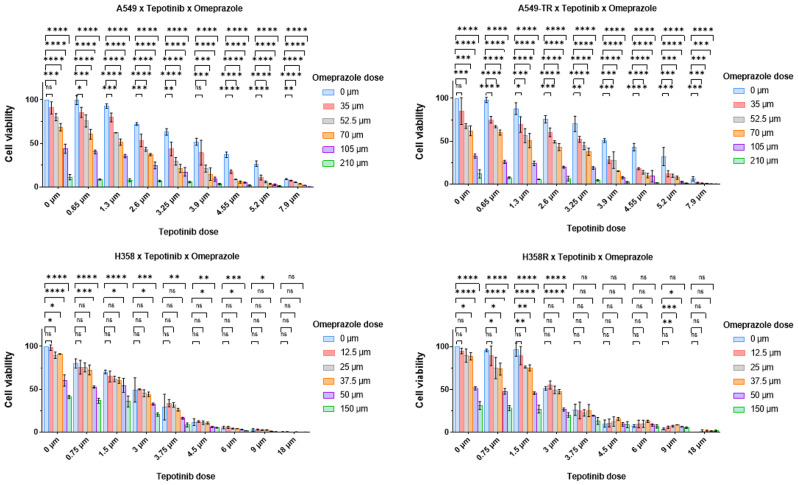
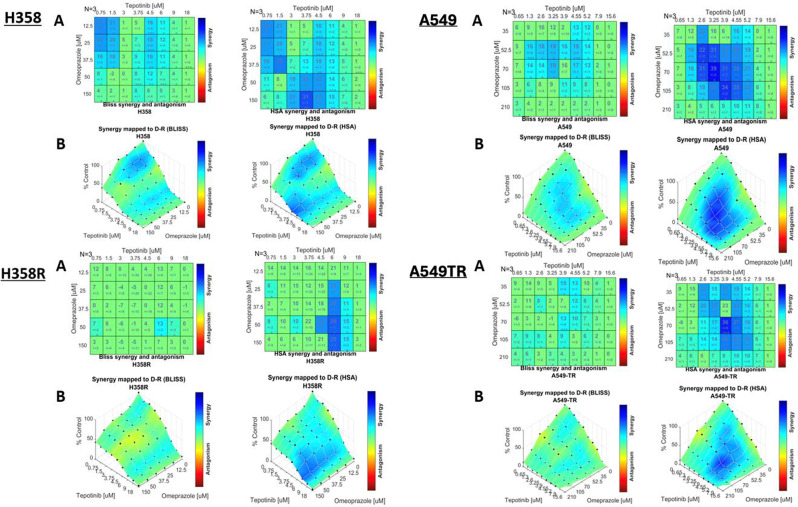
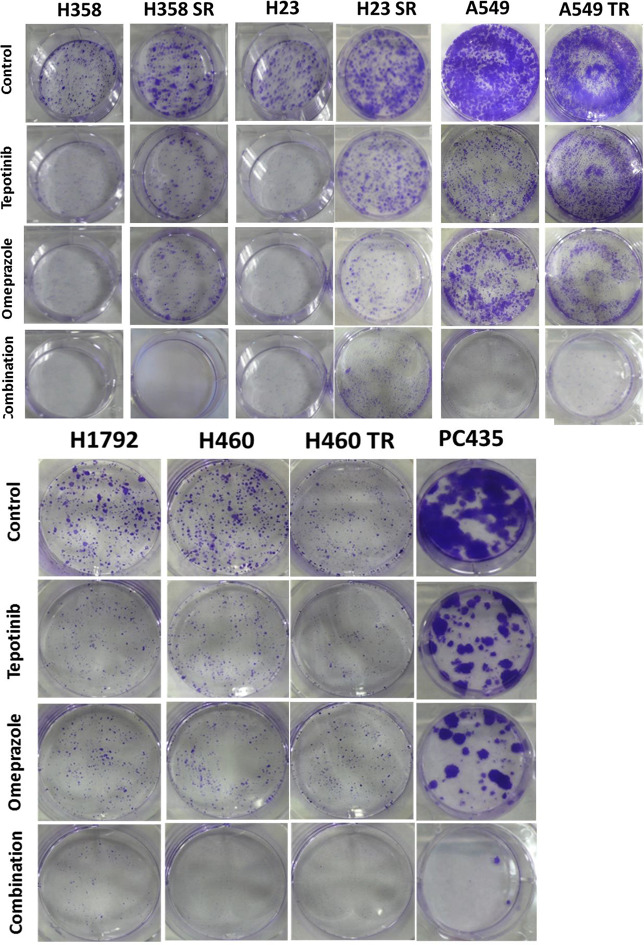
Cell viability assay and synergy analysis were carried out in native, sotorasib and trametinib-resistant KRAS-mutant NSCLC cell lines. Colony formation assays and Western blot analysis were also performed. RNA isolation from tumors of KRAS-mutant NSCLC patients was performed and KRAS and MET mRNA expression was determined by real-time RT-qPCR. In vivo studies were conducted in NSCLC (NCI-H358) cell-derived tumor xenograft model.
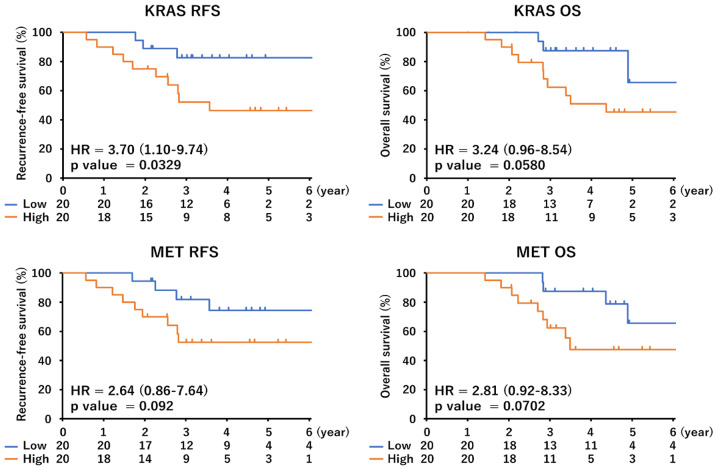
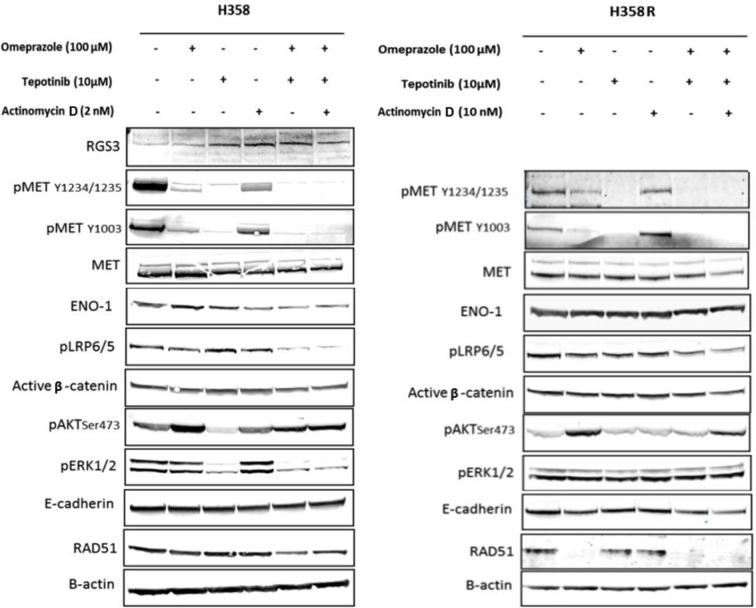
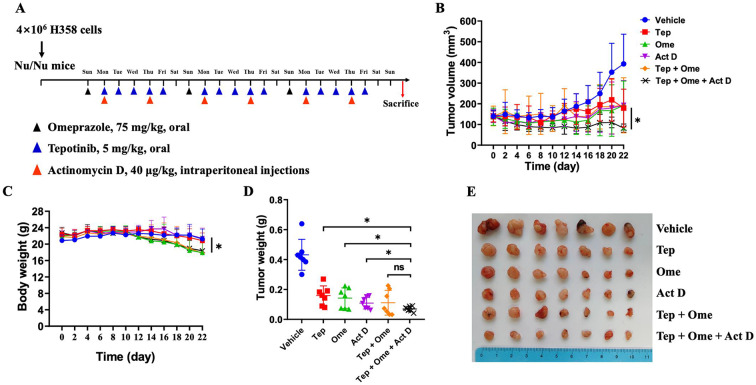
Our research has shown promising activity of omeprazole, a V-ATPase-driven proton pump inhibitor with potential anti-cancer properties, in combination with the MET inhibitor tepotinib in KRAS-mutant G12C and non-G12C NSCLC cell lines, as well as in G12C inhibitor (AMG510, sotorasib) and MEK inhibitor (trametinib)-resistant cell lines. Moreover, in a xenograft mouse model, combination of omeprazole plus tepotinib caused tumor growth regression. We observed that the combination of these two drugs downregulates phosphorylation of the glycolytic enzyme enolase 1 (ENO1) and the low-density lipoprotein receptor-related protein (LRP) 5/6 in the H358 KRAS G12C cell line, but not in the H358 sotorasib resistant, indicating that the effect of the combination could be independent of ENO1. In addition, we examined the probability of recurrence-free survival and overall survival in 40 early lung adenocarcinoma patients with KRAS G12C mutation stratified by KRAS and MET mRNA levels. Significant differences were observed in recurrence-free survival according to high levels of KRAS mRNA expression. Hazard ratio (HR) of recurrence-free survival was 7.291 (p = 0.014) for high levels of KRAS mRNA expression and 3.742 (p = 0.052) for high MET mRNA expression.
We posit that the combination of the V-ATPase inhibitor omeprazole plus tepotinib warrants further assessment in KRAS-mutant G12C and non G12C cell lines, including those resistant to the covalent KRAS G12C inhibitors.
KRAS 突变型非小细胞肺癌(NSCLC)对化疗、免疫疗法和 KRAS-G12C 选择性抑制剂的反应率相对较低,导致中位无进展生存期和总生存期较短。据报道,MET 受体酪氨酸激酶(c-MET)作为肝细胞生长因子(HGF)的同源受体,在 KRAS 突变型肺癌细胞中过表达,导致在非锚定依赖条件下肿瘤生长。
在天然的、对索托拉西布和曲美替尼耐药的 KRAS 突变型 NSCLC 细胞系中进行细胞活力测定和协同分析。还进行了集落形成试验和蛋白质印迹分析。从 KRAS 突变型 NSCLC 患者的肿瘤中提取 RNA,并通过实时 RT-qPCR 测定 KRAS 和 MET mRNA 表达。在 NSCLC(NCI-H358)细胞衍生的肿瘤异种移植模型中进行体内研究。
我们的研究表明,奥美拉唑(一种具有潜在抗癌特性的 V-ATP 酶驱动的质子泵抑制剂)与 MET 抑制剂替泊替尼联合使用,在 KRAS 突变型 G12C 和非 G12C NSCLC 细胞系以及对 G12C 抑制剂(AMG510、索托拉西布)和 MEK 抑制剂(曲美替尼)耐药的细胞系中显示出有前景的活性。此外,在异种移植小鼠模型中,奥美拉唑加替泊替尼的联合用药导致肿瘤生长消退。我们观察到,在 H358 KRAS G12C 细胞系中,这两种药物的联合使用下调了糖酵解酶烯醇化酶 1(ENO1)和低密度脂蛋白受体相关蛋白(LRP)5/6 的磷酸化,但在对索托拉西布耐药的 H358 细胞系中未观察到这种现象,这表明联合用药的效果可能与 ENO1 无关。此外,我们检查了 40 例 KRAS G12C 突变的早期肺腺癌患者按 KRAS 和 MET mRNA 水平分层后的无复发生存率和总生存率的概率。根据 KRAS mRNA 高表达水平,观察到无复发生存率有显著差异。KRAS mRNA 高表达水平的无复发生存风险比(HR)为 7.291(p = 0.014),MET mRNA 高表达水平的 HR 为 3.742(p = 0.052)。
我们认为,V-ATP 酶抑制剂奥美拉唑加替泊替尼的联合用药值得在 KRAS 突变型 G12C 和非 G12C 细胞系中进一步评估,包括那些对共价 KRAS G12C 抑制剂耐药的细胞系。