Barakeh Wael, Zein Omar, Hemdanieh Maya, Sleem Bshara, Nassereddine Mohamad
Orthopedic Surgery, American University of Beirut, Beirut, LBN.
Cureus. 2024 May 13;16(5):e60201. doi: 10.7759/cureus.60201. eCollection 2024 May.
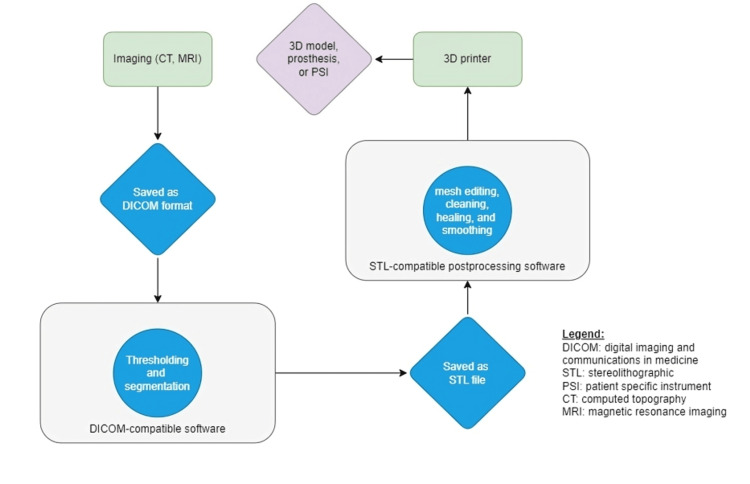
In the evolving field of orthopedic surgery, the integration of three-dimensional printing (3D printing) has emerged as a transformative technology, particularly in addressing the rising incidence of degenerative joint diseases. The integration of 3D printing technology in hip arthroplasty offers substantial advantages throughout the surgical process. In preoperative planning, 3D models enable meticulous assessments, aiding in accurate implant selection and precise surgical strategies. Intraoperatively, the technology contributes to precise prosthesis design, reducing operation duration, X-ray exposures, and blood loss. Beyond surgery, 3D printing revolutionizes medical equipment production, imaging, and implant design, showcasing benefits such as enhanced osseointegration and reduced stress shielding with titanium cups. Challenges include a higher risk of postoperative infection due to the porous surfaces of 3D-printed implants, technical complexities in the printing process, and the need for skilled manpower. Despite these challenges, the evolving nature of 3D printing technologies underscores the importance of relying on existing orthopedic surgical practices while emphasizing the need for standardized guidelines to fully harness its potential in improving patient care.
在不断发展的骨科手术领域,三维打印(3D打印)的整合已成为一项变革性技术,尤其是在应对退行性关节疾病发病率不断上升的问题上。3D打印技术在髋关节置换术中的整合在整个手术过程中具有显著优势。在术前规划中,3D模型有助于进行细致评估,辅助准确选择植入物和制定精确的手术策略。在手术过程中,该技术有助于精确的假体设计,减少手术时间、X射线暴露和失血量。手术之外,3D打印彻底改变了医疗设备生产、成像和植入物设计,展现出诸如增强骨整合以及使用钛杯减少应力遮挡等优势。挑战包括3D打印植入物多孔表面导致的术后感染风险更高、打印过程中的技术复杂性以及对技术熟练人力的需求。尽管存在这些挑战,但3D打印技术的不断发展凸显了依靠现有骨科手术实践的重要性,同时强调需要标准化指南以充分发挥其在改善患者护理方面的潜力。