Cloyd Colleen P, Macedone Danielle, Merandi Jenna, Pierson Shawn, Sellas Wcislo Maria, Lutmer Jeffrey, MacDonald Jennifer, Ayad Onsy, Kalata Lindsay, Thompson R Zachary
From the Department of Pharmacy, Nationwide Children's Hospital, Columbus Ohio.
Department of Critical Care Medicine, Nationwide Children's Hospital, Columbus, Ohio.
Pediatr Qual Saf. 2024 Jun 11;9(3):e741. doi: 10.1097/pq9.0000000000000741. eCollection 2024 May-Jun.
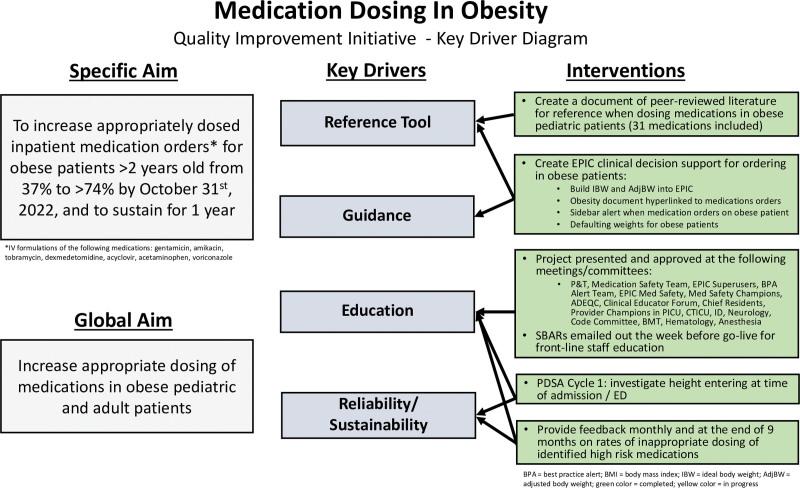
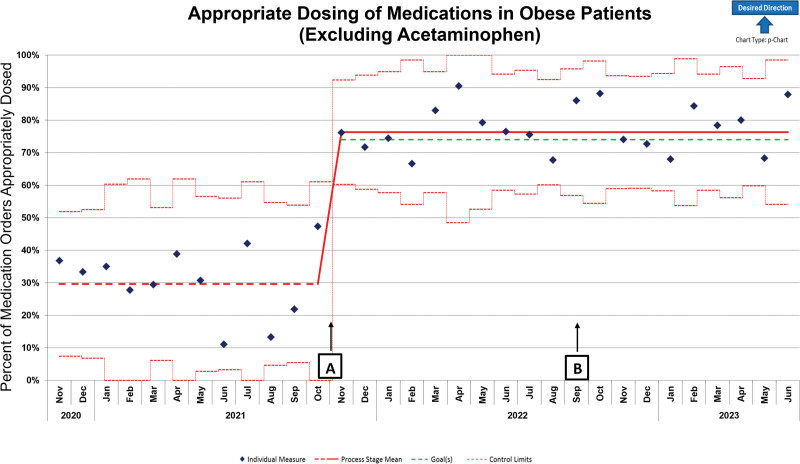
Emerging evidence supports the use of alternative dosing weights for medications in patients with obesity. Pediatric obesity presents a particular challenge because most medications are dosed based on patient weight. Additionally, building system-wide pediatric obesity safeguards is difficult due to pediatric obesity definitions of body mass index-percentile-for-age via the Center for Disease Control growth charts. We describe a quality initiative to increase appropriate medication dosing in inpatients with obesity. The specific aim was to increase appropriate dosing for 7 high-risk medications in inpatients with obesity ≥2 years old from 37% to >74% and to sustain for 1 year.
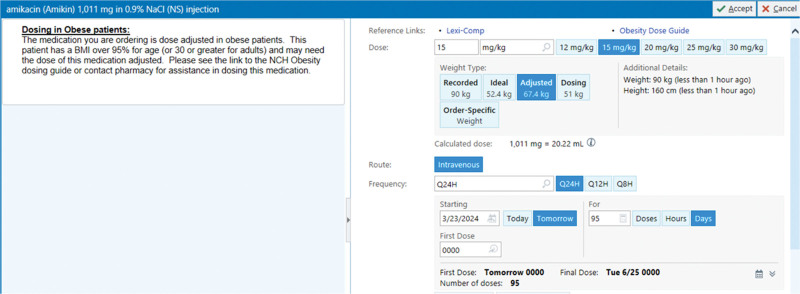
The Institute for Healthcare Improvement model for improvement was used to plan interventions and track outcomes progress. Interventions included a literature review to establish internal dosing guidance, electronic health record (EHR) functionality to identify pediatric patients with obesity, a default selection for medication weight with an opt-out, and obtaining patient heights in the emergency department.
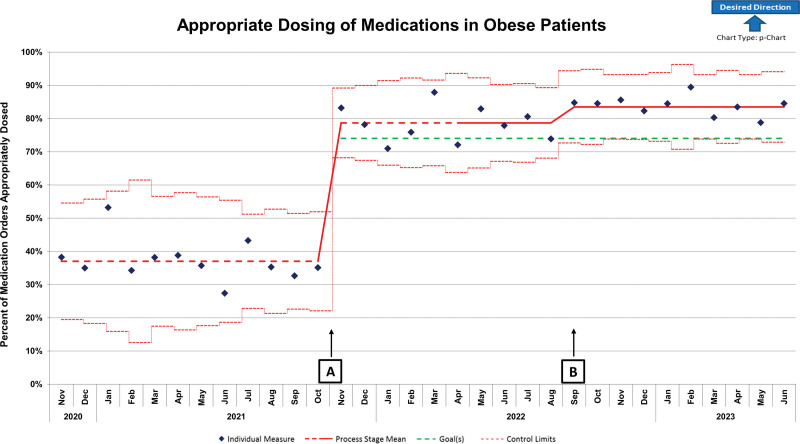
Appropriate dosing weight use in medication ordered for patients with obesity increased from 37% to 83.4% and was sustained above the goal of 74% for 12 months.
Implementation of EHR-based clinical decision support has increased appropriate evidence-based dosing of medications in pediatric and adult inpatients with obesity. Future studies should investigate the clinical and safety implications of using alternative dosing weights in pediatric patients.
新出现的证据支持肥胖患者使用替代给药体重来用药。儿童肥胖带来了特殊挑战,因为大多数药物是根据患者体重给药的。此外,由于疾病控制中心生长图表中儿童肥胖的年龄别体重指数百分位定义,建立全系统的儿童肥胖保障措施很困难。我们描述了一项旨在增加肥胖住院患者适当药物剂量的质量改进计划。具体目标是将≥2岁肥胖住院患者7种高风险药物的适当给药率从37%提高到>74%,并维持1年。
采用医疗保健改进研究所的改进模型来规划干预措施并跟踪结果进展。干预措施包括进行文献综述以制定内部给药指南、电子健康记录(EHR)功能以识别肥胖儿科患者、默认选择药物体重并可选择退出,以及在急诊科获取患者身高。
为肥胖患者开具的药物中适当给药体重的使用率从37%提高到83.4%,并在12个月内维持在74%以上的目标水平。
基于EHR的临床决策支持的实施增加了肥胖儿科和成人住院患者药物基于证据的适当给药。未来的研究应调查在儿科患者中使用替代给药体重的临床和安全影响。