Majumdar Atreye, Siva Venkatesh Indira Priya, Swarup Vivek, Basu Anirban
National Brain Research Centre, Manesar, Haryana, India.
Department of Neurobiology and Behaviour, University of California, Irvine, California, USA.
mBio. 2024 Jul 17;15(7):e0132124. doi: 10.1128/mbio.01321-24. Epub 2024 Jun 13.
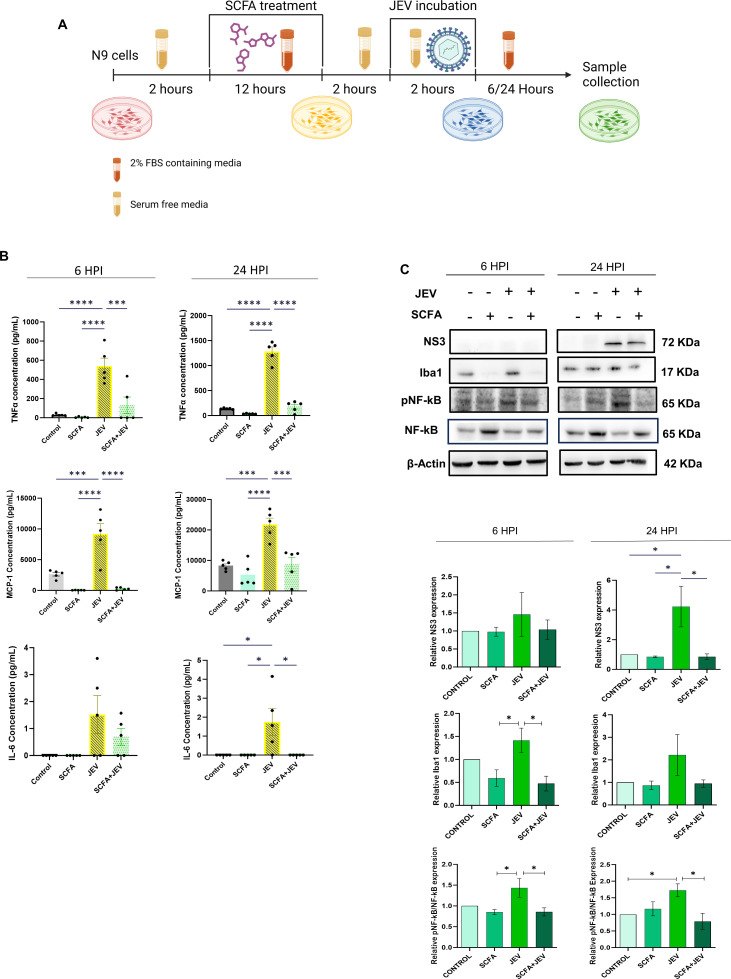
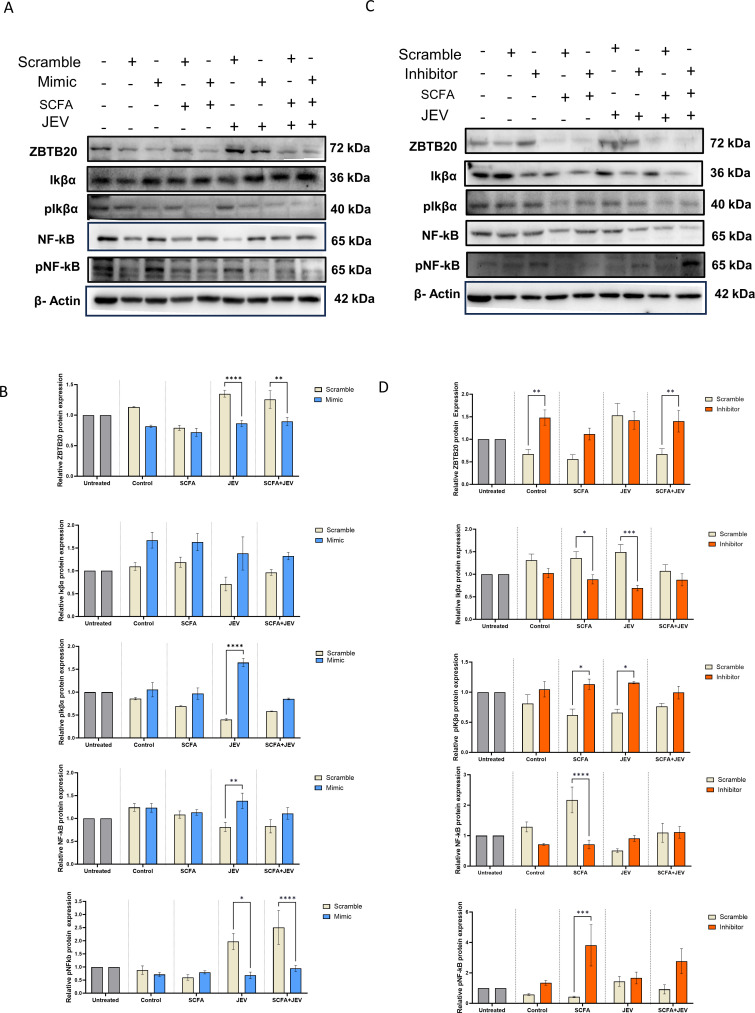
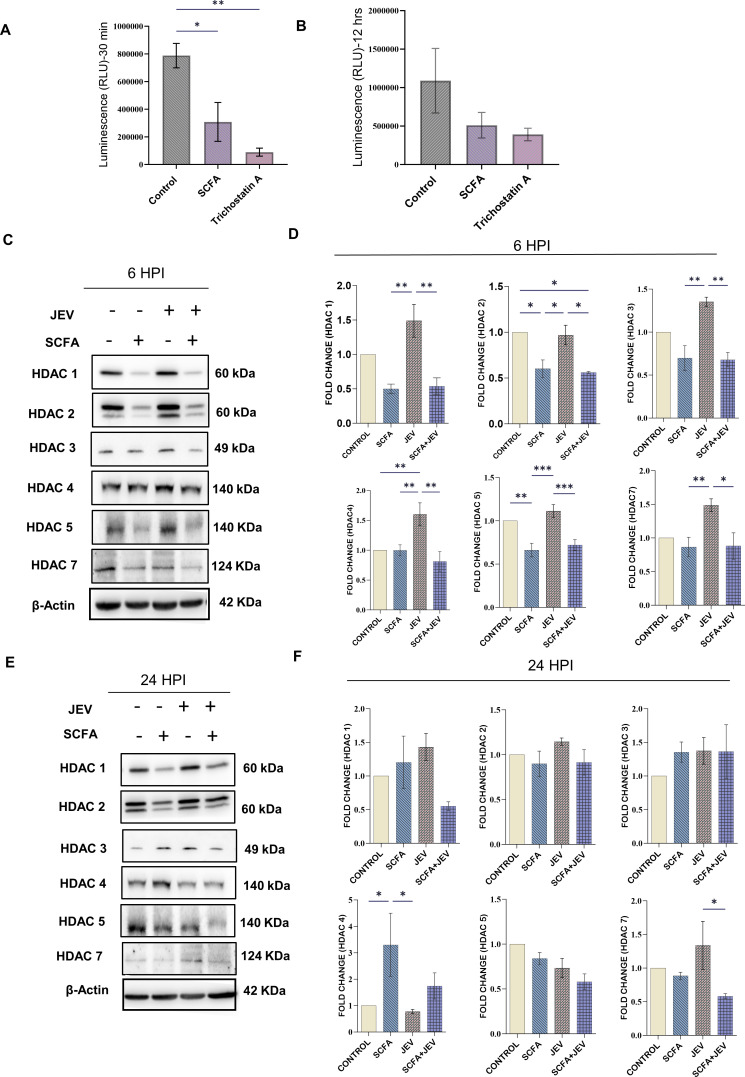
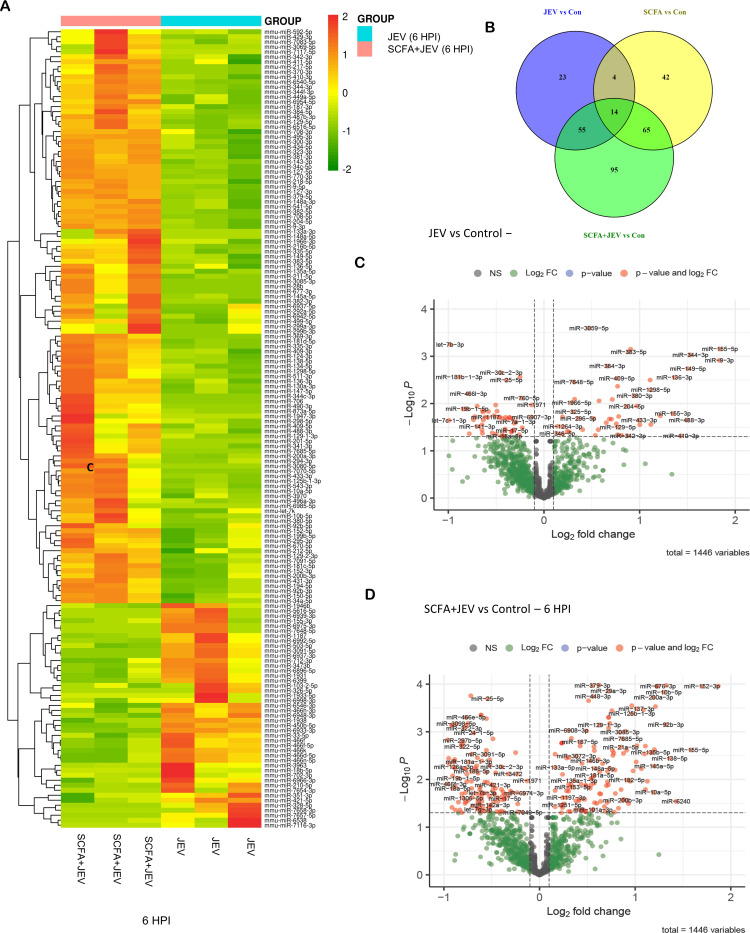
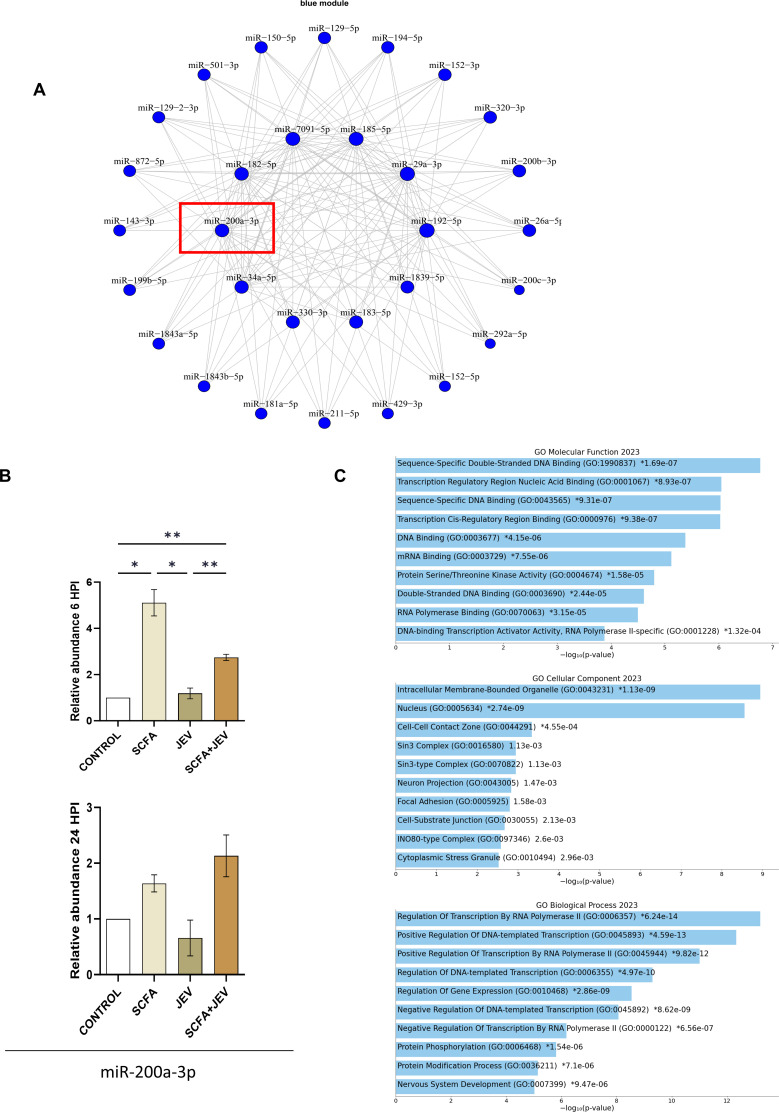
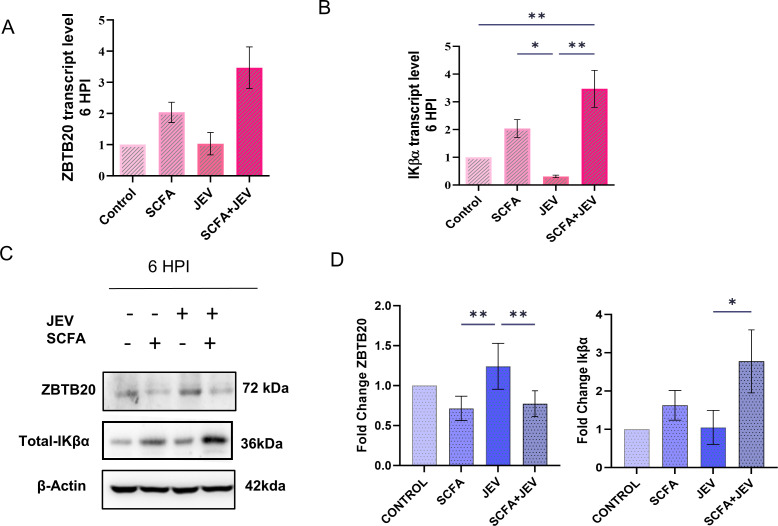
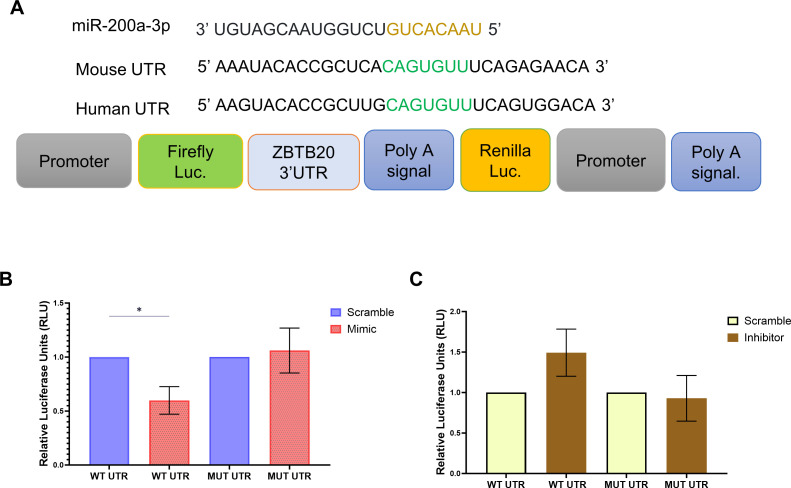
Japanese encephalitis virus (JEV), a member of the Flaviviridae family, is a leading cause of viral encephalitis in humans. Survivors of this infection often develop lifelong neurological sequelae. Short-chain fatty acids (SCFAs) produced in the gut are vital mediators of the gut-brain axis. We aimed to study microRNA-based mechanisms of SCFAs in an model of JEV infection. N9 microglial cells were pretreated with SCFA cocktail before JEV infection. Cytokine bead analysis, immunoblotting, and PCR were performed to analyze relevant inflammatory markers. microRNA sequencing was performed using Illumina Hiseq, and bioinformatics tools were used for differentially expressed (DE) miRNAs and weighted gene co-expression network analysis (WGCNA). microRNA mimic/inhibitor experiments and luciferase assay were performed to study miRNA-target interaction. A significant reduction in monocyte chemoattractant protein (MCP1) and tumor necrosis factor alpha (TNFα) along with reduced expression of phospho-nuclear factor kappa B (phospho-NF-κB) was observed in SCFA conditions. Significant attenuation of histone deacetylase activity and protein expression was recorded. miRNA sequencing revealed 160 DE miRNAs in SCFA + JEV-treated cells at 6 h post-infection. WGCNA revealed miR-200a-3p, a hub miRNA significantly upregulated in SCFA conditions. Transcription factor ZBTB20 was bioinformatically predicted and validated as a gene target for miR-200a-3p. Further miRNA mimic/inhibitor assay demonstrated that miR-200-3p regulated ZBTB20 along with Iκβα that possibly dampened NF-κB signal activation downstream.
The gut-brain axis plays a pivotal role in the physiological state of an organism. Gut microbiota-derived metabolites are known to play a role in brain disorders including neuroviral infections. Short-chain fatty acids (SCFAs) appear to quench inflammatory markers in Japanese encephalitis virus-infected microglial cells . Mechanistically, we demonstrate the interaction between miR-200a-3p and ZBTB20 in regulating the canonical nuclear factor kappa B (NF-κB) signaling pathway via transcriptional regulation of Iκβα. Findings of this study pave the way to a better understanding of SCFA mechanisms that can be used to develop strategies against viral neuroinflammation.
日本脑炎病毒(JEV)是黄病毒科的成员,是人类病毒性脑炎的主要病因。这种感染的幸存者往往会出现终身神经后遗症。肠道中产生的短链脂肪酸(SCFAs)是肠脑轴的重要介质。我们旨在研究JEV感染模型中基于微小RNA的SCFAs机制。在JEV感染前,用SCFA混合物预处理N9小胶质细胞。进行细胞因子珠分析、免疫印迹和PCR以分析相关炎症标志物。使用Illumina Hiseq进行微小RNA测序,并使用生物信息学工具进行差异表达(DE)微小RNA和加权基因共表达网络分析(WGCNA)。进行微小RNA模拟物/抑制剂实验和荧光素酶测定以研究微小RNA与靶标的相互作用。在SCFA条件下,观察到单核细胞趋化蛋白(MCP1)和肿瘤坏死因子α(TNFα)显著减少,同时磷酸化核因子κB(磷酸化-NF-κB)的表达降低。记录到组蛋白脱乙酰酶活性和蛋白表达显著减弱。微小RNA测序显示,在感染后6小时,SCFA + JEV处理的细胞中有160种DE微小RNA。WGCNA显示,miR-200a-3p是一种在SCFA条件下显著上调的枢纽微小RNA。通过生物信息学预测并验证转录因子ZBTB20是miR-200a-3p的基因靶标。进一步的微小RNA模拟物/抑制剂测定表明,miR-200-3p调节ZBTB20以及Iκβα,这可能会抑制下游NF-κB信号激活。
肠脑轴在生物体的生理状态中起关键作用。已知肠道微生物群衍生的代谢产物在包括神经病毒感染在内的脑部疾病中起作用。短链脂肪酸(SCFAs)似乎可以抑制日本脑炎病毒感染的小胶质细胞中的炎症标志物。从机制上讲,我们证明了miR-200a-3p与ZBTB20之间通过对Iκβα的转录调控来调节经典核因子κB(NF-κB)信号通路的相互作用。本研究结果为更好地理解可用于制定抗病毒性神经炎症策略的SCFA机制铺平了道路。