Stein Richard A, Riber Leise
Department of Chemical and Biomolecular Engineering, NYU Tandon School of Engineering, 6 MetroTech Center, Brooklyn, NY 11201, USA.
Department of Plant & Environmental Sciences, University of Copenhagen, Thorvaldsensvej 40, DK-1871 Frederiksberg, Denmark.
Microlife. 2023 Jun 16;4:uqad032. doi: 10.1093/femsml/uqad032. eCollection 2023.
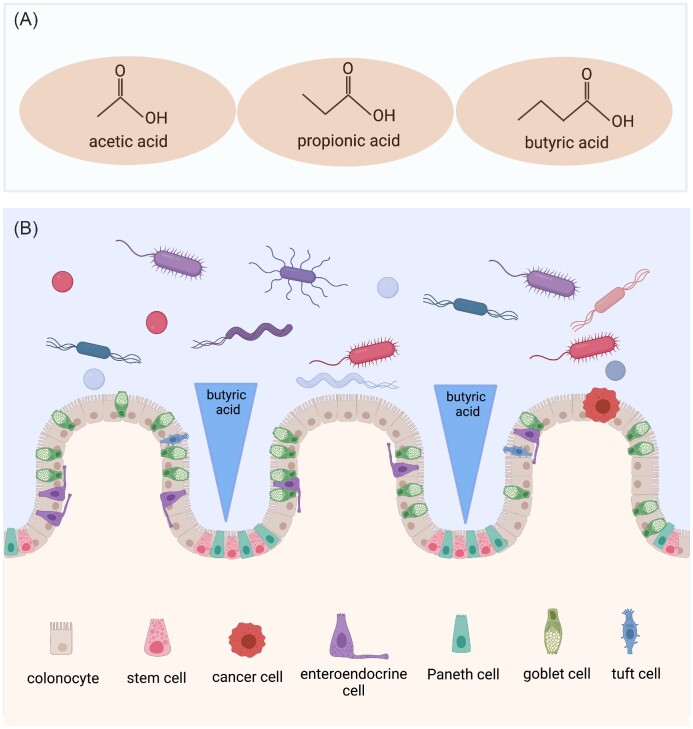
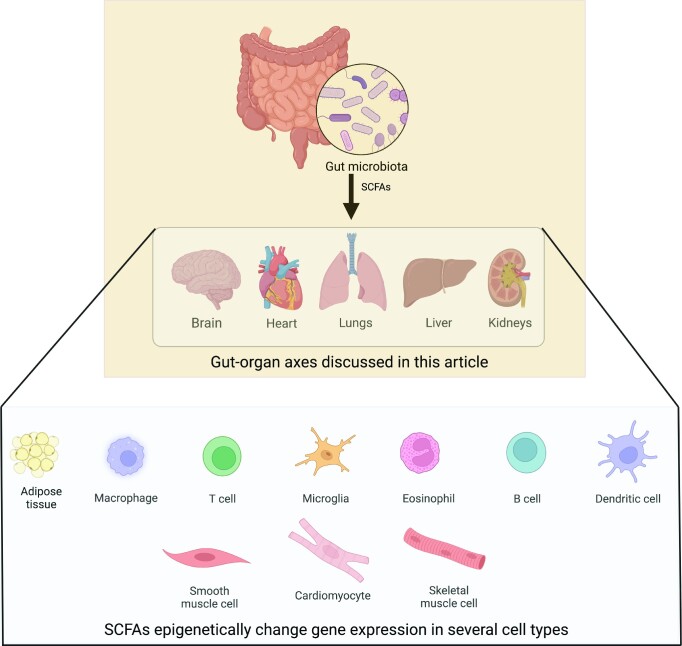
Adult humans harbor at least as many microbial cells as eukaryotic ones. The largest compartment of this diverse microbial population, , encompasses the collection of bacteria, archaea, viruses, and eukaryotic organisms that populate the gastrointestinal tract, and represents a complex and dynamic ecosystem that has been increasingly implicated in health and disease. The gut microbiota carries ∼100-to-150-times more genes than the human genome and is intimately involved in development, homeostasis, and disease. Of the several microbial metabolites that have been studied, short-chain fatty acids emerge as a group of molecules that shape gene expression in several types of eukaryotic cells by multiple mechanisms, which include DNA methylation changes, histone post-translational modifications, and microRNA-mediated gene silencing. Butyric acid, one of the most extensively studied short-chain fatty acids, reaches higher concentrations in the colonic lumen, where it provides a source of energy for healthy colonocytes, and its concentrations decrease towards the bottom of the colonic crypts, where stem cells reside. The lower butyric acid concentration in the colonic crypts allows undifferentiated cells, such as stem cells, to progress through the cell cycle, pointing towards the importance of the crypts in providing them with a protective niche. In cancerous colonocytes, which metabolize relatively little butyric acid and mostly rely on glycolysis, butyric acid preferentially acts as a histone deacetylase inhibitor, leading to decreased cell proliferation and increased apoptosis. A better understanding of the interface between the gut microbiota metabolites and epigenetic changes in eukaryotic cells promises to unravel in more detail processes that occur physiologically and as part of disease, help develop novel biomarkers, and identify new therapeutic modalities.
成年人体内的微生物细胞数量至少与真核细胞一样多。这个多样的微生物群体中最大的部分,包括存在于胃肠道中的细菌、古菌、病毒和真核生物,代表了一个复杂且动态的生态系统,它与健康和疾病的关系日益密切。肠道微生物群携带的基因比人类基因组多约100至150倍,并且与发育、体内平衡和疾病密切相关。在已研究的几种微生物代谢产物中,短链脂肪酸作为一类通过多种机制影响几种真核细胞基因表达的分子出现,这些机制包括DNA甲基化变化、组蛋白翻译后修饰和微小RNA介导的基因沉默。丁酸是研究最广泛的短链脂肪酸之一,在结肠腔中浓度较高,为健康的结肠上皮细胞提供能量来源,而其浓度向干细胞所在的结肠隐窝底部逐渐降低。结肠隐窝中较低的丁酸浓度使未分化细胞(如干细胞)能够通过细胞周期,这表明隐窝在为它们提供保护微环境方面的重要性。在代谢丁酸相对较少且主要依赖糖酵解的癌性结肠上皮细胞中,丁酸优先作为组蛋白脱乙酰酶抑制剂,导致细胞增殖减少和凋亡增加。更好地理解肠道微生物群代谢产物与真核细胞表观遗传变化之间的界面,有望更详细地揭示生理过程以及作为疾病一部分发生的过程,有助于开发新的生物标志物,并确定新的治疗方式。