Algarve Biomedical Center Research Institute (ABC-RI), Faro, Portugal.
PhD program in Biomedical Sciences, Faculdade de Medicina e Ciências Biomédicas, Universidade do Algarve (UAlg), Faro, Portugal.
Cell Death Dis. 2024 Jun 14;15(6):415. doi: 10.1038/s41419-024-06812-5.
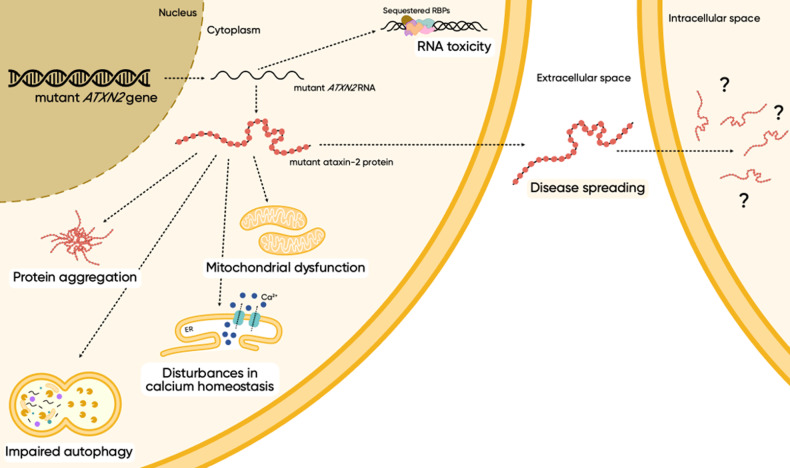
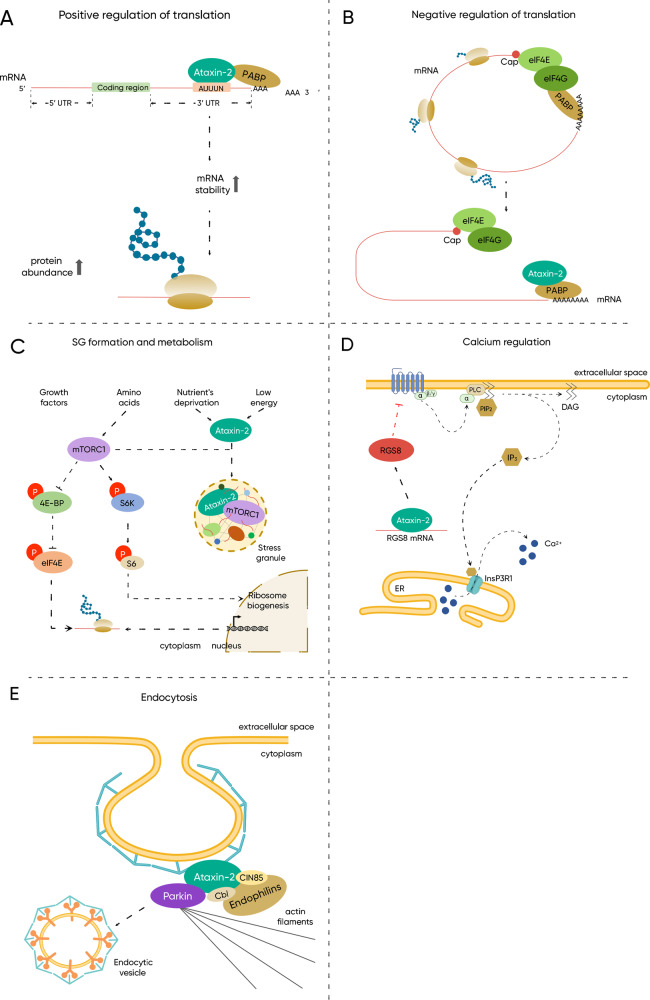
A CAG repeat sequence in the ATXN2 gene encodes a polyglutamine (polyQ) tract within the ataxin-2 (ATXN2) protein, showcasing a complex landscape of functions that have been progressively unveiled over recent decades. Despite significant progresses in the field, a comprehensive overview of the mechanisms governed by ATXN2 remains elusive. This multifaceted protein emerges as a key player in RNA metabolism, stress granules dynamics, endocytosis, calcium signaling, and the regulation of the circadian rhythm. The CAG overexpansion within the ATXN2 gene produces a protein with an extended poly(Q) tract, inducing consequential alterations in conformational dynamics which confer a toxic gain and/or partial loss of function. Although overexpanded ATXN2 is predominantly linked to spinocerebellar ataxia type 2 (SCA2), intermediate expansions are also implicated in amyotrophic lateral sclerosis (ALS) and parkinsonism. While the molecular intricacies await full elucidation, SCA2 presents ATXN2-associated pathological features, encompassing autophagy impairment, RNA-mediated toxicity, heightened oxidative stress, and disruption of calcium homeostasis. Presently, SCA2 remains incurable, with patients reliant on symptomatic and supportive treatments. In the pursuit of therapeutic solutions, various studies have explored avenues ranging from pharmacological drugs to advanced therapies, including cell or gene-based approaches. These endeavours aim to address the root causes or counteract distinct pathological features of SCA2. This review is intended to provide an updated compendium of ATXN2 functions, delineate the associated pathological mechanisms, and present current perspectives on the development of innovative therapeutic strategies.
在 ATXN2 基因中的 CAG 重复序列编码了一个在共济失调蛋白 2(ATXN2)蛋白内的多聚谷氨酰胺(polyQ)序列,展示了近几十年来逐渐揭示的复杂功能景观。尽管该领域取得了重大进展,但对 ATXN2 所调控的机制仍缺乏全面的了解。这种多面的蛋白质作为 RNA 代谢、应激颗粒动力学、内吞作用、钙信号和生物钟调节的关键参与者而出现。ATXN2 基因内的 CAG 过度扩展产生了一个具有扩展 poly(Q) 序列的蛋白质,导致构象动力学的后续改变,从而赋予毒性增益和/或部分功能丧失。尽管过度扩展的 ATXN2 主要与脊髓小脑性共济失调 2 型(SCA2)有关,但中间扩展也与肌萎缩侧索硬化症(ALS)和帕金森病有关。虽然分子复杂性仍有待充分阐明,但 SCA2 表现出与 ATXN2 相关的病理特征,包括自噬受损、RNA 介导的毒性、氧化应激增加和钙稳态破坏。目前,SCA2 仍然无法治愈,患者依赖于对症和支持性治疗。在寻求治疗方法的过程中,各种研究从药理学药物到先进的治疗方法,包括细胞或基因方法,都进行了探索。这些努力旨在解决 SCA2 的根本原因或对抗不同的病理特征。本综述旨在提供 ATXN2 功能的最新汇编,描述相关的病理机制,并介绍创新性治疗策略的最新观点。