Department of Neonatology, School of Medicine, Chengdu Women's and Children's Central Hospital, School of Medicine, University of Electronic Science and Technology of China, Chengdu, China.
Department of Neonatology, NHC Key Laboratory of Neonatal Diseases, Fudan University, Children's Hospital of Fudan University, Shanghai, China.
BMC Pediatr. 2024 Jun 14;24(1):394. doi: 10.1186/s12887-024-04664-8.
The occurrence of severe intraventricular hemorrhage (sIVH) was high in the very preterm infants (VPIs) in China. The management strategies significantly contributed to the occurrence of sIVH in VPIs. However, the status of the perinatal strategies associated with sIVH for VPIs was rarely described across the multiple neonatal intensive care units (NICUs) in China. We aim to investigate the characteristics of the perinatal strategies associated with sIVH for VPIs across the multiple NICUs in China.
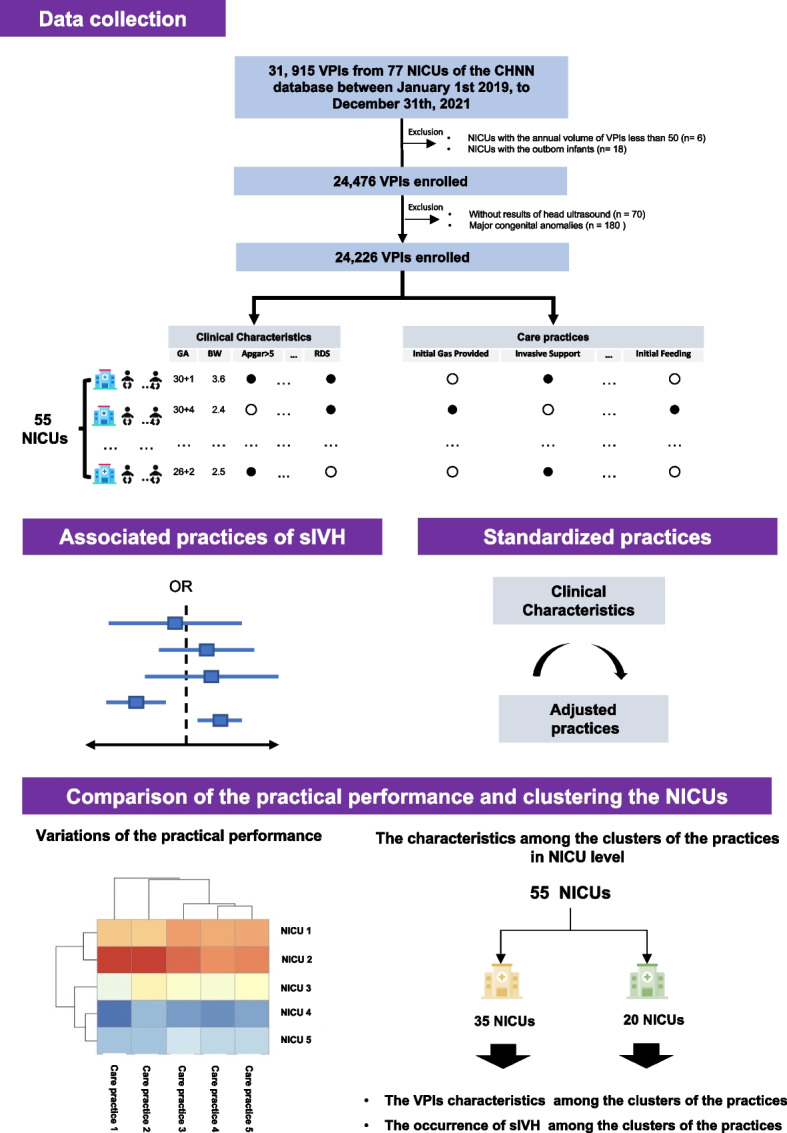
This was a retrospective analysis of data from a prospective cohort of Chinese Neonatal Network (CHNN) dataset, enrolling infants born at 24-31 from 2019 to 2021. Eleven perinatal practices performed within the first 3 days of life were investigated including antenatal corticosteroids use, antenatal magnesium sulphate therapy, intubation at birth, placental transfusion, need for advanced resuscitation, initial inhaled gas of 100% FiO2 in delivery room, initial invasive respiratory support, surfactant and caffeine administration, early enteral feeding, and inotropes use. The performances of these practices across the multiple NICUs were investigated using the standard deviations of differences between expected probabilities and observations. The occurrence of sIVH were compared among the NICUs.
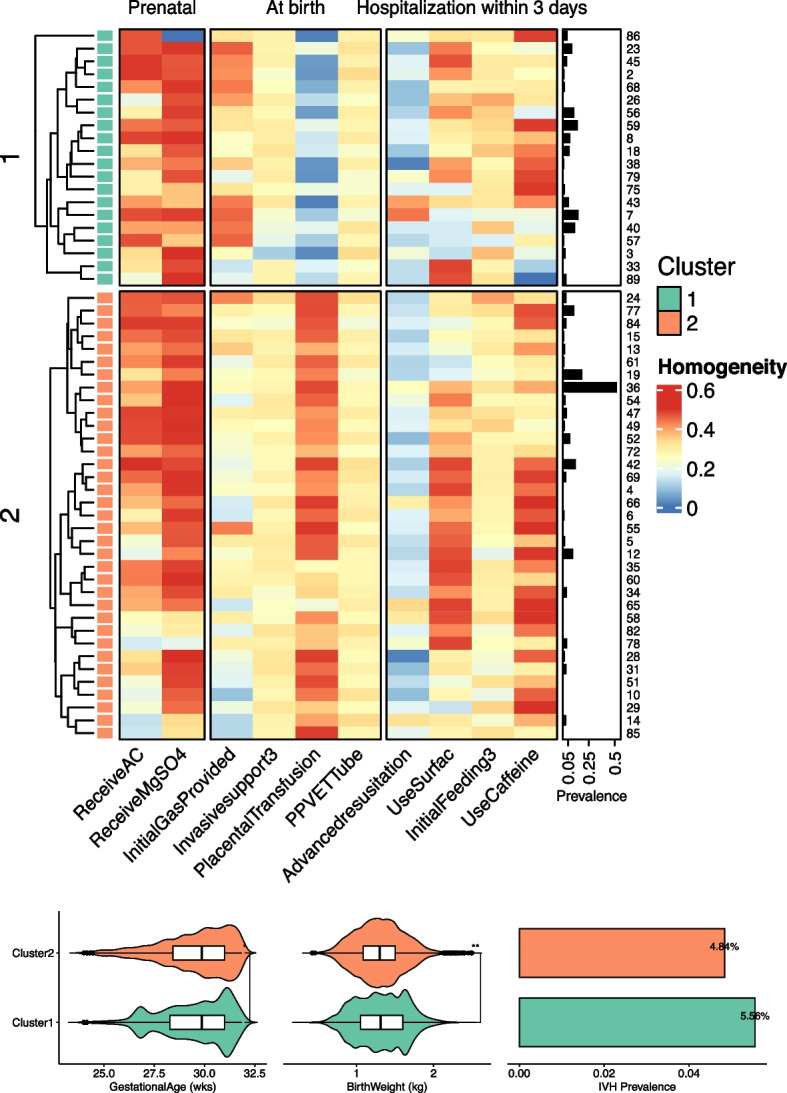
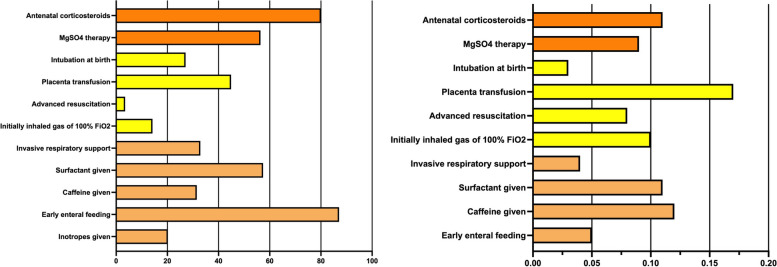
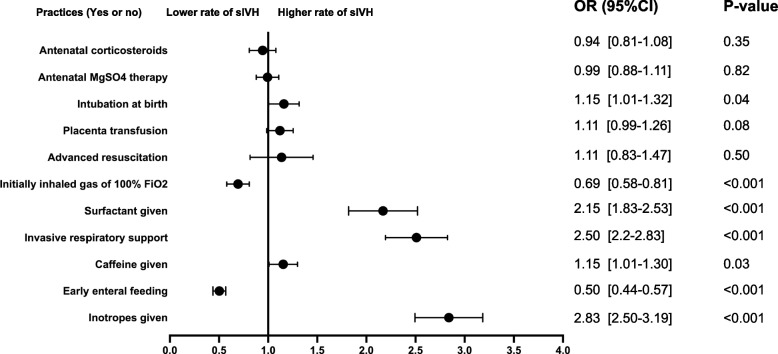
A total of 24,226 infants from 55 NICUs with a mean (SD) gestational age of 29.5 (1.76) and mean (SD) birthweight of 1.31(0.32) were included. sIVH was detected in 5.1% of VPIs. The rate of the antenatal corticosteroids, MgSO4 therapy, and caffeine was 80.0%, 56.4%, and 31.5%, respectively. We observed significant relationships between sIVH and intubation at birth (AOR 1.52, 95% CI 1.13 to 1.75) and initial invasive respiratory support (AOR 2.47, 95% CI 2.15 to 2.83). The lower occurrence of sIVH (4.8%) was observed corresponding with the highest utility of standard antenatal care, the lowest utility of invasive practices, and early enteral feeding administration.
The current evidence-based practices were not performed in each VPI as expected among the studied Chinese NICUs. The higher utility of the invasive practices could be related to the occurrence of sIVH.
中国早产儿(VPIs)中严重的脑室内出血(sIVH)发生率较高。围产期管理策略显著影响了 VPIs 中 sIVH 的发生。然而,在中国的多个新生儿重症监护病房(NICUs)中,很少有描述与 VPIs 中 sIVH 相关的围产期策略的情况。我们旨在研究与中国多个 NICUs 中 VPIs 中 sIVH 相关的围产期策略的特征。
这是对中国新生儿网络(CHNN)前瞻性队列数据的回顾性分析,纳入 2019 年至 2021 年出生的 24-31 周的婴儿。研究了出生后前 3 天内进行的 11 项围产期操作,包括产前皮质激素使用、产前硫酸镁治疗、出生时插管、胎盘输血、需要高级复苏、产房内初始吸入 100%FiO2 、初始有创呼吸支持、表面活性剂和咖啡因的使用、早期肠内喂养和使用血管加压药。使用预期概率与观察值之间差异的标准差来研究这些操作在多个 NICUs 中的表现。比较 NICUs 之间 sIVH 的发生情况。
共纳入 55 个 NICUs 的 24226 名婴儿,平均(SD)胎龄为 29.5(1.76),平均(SD)出生体重为 1.31(0.32)。5.1%的 VPIs 中发现 sIVH。产前皮质激素、MgSO4 治疗和咖啡因的使用率分别为 80.0%、56.4%和 31.5%。我们观察到 sIVH 与出生时插管(优势比 [AOR] 1.52,95%置信区间 [CI] 1.13 至 1.75)和初始有创呼吸支持(AOR 2.47,95% CI 2.15 至 2.83)之间存在显著关系。较低的 sIVH 发生率(4.8%)与最高标准产前护理的使用率、最低侵入性操作的使用率和早期肠内喂养管理有关。
在所研究的中国 NICUs 中,当前的循证实践并未按预期在每个 VPI 中进行。侵袭性操作使用率较高可能与 sIVH 的发生有关。