Department of Growth and Reproduction, Copenhagen University Hospital - Rigshospitalet, Copenhagen, Denmark.
International centre for Research and Research Training in Endocrine Disruption of Male Reproduction and Child Health (EDMaRC), Copenhagen University Hospital - Rigshospitalet, Copenhagen, Denmark.
Cell Commun Signal. 2024 Jun 15;22(1):330. doi: 10.1186/s12964-024-01704-9.
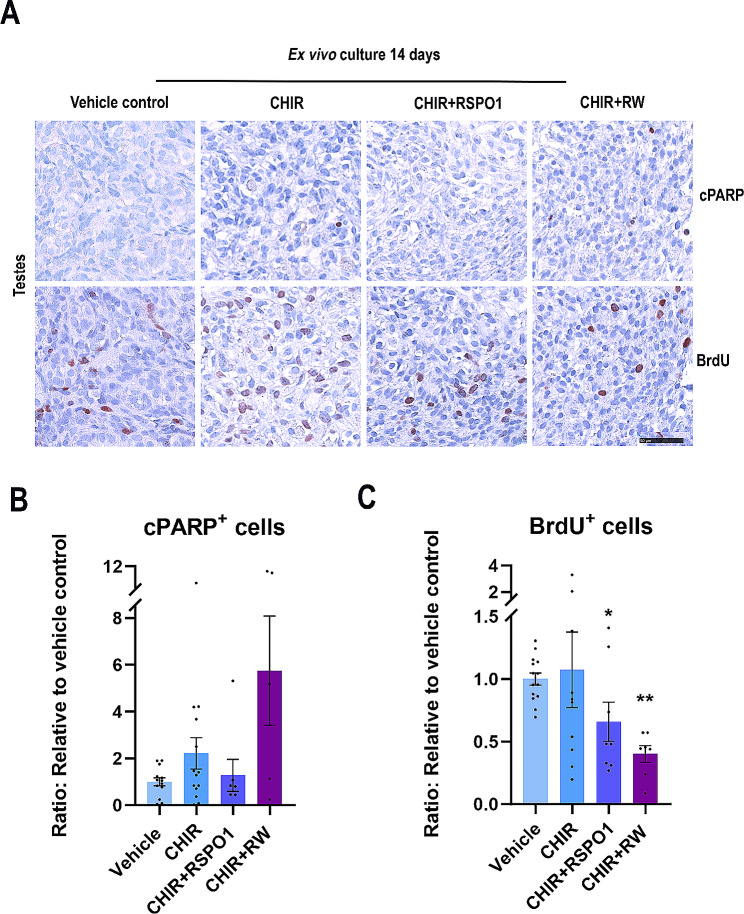
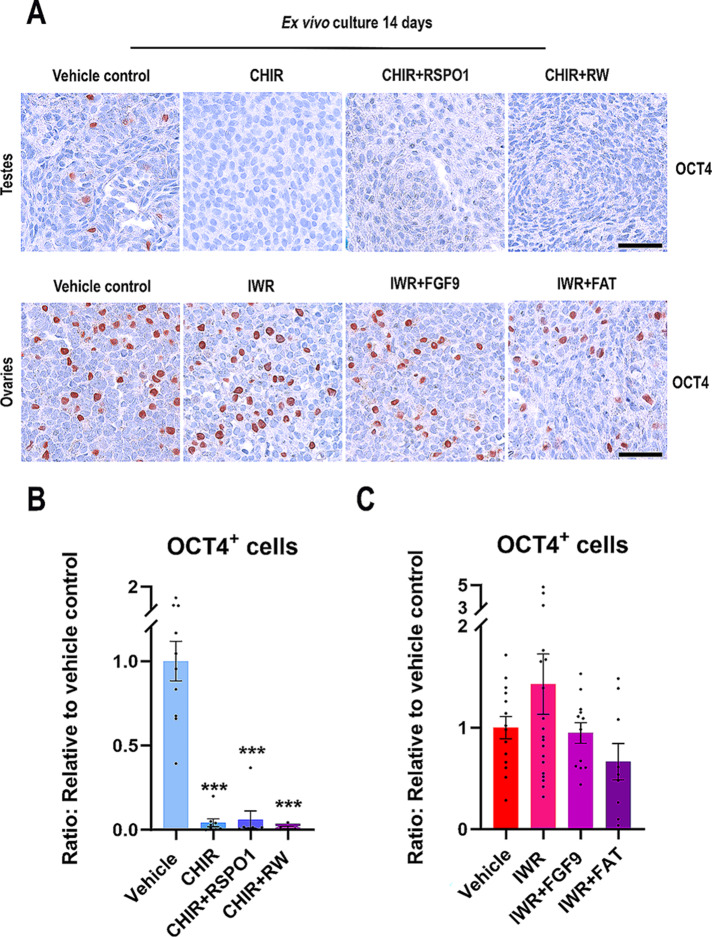
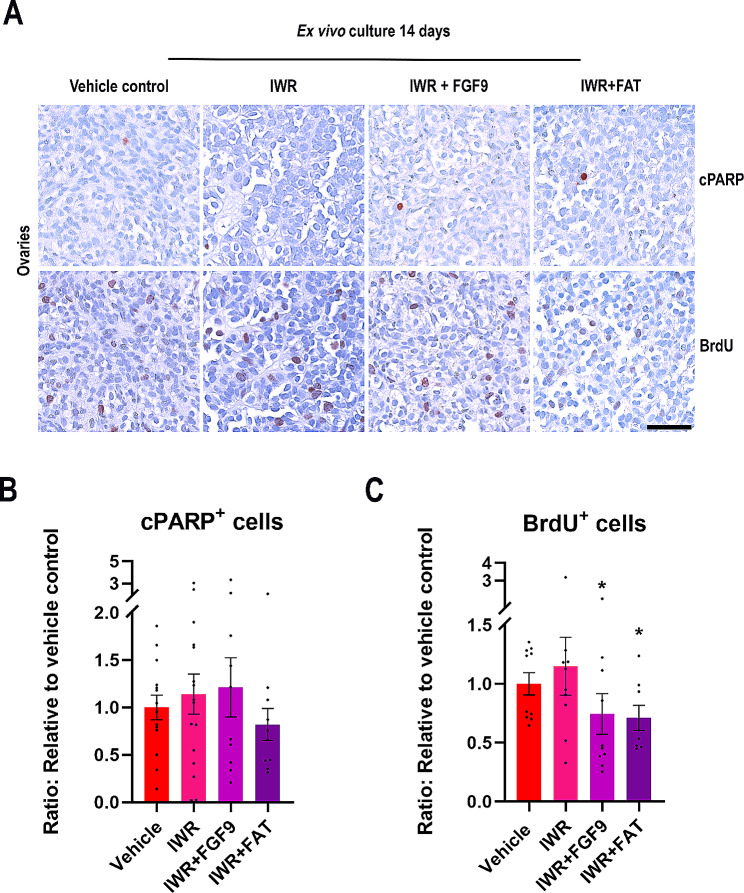
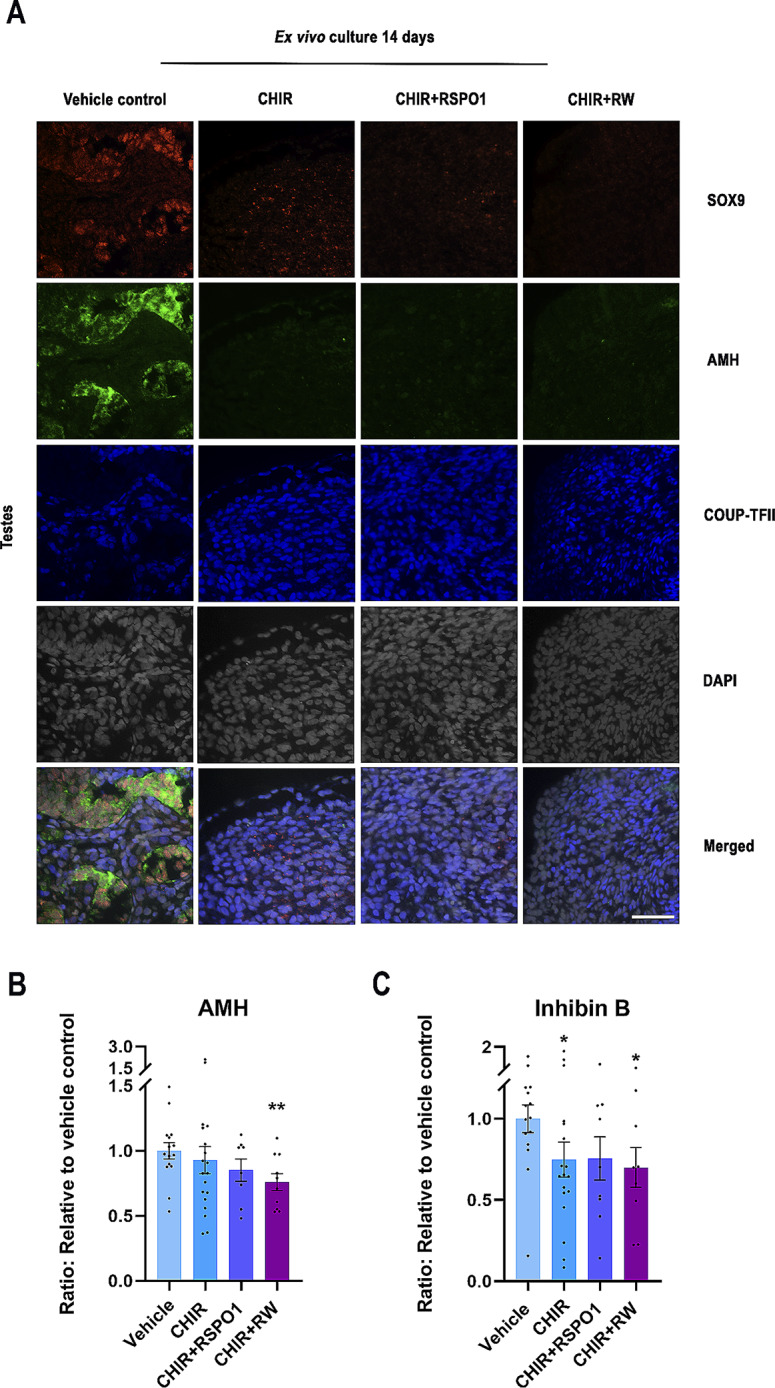
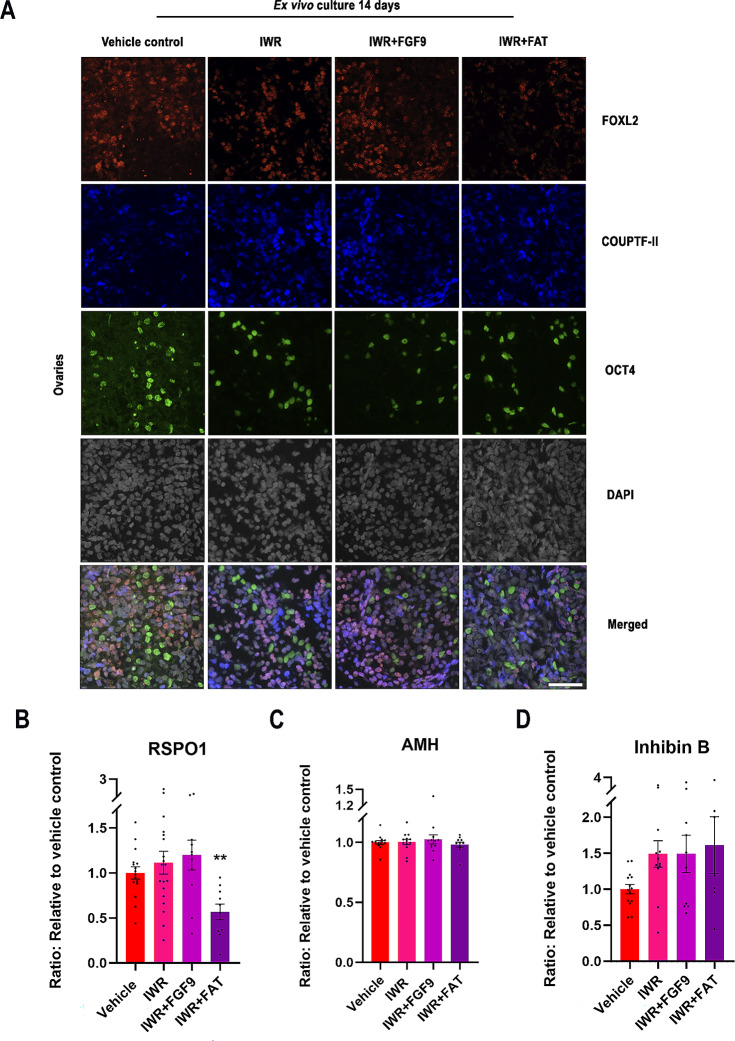
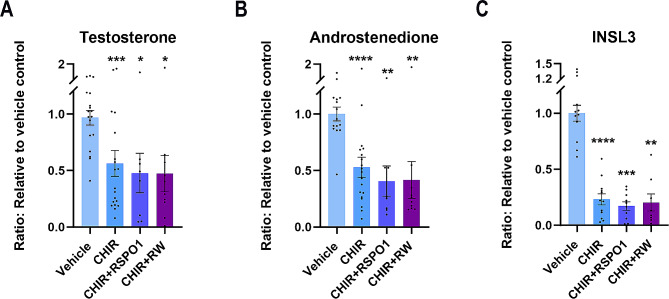
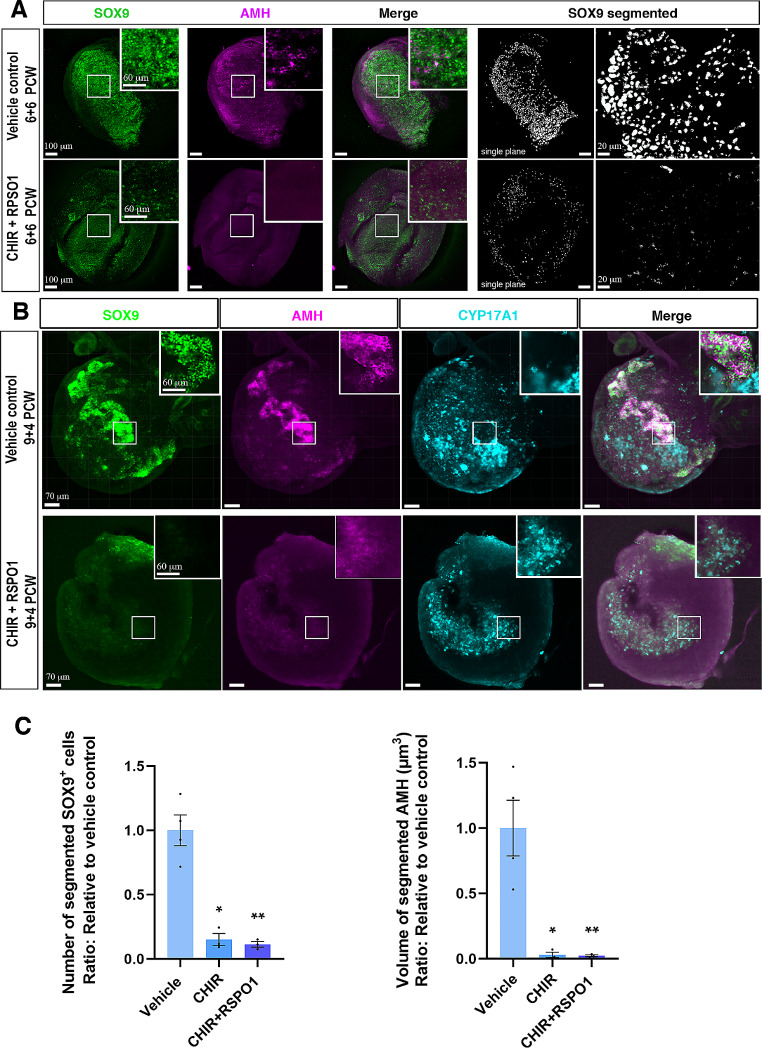
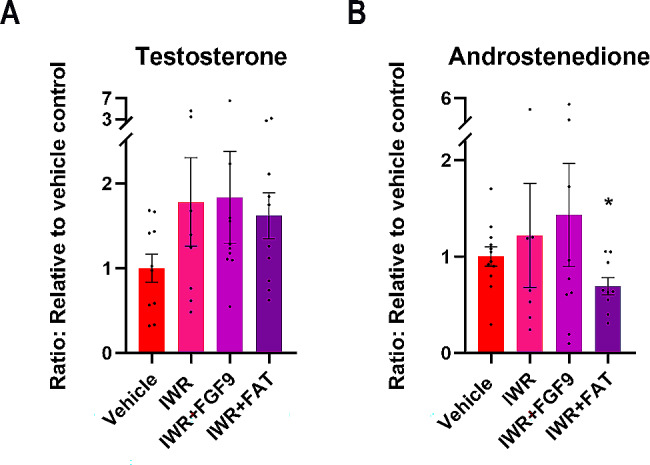
Sex-specific gonadal differentiation is directed by complex signalling promoting development in either male or female direction, while simultaneously inhibiting the opposite pathway. In mice, the WNT/β-catenin pathway promotes ovarian development and the importance of actively inhibiting this pathway to ensure normal testis development has been recognised. However, the implications of alterations in the tightly regulated WNT/β-catenin signalling during human fetal gonad development has not yet been examined in detail. Thus, the aim of this study was to examine the consequences of dysregulating the WNT/β-catenin signalling pathway in the supporting cell lineage during sex-specific human fetal gonad development using an established and extensively validated ex vivo culture model. Inhibition of WNT/β-catenin signalling in human fetal ovary cultures resulted in only minor effects, including reduced secretion of RSPO1 and reduced cell proliferation although this was not consistently found in all treatment groups. In contrast, promotion of WNT/β-catenin signalling in testes severely affected development and function. This included disrupted seminiferous cord structures, reduced cell proliferation, reduced expression of SOX9/AMH, reduced secretion of Inhibin B and AMH as well as loss of the germ cell population. Additionally, Leydig cell function was markedly impaired with reduced secretion of testosterone, androstenedione and INSL3. Together, this study suggests that dysregulated WNT/β-catenin signalling during human fetal gonad development severely impairs testicular development and function. Importantly, our study highlights the notion that sufficient inhibition of the opposite pathway during sex-specific gonadal differentiation is essential to ensure normal development and function also applies to human fetal gonads.
性别特异性性腺分化是由复杂的信号通路指导的,这些信号通路促进雄性或雌性方向的发育,同时抑制相反的途径。在小鼠中,WNT/β-catenin 通路促进卵巢发育,并且已经认识到积极抑制该途径以确保正常睾丸发育的重要性。然而,在人类胎儿性腺发育过程中,WNT/β-catenin 信号通路的严格调控变化的影响尚未详细研究。因此,本研究的目的是使用已建立和广泛验证的体外培养模型,研究在性别特异性人类胎儿性腺发育过程中,支持细胞谱系中 WNT/β-catenin 信号通路失调的后果。在人类胎儿卵巢培养物中抑制 WNT/β-catenin 信号通路仅导致轻微影响,包括 RSPO1 分泌减少和细胞增殖减少,尽管并非所有治疗组均发现这种情况。相比之下,促进睾丸中的 WNT/β-catenin 信号通路严重影响发育和功能。这包括破坏精曲小管结构、细胞增殖减少、SOX9/AMH 表达减少、抑制素 B 和 AMH 分泌减少以及生殖细胞群丧失。此外,Leydig 细胞功能明显受损,导致睾酮、雄烯二酮和 INSL3 分泌减少。总之,这项研究表明,在人类胎儿性腺发育过程中,WNT/β-catenin 信号通路失调严重损害睾丸发育和功能。重要的是,我们的研究强调了这样一种观点,即在性别特异性性腺分化过程中,对相反途径的充分抑制对于确保正常发育和功能至关重要,这也适用于人类胎儿性腺。