Mohammed Raffi, Badruddin Irfan Anjum, Shaik Abdul Saddique, Kamangar Sarfaraz, Khan Abdul Azeem
Dept. of Mechanical Engineering, Ramachandra College of Engineering, Vatluru Village, West Godavari Dist., Eluru, Andhra Pradesh 534007, India.
Mechanical Engineering Department, College of Engineering, King Khalid University, Abha 61421, Saudi Arabia.
ACS Omega. 2024 May 25;9(23):24761-24773. doi: 10.1021/acsomega.4c01365. eCollection 2024 Jun 11.
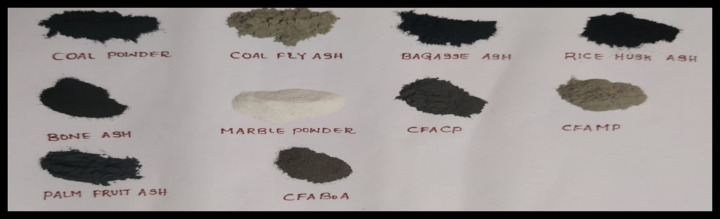
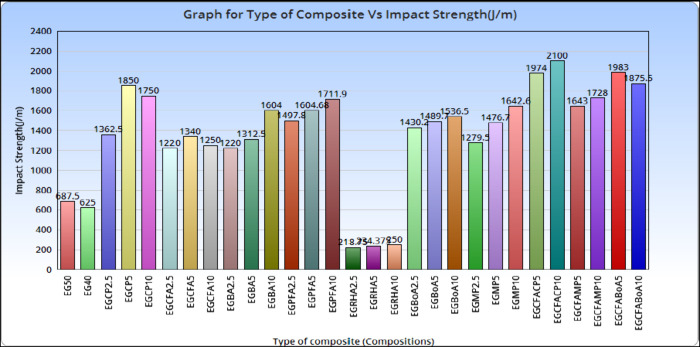
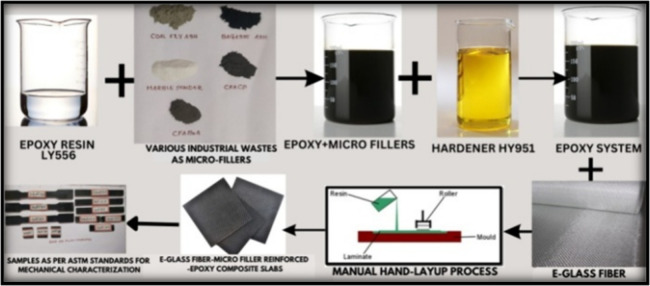
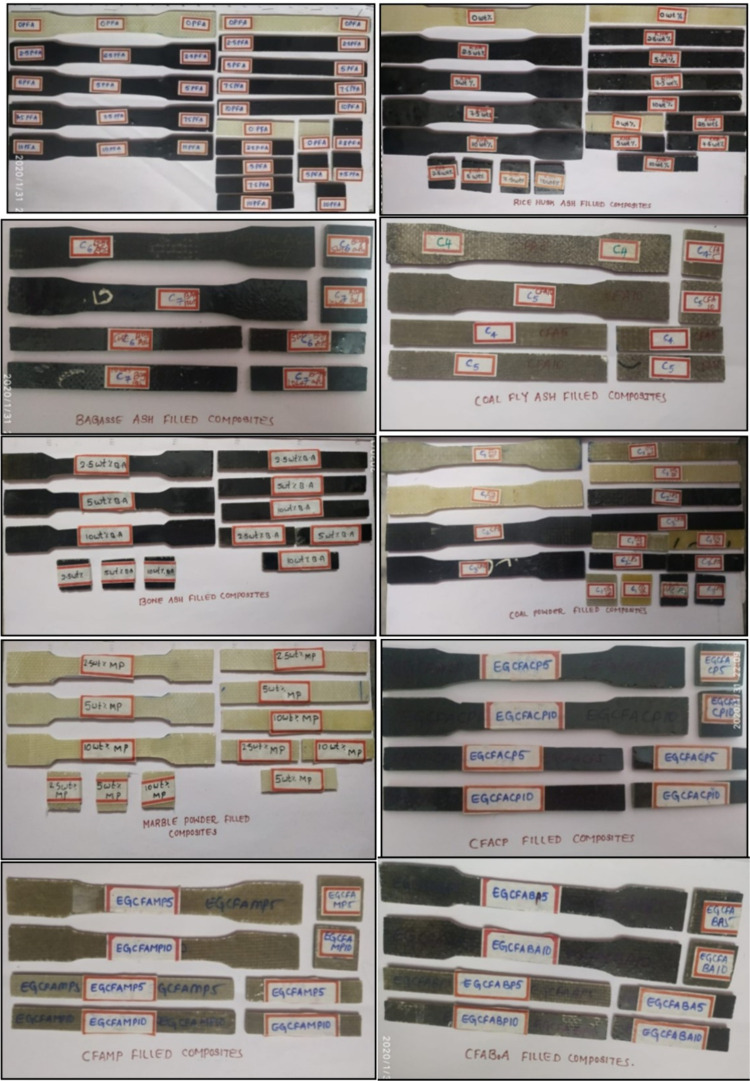
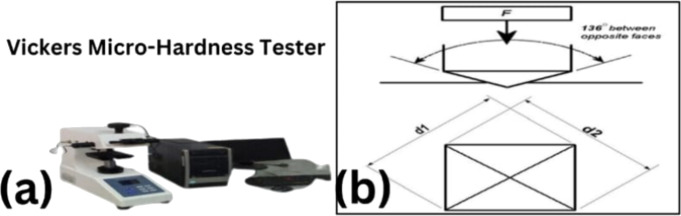
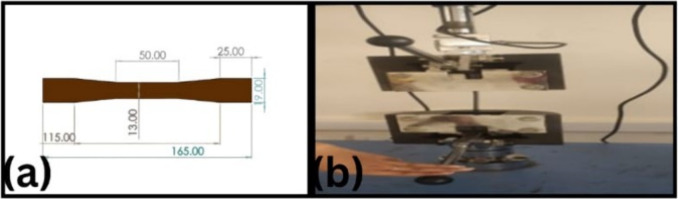
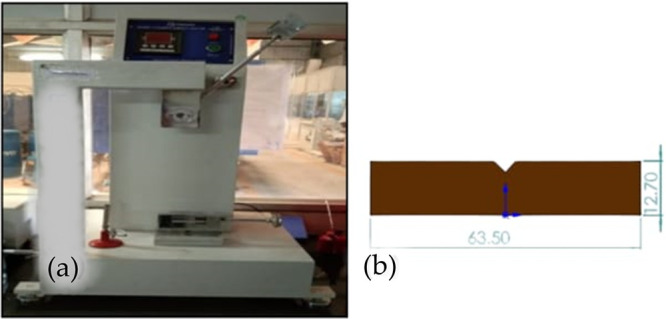
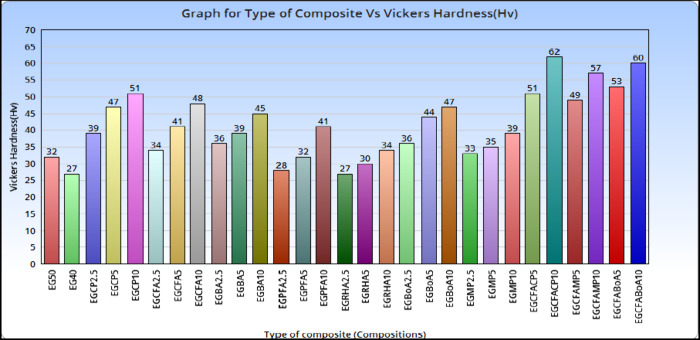
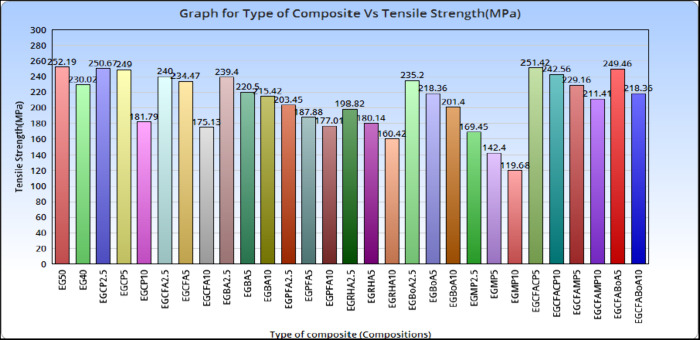
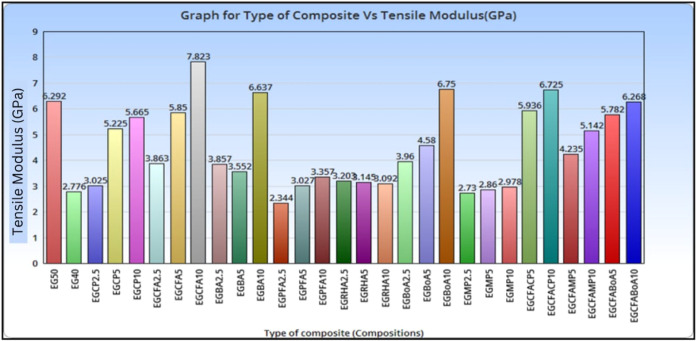
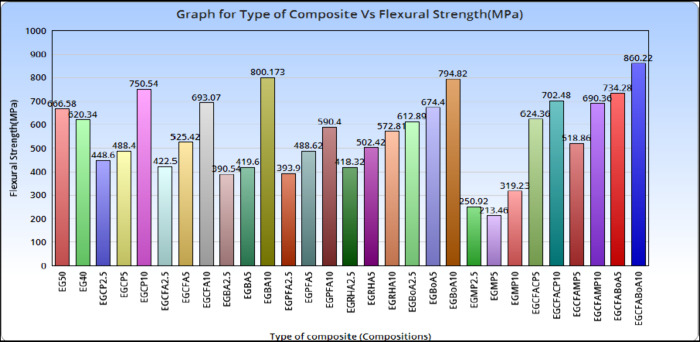
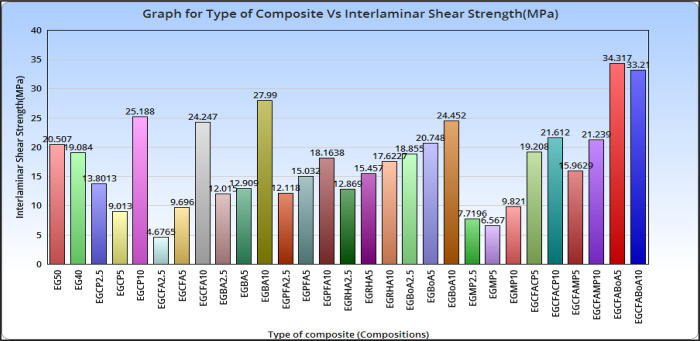
The present investigation focuses on the manufacturing and mechanical evaluation of epoxy-based composites reinforced with fiberglass with and without various particle fillers. The study explores the potential use of industrial wastes, such as coal powder (CP), coal fly ash (CFA), bagasse ash (BA), palm fruit ash (PFA), ash from rice husks (RHA), bone ash (BoA), marble/granite powder (MP), combinations of coal fly ash and coal powder (CFACP), blends of coal fly ash and marble powder (CFAMP), and combinations of coal fly ash and bone ash (CFABoA).The use of industrial factory wastes as a filler in polymer composite materials is becoming more and more common due to the improvement in structural characteristics compared to the pure epoxy-e-glass fiber composites. Composite manufacturing costs might be drastically reduced by using the above industrial wastes as reinforcing material, which would also solve the problems related to their disposal and ecological pollution. In previous research investigations, the comparative mechanical characteristic analysis of hybrid composites filled with two or more fillers has not been studied, which motivated us to take up the research on incorporation of the above listed industrial wastes as fillers. Different concentrations of these fillers are investigated, and the composites are formed successfully using a manual hand-layup approach. The mechanical properties assessed in accordance with ASTM Standards include micro-Vickers hardness (Hv), impact strength (IS), bending strength (TS), flexibility or flexural strength (FS), and interlaminar shear strength (ILSS). The form and amount of filler provided to the composite are considered when comparing each property of particle-loaded glass-reinforced epoxy composites. Some key findings from the investigation include: (1) Tensile Strength: unfilled composites exhibit a tensile strength of 252.19 MPa, marble powder causes the greatest drop in tensile strength, and CFACP-filled composites at 5 wt % yield the highest tensile strength of 251.42 MPa. (2) Flexural Strength: CFABoA-filled composites exhibit the highest peak bending strength of 860.22 MPa at 10 wt % and Peak ILSS of 34.317 MPa at 5 wt % is observed with CFABoA-filled composites. (3) Impact Strength and Hardness: CFACP-filled composites at 10 wt % show the maximum impact strength (2100 J/m) and hardness (62 Hv). (4) Effect of the Filler Percentage: mechanical characteristics of composites improve with increasing weight percentage of filler material, and Glass fiber-reinforced epoxy composites can be replaced with glass fiber-reinforced and particle-filled polymer-based hybrid composites for structural purposes. (5) Cost Considerations: hybrid composites based on CFACP-filled E-glass fiber-reinforced epoxy can be used instead of E-glass fiber-reinforced epoxy composites to reduce fabrication costs and "ER" epoxy resin usage. (6) Application Recommendation: the study suggests the use of CFACP-filled E-glass fiber-reinforced epoxy composites for constructing end posts in rail insulation junctions. In conclusion, the investigation provides valuable insights into the mechanical properties of epoxy-based composites with various fillers, offering potential applications in structural components with improved characteristics and cost-effectiveness.
本研究聚焦于有或无各种颗粒填料的玻璃纤维增强环氧基复合材料的制造及力学性能评估。该研究探索了工业废料的潜在用途,如煤粉(CP)、粉煤灰(CFA)、甘蔗渣灰(BA)、棕榈果灰(PFA)、稻壳灰(RHA)、骨灰(BoA)、大理石/花岗岩粉(MP)、粉煤灰与煤粉的组合(CFACP)、粉煤灰与大理石粉的混合物(CFAMP)以及粉煤灰与骨灰的组合(CFABoA)。与纯环氧 - 电子玻璃纤维复合材料相比,由于结构特性的改善,在聚合物复合材料中使用工业工厂废料作为填料变得越来越普遍。通过使用上述工业废料作为增强材料,复合材料的制造成本可能会大幅降低,这也将解决与它们的处置和生态污染相关的问题。在先前的研究调查中,尚未对填充有两种或更多种填料的混杂复合材料的比较力学特性分析进行研究,这促使我们开展关于掺入上述所列工业废料作为填料的研究。研究了这些填料的不同浓度,并采用手工铺层方法成功制成了复合材料。根据ASTM标准评估的力学性能包括显微维氏硬度(Hv)、冲击强度(IS)、弯曲强度(TS)、柔韧性或抗弯强度(FS)以及层间剪切强度(ILSS)。在比较颗粒填充玻璃纤维增强环氧复合材料的各项性能时,会考虑提供给复合材料的填料的形式和数量。该研究的一些关键发现包括:(1)拉伸强度:未填充的复合材料的拉伸强度为252.19MPa,大理石粉导致拉伸强度下降最大,5wt%的CFACP填充复合材料的拉伸强度最高,为251.42MPa。(2)抗弯强度:10wt%的CFABoA填充复合材料的峰值抗弯强度最高,为860.22MPa,5wt%的CFABoA填充复合材料的峰值ILSS为34.317MPa。(3)冲击强度和硬度:10wt%的CFACP填充复合材料显示出最大冲击强度(2100J/m)和硬度(62Hv)。(4)填料百分比的影响:复合材料的力学性能随着填料材料重量百分比的增加而提高,并且玻璃纤维增强环氧复合材料可被玻璃纤维增强且颗粒填充的聚合物基混杂复合材料替代用于结构目的。(5)成本考量:基于CFACP填充的E玻璃纤维增强环氧的混杂复合材料可用于替代E玻璃纤维增强环氧复合材料,以降低制造成本并减少“ER”环氧树脂的用量。(6)应用建议:该研究建议使用CFACP填充的E玻璃纤维增强环氧复合材料来建造铁路绝缘接头中的终端柱。总之,该研究为含各种填料的环氧基复合材料的力学性能提供了有价值的见解,为具有改进特性和成本效益的结构部件提供了潜在应用。