Merola Raffaele, Vargas Maria, Marra Annachiara, Buonanno Pasquale, Coviello Antonio, Servillo Giuseppe, Iacovazzo Carmine
Anesthesia and Intensive Care Medicine, Department of Neurosciences, Reproductive and Odontostomatological Sciences, University of Naples "Federico II", Via Pansini 5, 80100 Naples, Italy.
J Clin Med. 2024 May 29;13(11):3186. doi: 10.3390/jcm13113186.
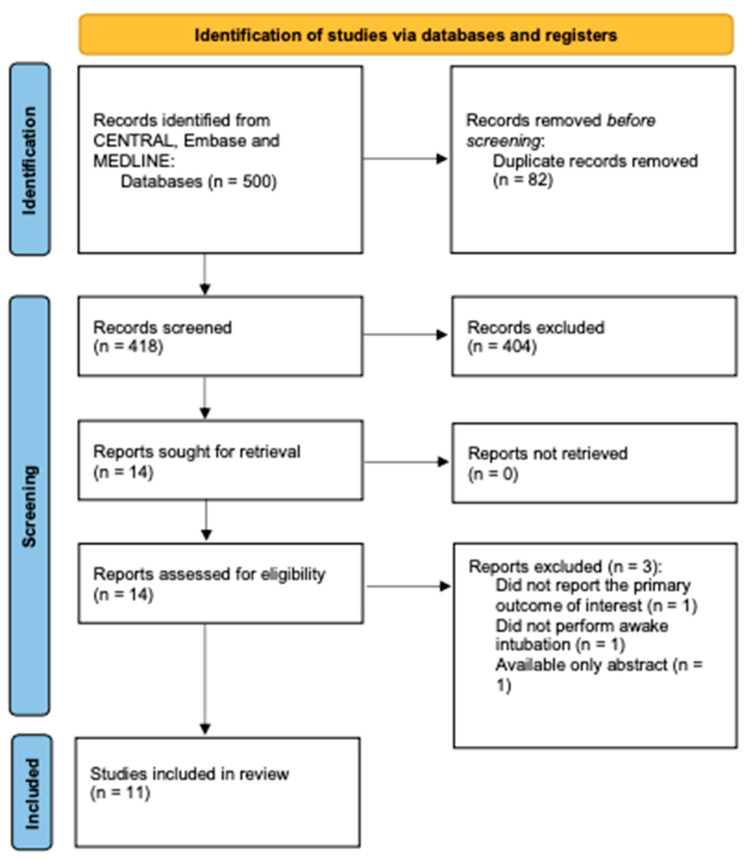
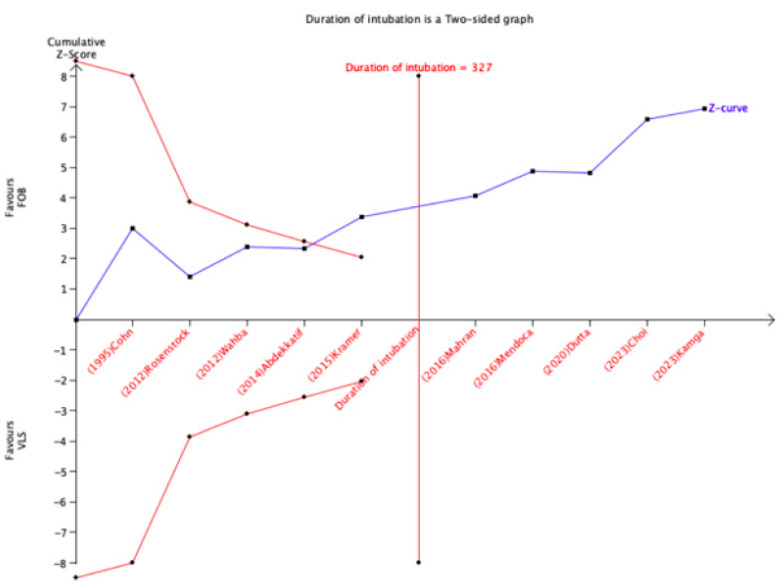
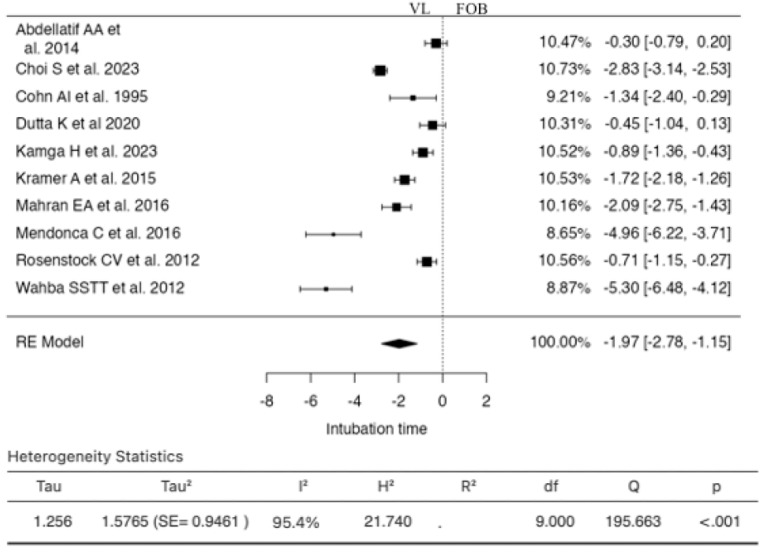
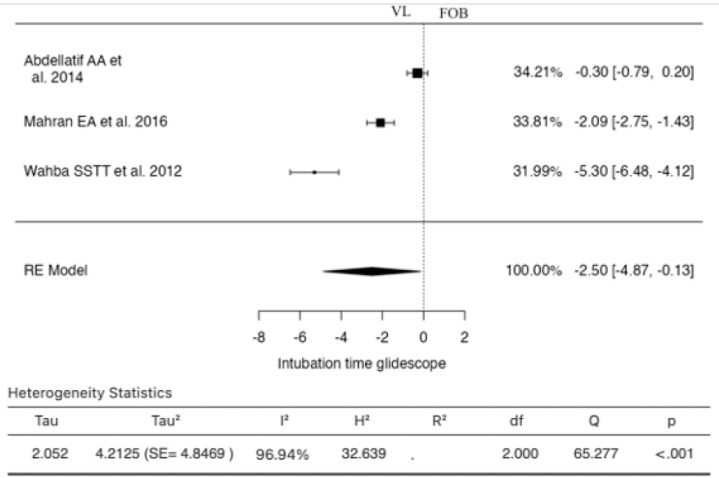
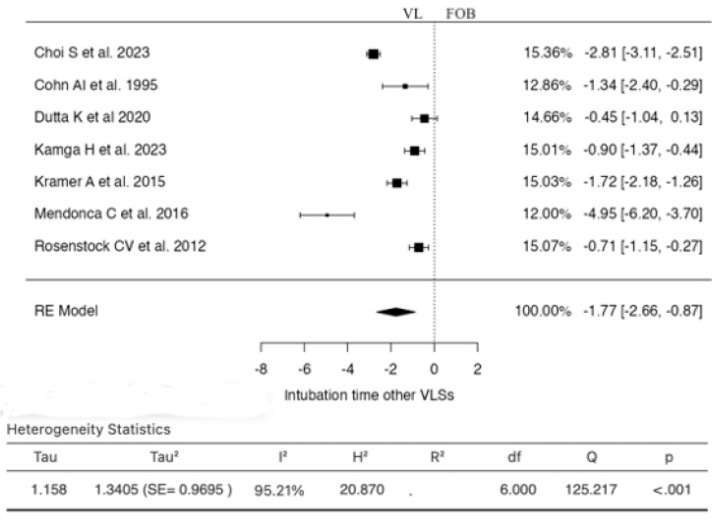
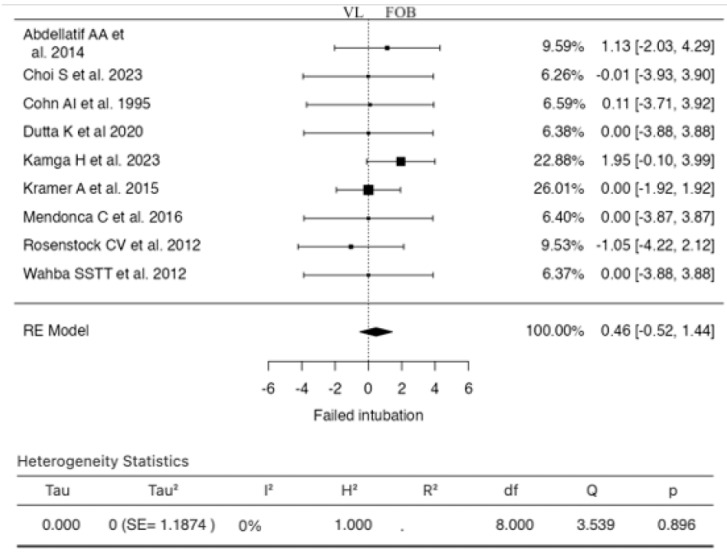
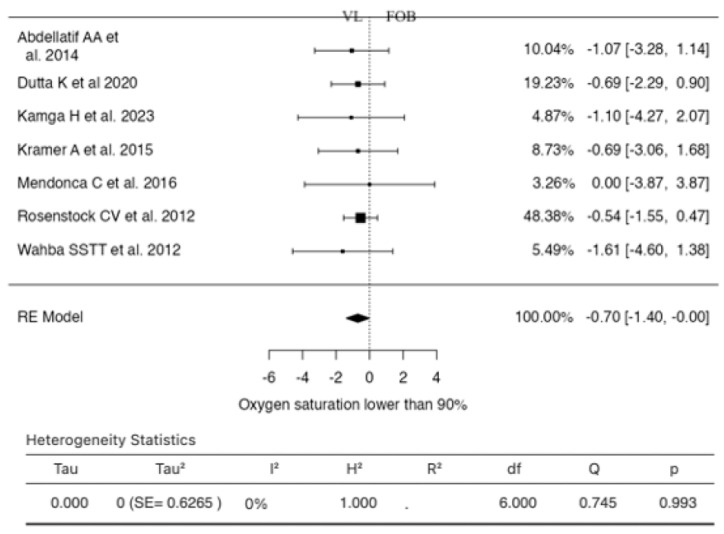
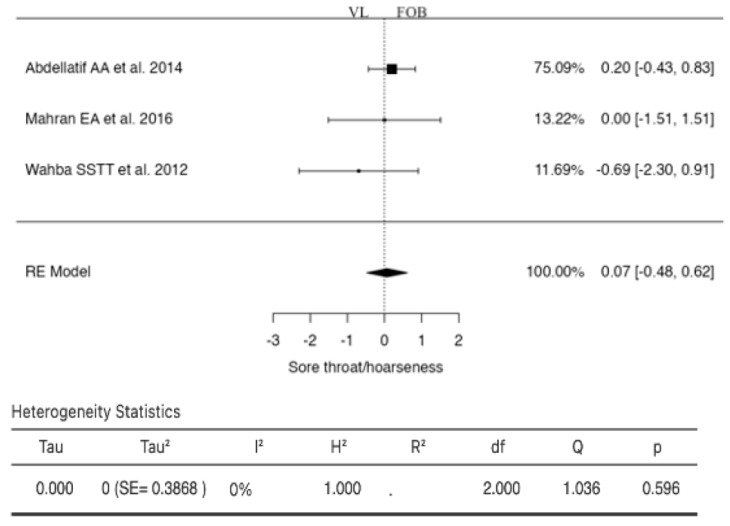
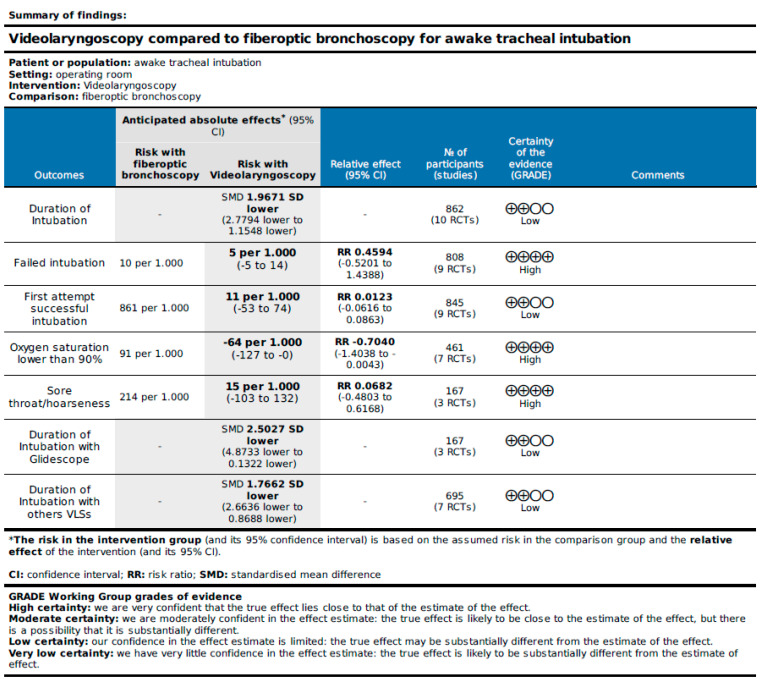
: In recent years, videolaryngoscopy has increasingly been utilized as an alternative to fiberoptic bronchoscopy in awake intubation. Nonetheless, it remains uncertain whether videolaryngoscopy represents a viable substitute for fiberoptic bronchoscopy. We conducted this systematic review with a meta-analysis to compare videolaryngoscopy and fiberoptic bronchoscopy for awake intubation. : We systematically searched for all randomized controlled trials (RCTs) comparing videolaryngoscopy and fiberoptic bronchoscopy for awake intubation. The Cochrane Central Register of Controlled Trials (CENTRAL), Embase, and MEDLINE were systematically queried through August 2023. Our primary outcome measure was the duration of intubation. Secondary outcomes encompassed the rate of successful intubation on the initial attempt, failed intubation, patient-reported satisfaction, and any complications or adverse events potentially stemming from the intubation procedure. The Cochrane Risk of Bias Tool for RCTs was employed to evaluate all studies for evidence of bias. The GRADE approach was utilized to gauge the certainty of the evidence. : Eleven trials involving 873 patients were ultimately included in our review for data extraction. Meta-analysis demonstrated that videolaryngoscopy decreased the duration of intubation compared to fiberoptic bronchoscopy (SMD -1.9671 [95% CI: -2.7794 to -1.1548] < 0.0001), a finding corroborated in subgroup analysis by the type of videolaryngoscope (SMD -2.5027 [95% CI: -4.8733 to -0.1322] = 0.0385). Additionally, videolaryngoscopy marginally lowered the risk of experiencing a saturation below 90% during the procedure (RR -0.7040 [95% CI: -1.4038 to -0.0043] = 0.0486). No statistically significant disparities were observed between the two techniques in terms of failed intubation, initial successful intubation attempt, or sore throat/hoarseness. With regard to patient-reported satisfaction, a pooled analysis was precluded due to the variability in evaluation methods employed across the trials to assess this outcome. Lastly, trial sequential analysis (TSA) conducted for intubation time (primary outcome) affirmed the conclusiveness of this evidence; TSA performed for secondary outcomes failed to yield conclusive evidence, indicating the necessity for further trials. : Videolaryngoscopy for awake tracheal intubation diminishes intubation time and the risk of experiencing a saturation below 90% compared to fiberoptic bronchoscopy.
近年来,视频喉镜越来越多地被用作清醒插管时纤维支气管镜的替代方法。尽管如此,视频喉镜是否是纤维支气管镜的可行替代方法仍不确定。我们进行了这项系统评价和荟萃分析,以比较视频喉镜和纤维支气管镜用于清醒插管的效果。
我们系统地检索了所有比较视频喉镜和纤维支气管镜用于清醒插管的随机对照试验(RCT)。通过检索截至2023年8月的Cochrane对照试验中心注册库(CENTRAL)、Embase和MEDLINE。我们的主要结局指标是插管时间。次要结局包括首次尝试插管的成功率、插管失败率、患者报告的满意度以及插管过程中可能出现的任何并发症或不良事件。采用Cochrane随机对照试验偏倚风险工具评估所有研究的偏倚证据。采用GRADE方法评估证据的确定性。
我们的综述最终纳入了11项涉及873例患者的试验进行数据提取。荟萃分析表明,与纤维支气管镜相比,视频喉镜缩短了插管时间(标准化均数差-1.9671 [95%可信区间:-2.7794至-1.1548] <0.0001),这一发现在按视频喉镜类型进行的亚组分析中得到了证实(标准化均数差-2.5027 [95%可信区间:-4.8733至-0.1322] = 0.0385)。此外,视频喉镜略微降低了术中血氧饱和度低于90%的风险(风险比-0.7040 [95%可信区间:-1.4038至-0.0043] = 0.0486)。在插管失败、首次成功插管尝试或咽痛/声音嘶哑方面,两种技术之间未观察到统计学上的显著差异。关于患者报告的满意度,由于各试验评估该结局所采用的方法存在差异,因此无法进行汇总分析。最后,对插管时间(主要结局)进行的试验序贯分析(TSA)证实了该证据的确定性;对次要结局进行的TSA未能得出确定性证据,表明有必要进行进一步试验。
与纤维支气管镜相比,视频喉镜用于清醒气管插管可缩短插管时间并降低血氧饱和度低于90%的风险。