Nguyen Minh-Ngoc, Yeo Seon-Ju, Park Hyun
Department of Infection Biology, School of Medicine, Zoonosis Research Center, Wonkwang University, Iksan, Republic of Korea.
Department of Tropical Medicine and Parasitology, Department of Biomedical Sciences, College of Medicine, Seoul National University, Seoul, Republic of Korea.
Front Microbiol. 2024 Jun 4;15:1385582. doi: 10.3389/fmicb.2024.1385582. eCollection 2024.
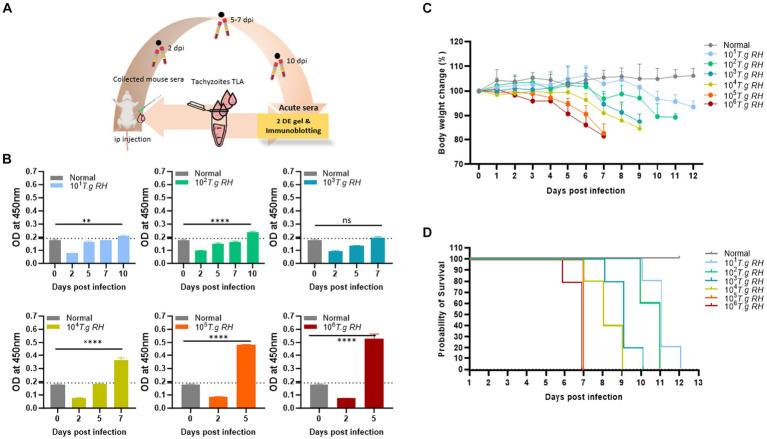
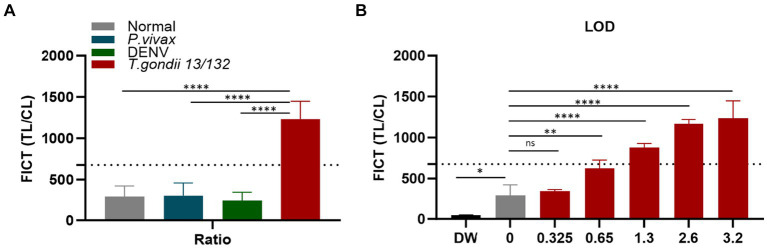
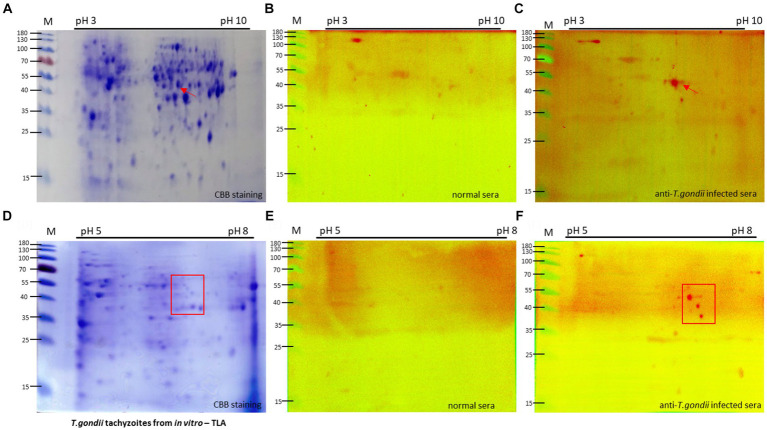
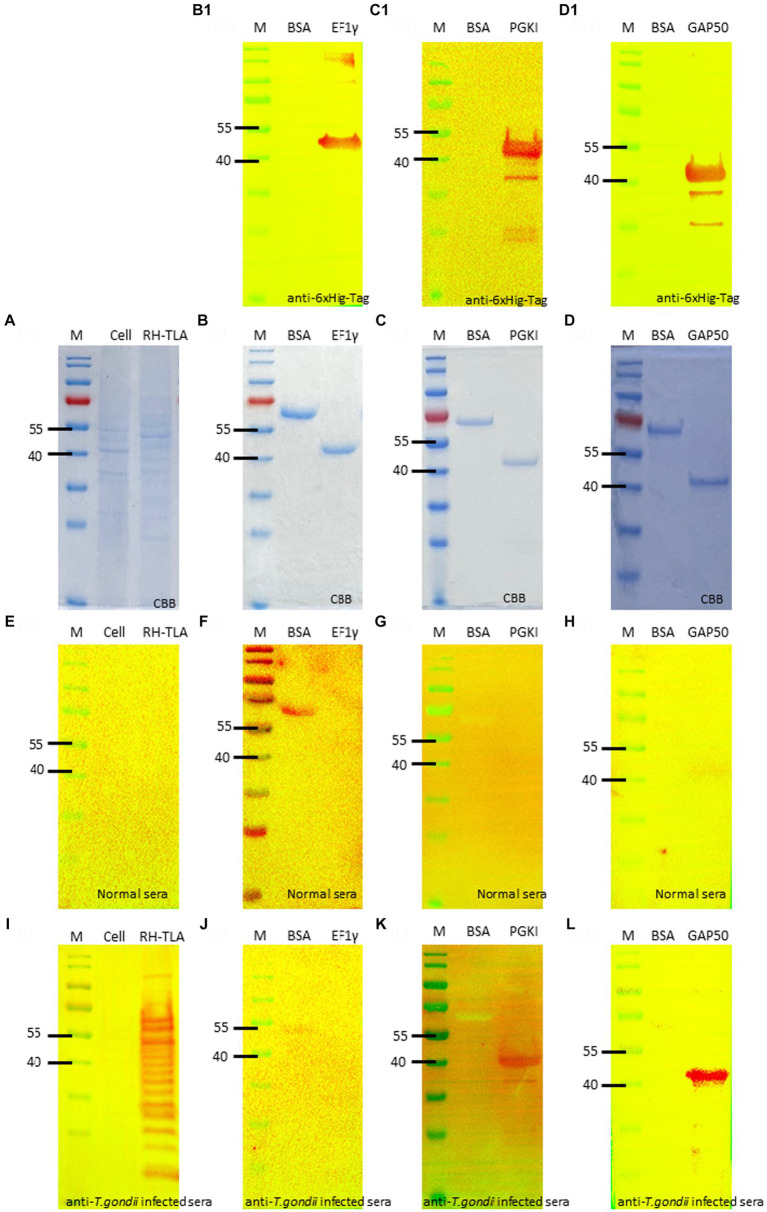
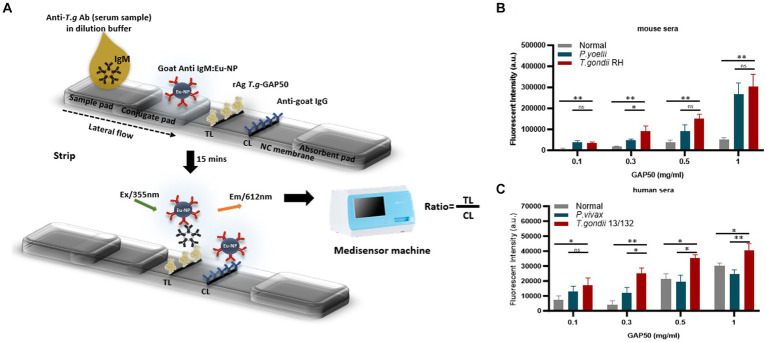
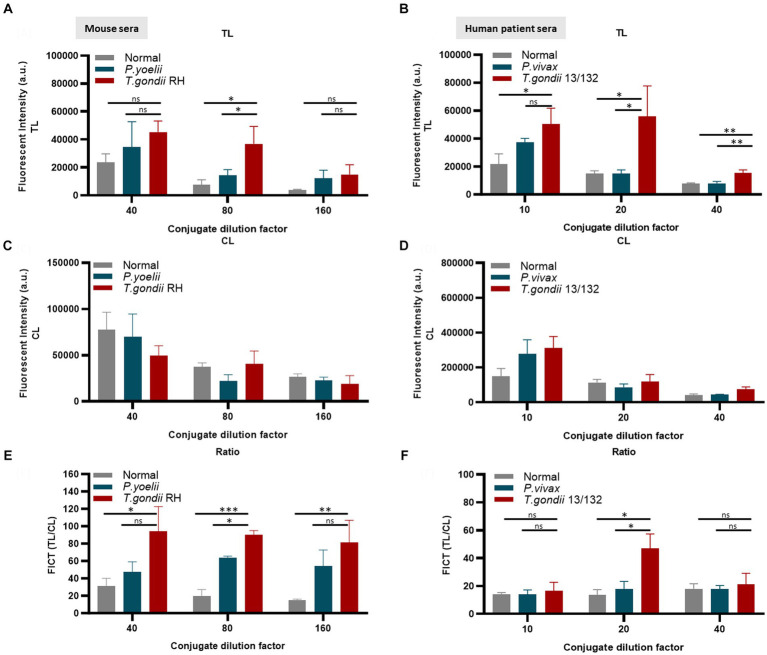
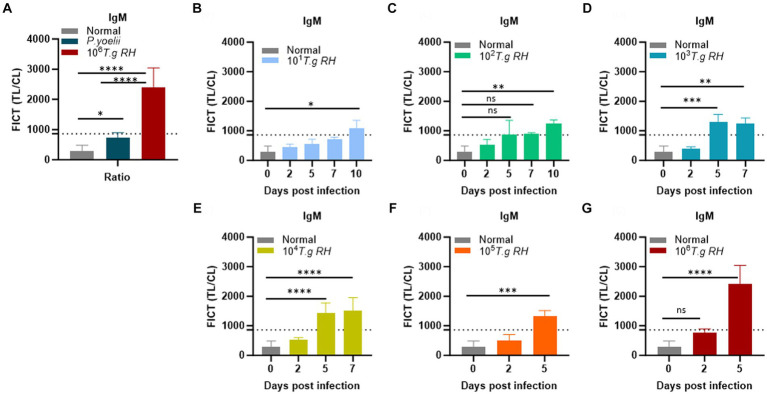
Toxoplasmosis, while often asymptomatic and prevalent as a foodborne disease, poses a considerable mortality risk for immunocompromised individuals during pregnancy. Point-of-care serological tests that detect specific IgG and IgM in patient sera are critical for disease management under limited resources. Despite many efforts to replace the total lysate antigens (TLAs) by recombinant antigens (rAgs) in commercial kits, while IgG detection provides significant specificity and sensitivity, IgM detection remains comparatively low in sensitivity. In this study, we attempted to identify novel antigens targeting IgM in early infection, thereby establishing an IgM on-site detection kit. Using two-dimensional gel electrophoresis (2DE) and mouse serum immunoblotting, three novel antigens, including EF1γ, PGKI, and GAP50, were indicated to target IgM. However, rAg EF1γ was undetectable by IgM of mice sera in Western blotting verification experiments, and ELISA coated with PGKI did not eliminate cross-reactivity, in contrast to GAP50. Subsequently, the lateral flow reaction employing a strip coated with 0.3 mg/mL purified rAg GAP50 and exhibited remarkable sensitivity compared with the conventional ELISA based on tachyzoite TLA, which successfully identified IgM in mouse sera infected with tachyzoites, ranging from 10 to 10 at 5 dpi and 10 at 7 dpi, respectively. Furthermore, by using standard -infected human sera from WHO, the limit of detection (LOD) for the rapid fluorescence immunochromatographic test (FICT) using GAP50 was observed at 0.65 IU (international unit). These findings underline the particular immunoreactivity of GAP50, suggesting its potential as a specific biomarker for increasing the sensitivity of the FICT in IgM detection.
弓形虫病虽然通常无症状且作为食源性疾病普遍存在,但在怀孕期间对免疫功能低下的个体构成相当大的死亡风险。在资源有限的情况下,用于检测患者血清中特异性IgG和IgM的即时检验血清学检测对于疾病管理至关重要。尽管人们做出了许多努力,用重组抗原(rAgs)取代商业试剂盒中的全裂解物抗原(TLAs),虽然IgG检测具有显著的特异性和敏感性,但IgM检测的敏感性仍然相对较低。在本研究中,我们试图鉴定早期感染中靶向IgM的新型抗原,从而建立一种IgM现场检测试剂盒。使用二维凝胶电泳(2DE)和小鼠血清免疫印迹法,表明包括EF1γ、PGKI和GAP50在内的三种新型抗原靶向IgM。然而,在蛋白质印迹验证实验中,小鼠血清IgM无法检测到rAg EF1γ,与GAP50相比,包被PGKI的酶联免疫吸附测定(ELISA)并未消除交叉反应性。随后,采用包被有0.3mg/mL纯化rAg GAP50的试纸条进行的侧向流动反应,与基于速殖子TLA的传统ELISA相比,显示出显著的敏感性,该反应成功鉴定了感染速殖子的小鼠血清中的IgM,在感染后第5天为10至10,在感染后第7天为10。此外,通过使用世界卫生组织的标准感染人血清,观察到使用GAP50的快速荧光免疫层析试验(FICT)的检测限(LOD)为0.65国际单位(IU)。这些发现强调了GAP50的特殊免疫反应性,表明其作为提高FICT在IgM检测中敏感性的特异性生物标志物的潜力。