Center for Precision Genome Editing and Genetic Technologies for Biomedicine, Lopukhin Federal Research and Clinical Center of Physical-Chemical Medicine of Federal Medical Biological Agency, Moscow, 119435, Russian Federation.
Lopukhin Federal Research and Clinical Center of Physical-Chemical Medicine of the Federal Medical and Biological Agency, Moscow, 119435, Russian Federation.
Nat Commun. 2024 Jun 19;15(1):5237. doi: 10.1038/s41467-024-49512-6.
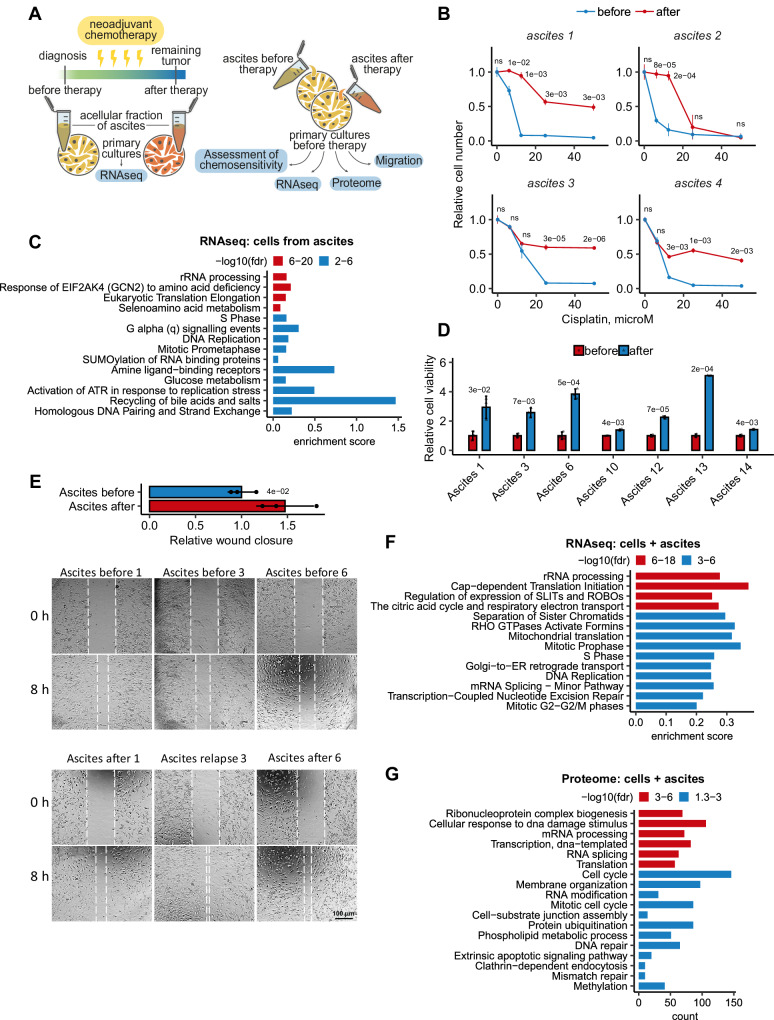
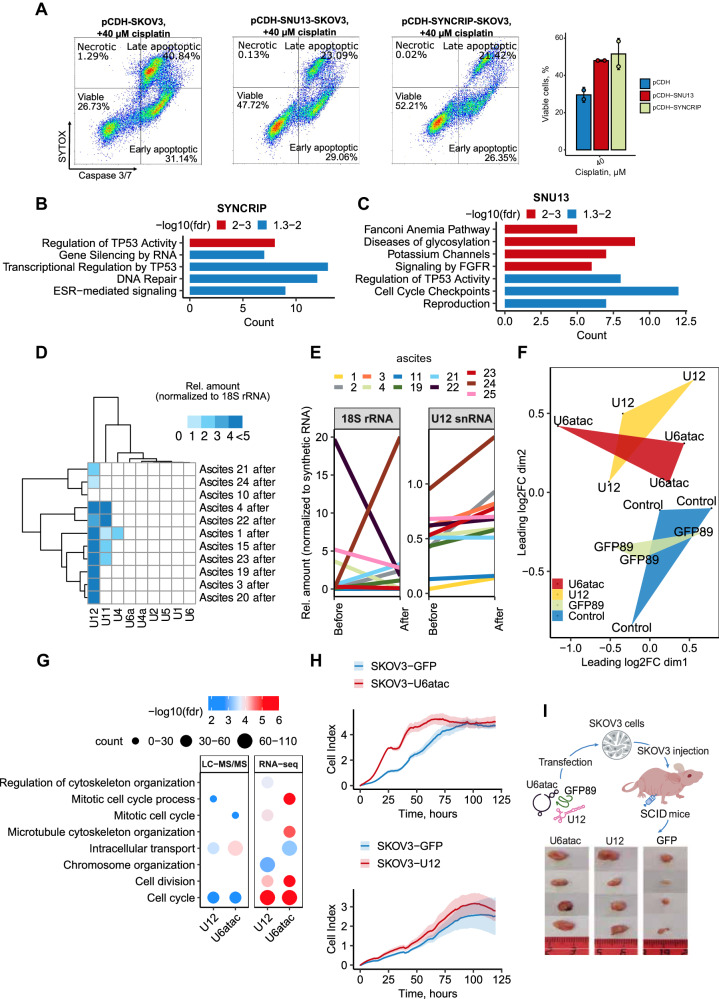
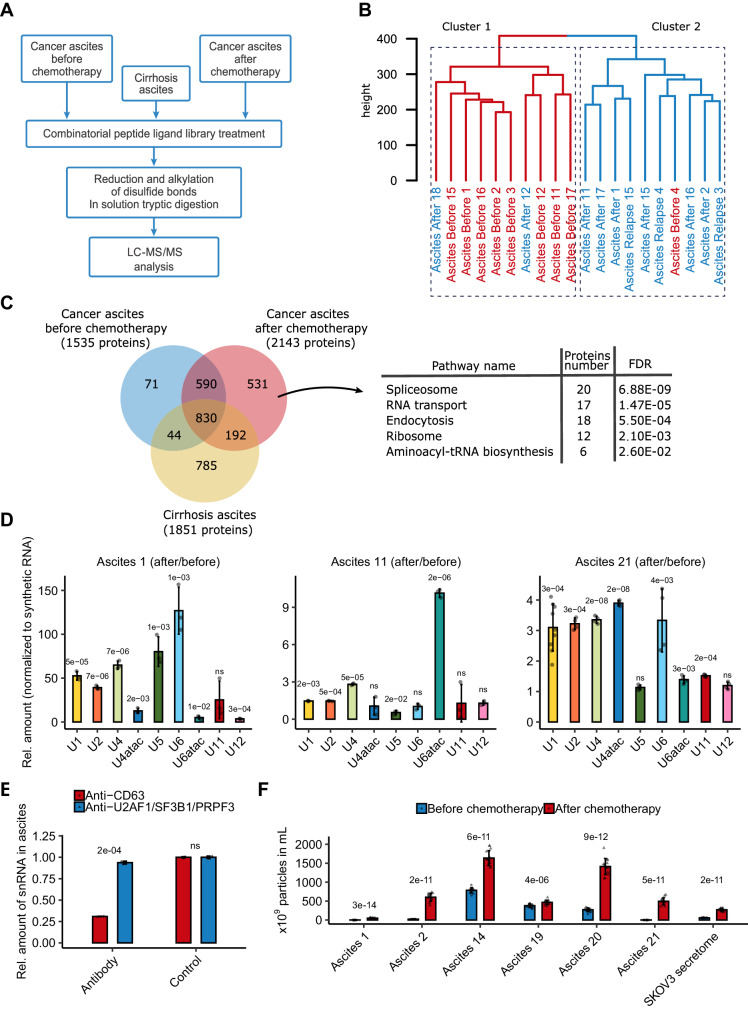
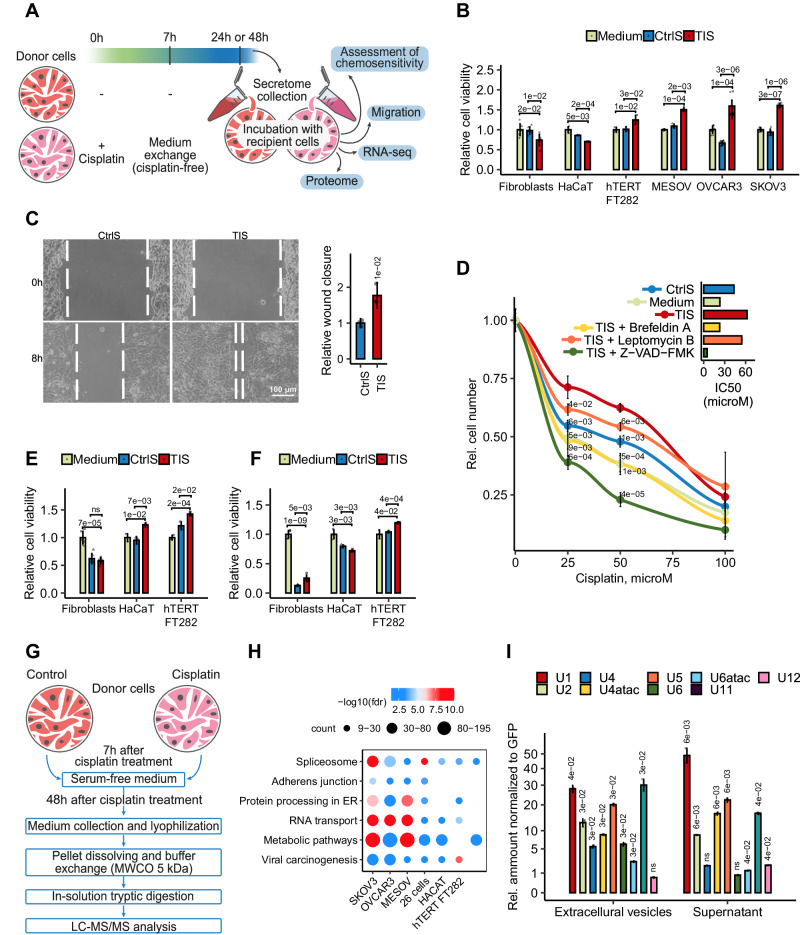
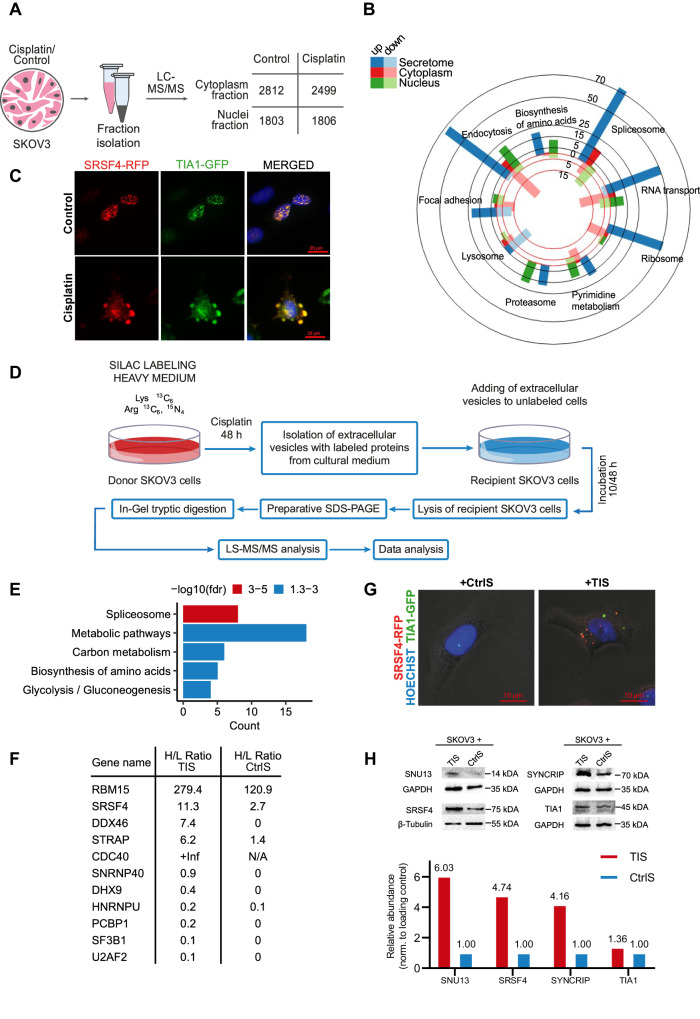
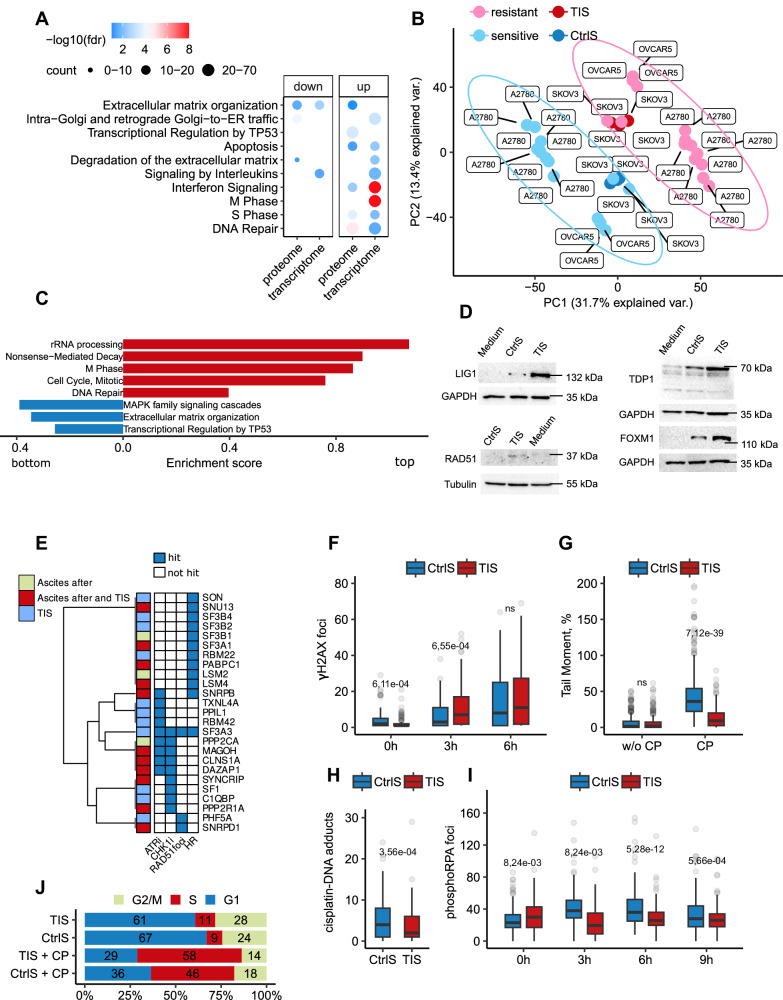
Ovarian cancer often develops resistance to conventional therapies, hampering their effectiveness. Here, using ex vivo paired ovarian cancer ascites obtained before and after chemotherapy and in vitro therapy-induced secretomes, we show that molecules secreted by ovarian cancer cells upon therapy promote cisplatin resistance and enhance DNA damage repair in recipient cancer cells. Even a short-term incubation of chemonaive ovarian cancer cells with therapy-induced secretomes induces changes resembling those that are observed in chemoresistant patient-derived tumor cells after long-term therapy. Using integrative omics techniques, we find that both ex vivo and in vitro therapy-induced secretomes are enriched with spliceosomal components, which relocalize from the nucleus to the cytoplasm and subsequently into the extracellular vesicles upon treatment. We demonstrate that these molecules substantially contribute to the phenotypic effects of therapy-induced secretomes. Thus, SNU13 and SYNCRIP spliceosomal proteins promote therapy resistance, while the exogenous U12 and U6atac snRNAs stimulate tumor growth. These findings demonstrate the significance of spliceosomal network perturbation during therapy and further highlight that extracellular signaling might be a key factor contributing to the emergence of ovarian cancer therapy resistance.
卵巢癌通常对常规疗法产生耐药性,从而降低其疗效。在这里,我们使用化疗前后获得的卵巢癌腹水和体外治疗诱导的分泌组学进行研究,结果表明,治疗后卵巢癌细胞分泌的分子促进了顺铂耐药性,并增强了受体癌细胞的 DNA 损伤修复。即使短时间孵育化疗敏感的卵巢癌细胞与治疗诱导的分泌组,也会诱导类似于长期治疗后在耐药患者来源的肿瘤细胞中观察到的变化。通过整合组学技术,我们发现,无论是在体外用药物处理,还是在体外处理,分泌组学中都富含剪接体成分,这些成分在治疗后会从核内重新定位到细胞质,并随后进入细胞外囊泡。我们证明这些分子对治疗诱导的分泌组的表型效应有很大的贡献。因此,SNU13 和 SYNCRIP 剪接体蛋白促进治疗耐药性,而外源性 U12 和 U6atac snRNA 则刺激肿瘤生长。这些发现表明,在治疗过程中剪接体网络的改变具有重要意义,进一步强调了细胞外信号可能是导致卵巢癌治疗耐药性产生的关键因素。