Tang Haoyi, Cai Luwei, He Xiangyang, Niu Zihe, Huang Haitong, Hu Wentao, Bian Huahui, Huang Hao
State Key Laboratory of Radiation Medicine and Protection, School of Radiation Medicine and Protection, Collaborative Innovation Center of Radiological Medicine of Jiangsu Higher Education Institutions, Soochow University, Suzhou, China.
Nuclear and Radiation Incident Medical Emergency Office, The Second Affiliated Hospital of Soochow University, Suzhou, China.
Front Oncol. 2023 Apr 5;13:1124412. doi: 10.3389/fonc.2023.1124412. eCollection 2023.
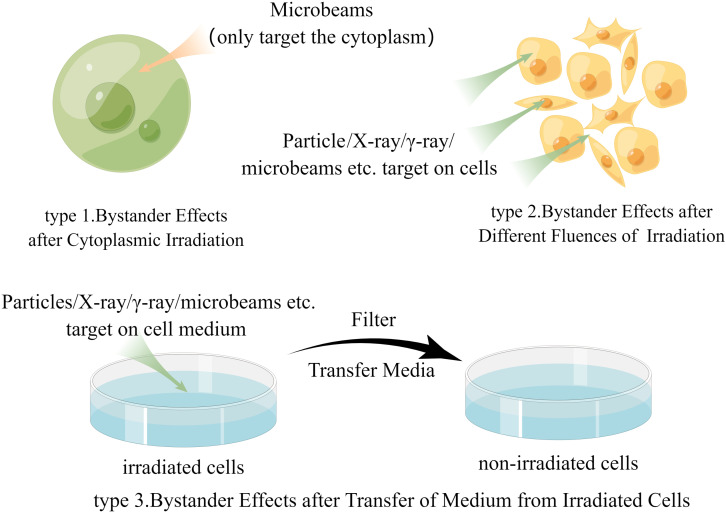
For many years, targeted DNA damage caused by radiation has been considered the main cause of various biological effects. Based on this paradigm, any small amount of radiation is harmful to the organism. Epidemiological studies of Japanese atomic bomb survivors have proposed the linear-non-threshold model as the dominant standard in the field of radiation protection. However, there is increasing evidence that the linear-non-threshold model is not fully applicable to the biological effects caused by low dose radiation, and theories related to low dose radiation require further investigation. In addition to the cell damage caused by direct exposure, non-targeted effects, which are sometimes referred to as bystander effects, abscopal effects, genetic instability, etc., are another kind of significant effect related to low dose radiation. An understanding of this phenomenon is crucial for both basic biomedical research and clinical application. This article reviews recent studies on the bystander effect and summarizes the key findings in the field. Additionally, it offers a cross-sectional comparison of bystander effects caused by various radiation sources in different cell types, as well as an in-depth analysis of studies on the potential biological mechanisms of bystander effects. This review aims to present valuable information and provide new insights on the bystander effect to enlighten both radiobiologists and clinical radiologists searching for new ways to improve clinical treatments.
多年来,辐射引起的靶向DNA损伤一直被认为是各种生物学效应的主要原因。基于这一范式,任何少量辐射对生物体都是有害的。对日本原子弹幸存者的流行病学研究提出了线性无阈模型,作为辐射防护领域的主导标准。然而,越来越多的证据表明,线性无阈模型并不完全适用于低剂量辐射引起的生物学效应,与低剂量辐射相关的理论需要进一步研究。除了直接照射造成的细胞损伤外,非靶向效应,有时也被称为旁观者效应、远隔效应、遗传不稳定等,是与低剂量辐射相关的另一种重要效应。了解这一现象对于基础生物医学研究和临床应用都至关重要。本文综述了近期关于旁观者效应的研究,并总结了该领域的关键发现。此外,还对不同细胞类型中各种辐射源引起的旁观者效应进行了横断面比较,并对旁观者效应潜在生物学机制的研究进行了深入分析。这篇综述旨在提供有价值的信息,并为旁观者效应提供新的见解,以启发正在寻找改善临床治疗新方法的放射生物学家和临床放射科医生。