Department of Surgery, Meander Medical Center, Maatweg 3, 3813 TZ, Amersfoort, The Netherlands.
Department of Surgery, University of Groningen, University Medical Center Groningen, Hanzeplein 1, 9713 GZ, Groningen, The Netherlands.
Surg Endosc. 2024 Aug;38(8):4431-4444. doi: 10.1007/s00464-024-10934-4. Epub 2024 Jun 19.
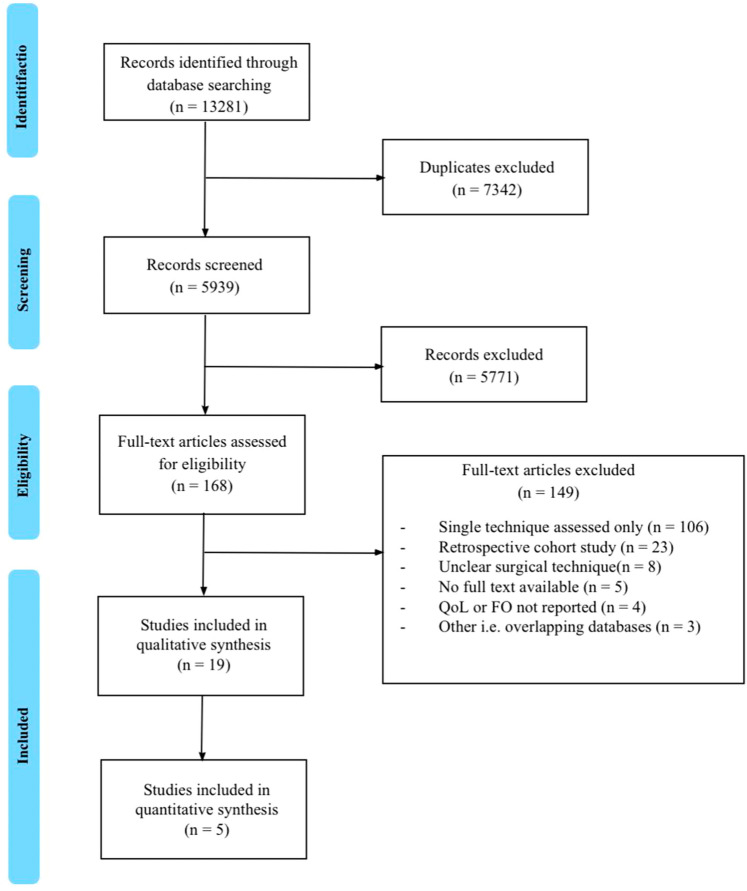
The standard surgical treatment for rectal cancer is total mesorectal excision (TME), which may negatively affect patients' functional outcomes and quality of life (QoL). However, it is unclear how different TME techniques may impact patients' functional outcomes and QoL. This systematic review and meta-analysis evaluated functional outcomes of urinary, sexual, and fecal functioning as well as QoL after open, laparoscopic (L-TME), robot-assisted (R-TME), and transanal total mesorectal excision (TaTME).
A systematic review and meta-analysis, based on the preferred reporting items for systematic reviews and meta-analysis statement, were conducted (PROSPERO: CRD42021240851). A literature review was performed (sources: PubMed, Medline, Embase, Scopus, Web of Science, and Cochrane Library databases; end-of-search date: September 1, 2023), and a quality assessment was performed using the Methodological index for non-randomized studies. A random-effects model was used to pool the data for the meta-analyses.
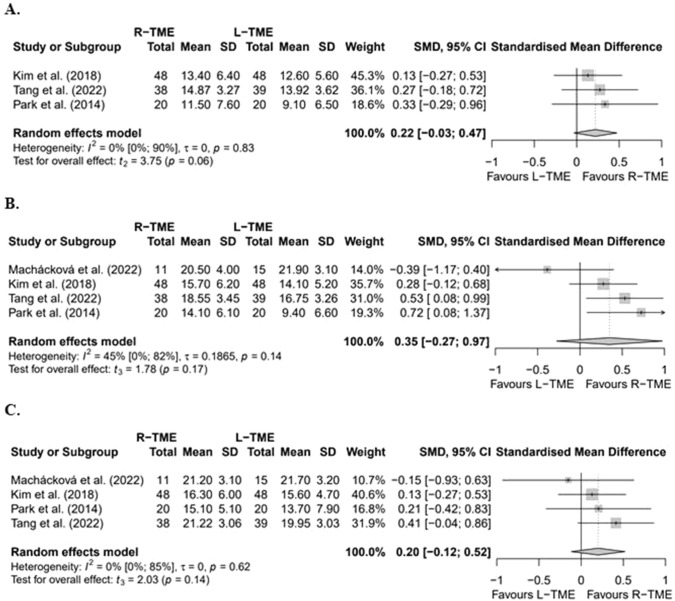
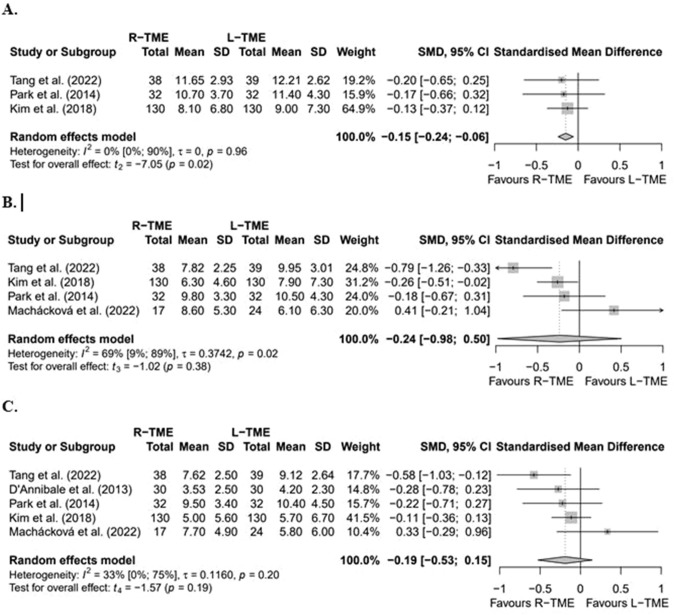
Nineteen studies were included, reporting on 2495 patients (88 open, 1171 L-TME, 995 R-TME, and 241 TaTME). Quantitative analyses comparing L-TME vs. R-TME showed no significant differences regarding urinary and sexual functioning, except for urinary function at three months post-surgery, which favoured R-TME (SMD [CI] -0 .15 [- 0.24 to - 0.06], p = 0.02; n = 401). Qualitative analyses identified most studies did not find significant differences in urinary, sexual, and fecal functioning and QoL between different techniques.
This systematic review and meta-analysis highlight a significant gap in the literature concerning the evaluation of functional outcomes and QoL after TME for rectal cancer treatment. This study emphasizes the need for high-quality, randomized-controlled, and prospective cohort studies evaluating these outcomes. Based on the limited available evidence, this systematic review and meta-analysis suggests no significant differences in patients' urinary, sexual, and fecal functioning and their QoL across various TME techniques.
直肠癌的标准手术治疗是全直肠系膜切除术(TME),但可能对患者的功能结局和生活质量(QoL)产生负面影响。然而,不同的 TME 技术如何影响患者的功能结局和 QoL 尚不清楚。本系统评价和荟萃分析评估了开放式、腹腔镜(L-TME)、机器人辅助(R-TME)和经肛门全直肠系膜切除术(TaTME)后尿、性和排便功能以及 QoL 的功能结局。
根据系统评价和荟萃分析的首选报告项目声明(PROSPERO:CRD42021240851)进行了系统评价和荟萃分析。进行了文献回顾(来源:PubMed、Medline、Embase、Scopus、Web of Science 和 Cochrane Library 数据库;搜索截止日期:2023 年 9 月 1 日),并使用非随机研究方法学指数对质量进行评估。使用随机效应模型对荟萃分析数据进行汇总。
纳入了 19 项研究,共报告了 2495 名患者(88 例开放,1171 例 L-TME,995 例 R-TME 和 241 例 TaTME)。比较 L-TME 与 R-TME 的定量分析显示,在术后三个月的尿功能方面,除了尿功能外,在尿功能和性功能方面没有显著差异,这有利于 R-TME(SMD [CI] -0.15 [-0.24 至-0.06],p=0.02;n=401)。定性分析确定大多数研究没有发现不同技术之间在尿、性和排便功能以及 QoL 方面有显著差异。
本系统评价和荟萃分析强调了在直肠癌 TME 治疗后评估功能结局和 QoL 的文献中存在显著差距。本研究强调需要高质量、随机对照和前瞻性队列研究来评估这些结果。基于有限的可用证据,本系统评价和荟萃分析表明,在各种 TME 技术中,患者的尿、性和排便功能以及 QoL 没有显著差异。