Paediatric Onco-Hematology, Stem Cell Transplantation and Cellular Therapy Division, Regina Margherita Children's Hospital, Piazza Polonia 94, Turin, 10126, Italy.
Department of Public Health and Paediatrics, University of Turin, Turin, Italy.
BMC Cancer. 2024 Jun 19;24(1):747. doi: 10.1186/s12885-024-12498-x.
The prognosis of patients with Relapsed/Refractory Osteosarcoma (R/R OS) remains dismal without an agreement on systemic therapy. The use of High-Dose Ifosfamide (14 g/sqm) with an external pump in outpatient setting (14-IFO) in R/R OS patients is limited. This study represents the first retrospective cohort analysis focused on evaluating the activity and toxicity of 14-IFO in this setting.
The study investigated 14-IFO activity, in terms of tumour response according to RECIST 1.1 criteria, as well as survival rates and toxicity, according to CTCAE v.5.
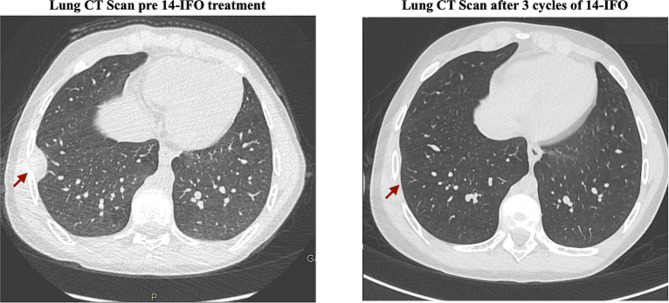
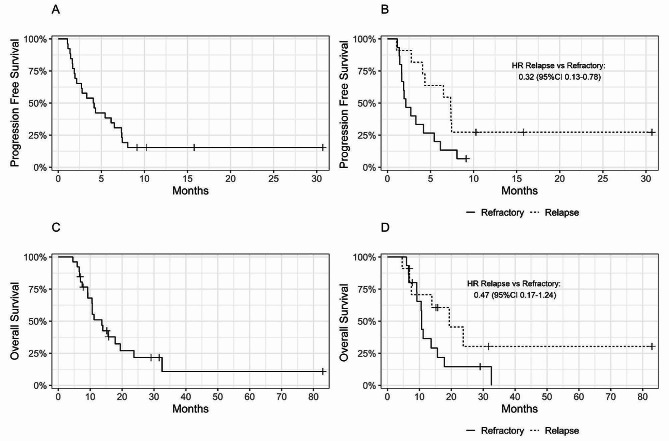
The trial enrolled 26 patients with R/R OS. The Overall Response Rate (ORR) and Disease Control Rate (DCR) obtained was 23% and 57.5%, respectively. Patients with relapsed OS showed a higher ORR (45%) and DCR (82%) compared to refractory patients, irrespective of the number of prior treatment lines received. The achievement of disease control with 14-IFO administration enabled 27% of patients to undergo new local treatment. Four-month Progression-Free Survival (PFS) was 54% for all patients and 82% for the relapsed OS sub-group. Median Overall Survival (OSurv) was 13.7 months, with 1-year OSurv of 51% for all patients and 71% for relapsed patients. Age over 18 years and the presence of refractory disease were identified as negative prognostic factors for this patient cohort. A total of 101 cycles were evaluated for toxic assessment, demonstrating a tolerable profile without grade 3-4 non-haematological toxicities.
14-IFO should be considered a viable treatment option for R/R OS, particularly due to its well tolerated toxicity profile and the potential for home-administration, which can improve patient quality of life without compromising efficacy.
复发/难治性骨肉瘤(R/R OS)患者的预后仍然很差,没有关于系统治疗的共识。在 R/R OS 患者中,在门诊环境下使用外部泵给予高剂量异环磷酰胺(14 g/sqm,14-IFO)的应用受到限制。本研究代表了首次针对该方案中 14-IFO 活性、肿瘤反应(根据 RECIST 1.1 标准)、生存率和毒性的回顾性队列分析。
该研究评估了 14-IFO 的活性,根据 RECIST 1.1 标准评估肿瘤反应,根据 CTCAE v.5 评估生存率和毒性。
该试验纳入了 26 例 R/R OS 患者。总体缓解率(ORR)和疾病控制率(DCR)分别为 23%和 57.5%。与接受过治疗线数无关,与复发 OS 患者相比,复发 OS 患者的 ORR(45%)和 DCR(82%)更高。14-IFO 治疗达到疾病控制后,27%的患者接受了新的局部治疗。所有患者的 4 个月无进展生存率(PFS)为 54%,复发 OS 亚组为 82%。中位总生存期(OSurv)为 13.7 个月,所有患者的 1 年 OSurv 为 51%,复发患者为 71%。年龄大于 18 岁和存在难治性疾病是该患者队列的负面预后因素。共评估了 101 个周期的毒性,显示出可耐受的特征,没有 3-4 级非血液学毒性。
14-IFO 应被视为 R/R OS 的可行治疗选择,特别是由于其可耐受的毒性特征和家庭管理的潜力,这可以提高患者的生活质量,而不影响疗效。