Bonet-Ponce Luis, Tegicho Tsion, Beilina Alexandra, Kluss Jillian H, Li Yan, Cookson Mark R
Department of Neurology, Wexner Medical Center, The Ohio State University, Columbus, Ohio, 43210, USA.
Cell Biology and Gene Expression Section, National Institute on Aging, National Institutes of Health, Bethesda, Maryland, 20892, USA.
bioRxiv. 2024 Apr 3:2024.04.02.587808. doi: 10.1101/2024.04.02.587808.
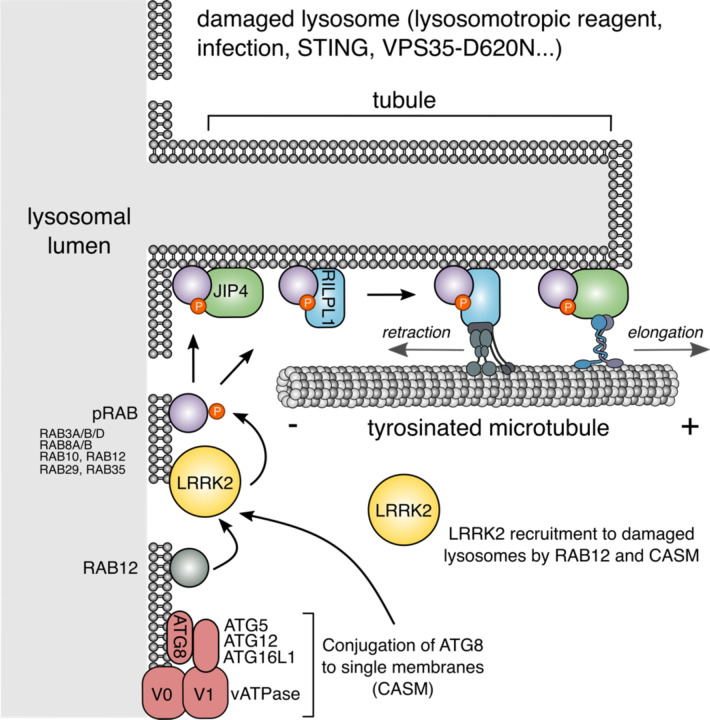
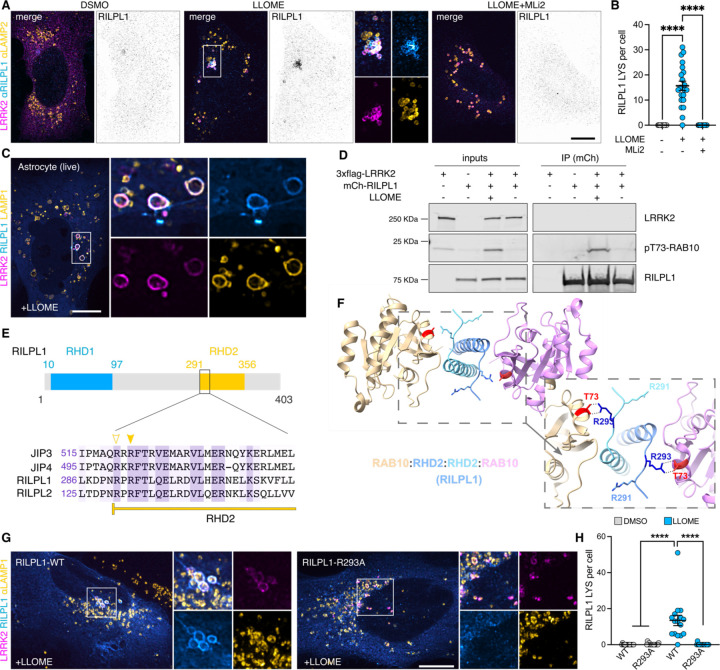
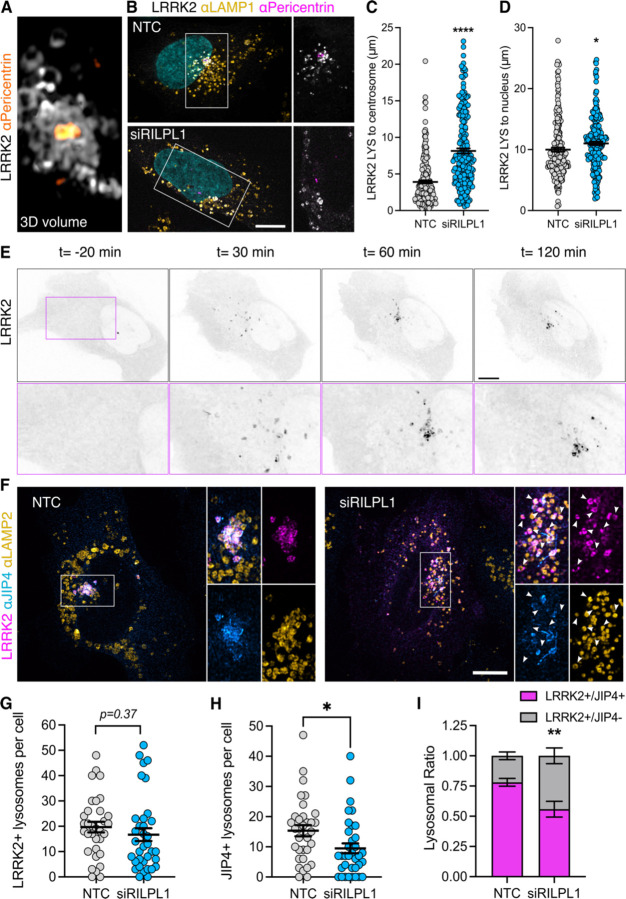
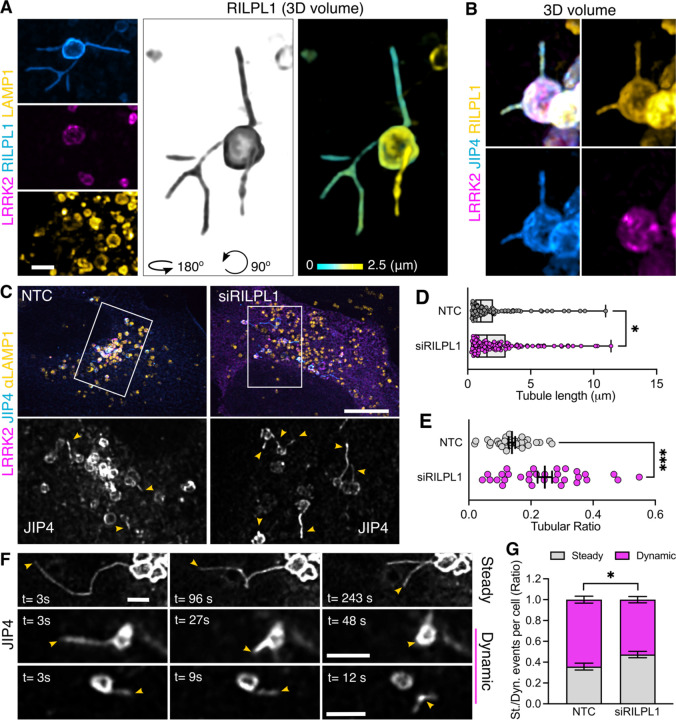
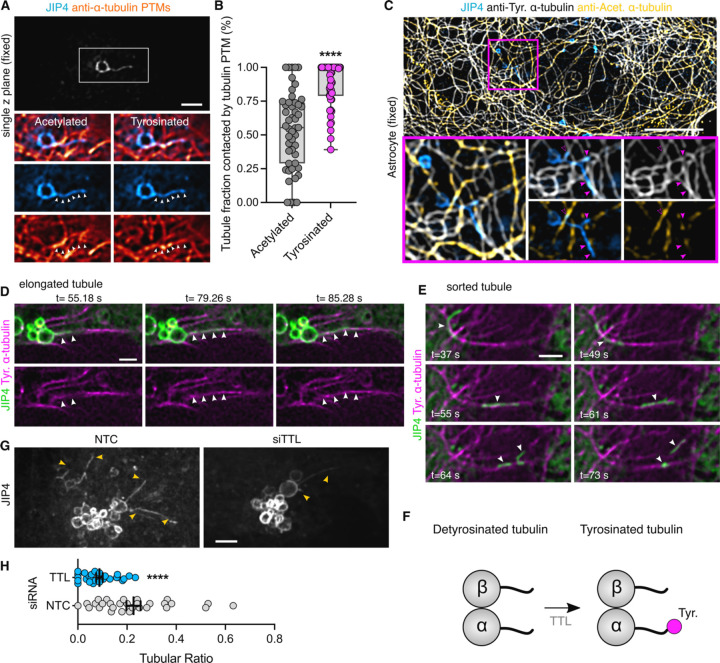
Lysosomes are dynamic cellular structures that adaptively remodel their membrane in response to stimuli, including membrane damage. We previously uncovered a process we term LYTL (LYsosomal Tubulation/sorting driven by Leucine-Rich Repeat Kinase 2 [LRRK2]), wherein damaged lysosomes generate tubules sorted into mobile vesicles. LYTL is orchestrated by the Parkinson's disease-associated kinase LRRK2 that recruits the motor adaptor protein and RHD family member JIP4 to lysosomes via phosphorylated RAB proteins. To identify new players involved in LYTL, we performed unbiased proteomics on isolated lysosomes after LRRK2 kinase inhibition. Our results demonstrate that there is recruitment of RILPL1 to ruptured lysosomes via LRRK2 activity to promote phosphorylation of RAB proteins at the lysosomal surface. RILPL1, which is also a member of the RHD family, enhances the clustering of LRRK2-positive lysosomes in the perinuclear area and causes retraction of LYTL tubules, in contrast to JIP4 which promotes LYTL tubule extension. Mechanistically, RILPL1 binds to p150, a dynactin subunit, facilitating the transport of lysosomes and tubules to the minus end of microtubules. Further characterization of the tubulation process revealed that LYTL tubules move along tyrosinated microtubules, with tubulin tyrosination proving essential for tubule elongation. In summary, our findings emphasize the dynamic regulation of LYTL tubules by two distinct RHD proteins and pRAB effectors, serving as opposing motor adaptor proteins: JIP4, promoting tubulation via kinesin, and RILPL1, facilitating tubule retraction through dynein/dynactin. We infer that the two opposing processes generate a metastable lysosomal membrane deformation that facilitates dynamic tubulation events.
溶酶体是动态的细胞结构,可根据刺激(包括膜损伤)适应性地重塑其膜。我们之前发现了一个我们称为LYTL(由富含亮氨酸重复激酶2 [LRRK2]驱动的溶酶体微管形成/分选)的过程,其中受损的溶酶体产生微管并分选到移动囊泡中。LYTL由与帕金森病相关的激酶LRRK2协调,LRRK2通过磷酸化的RAB蛋白将运动衔接蛋白和RHD家族成员JIP4募集到溶酶体。为了鉴定参与LYTL的新因子,我们在LRRK2激酶抑制后对分离的溶酶体进行了无偏向蛋白质组学分析。我们的结果表明,RILPL1通过LRRK2活性被募集到破裂的溶酶体,以促进溶酶体表面RAB蛋白的磷酸化。RILPL1也是RHD家族的成员,与促进LYTL微管延伸的JIP4相反,它增强了核周区域LRRK2阳性溶酶体的聚集并导致LYTL微管回缩。从机制上讲,RILPL1与动力蛋白激活蛋白亚基p150结合,促进溶酶体和微管向微管负端的运输。对微管形成过程的进一步表征表明,LYTL微管沿着酪氨酸化微管移动,微管蛋白酪氨酸化对微管伸长至关重要。总之,我们的研究结果强调了两种不同的RHD蛋白和pRAB效应器对LYTL微管的动态调节,它们作为相反的运动衔接蛋白:JIP4通过驱动蛋白促进微管形成,而RILPL1通过动力蛋白/动力蛋白激活蛋白促进微管回缩。我们推断这两个相反的过程产生了一种亚稳态的溶酶体膜变形,促进了动态微管形成事件。