Evolutionary Neurobiology Unit, Okinawa Institute of Science and Technology, 1919-1 Tancha, Onna-son, Kunigami-gun, Okinawa, 904-0412, Japan.
Neural Dev. 2024 Jun 21;19(1):10. doi: 10.1186/s13064-024-00184-4.
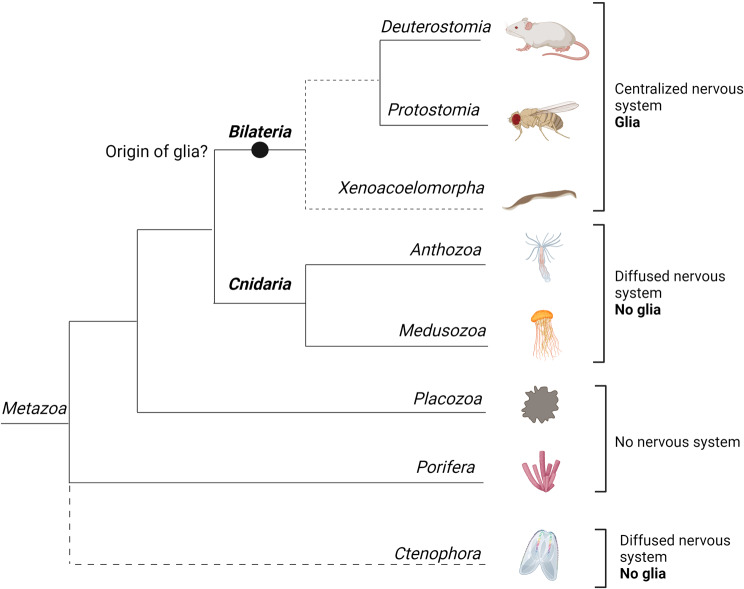
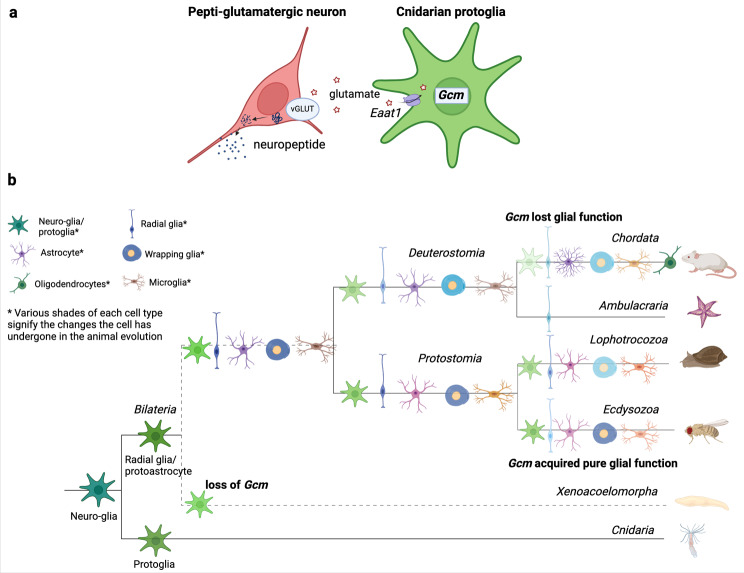
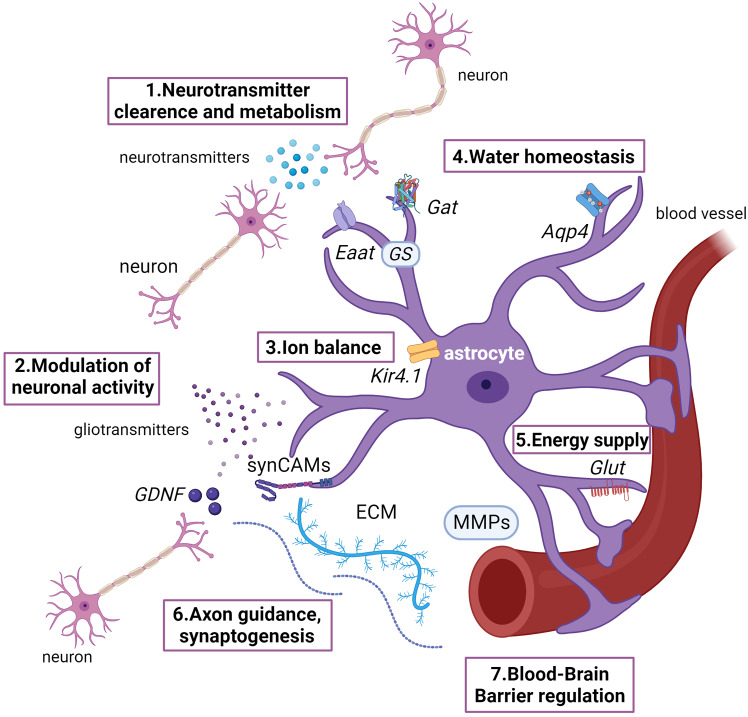
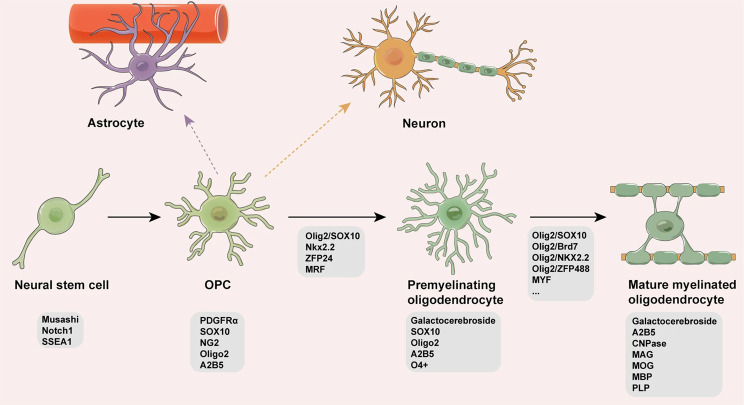
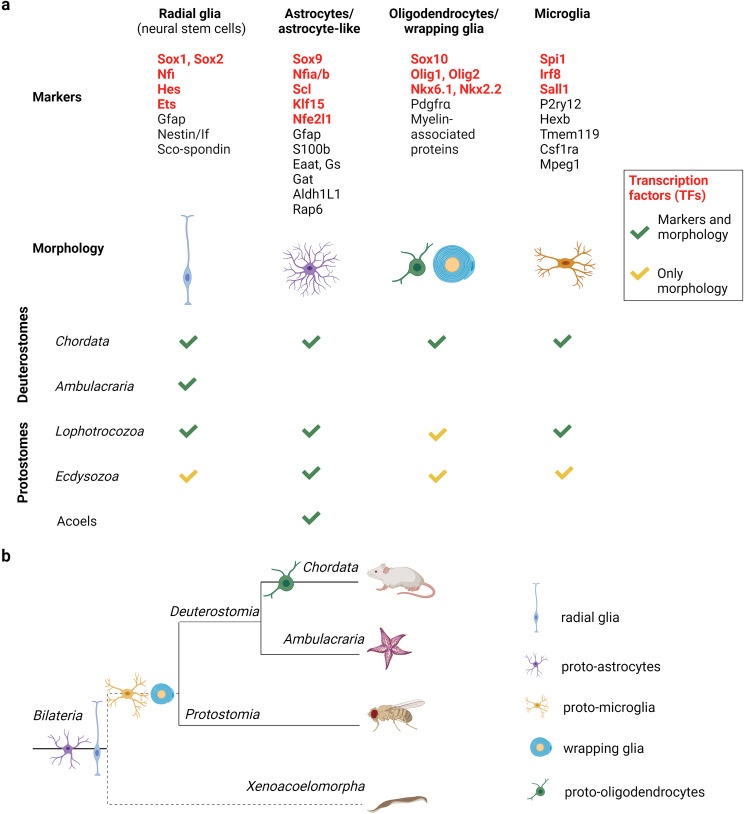
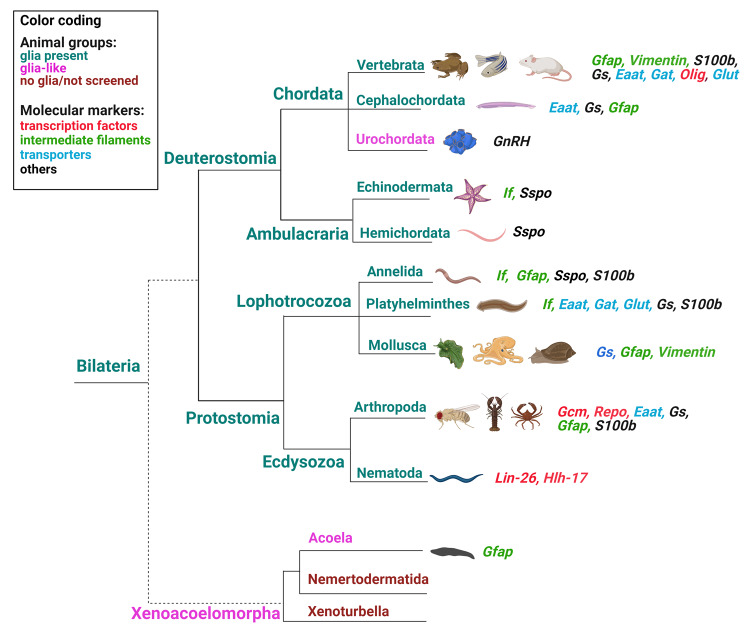
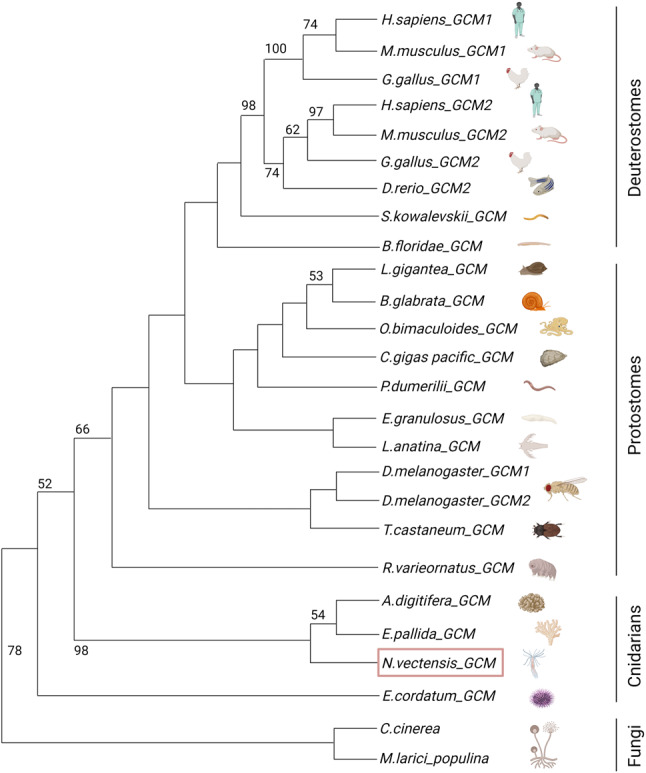
Nervous systems of bilaterian animals generally consist of two cell types: neurons and glial cells. Despite accumulating data about the many important functions glial cells serve in bilaterian nervous systems, the evolutionary origin of this abundant cell type remains unclear. Current hypotheses regarding glial evolution are mostly based on data from model bilaterians. Non-bilaterian animals have been largely overlooked in glial studies and have been subjected only to morphological analysis. Here, we provide a comprehensive overview of conservation of the bilateral gliogenic genetic repertoire of non-bilaterian phyla (Cnidaria, Placozoa, Ctenophora, and Porifera). We overview molecular and functional features of bilaterian glial cell types and discuss their possible evolutionary history. We then examine which glial features are present in non-bilaterians. Of these, cnidarians show the highest degree of gliogenic program conservation and may therefore be crucial to answer questions about glial evolution.
神经元和神经胶质细胞。尽管关于神经胶质细胞在两侧对称动物神经系统中发挥的许多重要功能有大量数据积累,但这种丰富的细胞类型的进化起源仍不清楚。关于神经胶质进化的当前假说主要基于来自模式两侧对称动物的数据。在神经胶质研究中,非两侧对称动物在很大程度上被忽视,仅进行了形态分析。在这里,我们全面概述了非两侧对称门(刺胞动物门、扁盘动物门、栉水母动物门和多孔动物门)的双侧神经发生遗传库的保守性。我们概述了两侧对称动物神经胶质细胞类型的分子和功能特征,并讨论了它们可能的进化历史。然后,我们检查了非两侧对称动物中存在哪些神经胶质特征。在这些特征中,刺胞动物显示出最高程度的神经发生程序保守性,因此对于回答有关神经胶质进化的问题可能至关重要。