Sars International Centre for Marine Molecular Biology, University of Bergen, Thormøhlensgt. 55, 5006, Bergen, Norway.
Cell Tissue Res. 2019 Sep;377(3):321-339. doi: 10.1007/s00441-019-03075-x. Epub 2019 Aug 7.
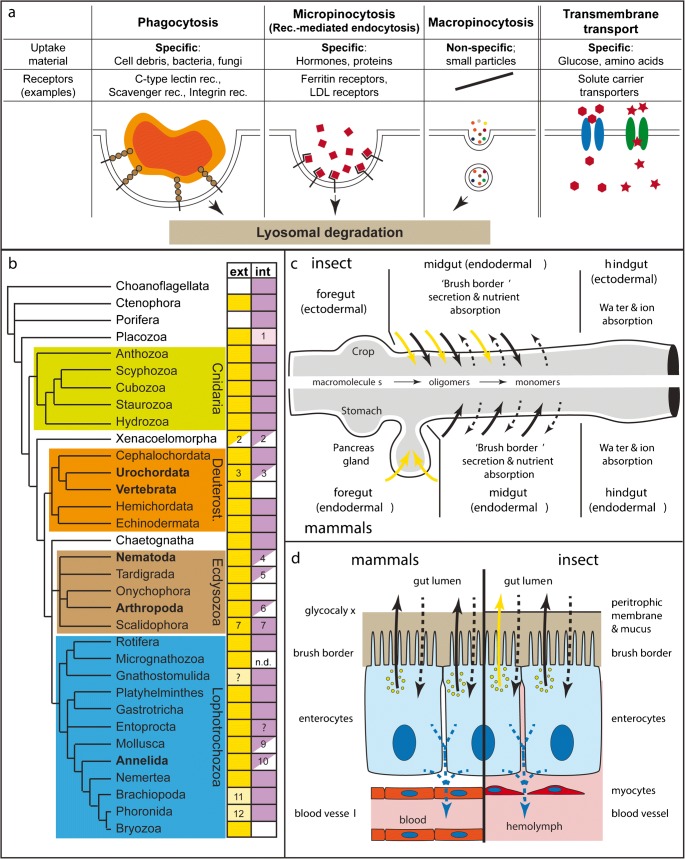
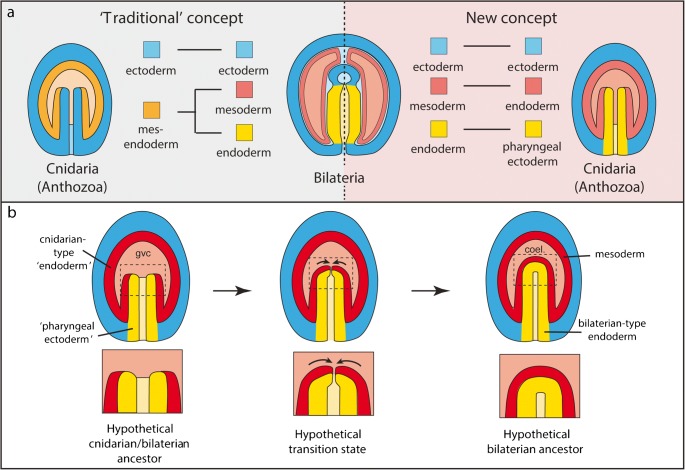
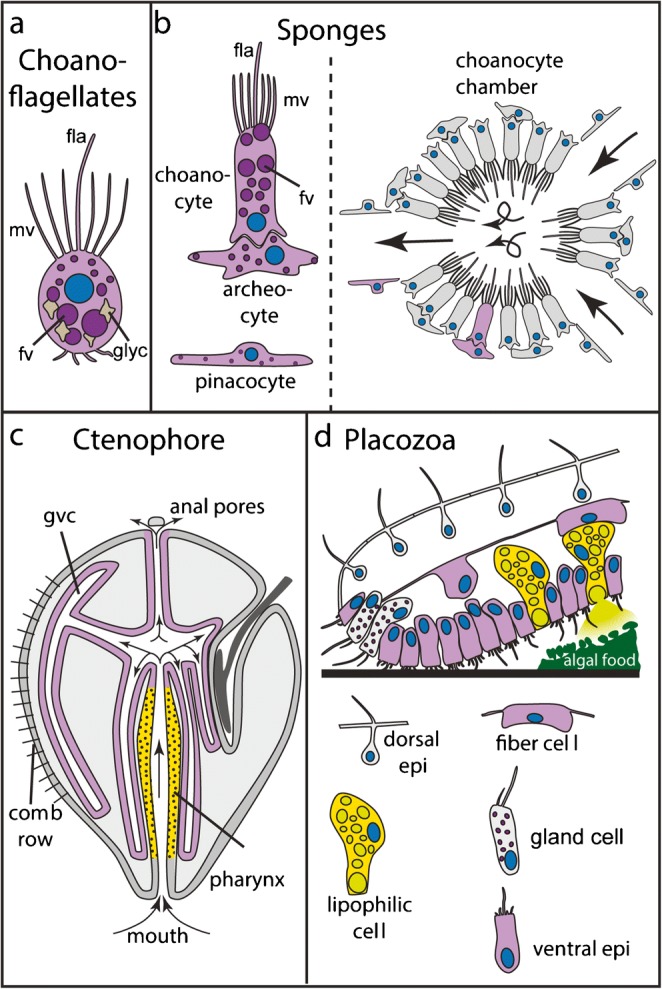
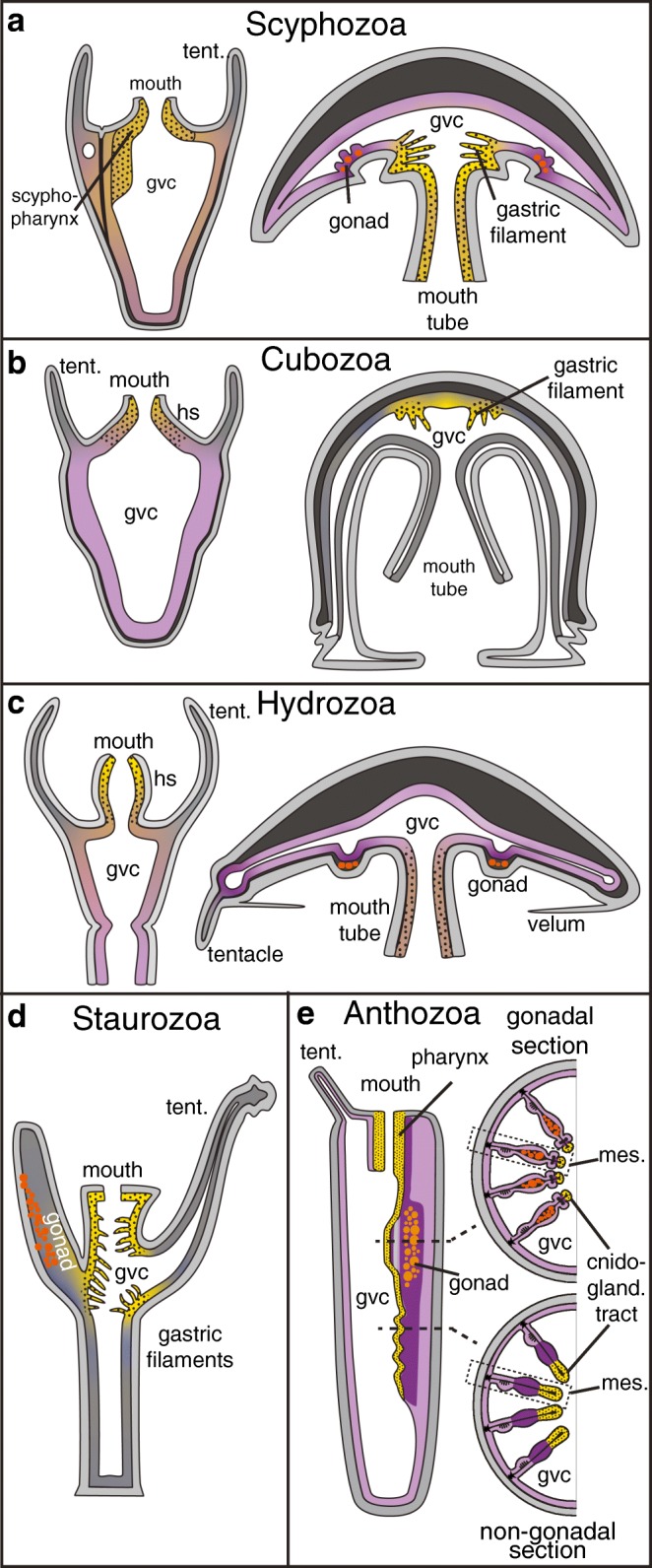
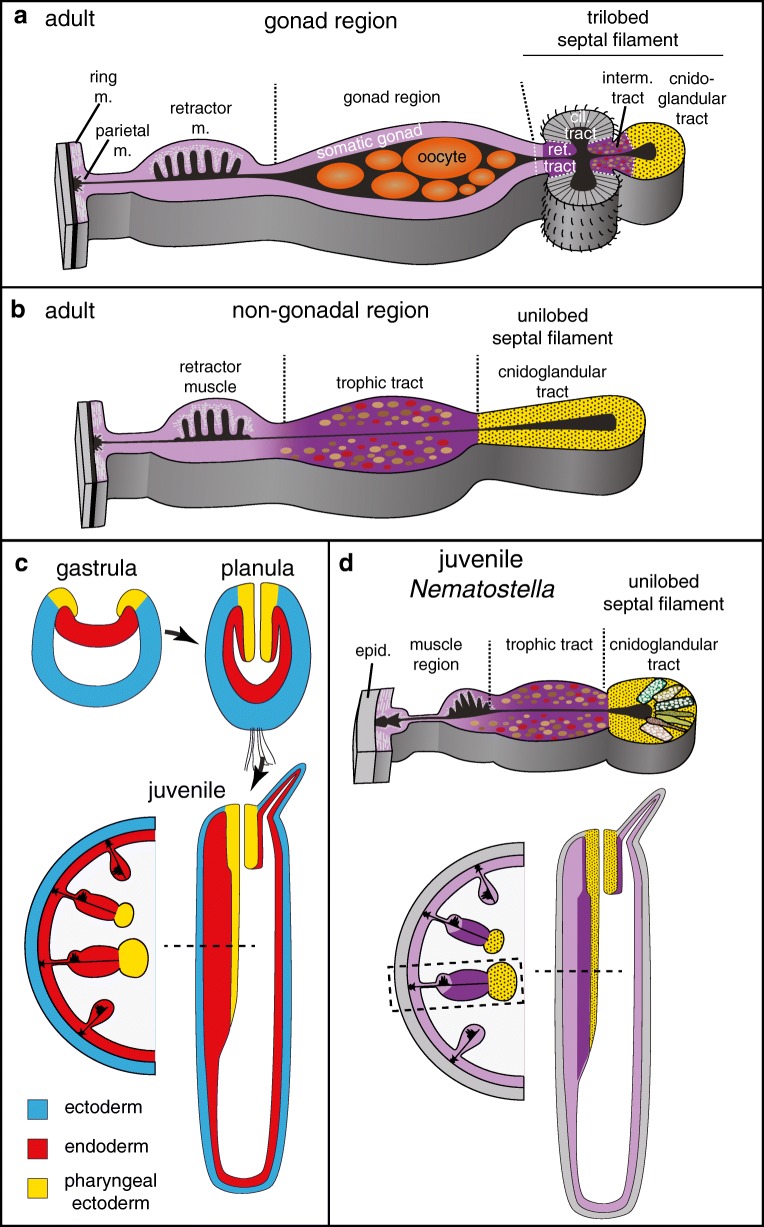
Digestive systems and extracellular digestion are key animal features, but their emergence during early animal evolution is currently poorly understood. As the last common ancestor of non-bilaterian animal groups (sponges, ctenophores, placozoans and cnidarians) dates back to the beginning of animal life, their study and comparison provides important insights into the early evolution of digestive systems and functions. Here, I have compiled an overview of the development and cell biology of digestive tissues in non-bilaterian animals. I will highlight the fundamental differences between extracellular and intracellular digestive processes, and how these are distributed among animals. Cnidarians (e.g. sea anemones, corals, jellyfish), the phylogenetic outgroup of bilaterians (e.g. vertebrates, flies, annelids), occupy a key position to reconstruct the evolution of bilaterian gut evolution. A major focus will therefore lie on the development and cell biology of digestive tissues in cnidarians, especially sea anemones, and how they compare to bilaterian gut tissues. In that context, I will also review how a recent study on the gastrula fate map of the sea anemone Nematostella vectensis challenges our long-standing conceptions on the evolution of cnidarian and bilaterian germ layers and guts.
消化系统和细胞外消化是动物的重要特征,但它们在早期动物进化中的出现目前还知之甚少。由于非两侧对称动物群(海绵动物、栉水母动物、扁盘动物和刺胞动物)的最后共同祖先可以追溯到动物生命的起源,因此对它们的研究和比较为消化系统和功能的早期进化提供了重要的见解。在这里,我对非两侧对称动物的消化组织的发育和细胞生物学进行了综述。我将重点介绍细胞外和细胞内消化过程之间的基本区别,以及这些过程在动物中的分布方式。刺胞动物(例如海葵、珊瑚、水母)是两侧对称动物(例如脊椎动物、苍蝇、环节动物)的系统发育外类群,在重建两侧对称动物肠道进化方面占据关键位置。因此,一个主要的重点将放在刺胞动物,特别是海葵的消化组织的发育和细胞生物学上,并比较它们与两侧对称动物肠道组织的差异。在这方面,我还将回顾最近一项关于海葵 Nematostella vectensis 原肠胚命运图谱的研究,该研究挑战了我们关于刺胞动物和两侧对称动物胚层和肠道进化的长期观念。