Department of Immunology and Cell Biology, Faculty of Medicine and Health Sciences, Université de Sherbrooke, Sherbrooke, QC, Canada.
Front Immunol. 2024 Jun 11;15:1404891. doi: 10.3389/fimmu.2024.1404891. eCollection 2024.
Inflammatory cytokines play key pathogenic roles in liver fibrosis. IL-15 is a proinflammatory cytokine produced by myeloid cells. IL-15 promotes pathogenesis of several chronic inflammatory diseases. However, increased liver fibrosis has been reported in mice lacking IL-15 receptor alpha chain (IL-15Rα), suggesting an anti-fibrogenic role for IL-15. As myeloid cells are key players in liver fibrosis and IL-15 signaling can occur independently of IL-15Rα, we investigated the requirement of IL-15 and IL-15Rα in liver fibrosis.
We induced liver fibrosis in , and wildtype C57BL/6 mice by the administration of carbon tetrachloride (CCl). Liver fibrosis was evaluated by Sirius red and Mason's trichrome staining and α-smooth muscle acting immunostaining of myofibroblasts. Gene expression of collagens, matrix modifying enzymes, cytokines and chemokines was quantified by RT-qPCR. The phenotype and the numbers of intrahepatic lymphoid and myeloid cell subsets were evaluated by flow cytometry.
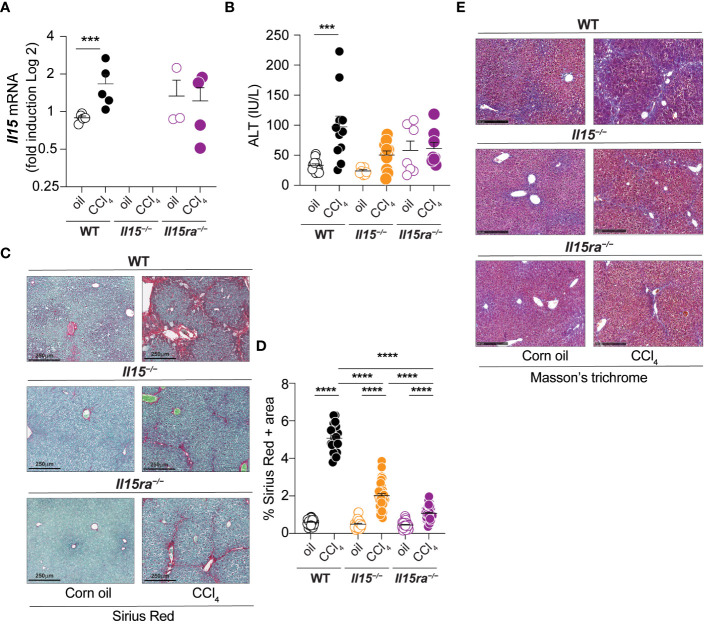
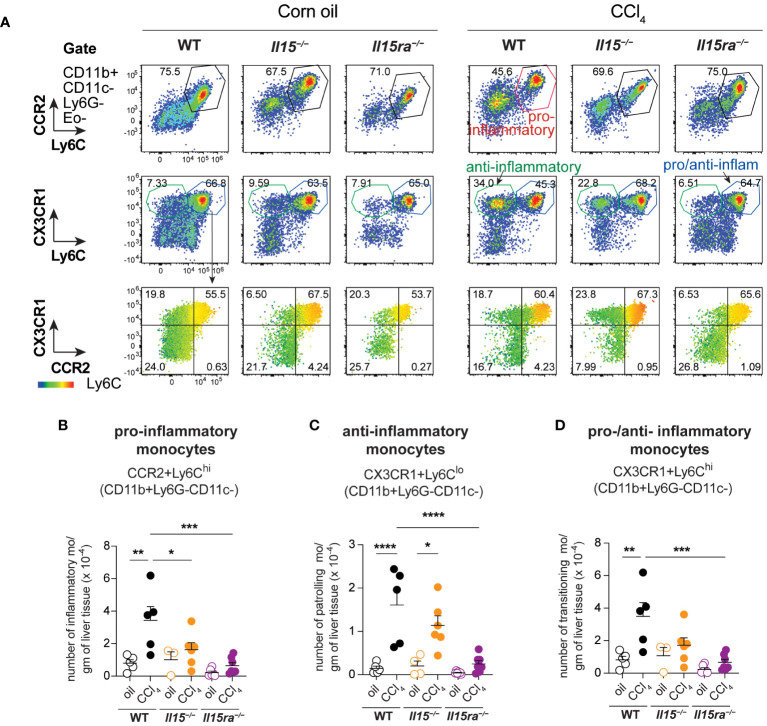
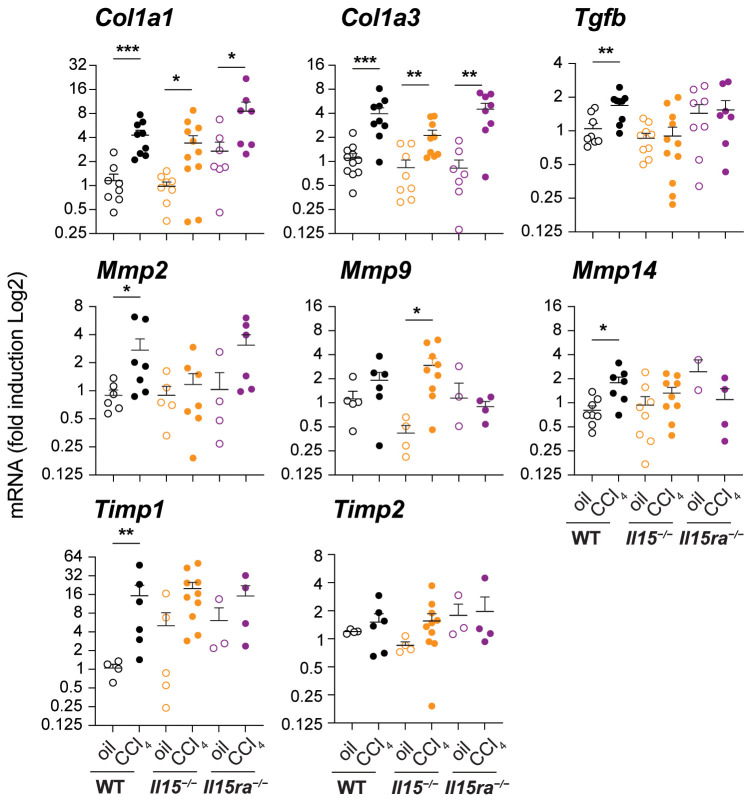
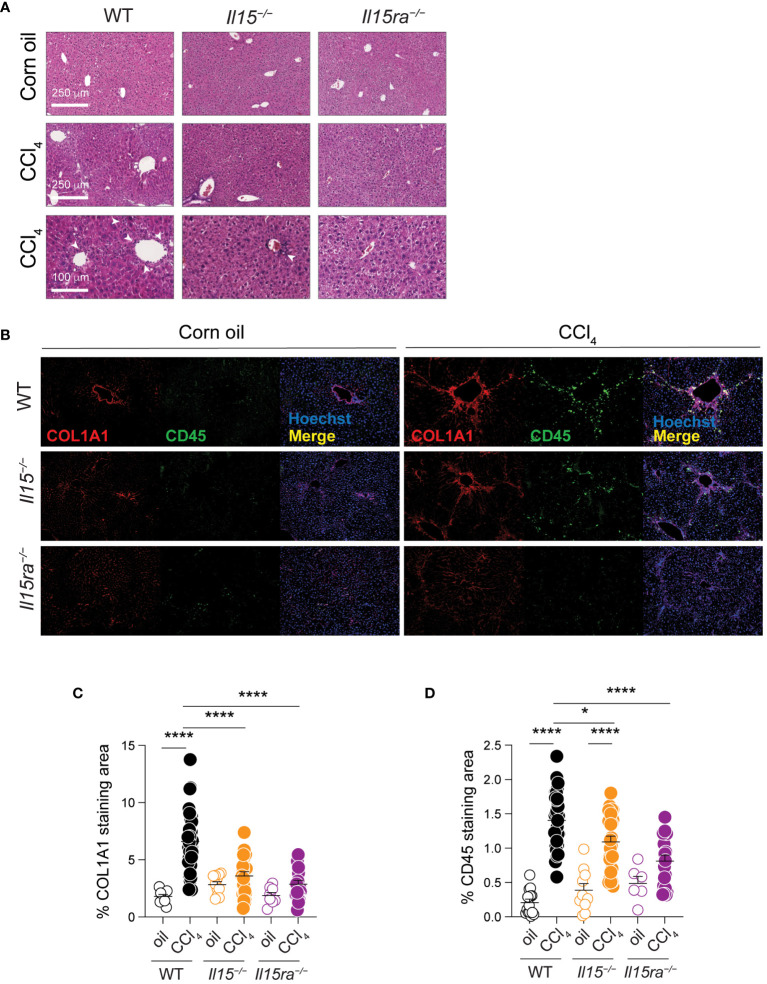
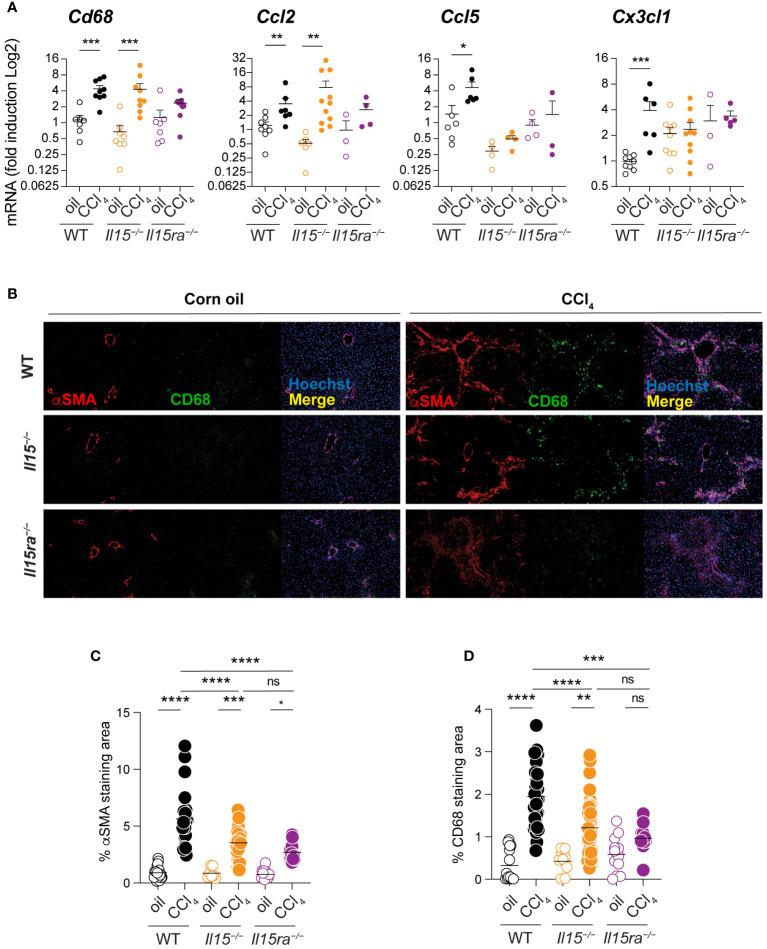
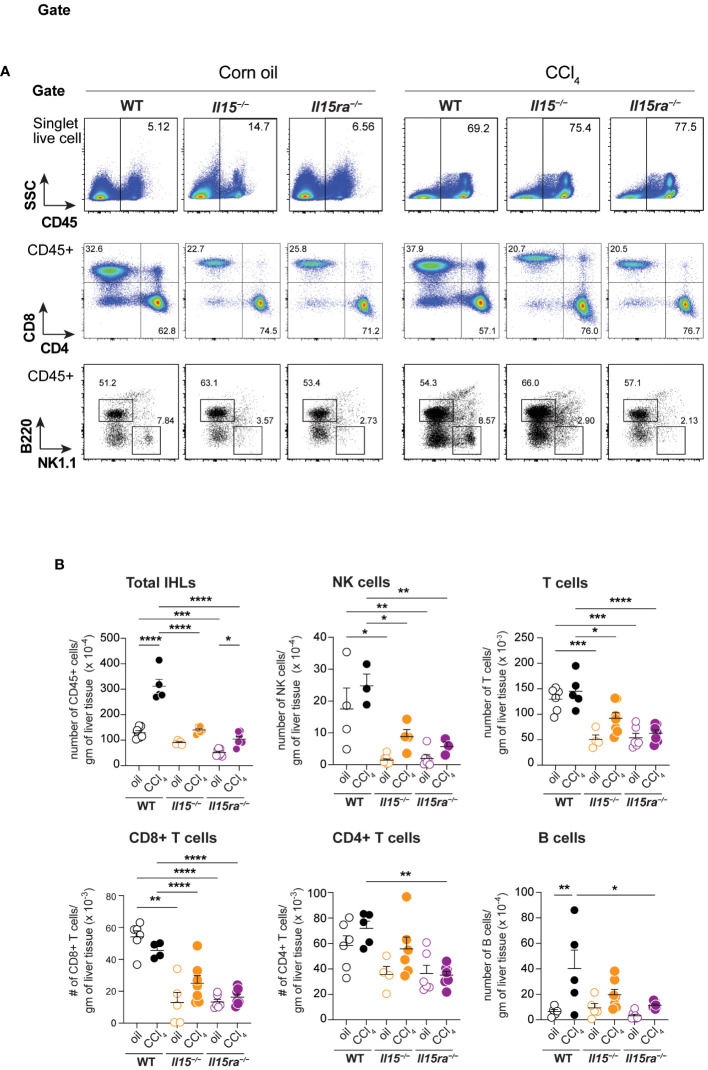
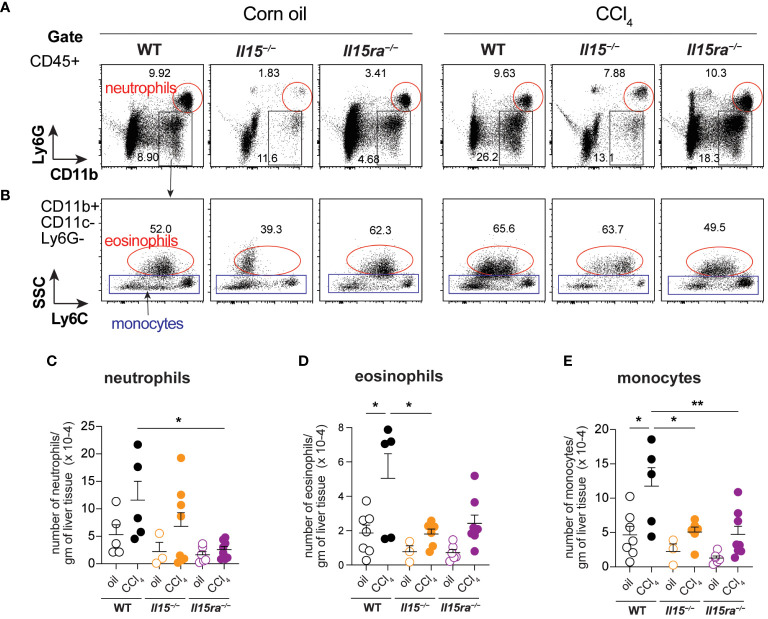
Both and mice developed markedly reduced liver fibrosis compared to wildtype control mice, as revealed by reduced collagen deposition and myofibroblast content. mice showed further reduction in collagen deposition compared to mice. However, and genes were similarly induced in the fibrotic livers of wildtype, and mice, although notable variations were observed in the expression of matrix remodeling enzymes and chemokines. As expected, and mice showed markedly reduced numbers of NK cells compared to wildtype mice. They also showed markedly less staining of CD45 immune cells and CD68 macrophages, and significantly reduced inflammatory cell infiltration into the liver, with fewer pro-inflammatory and anti-inflammatory monocyte subsets compared to wildtype mice.
Our findings indicate that IL-15 exerts its profibrogenic role in the liver by promoting macrophage activation and that this requires trans-presentation of IL-15 by IL-15Rα.
炎症细胞因子在肝纤维化的发病机制中起关键作用。IL-15 是一种由髓样细胞产生的促炎细胞因子。IL-15 促进了几种慢性炎症性疾病的发病机制。然而,缺乏白细胞介素 15 受体 α 链(IL-15Rα)的小鼠报告肝脏纤维化增加,表明 IL-15 具有抗纤维化作用。由于髓样细胞是肝纤维化的关键参与者,并且 IL-15 信号可以独立于 IL-15Rα 发生,因此我们研究了 IL-15 和 IL-15Rα 在肝纤维化中的需求。
我们通过四氯化碳(CCl)给药在 、 和野生型 C57BL/6 小鼠中诱导肝纤维化。通过天狼星红和 Mason 三色染色以及肌成纤维细胞的 α-平滑肌肌动蛋白免疫染色评估肝纤维化。通过 RT-qPCR 定量测定胶原蛋白、基质修饰酶、细胞因子和趋化因子的基因表达。通过流式细胞术评估肝内淋巴和髓样细胞亚群的表型和数量。
与野生型对照小鼠相比, 和 小鼠的肝纤维化明显减少,这表现在胶原沉积和肌成纤维细胞含量减少。与 小鼠相比, 小鼠的胶原沉积进一步减少。然而,纤维化肝脏中的 和 基因在野生型、 和 小鼠中均被相似地诱导,尽管在基质重塑酶和趋化因子的表达方面观察到明显的差异。正如预期的那样,与野生型小鼠相比, 和 小鼠的 NK 细胞数量明显减少。它们还显示出 CD45 免疫细胞和 CD68 巨噬细胞的染色明显减少,并且肝脏中的炎症细胞浸润明显减少,与野生型小鼠相比,促炎和抗炎单核细胞亚群减少。
我们的研究结果表明,IL-15 通过促进巨噬细胞活化在肝脏中发挥其促纤维化作用,这需要 IL-15Rα 转呈 IL-15。