Malewska-Kasprzak Magda, Skibińska Maria, Dmitrzak-Węglarz Monika
Department of Psychiatry, Poznan University of Medical Sciences, 61-701 Poznan, Poland.
Department of Psychiatric Genetics, Poznan University of Medical Sciences, 61-701 Poznan, Poland.
Brain Sci. 2024 Jun 6;14(6):583. doi: 10.3390/brainsci14060583.
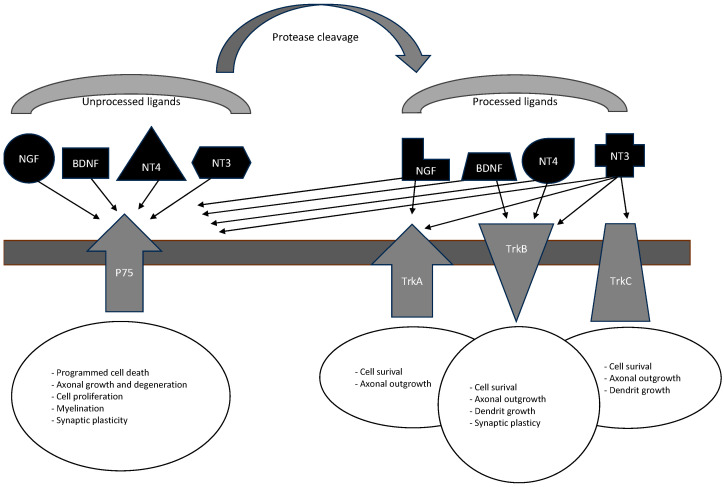
Alcohol use disorder (AUD) is related to mental and somatic disorders that result in alcohol withdrawal syndrome (AWS), with 30% of AWS cases leading to life-threatening delirium tremens (DTs). Currently, studies do not support using any one biomarker in DTs. Neurotrophins affect neuromodulation, playing a role in the pathogenesis of AUD, AWS, and DTs.
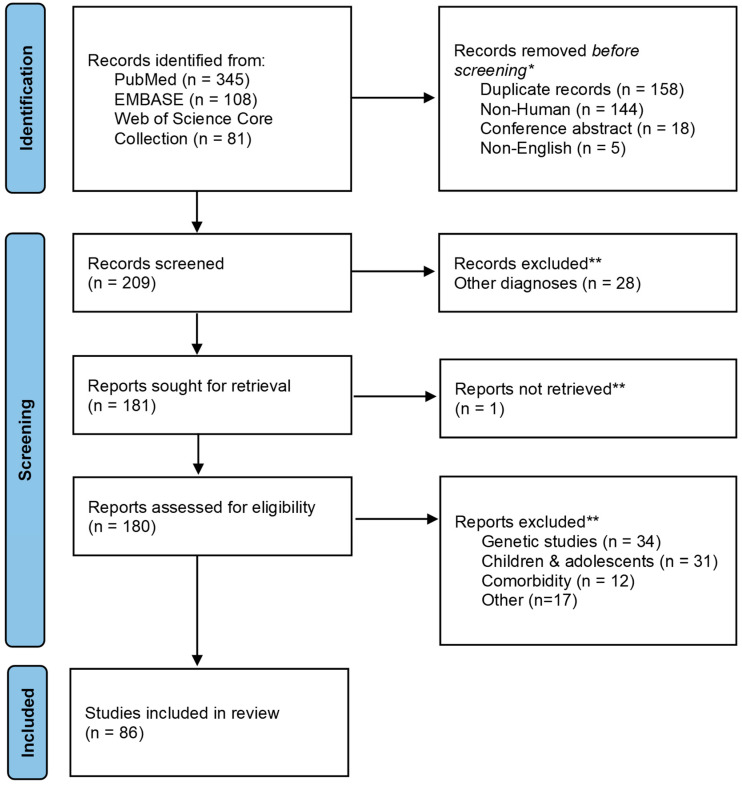
This review aims to summarize experimental and clinical data related to neurotrophins and S100B in neuroplasticity, as well as neurodegeneration in the context of AUD, AWS, and DTs. This work used publications that were selected based on the protocol consistent with the Preferred Reporting Items for Systematic Reviews and Meta-Analysis (PRISMA) statement.
The BDNF level could be a good candidate biomarker for relapse susceptibility, as it is significantly reduced during consumption and gradually increases during abstinence. GDNF influences AUD through its integral role in the function of dopaminergic neurons and ablates the return to alcohol-drinking behavior. NGF protects neurons from ethanol-induced cytotoxic damage and affects recovery from cognitive deficits after brain damage. The NT-3 level is decreased after alcohol exposure and is involved in compensatory mechanisms for cognitive decline in AUD. NT-4 affects oxidative stress, which is associated with chronic alcohol consumption. S100B is used as a biomarker of brain damage, with elevated levels in serum in AUD, and can protect 5-HT neurons from the damage caused by alcohol.
BDNF, GDNF, NT-3, NT-4, NGF, and S100B may be valuable markers for withdrawal syndrome. In particular, the most relevant is their association with the development of delirium complications. However, there are few data concerning some neurotrophins in AWS and DTs, suggesting the need for further research.
酒精使用障碍(AUD)与导致酒精戒断综合征(AWS)的精神和躯体疾病相关,30%的AWS病例会发展为危及生命的震颤谵妄(DTs)。目前,研究并不支持在DTs中使用任何单一生物标志物。神经营养因子影响神经调节,在AUD、AWS和DTs的发病机制中发挥作用。
本综述旨在总结与神经营养因子和S100B在神经可塑性以及AUD、AWS和DTs背景下的神经退行性变相关的实验和临床数据。本研究使用了根据与系统评价和Meta分析的首选报告项目(PRISMA)声明一致的方案选择的出版物。
脑源性神经营养因子(BDNF)水平可能是复发易感性的良好候选生物标志物,因为其在饮酒期间显著降低,在戒酒期间逐渐升高。胶质细胞源性神经营养因子(GDNF)通过在多巴胺能神经元功能中的重要作用影响AUD,并抑制恢复饮酒行为。神经生长因子(NGF)保护神经元免受乙醇诱导的细胞毒性损伤,并影响脑损伤后认知缺陷的恢复。酒精暴露后神经营养因子-3(NT-3)水平降低,并参与AUD中认知衰退的代偿机制。神经营养因子-4(NT-4)影响氧化应激,这与长期饮酒有关。S100B用作脑损伤的生物标志物,在AUD患者血清中水平升高,并且可以保护5-羟色胺能(5-HT)神经元免受酒精引起的损伤。
BDNF、GDNF、NT-3、NT-4、NGF和S100B可能是戒断综合征的有价值标志物。特别是,它们与谵妄并发症的发生最为相关。然而,关于AWS和DTs中一些神经营养因子的数据很少,这表明需要进一步研究。