Li Lu, Zhang Liang, Luo Lijun, Shen Fujun, Zhao Yanni, Wu Honglin, Huang Yan, Hou Rong, Yue Bisong, Zhang Xiuyue
Key Laboratory of Bio-Resources and Eco-Environment, Ministry of Education, College of Life Sciences, Sichuan University, Chengdu 610065, China.
Integrative Science Center of Germplasm Creation in Western China (CHONGQING) Science City, Key Laboratory of Freshwater Fish Reproduction and Development (Ministry of Education), Key Laboratory of Aquatic Science of Chongqing, School of Life Sciences, Southwest University, Chongqing 400715, China.
Animals (Basel). 2024 Jun 15;14(12):1795. doi: 10.3390/ani14121795.
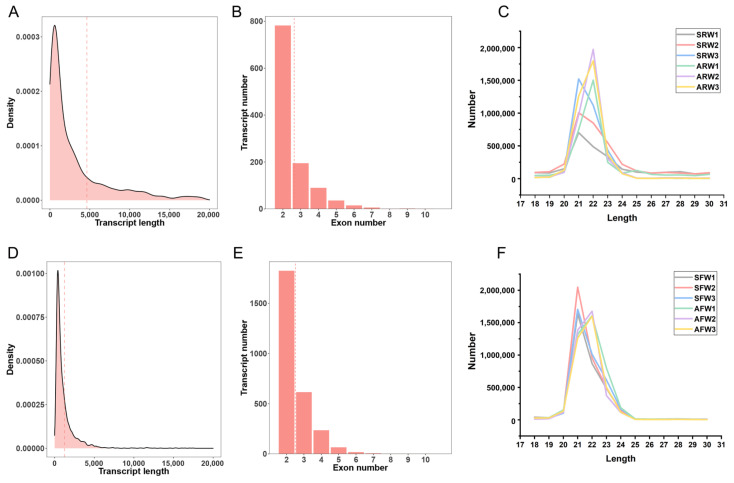
Red pandas evolved from carnivores to herbivores and are unique within Carnivora. Red pandas and carnivorous mammals consume milk during the suckling period, while they consume bamboo and meat during the adult period, respectively. Red pandas and carnivorous mammal ferrets have a close phylogenetic relationship. To further investigate the molecular mechanisms of dietary changes and nutrient utilization in red pandas from suckling to adult, comparative analysis of the whole transcriptome was performed on stomach tissues from red pandas and ferrets during the suckling and adult periods. The main results are as follows: (1) we identified ncRNAs for the first time in stomach tissues of both species, and found significant expression changes of 109 lncRNAs and 106 miRNAs in red pandas and 756 lncRNAs and 109 miRNAs in ferrets between the two periods; (2) up-regulated genes related to amino acid transport regulated by lncRNA-miRNA-mRNA networks may efficiently utilize limited bamboo amino acids in adult red pandas, while up-regulated genes related to amino acid degradation regulated by lncRNAs may maintain the balance of amino acid metabolism due to larger daily intakes in adult ferrets; and (3) some up-regulated genes related to lipid digestion may contribute to the utilization of rich nutrients in milk for the rapid growth and development of suckling red pandas, while up-regulated genes associated with linoleic acid metabolism regulated by lncRNA-miRNA-mRNA networks may promote cholesterol decomposition to reduce health risks for carnivorous adult ferrets. Collectively, our study offers evidence of gene expression adaptation and ncRNA regulation in response to specific dietary changes and nutrient utilization in red pandas during suckling and adult periods.
小熊猫从肉食动物进化为草食动物,在食肉目动物中独具特色。小熊猫和肉食性哺乳动物在哺乳期都食用乳汁,而成年期分别食用竹子和肉类。小熊猫与肉食性哺乳动物雪貂有着密切的系统发育关系。为了进一步探究小熊猫从幼崽到成年期饮食变化和营养利用的分子机制,对小熊猫和雪貂在哺乳期和成年期的胃组织进行了全转录组比较分析。主要结果如下:(1)我们首次在两种动物的胃组织中鉴定出非编码RNA,并发现两个时期之间,小熊猫中有109个长链非编码RNA和106个微小RNA以及雪貂中有756个长链非编码RNA和109个微小RNA存在显著的表达变化;(2)由长链非编码RNA - 微小RNA - 信使RNA网络调控的与氨基酸转运相关的上调基因,可能使成年小熊猫有效利用有限的竹子氨基酸,而由长链非编码RNA调控的与氨基酸降解相关的上调基因,可能因成年雪貂每日摄入量较大而维持氨基酸代谢的平衡;(3)一些与脂质消化相关的上调基因,可能有助于哺乳期小熊猫利用乳汁中丰富的营养物质实现快速生长发育,而由长链非编码RNA - 微小RNA - 信使RNA网络调控的与亚油酸代谢相关的上调基因,可能促进胆固醇分解以降低肉食性成年雪貂的健康风险。总体而言,我们的研究为小熊猫在哺乳期和成年期应对特定饮食变化和营养利用时的基因表达适应性和非编码RNA调控提供了证据。