Yalcin-Mutlu Melek, Icacan Ozan Cemal, Yildirim Fatih, Temiz Selahattin Alp, Fagni Filippo, Schett Georg, Tascilar Koray, Minopoulou Ioanna, Burul Gokhan, Bes Cemal
Department of Medicine 3-Rheumatology and Immunology, Friedrich-Alexander-Universität Erlangen-Nürnberg and Uniklinikum Erlangen, 91054 Erlangen, Germany.
Deutsches Zentrum für Immuntherapie (DZI), Friedrich-Alexander-Universität Erlangen-Nürnberg and Uniklinikum Erlangen, 91054 Erlangen, Germany.
J Clin Med. 2024 Jun 7;13(12):3375. doi: 10.3390/jcm13123375.
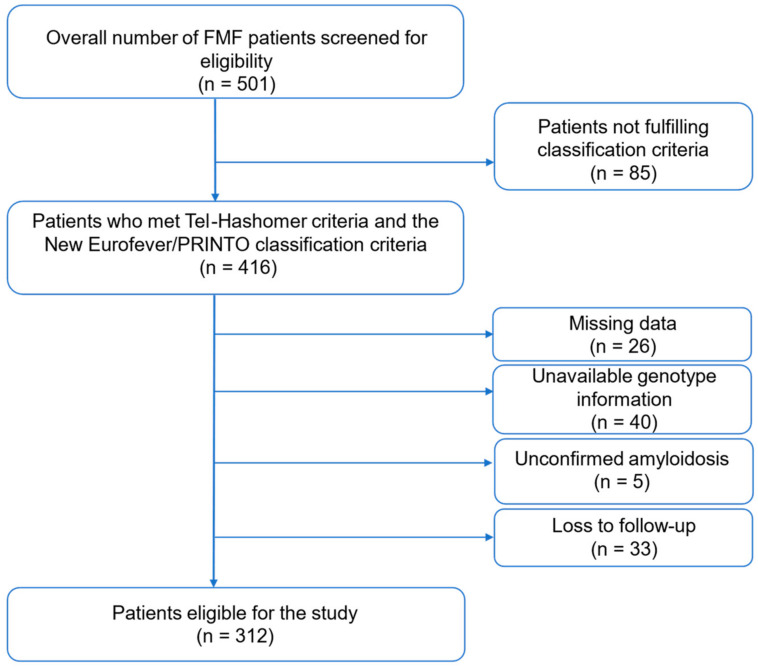
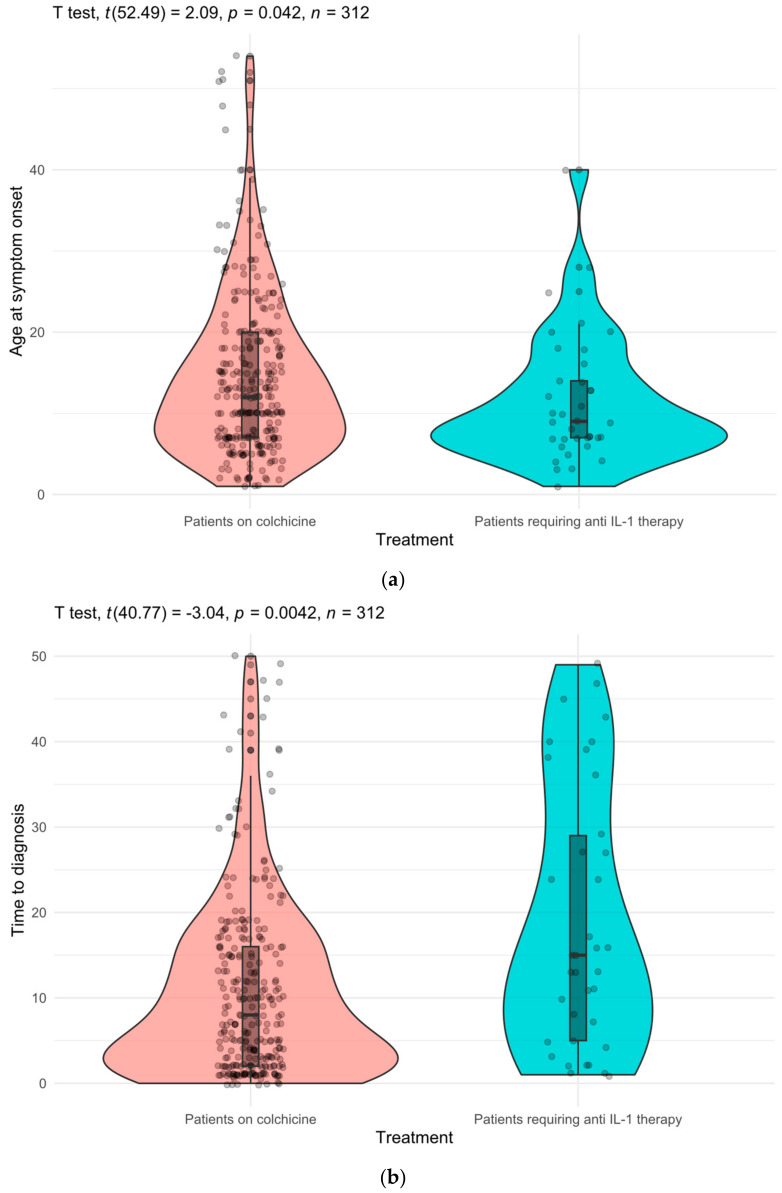
The accruing evidence about the efficacy of anti-IL-1 agents in Familial Mediterranean Fever (FMF) patients led to their widespread off-label use. Therefore, identifying precise indications and clinical characteristics of IL-1i-warranting patients are important. This study investigated the clinical characteristics and treatment indications of patients with FMF requiring interleukin 1 inhibition therapy (IL-1i). Hospital records of FMF patients attending a tertiary care center at the Department of Rheumatology, University of Health Sciences, Basaksehir Cam and Sakura City Hospital were retrospectively analyzed. Data on symptoms and disease manifestations, age of symptom onset, time to diagnosis, MEFV variants, type of treatment, and their indications were collected. Between June 2020 and March 2023, 312 FMF patients were identified. The mean age at the onset of symptoms was 14.0, and the mean time to diagnosis was 11.9 years. In total, 87.1% of patients were receiving colchicine monotherapy, while the remaining 11.8% warranted IL-1i. Clinical symptoms and flare manifestations did not show a significant difference between the two groups. However, patients receiving IL-1i started having symptoms at younger age (11.5 vs. 14.5, = 0.042) and time to diagnosis was longer (18.2 vs. 11.0, < 0.01). M694V homozygosity was more common in patients receiving IL-1i. Indications for patients receiving IL-1i were colchicine resistance (8.0%), secondary amyloidosis (5.1%), and colchicine intolerance (2.2%). This study shows that a subset of FMF patients, particularly those with a more severe phenotype with an earlier disease onset and M694V homozygosity, require IL-1i treatment despite the overall good efficacy and tolerability of colchicine, primarily due to colchicine resistance, intolerance, or complications such as amyloidosis.
关于抗白细胞介素-1(IL-1)药物对家族性地中海热(FMF)患者疗效的证据不断积累,导致其在广泛的非适应证使用。因此,确定需要使用IL-1抑制剂(IL-1i)的患者的精确适应证和临床特征很重要。本研究调查了需要白细胞介素1抑制治疗(IL-1i)的FMF患者的临床特征和治疗适应证。对在健康科学大学巴赫切希尔卡姆和樱花市医院风湿病科三级护理中心就诊的FMF患者的医院记录进行了回顾性分析。收集了有关症状和疾病表现、症状发作年龄、诊断时间、MEFV变异、治疗类型及其适应证的数据。在2020年6月至2023年3月期间,共确定了312例FMF患者。症状发作的平均年龄为14.0岁,平均诊断时间为11.9年。总体而言,87.1%的患者接受秋水仙碱单药治疗,其余11.8%的患者需要IL-1i治疗。两组之间的临床症状和发作表现没有显著差异。然而,接受IL-1i治疗的患者症状发作年龄更小(11.5岁对14.5岁,P = 0.042),诊断时间更长(18.2年对11.0年,P < 0.01)。M694V纯合子在接受IL-1i治疗的患者中更为常见。接受IL-1i治疗的患者的适应证为秋水仙碱耐药(8.0%)、继发性淀粉样变性(5.1%)和秋水仙碱不耐受(2.2%)。本研究表明,尽管秋水仙碱总体疗效良好且耐受性良好,但一部分FMF患者,特别是那些具有更严重表型、疾病发作较早且为M694V纯合子的患者,仍需要IL-1i治疗,主要原因是秋水仙碱耐药、不耐受或出现淀粉样变性等并发症。