Department of Medicine, University of Alabama at Birmingham, Birmingham, AL, USA.
Department of Biochemistry and Molecular Genetics, Schools of Medicine and Dentistry, University of Alabama at Birmingham, Birmingham, AL, USA.
Mucosal Immunol. 2024 Oct;17(5):958-972. doi: 10.1016/j.mucimm.2024.06.009. Epub 2024 Jun 28.
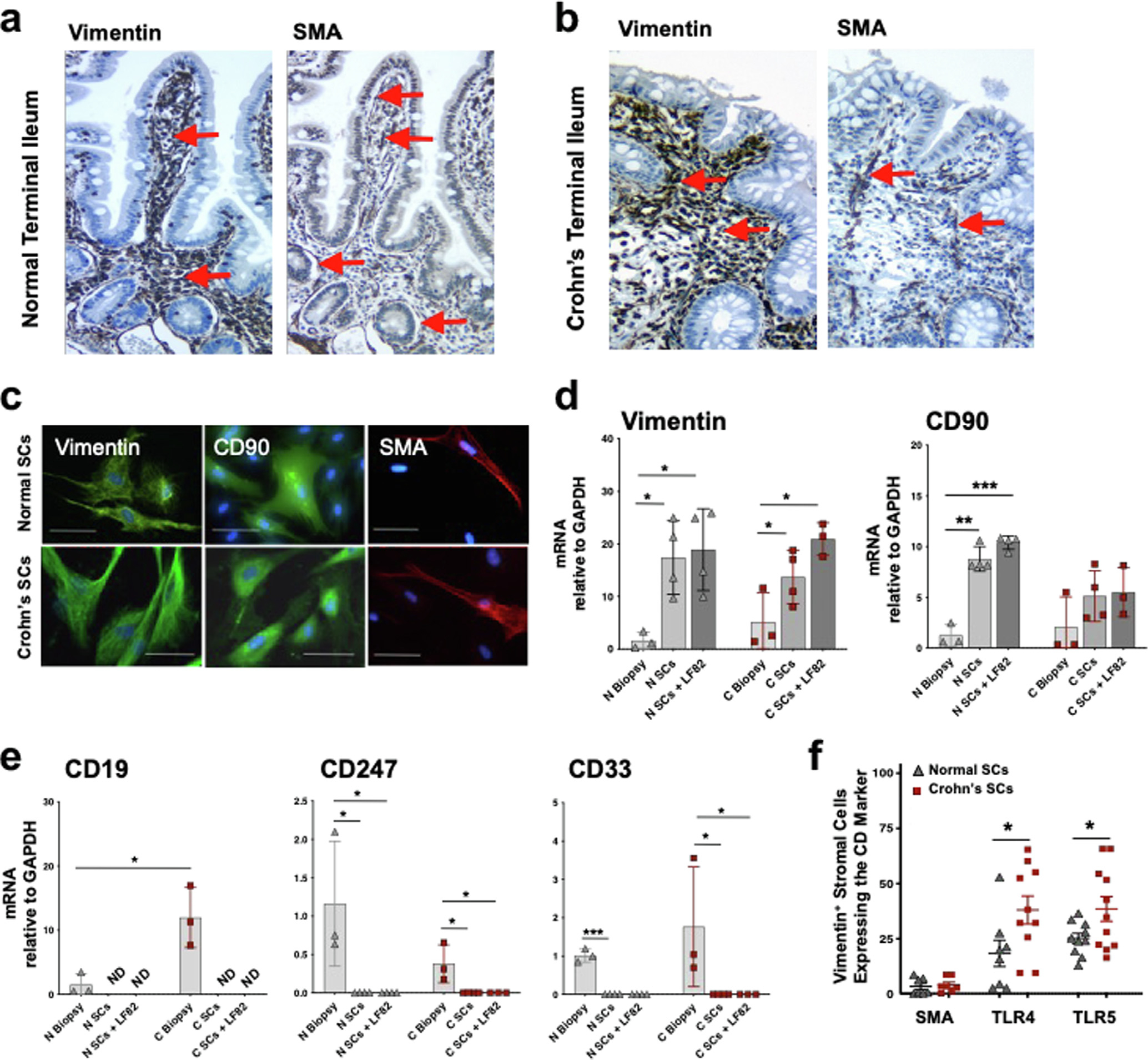
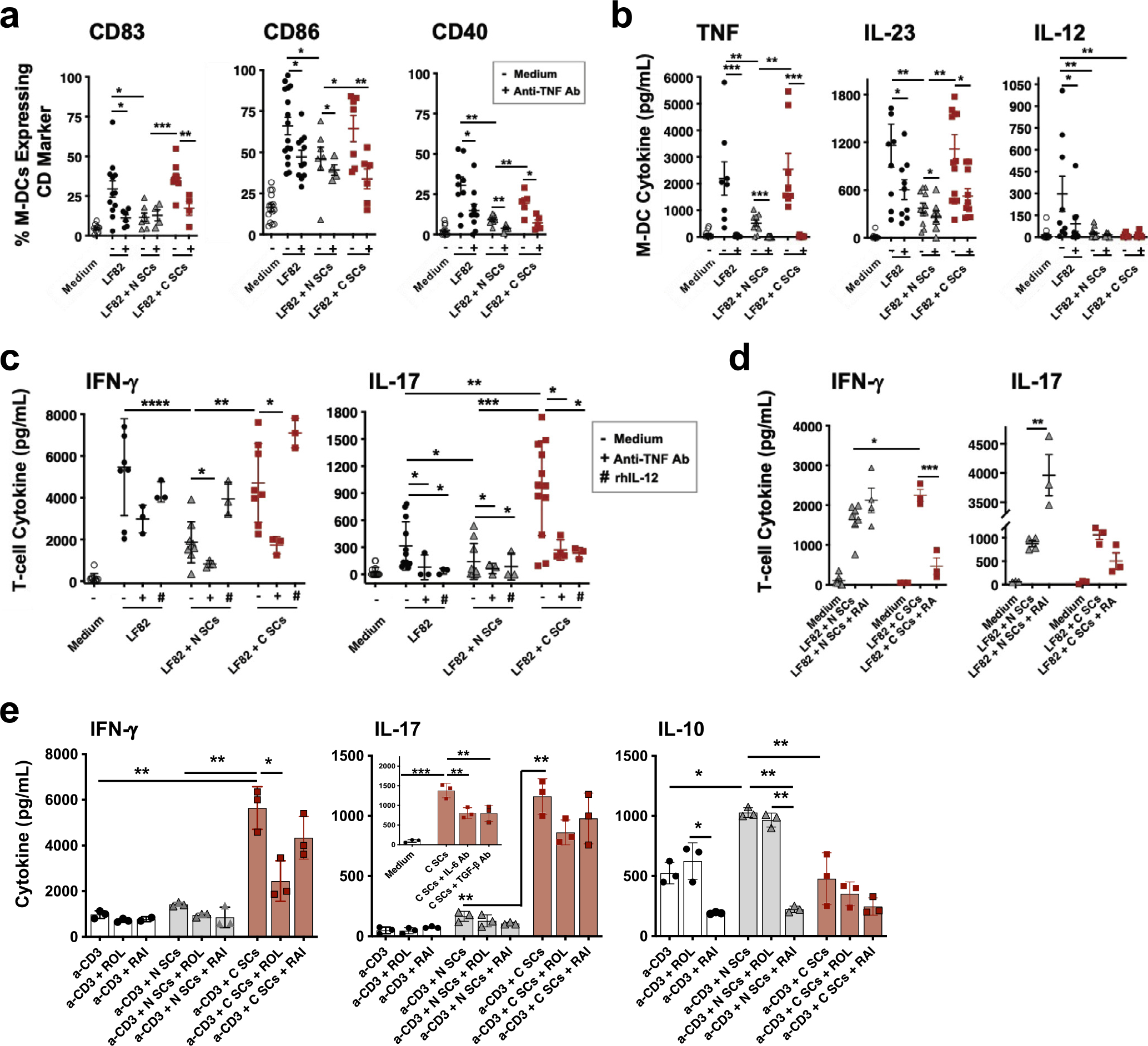
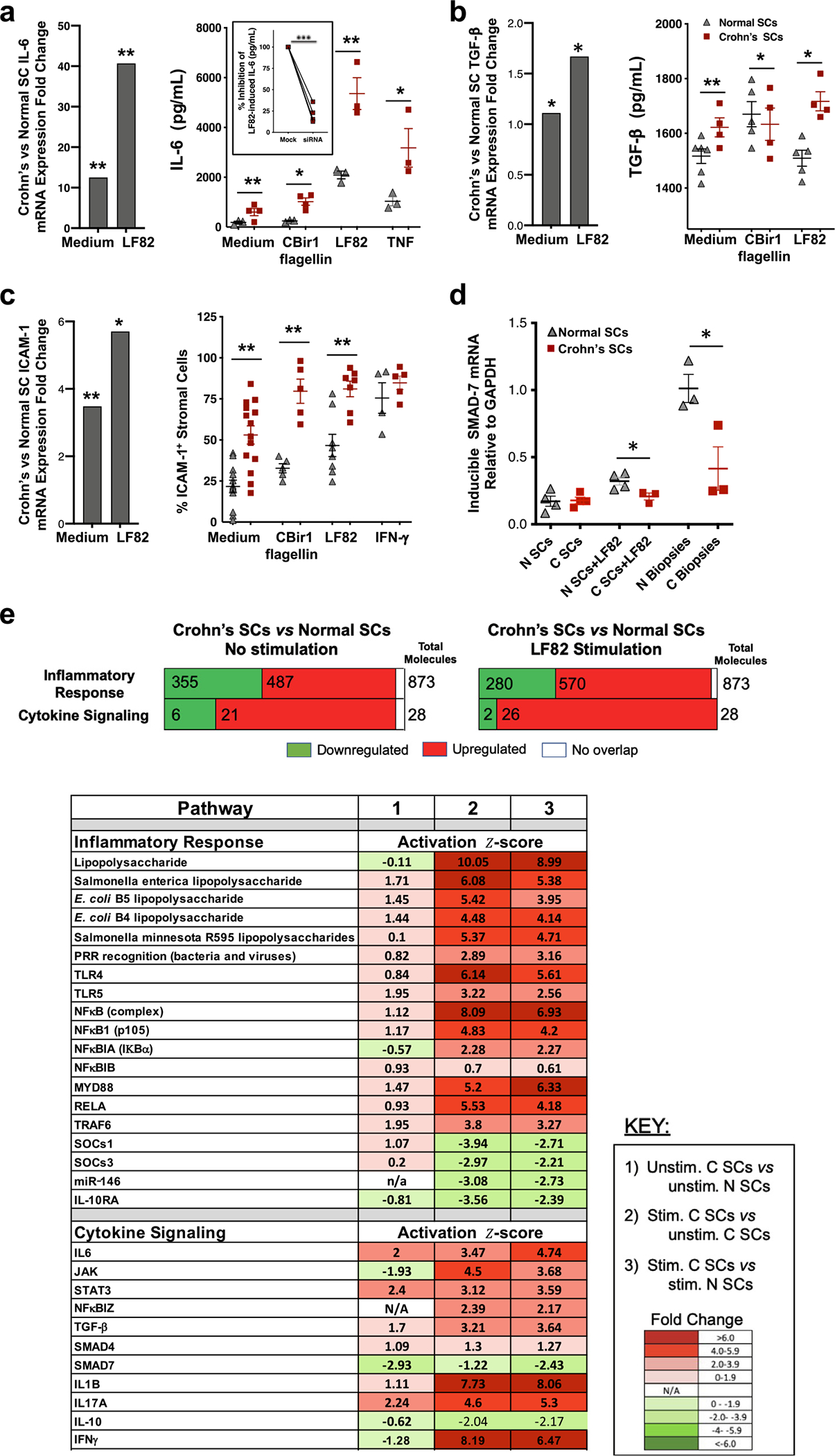
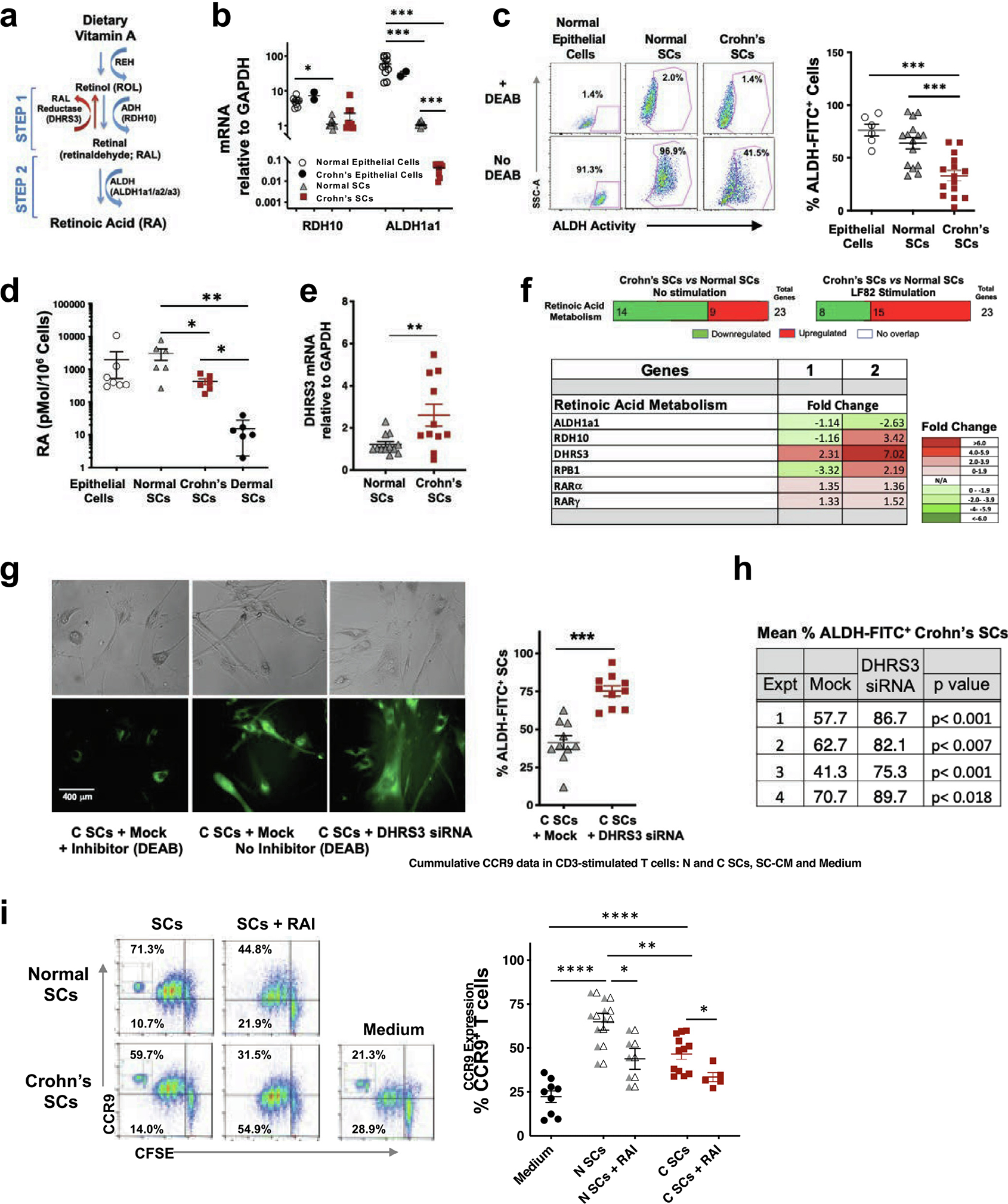
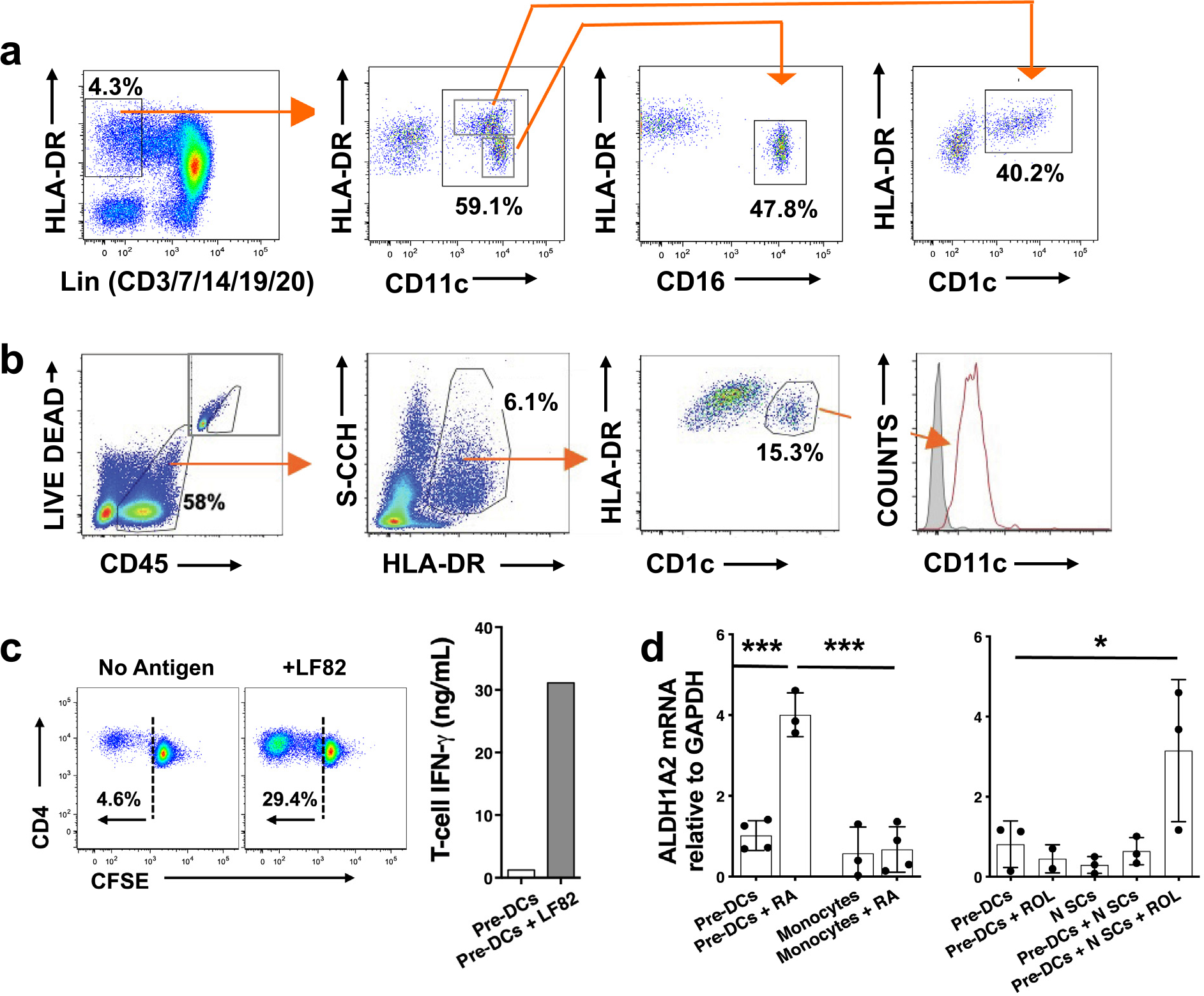
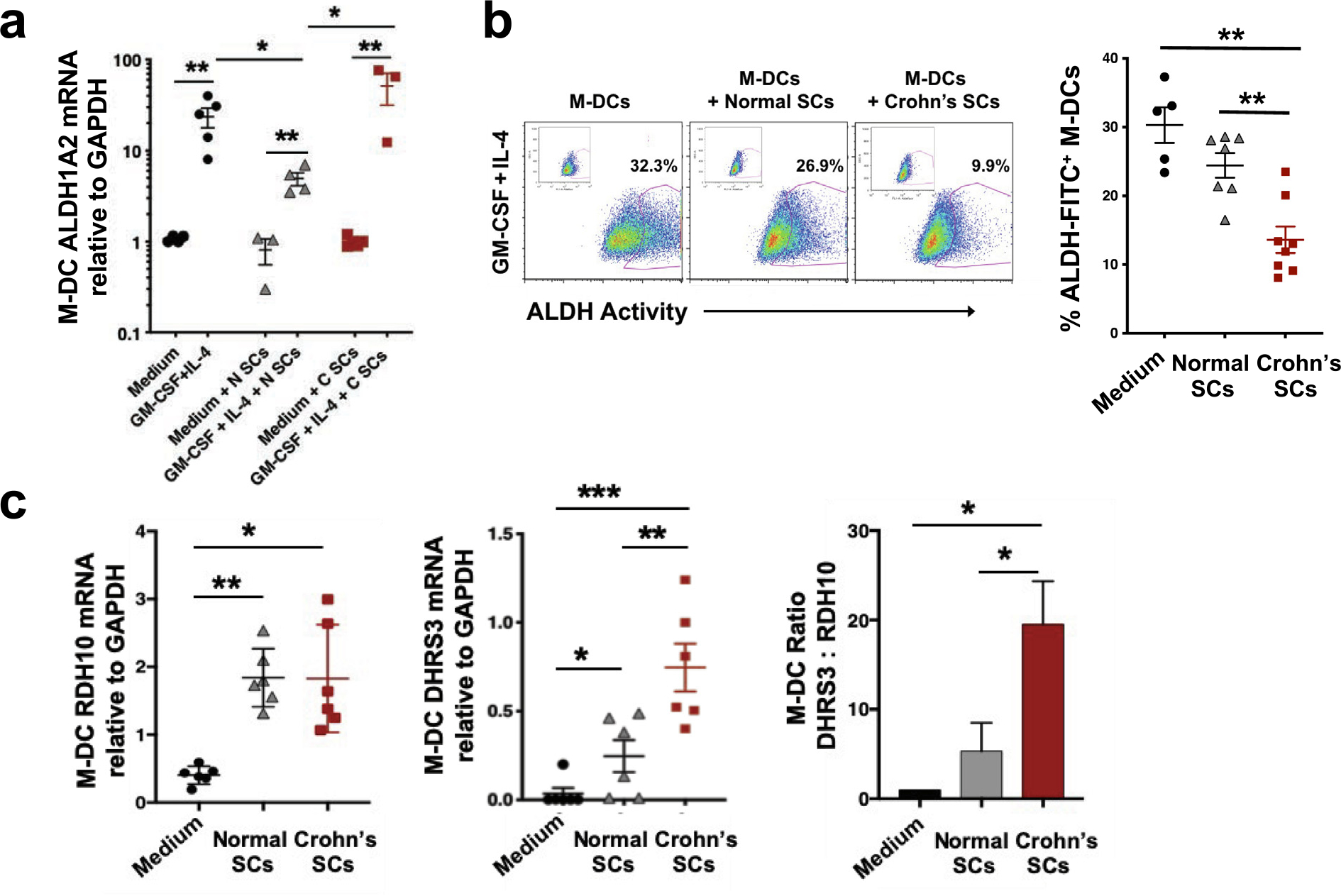
Intestinal stromal cells (SCs), which synthesize the extracellular matrix that gives the mucosa its structure, are newly appreciated to play a role in mucosal inflammation. Here, we show that human intestinal vimentinCD90smooth muscle actin SCs synthesize retinoic acid (RA) at levels equivalent to intestinal epithelial cells, a function in the human intestine previously attributed exclusively to epithelial cells. Crohn's disease SCs (Crohn's SCs), however, synthesized markedly less RA than SCs from healthy intestine (normal SCs). We also show that microbe-stimulated Crohn's SCs, which are more inflammatory than stimulated normal SCs, induced less RA-regulated differentiation of mucosal dendritic cells (DCs) (circulating pre-DCs and monocyte-derived DCs), leading to the generation of more potent inflammatory interferon-γ/interleukin-17 T cells than normal SCs. Explaining these results, Crohn's SCs expressed more DHRS3, a retinaldehyde reductase that inhibits retinol conversion to retinal and, thus, synthesized less RA than normal SCs. These findings uncover a microbe-SC-DC crosstalk in which luminal microbes induce Crohn's disease SCs to initiate and perpetuate inflammation through impaired synthesis of RA.
肠基质细胞(SCs)合成细胞外基质,为黏膜提供结构,它们在黏膜炎症中发挥作用。在这里,我们发现人肠间充质干细胞(SCs)合成维甲酸(RA)的水平与肠上皮细胞相当,这一功能以前被认为是肠上皮细胞所特有的。然而,与来自健康肠道的 SCs(正常 SCs)相比,克罗恩病 SCs(克罗恩病 SCs)合成的 RA 明显较少。我们还表明,与受刺激的正常 SCs 相比,受微生物刺激的克罗恩病 SCs 具有更强的炎症反应,诱导黏膜树突状细胞(DCs)分化的 RA 减少(循环前 DC 和单核细胞衍生的 DCs),导致比正常 SCs 产生更强的炎症性干扰素-γ/白细胞介素-17 T 细胞。解释这些结果,克罗恩病 SCs 表达更多的视黄醛还原酶 DHRS3,它抑制视黄醇转化为视黄醛,因此比正常 SCs 合成的 RA 少。这些发现揭示了一种微生物-SC-DC 相互作用,其中腔微生物诱导克罗恩病 SCs 通过受损的 RA 合成启动和持续炎症。