
营养在慢性肌肉骨骼疼痛患者管理中的作用
Role of Nutrition in the Management of Patients with Chronic Musculoskeletal Pain.
作者信息
Cuomo Arturo, Parascandolo Ileana
机构信息
Division of Anesthesia and Pain Medicine, Istituto Nazionale Tumori, IRCCS - Fondazione G Pascale, Naples, Italy.
Istituto Nazionale Tumori, IRCCS - Fondazione G Pascale, Naples, Italy.
出版信息
J Pain Res. 2024 Jun 25;17:2223-2238. doi: 10.2147/JPR.S456202. eCollection 2024.
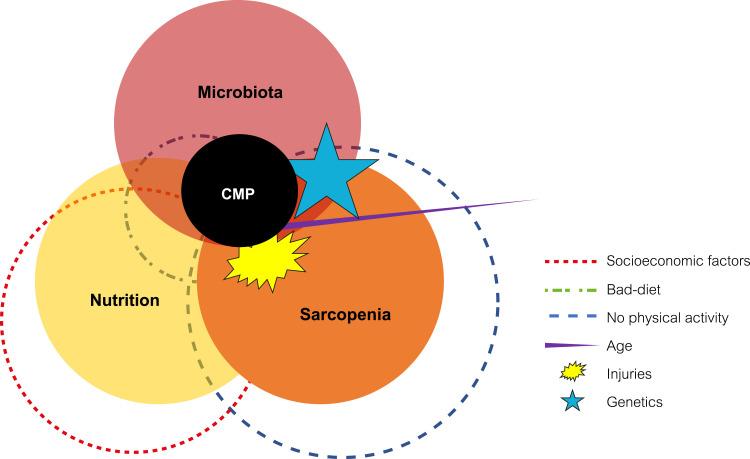
Chronic musculoskeletal pain (CMP), defined as persistent discomfort in musculoskeletal tissues persisting for over 3 months, afflicts an estimated 1.71 billion people globally, leading to significant functional impairments and psychological distress, thereby detrimentally affecting individuals' quality of life. The objective of this narrative review is to elucidate the complex relationship among dietary habits, sarcopenia, and gut microbiota composition, with an eye toward enhancing patient management and outcomes. Given the burgeoning interest in the influence of diet on CMP, a detailed examination of the current literature is warranted. Nutritional intake is a critical determinant of the gut microbiota profile, which, in turn, is linked to musculature integrity and performance, potentially leading to sarcopenia. The development of sarcopenia can aggravate CMP owing to diminished muscular strength and functionality. Additionally, disruptions in the gut microbiota may directly modulate nociception, intensifying CMP manifestations. Thus, nutritional optimization emerges as a viable approach to CMP management. Emphasizing a diet conducive to a healthy gut microbiome could forestall or mitigate sarcopenia, thereby attenuating CMP intensity. Nevertheless, the domain calls for further empirical exploration to unravel the nuances of these interactions and to forge efficacious dietary strategies for individuals with CMP. Beyond mere analgesia, comprehensive patient care for CMP requires acknowledgment of the complex and multifactorial nature of pain and its foundational elements. Embracing an integrative treatment model allows healthcare practitioners to promise better patient prognoses, enriched life quality, and a decrease in the sustained healthcare costs associated with CMP.
慢性肌肉骨骼疼痛(CMP)被定义为肌肉骨骼组织持续不适超过3个月,全球估计有17.1亿人受其困扰,导致严重的功能障碍和心理困扰,从而对个人生活质量产生不利影响。本叙述性综述的目的是阐明饮食习惯、肌肉减少症和肠道微生物群组成之间的复杂关系,以期改善患者管理和治疗效果。鉴于饮食对CMP影响的研究兴趣日益浓厚,有必要对当前文献进行详细审查。营养摄入是肠道微生物群特征的关键决定因素,而肠道微生物群又与肌肉组织的完整性和功能相关,可能导致肌肉减少症。肌肉减少症的发展会因肌肉力量和功能下降而加重CMP。此外,肠道微生物群的紊乱可能直接调节痛觉,加剧CMP的表现。因此,营养优化成为CMP管理的一种可行方法。强调有利于健康肠道微生物群的饮食可以预防或减轻肌肉减少症,从而减轻CMP的强度。然而,该领域需要进一步的实证探索,以揭示这些相互作用的细微差别,并为CMP患者制定有效的饮食策略。除了单纯的镇痛之外,对CMP患者的全面护理需要认识到疼痛及其基础因素的复杂性和多因素性质。采用综合治疗模式可以使医疗从业者有望改善患者预后、提高生活质量,并降低与CMP相关的持续医疗成本。
 Zotero 插件